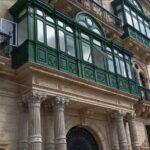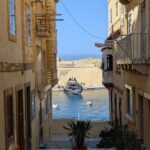
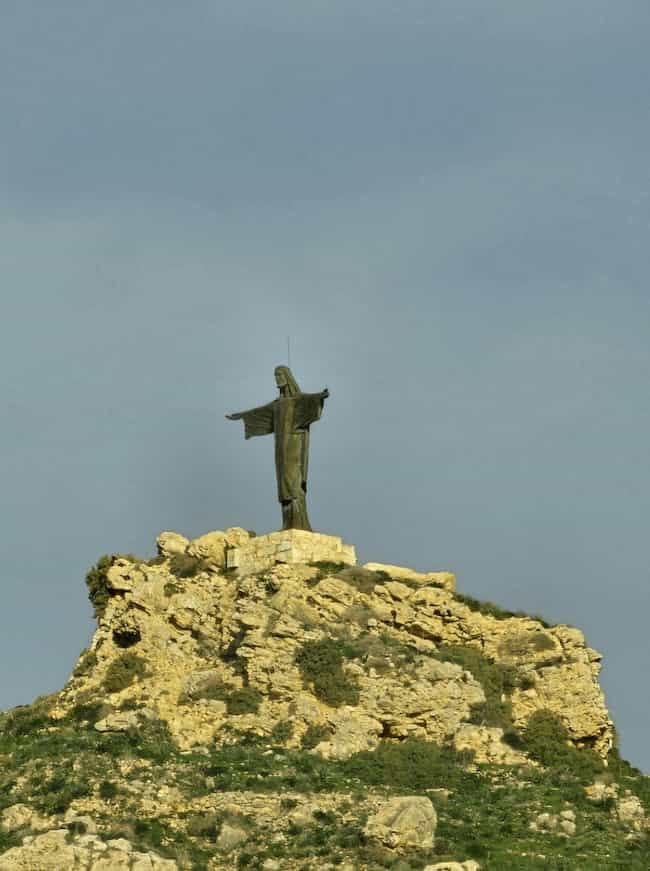

TL;DR: Easter in Malta is a full season — Lent through Holy Week through Easter Sunday — of baroque processions, street-level theatre, and traditions most visitors never hear about. This 2026-specific guide covers every procession, food tradition, church custom, and practical detail you need, from the first kwarezimal in February to the running statues of Easter Sunday. Written for anyone visiting Malta in late March or early April 2026.
Jump to:
Easter 2026 Dates
Lent in Malta
Our Lady of Sorrows
Palm Sunday
Maundy Thursday
Good Friday Processions
Holy Week Community Art
What Closes During Holy Week
Easter Sunday
Easter Food
Figolli
Three Cities at Easter
Other Things to Do
Practical Planning
Photography Etiquette
FAQ
Where to Stay
Easter in Malta is more than a holiday. It is a full season of ritual, community, and street-level theatre that unfolds from Lent through Holy Week and culminates on Easter Sunday. Churches, town squares, and harbour promenades shift in mood day by day: quiet and penitential in the run-up, solemn and dramatic on Good Friday, then celebratory and loud with bells and bands on Easter morning.
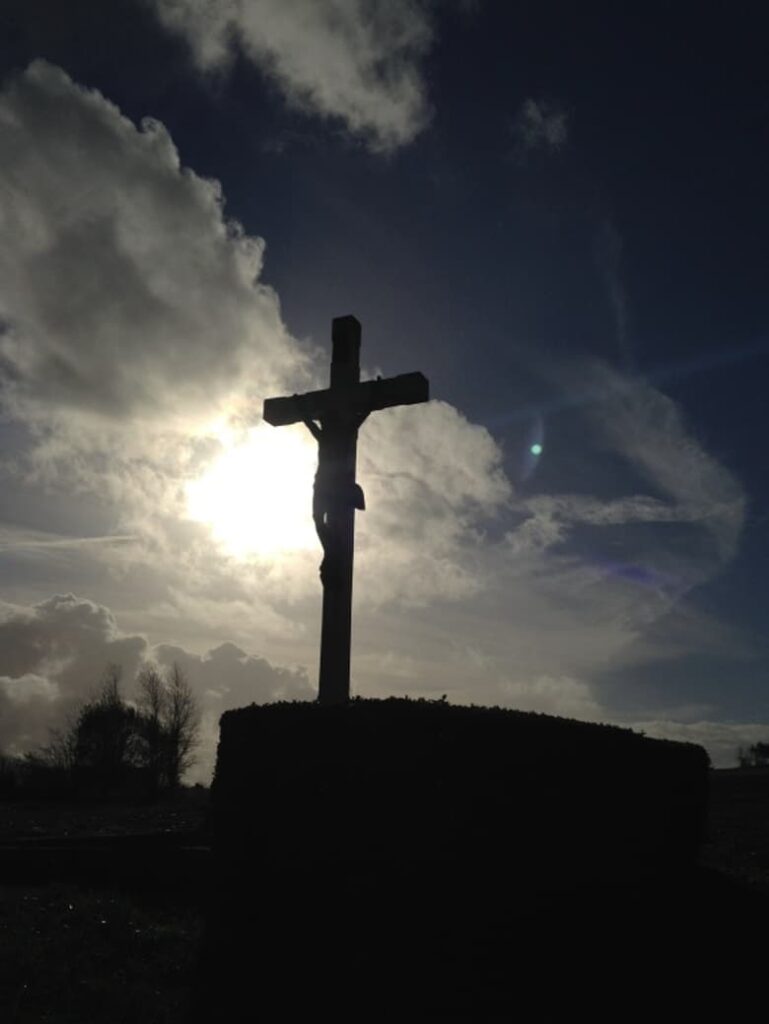
One detail visitors often miss: Easter Monday is not a public holiday in Malta, unlike in many other European countries. The islands return to normal quickly, which makes the core Easter weekend feel even more concentrated. That said, many Maltese families still treat Easter Sunday afternoon or Monday after work as picnic time — if the weather cooperates, you’ll see families at Buskett Gardens, Għadira, or Dingli Cliffs with leftover figolla and cold lamb.
Separate Good Friday processions held across Malta and Gozo each year
Easter 2026 Key Dates
Mark these before you book anything
Palm Sunday: 29 March · Holy Thursday: 2 April · Good Friday: 3 April · Holy Saturday: 4 April · Easter Sunday: 5 April
The scale distinguishes Malta from almost every other Catholic country. Seville’s Semana Santa is internationally famous, but Malta’s equivalent is virtually unknown outside the island — which means you can stand metres from a 300-year-old baroque statue being carried by men in medieval hooded robes without fighting through tourist crowds. This guide covers both: the public spectacle and the quieter traditions that locals keep largely to themselves.
Lent in Malta and Gozo: What You Will Notice Immediately
The islands signal the season before you ask a single question
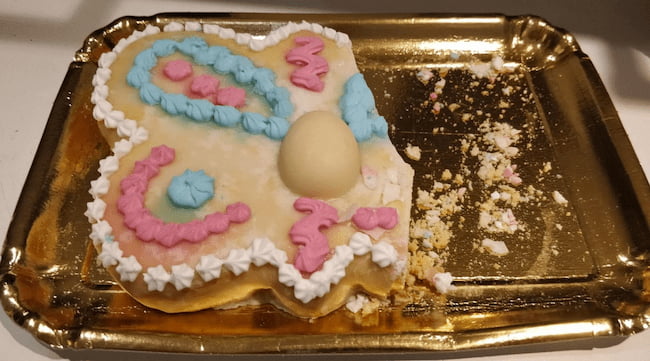
A Figolla, but the children got to it before the photo!
Long before Holy Week arrives, Malta announces Lent through its churches. Across both islands, sacred spaces are draped in purple linen, and statues and paintings are often covered entirely as part of the traditional penitential observance. For a visitor arriving in mid-to-late March, this visual shift is one of the clearest signs that the archipelago has entered its reflective period.
Modern Lenten fasting is typically limited to Ash Wednesday and Good Friday, though many Maltese still choose additional personal discipline — abstaining from meat and sweets on Wednesdays and Fridays, or giving up smoking, television, or specific pleasures for the full 40 days. Parish life becomes more structured: evening reflective sermons known as eżerċizzji spiritwali are held in local churches.
Bakeries are the other immediate signal. From Ash Wednesday onward, kwarezimal appear in every pastiċċerija: dense almond-and-spice biscuits made without eggs or animal fat, their name derived directly from the Maltese word for Lent. Many village bakeries quietly switch their entire production mix during these weeks. By the time Holy Week arrives, they have been selling kwarezimal for six weeks. If you haven’t tried one, you are running out of time.
- On Ash Wednesday, you’ll see Maltese walking around all day with ash crosses still visible on their foreheads — nobody wipes them off
- Some households keep a bowl of sprouting grain or beans (plejtu) in a dark corner as a symbol of death and resurrection — these later appear in church displays
- Several parishes prepare elaborate miniature “Holy Sepulchre” displays in side chapels with candles, flowers, and symbolic food — rarely advertised, often stumbled upon
- Some older Maltese stick to very simple meals like broad-bean soup (kusksu) and carob sweets (karamelli tal-ħarob) as low-key penance throughout the season
- A few families still cover mirrors or keep TV and music volumes very low from Maundy Thursday through Good Friday, out of respect for the Passion
- Some churches burn old palms from previous years to create the ashes used on Ash Wednesday — a closed-loop ritual cycle few visitors notice
If you want Easter atmosphere without the Easter-weekend crush, this is the stretch to come. You get Lent visuals in churches, kwarezimal season in full swing, and the first major events before Holy Week peaks.
- 19 March: Feast of St Joseph (public holiday)
- 27 March: Our Lady of Sorrows / Id-Duluri (processions across Malta)
- 29 March: Palm Sunday — Holy Week begins
- 31 March: Freedom Day (public holiday + National Regatta)
Stay in Gzira so you can do Valletta’s Seven Visits without worrying about late-night transport, and still reach Birgu or Żejtun for Good Friday without changing bases. Late March dates still available at manicmalta.com/gzira →
Our Lady of Sorrows: The Friday Before Good Friday
Emotionally bigger than most visitors realise — and the first major procession of the season
The Friday before Good Friday is dedicated to Our Lady of Sorrows (Id-Duluri), and it functions as the emotional overture to Holy Week. This is not a minor warmup: it draws thousands of devotees across Malta and Gozo and is one of the most deeply felt days of the entire Easter season.
The Friday before Good Friday — Our Lady of Sorrows — Malta’s most underappreciated Easter procession day
These processions can last hours, winding through narrow streets with people singing hymns and reciting the rosary almost continuously. Some devotees still walk barefoot or drag chains around their ankles in fulfilment of vows made after illness or crisis. The statues of Our Lady of Sorrows used in processions are often centuries old, and some towns keep a separate “processional” statue just for this day.
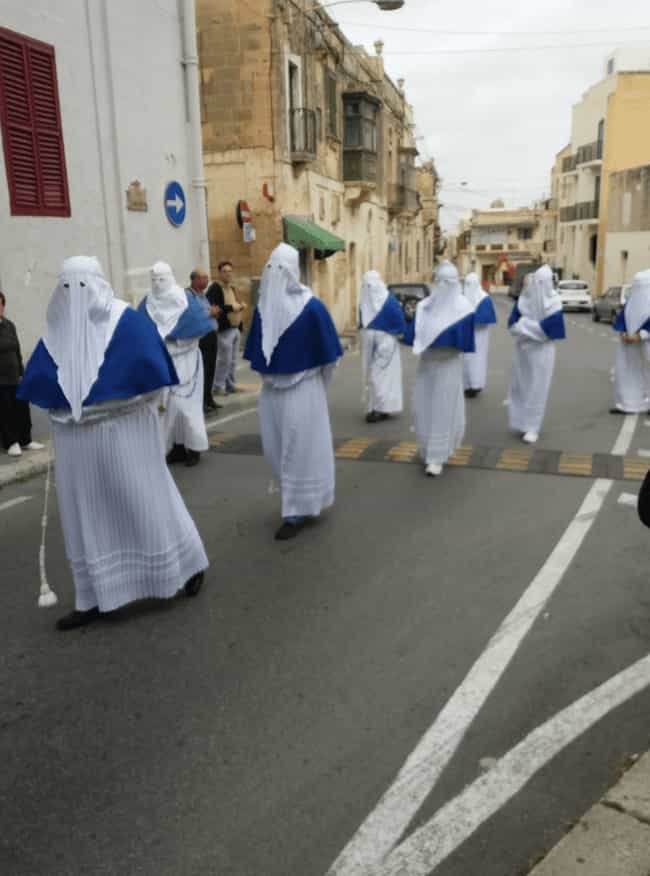
The most renowned Our Lady of Sorrows procession is held by the Church of St Mary of Jesus (Ta’ Ġieżu) in Valletta. To keep the focus on devotion rather than personal identity, penitents may wear kapirott hoods in various colours that conceal their faces while they fulfil their vows. For visitors encountering this for the first time, the effect is medieval, deeply sincere, and unlike anything else in the Mediterranean.
Palm Sunday and the Start of Holy Week
Olive branches, woven crosses, and the dramatic gospel reading that sets the tone
Palm Sunday marks the official start of Holy Week. In churches across both islands, priests bless palm leaves and olive branches with holy water, and the faithful carry them in short processions before or after Mass. Many Maltese hang the blessed branches at home afterward — a quiet protection tradition that continues year-round.
On mobile, swipe left to see full table.
| Palm Sunday Detail | What You’ll See |
|---|---|
| Blessed branches | Olive branches and palm leaves distributed after Mass; hung at home for protection |
| Palm-leaf crosses | Tiny crosses woven from palm leaves — a quiet craft tradition done by a handful of older parishioners |
| The Passion gospel | Read as a semi-dramatic recitation with multiple readers, giving Mass a theatrical quality before the big processions begin |
| Għaxaq procession | The first full procession of Easter — held in two acts in the late afternoon/early evening (check parish announcements for exact times) |
Via Sagra, Pilgrimages, and Acts of Penitence
The devotional practices that most visitors walk past without recognising
A central Lenten devotion is the Way of the Cross — locally Via Sagra — where worshippers meditate on the fourteen Stations depicting Christ’s Passion. These stations appear in churches across both islands, and in some localities on Good Friday the Passion narrative is read aloud while the Cross symbolically follows the Way of Jesus through the streets.
Penitential pilgrimage is another long-standing practice: visiting churches to venerate Passion scenes and altars dressed in black damask — a sombre decorative style associated with mourning that gives certain churches a striking, almost theatrical gravity during Lent.
Maundy Thursday: Ħamis ix-Xirka
One of the busiest nights of the Maltese calendar — and almost nobody outside the island knows it exists
Maundy Thursday is known in Maltese as Ħamis ix-Xirka, meaning Communion Thursday. It is one of the most active evenings of the entire Easter season.
The Seven Visits: Is-Seba’ Visti
The most embedded Holy Thursday custom is is-seba’ visti — the Seven Visits — when families tour seven churches in a single night, praying at the altars of repose where the Blessed Sacrament is reserved after the evening Mass of the Lord’s Supper, and often leaving candles in each. The practice is also called is-Sepulkri and mirrors the Catholic devotion sometimes described as Visita Iglesia.
In Valletta, this means walking church to church through the baroque capital on a mild April evening, with families, couples, and elderly parishioners all on the same circuit. The city has enough churches within walking distance to complete seven without difficulty. Many Maltese dress formally for the occasion — this is not a casual stroll.
Valletta has 25+ churches within its walls. One walkable circuit — adjust to taste and to whichever churches are open. Total distance: roughly 1.5 km on foot.
- St John’s Co-Cathedral — Start here. The Knights’ masterpiece. Caravaggio’s Beheading inside.
- St Paul’s Shipwreck Church — One of Valletta’s oldest. Contains relics of St Paul.
- Our Lady of Victory — The first church built in Valletta after the Great Siege. Tiny but significant.
- St Augustine’s Church — Old Street. Quieter and less visited. Good contrast.
- Our Lady of Damascus (Ta’ Damas) — Hidden off Republic Street. Easy to miss; worth finding.
- Our Lady of Mount Carmel — The dome you see from the harbour. Dramatic interior.
- St Dominic’s Basilica — End here. One of the largest churches in the city.
Tip: The Maltese dress up for the Seven Visits. Smart casual is the minimum. You’ll be sharing narrow streets with entire families in their best clothes.
- The Seven Visits tradition is so embedded that even non-practising Maltese “do the seven” as a cultural ritual — a night walk with family or friends
- Churches fill with the unmistakable scent of il-Borma: a simmering mixture of citrus zest, apples, and cinnamon considered a uniquely Maltese Holy Week fragrance
- During Mass, a priest washes the feet of twelve people representing the apostles — some parishes choose local workers (fishermen, nurses, carers) rather than parish insiders
- Many locals combine the Seven Visits with parish exhibitions: miniature Last Supper scenes, Passion dioramas, and displays of traditional food
- Craft enthusiasts spend months building intricate Passion dioramas at home, then open their garages or living rooms for neighbours to visit
- After the evening Mass, the traditional unleavened bread Qaħqa’ tal-Appostli — garnished with almonds and sesame seeds — is eaten at home
The Laferla Cross Pilgrimage
Another cherished Maundy Thursday tradition is the candlelit pilgrimage to the Laferla Cross (is-Salib tal-Għolja) on the hill outside Siġġiewi. The path is illuminated with thousands of candles and traditional lanterns, and pilgrims climb while praying — symbolising Christ’s journey to Golgotha. Some walk barefoot as penance. The event draws growing numbers each year and creates one of the most visually striking scenes of the entire Easter season.
Last Supper Re-enactments
Some areas hold Last Supper re-enactments on Maundy Thursday. A notable outdoor version is associated with the Ta’ Passi fields at night, adding a dramatic open-air dimension to an already full evening.
The Long Walk: Mellieħa to Senglea
One of Malta’s most physically demanding Holy Week traditions is also one of its least publicised: a night walk spanning over 30 km, running from Mellieħa through the Dome of Mosta to Senglea. Organised annually in aid of Puttinu Cares (a cancer support charity), it typically begins around 2 am on Good Friday morning and finishes around 7:30 am at sunrise. Thousands of participants join each year.
The walk is strikingly communal. Supplies are provided at intervals, grandmothers encourage people from doorways, and minibuses assist the tired at certain points. Even if you only catch part of it, this walk shows how Malta’s Easter season blends genuine devotion with community care in a way that feels entirely different from a religious tourism experience.
Good Friday in Malta: The Most Important Day of the Year
Twenty processions. Baroque statues. A competitive bidding tradition nobody writes about.
Good Friday is the emotional centre of Holy Week — and in Malta, it is public, dramatic, and historic in a way that surprises almost every visitor. It is a full public holiday: many Maltese still fast or eat very little and avoid meat for the entire day. Churches are dressed in purple and black, and in some localities Good Friday Mass is conducted outdoors in the afternoon.
Men required to carry each statue — some weigh 150–200 kg in their wooden frames
Processions feature life-sized baroque statues depicting scenes from the Passion, accompanied by bands playing slow funeral marches, and hushed crowds that can stretch for hundreds of metres. In Maltese, Holy Week is il-Ġimgħa Mqaddsa — the Sacred Week — and Good Friday is its apex.
The Processions: Where to Go
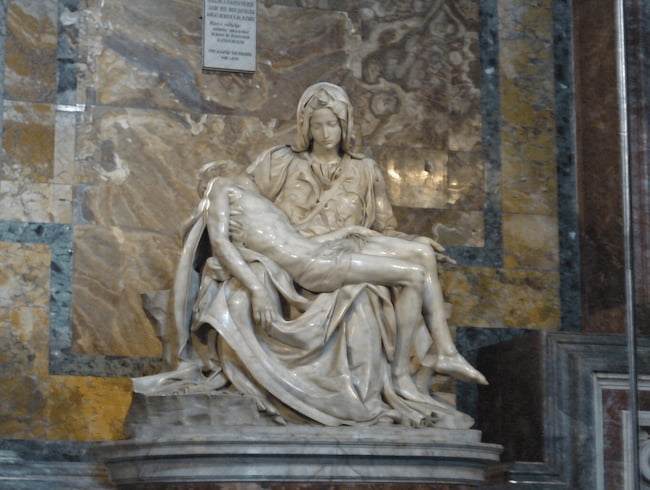 Mary Holding Dying Jesus
Not all processions are equal. Every town runs its own through its own confraternity (il-fratellanza), with its own statues, route, and fierce pride in the result.
On mobile, swipe left to see full table.
| Village / Town | Start Time | Duration | What Sets It Apart | Best Viewing Spot |
|---|---|---|---|---|
| Żejtun | ~5:00 PM | 5–6 hours | Largest in Malta; 300+ participants; twelve statues (most have eight); 18th-century statuary | Outside St Catherine’s Church as statues depart — takes ~90 min to fully exit |
| Valletta | ~6:00 PM | 3–4 hours | Historic capital; UNESCO-listed baroque streets; multiple confraternities | Republic Street near St John’s Co-Cathedral |
| Vittoriosa (Birgu) | ~5:30 PM | 3–4 hours | Entire procession by candlelight only — no electric lighting; deeply atmospheric | Vittoriosa main gate (Couvre Porte) |
| Żebbuġ | ~5:30 PM | 4+ hours | Renowned extravagance; one of the longest; historically includes live horses with Roman cavalry | Parish Church square |
| Qormi | ~5:30 PM | 3 hours | Twelve statues (tied with Żejtun); includes Last Supper tableau; strong local atmosphere | St George’s Parish Church steps |
| Mosta | ~5:30 PM | 3 hours | Passes beneath the famous Mosta Dome rotunda; significant local attendance | Below the Dome as statues pass |
| Rabat | ~6:00 PM | 3 hours | Passes in Mdina’s shadow; strong confraternity tradition; less crowded than Valletta | St Paul’s Parish Church steps |
| Naxxar | ~5:30 PM | 3 hours | Theatrical lighting; well-maintained statues | Parish church square |
| Victoria, Gozo | ~6:00 PM | 2–3 hours | Two separate processions: Cathedral of the Assumption and St George’s Basilica (the latter on Maundy Thursday at 7 PM). Intimate and distinct from mainland | Cathedral square |
| Xagħra, Gozo | ~6:00 PM | 3+ hours | Most grandiose Gozo procession: 400+ participants, rich costumes, animals, biblical personages. Hilly streets make it the most scenic | Parish church square — arrive early for the best position on the hill |
| Nadur, Gozo | ~6:00 PM | 2–3 hours | Large number of statues; strong pageantry tradition. Peter’s Denial scene is a highlight | Parish church steps |
Planning to cross to Gozo for Easter? The ferry runs enhanced schedules over the holiday weekend. Xagħra’s is the procession to prioritise if you can only see one on Gozo.
The Statues: What You Are Actually Looking At
Most Good Friday processions depict between seven and fourteen scenes from the Passion in sequence, processed in narrative order. You are watching a slow-moving baroque graphic novel unfold over several hours. The statues in major processions are not props: many are 17th- and 18th-century polychrome sculptures, some by named Maltese masters, and treating them as such is a matter of serious local honour.
- L-Ort — The Agony in the Garden (Christ with angel holding chalice and cross)
- Il-Marbut — The Scourging at the Pillar
- L-Ecce Homo — Christ wearing the Crown of Thorns
- Ir-Redentur — The Carrying of the Cross
- Il-Veronika — Veronica with the cloth bearing Christ’s face
- Il-Kruċifiss — The Crucifixion (in some processions)
- Il-Pietà — The Virgin holding Christ’s body
- Il-Monument — The Dead Christ / Holy Sepulchre
The Pietà and Dead Christ occupy the final, most solemn positions. These are the oldest, most precious figures — and the most fiercely contested at l-irkant. Żejtun and Qormi carry twelve statues each, adding scenes like the Last Supper and the Betrayal.
The Craft: Who Made the Statues
The processional statues are not anonymous church props. Many are the work of named Maltese masters, and locals know exactly who carved which piece.
On mobile, swipe left to see full table.
| Sculptor | Period | Known For |
|---|---|---|
| Xandru (Alessandro) Farrugia | 1791–1871 | Żejtun’s “Jesus Scourged at the Pillar” (1844), carved from a single piece of wood. Also worked at Tarxien, Mqabba, and Safi. Student of Mariano Gerada. |
| Karlu (Carlo) Darmanin | 19th century | Malta’s most important papier-mâché sculptor. Pioneered Good Friday iconography. Subject of a centenary exhibition at the University of Malta. Statues found in churches across both islands. |
| Camilleri Cauchi family | 20th–21st century | Alfred and Aaron Camilleri Cauchi — Malta’s most active contemporary restorers and sculptors of processional statues. If a statue has been recently restored, it was probably in their workshop. |
When locals tell you a statue “dates to the 18th century,” they aren’t making a vague heritage claim. They can often name the carver, the commissioner, and the year of the last restoration. This changes the way you look at the statues when you understand they are individual works of art with documented histories, not interchangeable props.
L-Irkant: The Auction Nobody Writes About
The detail that separates Maltese Easter from every other Catholic procession in the world is l-irkant — the auction.
Before each Good Friday procession, confraternities hold a public bidding event to determine who earns the honour of carrying each individual statue. This is not a token gesture. The statues are heavy — polychrome baroque sculptures in their wooden frames can weigh 150–200 kg — and they must be carried on the shoulders of bearer teams for hours through cobbled streets.
Each statue is auctioned separately. Bidders are typically confraternity members or prominent parishioners. The winning bid confers community status. Winning the right to carry the centrepiece statue (usually the Dead Christ or the Pietà) has been compared socially to winning a civic honour. Bids regularly reach hundreds of euros for secondary statues and can exceed several thousand for the principal figures in prestigious processions like Żejtun. Proceeds go to the confraternity for statue maintenance and restoration.
The auctions take place in the weeks before Holy Week. They are public but rarely advertised to visitors. Asking at the local parish church is the most reliable way to find out when and where. Why does this matter? The men carrying those statues past you have personally invested — financially and communally — in that moment. It changes how you watch.
Things Only Locals Know About Good Friday
On mobile, swipe left to see full table.
| What You’ll Notice | What It Means |
|---|---|
| Dark clothing everywhere | Not a rule, not enforced — but turning up in red or tourist shorts reads as conspicuously foreign. The Maltese dress for mourning. |
| Slow, heavy brass music | Band clubs that normally play upbeat marches switch to funeral-style pieces. No upbeat music anywhere near a procession. |
| No church bells | Silent from Holy Thursday Mass until Easter Vigil on Saturday night. Wooden clappers (ċuqlajta) replace them. In a country where bells mark every hour, the absence is jarring. |
| Live horses | Some processions (notably Żebbuġ) include horses with Roman “cavalry” — surprising for visitors expecting only church pageantry. |
| Hooded penitents with chains | Men in white robes and hoods walk barefoot, some dragging chains. Acts of penance or vow fulfilment. Strictly religious — no negative symbolism. |
| Families following the route | Many locals plan their afternoon around rejoining the procession at different points rather than watching from one spot. It’s not a static event. |
| Paid seating near churches | Some villages offer reserved chairs for a charge near the church square. Ask locally. Park in side streets well before — main roads close. |
| Flash photography | Generally permitted without flash. Many Maltese are moved. Read the room. |
The Band Clubs: The Heart of the Village
You’ll hear the bands before you see the procession, but the band clubs themselves are worth understanding. Every Maltese town has at least one — often two, in fierce rivalry — and they are far more than music venues. Band clubs (każini tal-banda) are social centres, drinking spots, meeting halls, and the organisational backbone of every major parish event including the Good Friday procession.
The bars inside the band clubs stay open during processions. While waiting for the statues to exit the church (which can take 90 minutes), do what the locals do: step into the nearest kazin and order a ħobż biż-żejt (bread with oil, tomato, and capers) or a beer. It is the cheapest meal in the village and the best seat for people-watching. Nobody will mind a visitor — you’ll probably get a chair offered.
Getting There: Transport and Parking
On mobile, swipe left to see full table.
| Detail | What You Need to Know |
|---|---|
| Public transport on Good Friday | Malta Public Transport runs a reduced Sunday/public holiday schedule. Services operate but frequency is lower. Plan early. |
| Parking in procession towns | Main streets close. Parking in Żejtun on Good Friday is a nightmare — arrive very early or take the bus. Same applies to Qormi and Valletta. |
| Gozo ferry | Runs normal schedule through Easter — often enhanced with extra crossings due to demand. Many Maltese cross to Gozo for the weekend. |
| From Gzira | Valletta is 10 minutes by ferry from Sliema (next to Gzira). Żejtun and Vittoriosa are 15–20 minutes by car. Centrally placed for every major procession. |
Holy Week Community Art: Coloured Salt and Rice
The exhibitions you won’t find in a museum — and one you will
During Holy Week, private homes, band club halls, garages, and parish rooms across Malta open their doors to display handmade dioramas of the Last Supper. These are not commercial exhibits — they are community projects, built by volunteers using coloured salt, dyed rice, pasta, seeds, lentils, and dried flowers. Some are traditional and devotional; others are startlingly elaborate, filling entire rooms with miniature landscapes.
The best-known displays are found in the band clubs of Qormi, Żejtun, and Paola, where the competition between rival clubs extends to who can produce the most impressive Last Supper exhibition. Parish churches also stage their own — Mosta and Naxxar are consistently recommended. Finding them is straightforward: walk toward the parish church of any town during Holy Week and follow the signs. Most exhibitions are free, though a small donation is customary. Typically open from Maundy Thursday evening (~8 PM) through Good Friday morning (~1 PM).
[IMAGE PLACEHOLDER] Suggested alt text: “Close-up of a rice-art Last Supper display in a Maltese band club hall, showing intricate coloured grain work”
A less-known tradition is the creation of community artworks made from coloured salt or rice, displayed during Holy Week and then deliberately discarded afterward. This practice, which began in the 1960s, reinforces the idea that the season is lived and temporary — a kind of Maltese counterpart to the Tibetan sand mandala, though rooted entirely in local Catholic culture.
If the temporary parish displays whet your appetite, visit the Inquisitor’s Palace in Birgu (Vittoriosa) — the only Inquisitor’s Palace open to the public in the world. Its permanent exhibition Passio et Resurrectio includes two life-sized processional statues: an 18th-century papier-mâché Dead Christ, believed to be among the oldest surviving Good Friday processional statuary in Malta, and a Scourging at the Pillar. The palace also displays 18th-century paintings of Our Lady of Sorrows and Christ Crucified.
Visit during Holy Week for context — but note: the palace is closed on Good Friday itself. Open Tues–Sun; check Heritage Malta for current admission. More on the Three Cities →
What Closes (and Doesn’t) During Holy Week
The information most travel guides skip entirely
Good Friday in Malta is, functionally, a different country from the Malta of August.
On mobile, swipe left to see full table.
| Day | Restaurants | Bars | Supermarkets | Tourist Sites |
|---|---|---|---|---|
| Palm Sunday (29 Mar) | Open | Open | Open | Open |
| Holy Mon–Wed | Open | Open | Open | Open |
| Ħamis ix-Xirka (Thurs) | Mostly open | Mostly open | Open | Open |
| Good Friday (3 Apr) | Many closed | Many closed | Most closed or reduced hours; convenience shops may open — check ahead | Modified hours |
| Holy Saturday | Reopening by evening | Reopening | Open | Open |
| Easter Sunday (5 Apr) | Open — book ahead | Open | Some closed; convenience shops often open | Open |
| Easter Monday (6 Apr) | Open | Open | Open | Open (not a public holiday) |
On Good Friday specifically: most traditional restaurants and family-run establishments close. Paceville feels subdued. Supermarkets in smaller towns close or reduce hours. Hotels and tourist-facing cafés generally remain open. Pharmacy rotations cover essential needs.
Easter Sunday is the inverse: restaurants reopen, often with special menus, and Easter lunch is the major family meal of the year. Book ahead — popular restaurants fill weeks in advance.
The Bells and the Easter Vigil
One of the most extraordinary sounds you will hear in Malta
At the Easter Vigil on Holy Saturday night, the church bells that have been silent since Holy Thursday resume simultaneously across the island. In Valletta, with dozens of church towers within earshot, the effect is extraordinary: a sudden cascade of sound after days of enforced quiet that signals, unmistakably, that Lent is over. The service begins in darkness — the Paschal candle and new fire are blessed, symbolising the resurrection — and progresses to light. New members are baptised. Many families go for a meal after the vigil to begin celebrating Easter together.
Easter Sunday: The Run, the Bands, and the Blessings
The mood shifts completely — and the statues start moving uphill
Easter Sunday flips everything. Churches change their drapery from purple and black to white and gold. Bells ring loudly and repeatedly. Towns feel bright and animated in a way that directly contrasts with the silence of Good Friday.
- Processions with the statue of the Risen Christ typically begin after morning Mass, around 10:00 AM
- In harbour towns like Vittoriosa, Senglea, and Cospicua, bearers famously run uphill with the statue — symbolising Christ’s victory over death — while the crowd cheers and confetti rains from balconies
- These runners train and coordinate in advance because the statue is heavy and streets are steep and slippery from confetti and flower petals
- Children carry small flags and ring handbells during processions, giving them a high-energy, almost carnival atmosphere
- Children extend eggs and figolli toward the statue for blessing as it passes — a small, family-centred moment
- The traditional Easter greeting is “L-Għid it-Tajjeb” — used in person, on cards, and in messages
- After Mass and the procession, most families go for a long, multi-course lunch at home or in restaurants with special Easter menus
In places like Lija, the Easter Sunday procession carries the statue of the Risen Christ uphill through the streets, with brass bands playing festive music — creating momentum and triumph that deliberately reverses the solemnity of two nights before. The climax comes at the end of the route: bearers break into a run with the statue while the crowd cheers, applauds, and throws confetti from the balconies. The contrast with Good Friday’s silence is total.
Easter Food in Malta: What Locals Eat and When
From Lenten fasting to Easter Sunday feasting, food tells the story of the season
On mobile, swipe left to see full table.
| Food | When | What It Is | Where to Find It |
|---|---|---|---|
| Kwarezimal | Throughout Lent | Dense almond, honey, and spice biscuits; rich in flavour but made without eggs or butter — deliberately penitential | Every pastiċċerija from Ash Wednesday |
| Karamelli tal-ħarob | Lent and Holy Week | Carob sweets sold near churches and processions; originally a throat remedy and a “legal” sweet during fasting. Delicious but viciously sticky — the Maltese joke is that more dental work is scheduled the week after Easter than any other time. You’ve been warned. | Street vendors near churches; traditional sweet shops |
| Qaħqa’ tal-Appostli | Maundy Thursday / Good Friday | Ring-shaped unleavened bread garnished with almonds and sesame seeds; eaten after the Seven Visits | Traditional bakeries |
| Kusksu | Good Friday / Holy Week | Traditional broad-bean soup; a fasting-day staple | Home kitchens; some traditional restaurants |
| Aljotta | Good Friday | Garlic-rich Maltese fish broth; the classic Good Friday meal in observant households | Home kitchens; seafood restaurants |
| Figolli | Easter Sunday | Almond-paste-filled pastry in symbolic shapes; decorated with icing and a chocolate egg | Every bakery from mid-Lent; also homemade |
| Roast lamb | Easter Sunday lunch | The traditional centrepiece of the Easter Sunday table; often with roast potatoes and vegetables | Home; restaurants with Easter menus |
Small bakeries become social anchors during Holy Week. People stop in after church visits, pick up seasonal bread, and exchange updates on procession times and family plans. Village bakeries quietly switch their entire production mix — fewer everyday pastries, more Lenten and Easter specialties. If you want to understand how Easter actually feels to a Maltese family, standing in a village bakery queue on Good Friday morning is as good a starting point as any.
Figolli: Malta’s Iconic Easter Sweet
The tradition is more layered than the icing suggests
Malta’s Easter gift: an almond-paste-filled pastry cut into symbolic shapes and decorated with icing. Given between families on Easter Sunday, available in every pastiċċerija from mid-Lent. Buy one before you leave. They travel well.
On mobile, swipe left to see full table.
| Detail | What You Should Know |
|---|---|
| The name | Commonly linked to the Italian figura (figure/shape) — which makes sense given the variety of shapes |
| Who gives them | Grandmothers to grandchildren is the classic pattern; aunts and godparents also give them after Easter morning visits |
| Personalisation | Home-baked figolli are often “assigned” to specific children — names iced on top, same shape expected every year. A fish-shaped figolla for a grandfather who was a fishmonger. It is personal. |
| Traditional shapes | Men, women, fish, baskets (often interpreted as fertility symbols); human-shaped figolli sometimes decorated with old-fashioned oleograph faces |
| Modern shapes | Butterflies, lambs, cars, football shirts, cartoon characters — tradition stretches to fit the times |
| The chocolate egg | A half chocolate egg in coloured foil sits on top, symbolising new life. Children eat this first — always — then negotiate which parent gets the next piece |
| The “ear” and the “tail” | Ask any Maltese child: the ear of the lamb or the tail of the fish is the best part — where the almond paste is thickest and the icing heaviest. Non-negotiable. |
| The blessing | On Easter morning, children bring figolli to Mass for blessing, then hold them out toward the Risen Christ statue during the procession |
| Scale and cost | Can take most of a day to bake and decorate; often larger than a head. Ground almonds are expensive, so modern bakeries offer half-size versions |
| Dyed eggs | Some households still dye real eggs red to symbolise Christ’s blood and keep a few on display — not just chocolate ones |
Language You May Hear During Holy Week
Why Maltese Easter vocabulary carries more history than it first appears
Maltese religious vocabulary carries layers of history that even Maltese people sometimes note with curiosity. In everyday speech during Holy Week, you may hear older residents use terms reflecting the islands’ linguistic crossroads:
On mobile, swipe left to see full table.
| Maltese Term | Meaning | Linguistic Connection |
|---|---|---|
| Randan | Lent | Linked by some to the Arabic Ramadan |
| Għid | Easter | Linked by some to Eid |
| Alla | God | Directly from the Arabic |
| L-Għid it-Tajjeb | “Happy Easter” | The standard Easter greeting used in person and on cards |
These connections come up in conversation when older residents explain customs to younger family members or curious visitors. They reflect Malta’s position as a linguistic crossroads between Catholic Europe and the Arab world — a layering that makes the island’s traditions richer and stranger than a first glance suggests.
The Two Weeks Around Easter: Atmosphere and Small Details
The things that only make sense if you’re here long enough to notice them
The fortnight around Easter has its own texture in Malta — a rhythm of preparation, build-up, and release that visitors on a short trip miss entirely. If you arrive in mid-to-late March and stay through Easter, you experience the full arc.
- Village streets near parish churches get temporary lighting, banners, and purple or black drapes in the fortnight before Easter — swapped for white and gold on Easter Sunday
- Band clubs are audibly active in the evenings — children rehearse alongside adult members for their processional roles
- Some people “collect” processions: visiting different localities each evening of Holy Week like a personal pilgrimage
- Because Easter marks the line between winter and spring, many Maltese use the fortnight before it to deep-clean houses and swap winter clothes for lighter ones
- In fishing villages, families time boat repairs and repainting for just before or after Easter — treating fresh paint almost like a blessing for the new season
- Some local NGOs and parishes organise charity drives during Holy Week — food or clothes collections framed as living the Easter message of mercy
- For older Maltese, the combination of incense, il-Borma scent, candle wax, band music, and carob sweets in these two weeks is so distinctive they describe it simply as “the smell of Easter”
The Three Cities at Easter: The Soul of Holy Week
Birgu, Senglea, and Cospicua — where the tradition runs deepest
If you can only be in one place for Easter in Malta, make it the Three Cities. Birgu (Vittoriosa), Senglea (Isla), and Cospicua (Bormla) sit across the Grand Harbour from Valletta, connected by narrow limestone streets that have barely changed since the Knights of St John made Birgu their first capital in 1530. Easter here feels different from the rest of Malta — older, more concentrated, more intense.
The Good Friday procession in Vittoriosa is among the most atmospheric on the island. The route passes through streets so narrow that bearers sometimes need to angle the statues to turn corners. Candles are set in windows. The limestone amplifies the sound of the band’s funeral march. The procession exits from St Lawrence’s Church — the same church where the Knights worshipped during the Great Siege of 1565 — and the crowds stretch back hundreds of metres through alleys barely four metres wide.
But it is Easter Sunday morning that makes the Three Cities unique. This is where the famous “running with the statue” tradition is most dramatic. In Vittoriosa and Cospicua, the bearers — who have trained specifically for this — break into a run carrying the statue of the Risen Christ uphill, with crowds cheering, confetti exploding, and church bells ringing simultaneously. The Vittoriosa run is the most renowned: the bearers sprint uphill from the waterfront toward the parish church, the statue swaying above them. It is exhilarating, slightly dangerous-looking, and completely unlike anything from Good Friday 48 hours earlier.
If you’re watching the running statue in Senglea or Vittoriosa, wear shoes with grip. The combination of confetti and smooth limestone makes the ground like an ice rink. The Maltese know this. Tourists find out the hard way.
Between the processions, the Three Cities are worth exploring for their own sake. The Inquisitor’s Palace houses Malta’s permanent Holy Week exhibition. Fort St Angelo — the Knights’ citadel during the Great Siege — reopened as a Heritage Malta site and offers Grand Harbour views. The waterfront restaurants at Birgu Marina are an excellent lunch stop. And the Gardjola Gardens in Senglea, with their vedette (watchtower) overlooking the harbour, are one of Malta’s most photographed spots — and one of its quietest during Holy Week.
Getting there from Gzira: the Three Cities are a 15-minute drive or a short bus ride. Alternatively, take the Sliema–Valletta ferry then the Valletta–Birgu ferry across the harbour — a 20-minute journey with some of the best harbour views in the Mediterranean.
Other Things to Do During Easter Week in Malta
Holy Week is shoulder season with spring light and significantly fewer tourists than summer
Beyond the religious events, Malta in late March and early April is quietly spectacular. The islands are in full wildflower bloom, temperatures sit around 18–21°C with low humidity and long evenings, and tourist numbers are a fraction of June–September.
- The Neolithic temples in spring — Ħaġar Qim and Mnajdra are surrounded by wildflowers in April, and crowds are minimal. Malta’s megalithic sites are older than Stonehenge and older than the Pyramids. Spring is the best time to visit.
- Valletta without the queues — The capital’s baroque architecture, St John’s Co-Cathedral, and the Grand Master’s Palace are all accessible during Holy Week, with April light making it the best time for photography. Valletta self-guided tour →
- The Three Cities — Particularly resonant during Holy Week given their deep Knights-period heritage. Vittoriosa’s candlelit Good Friday procession makes an evening in Birgu worth planning around.
- Mdina — The Silent City is always atmospheric, but Holy Week gives it extra stillness. With most coach tours absent on Good Friday, you may have the medieval streets nearly to yourself.
- Gozo day trip — The smaller island runs its own quieter Holy Week calendar. The ferry runs normally through Easter. Victoria’s Good Friday procession is more intimate than the mainland equivalents.
Practical Planning Table
Quick answers to the questions visitors ask most
On mobile, swipe left to see full table.
| Question | Answer |
|---|---|
| When is Easter 2026? | Easter Sunday is 5 April 2026. Good Friday: 3 April. Palm Sunday: 29 March. |
| Is Good Friday a public holiday? | Yes — one of fourteen national public holidays. Easter Monday is NOT a public holiday. |
| When does it start to feel different? | From Our Lady of Sorrows (27 March) the atmosphere shifts noticeably. Arriving mid-March means you catch the full Lenten build-up. |
| Do processions require tickets? | No. All processions are free on public streets. Some villages offer paid reserved seating near churches. |
| What time do processions start? | Most begin between 5:00 PM and 6:00 PM and run until 10:00 PM or later. Takes up to 90 minutes to fully exit the church. |
| Which procession should I prioritise? | Żejtun for scale; Vittoriosa for atmosphere (our pick); Żebbuġ for extravagance and horses; Valletta for convenience. If you want atmosphere over crowds, skip Valletta and head to Birgu. |
| Can I attend more than one? | Logistics are difficult. Choose one and stay for the full duration — processions are experienced over time, not sampled. |
| How busy is Malta at Easter? | Busier than Feb–March but significantly quieter than June–September. Book accommodation early for Good Friday weekend. |
| Is public transport running? | Malta Public Transport operates on a modified schedule. Services run but frequency is reduced on Good Friday. |
| Will I find food on Good Friday? | Yes, but options are reduced. Hotels and tourist-facing cafés remain open. Don’t leave finding dinner until 8 PM without a plan. |
| What should I wear? | Dark clothing. Bright tourist colours read as conspicuously foreign at a solemn religious event. |
| What’s the weather like? | Late March to early April: typically 18–21°C, low humidity, long evenings. Islands in full spring bloom. Pack a light rain jacket — April averages 6 rainy days (usually brief showers). |
How to Photograph a Procession Without Being “That” Tourist
Get the shots. Respect the event.
[IMAGE PLACEHOLDER] Suggested alt text: “Hooded penitent (kapirott) walking barefoot past candlelit doorway in Valletta”
- Never stand in the middle of the route. The bearers carry 150–200 kg statues on wooden platforms. They cannot stop or swerve for you.
- No flash in dark churches. During the Seven Visits and Easter Vigil, flash disrupts the atmosphere. Modern phone cameras handle candlelight well without it.
- Don’t push past penitents. The hooded men and barefoot women dragging chains are in prayer. Weaving through them for a better angle is the fastest way to draw hostile looks.
- Arrive early for your position. The best spots fill fast — particularly the church exit where statues emerge. Get there 30–60 minutes before.
- Side streets are better than the main route. The most atmospheric images come from narrow backstreets where statues fill the entire lane, candlelight catches limestone, and the crowd thins.
- Easter Sunday is fair game. The celebration, confetti, and running statues are public and joyful. Photograph freely. Good Friday rules about discretion relax completely on Sunday.
Frequently Asked Questions
The things people ask after reading everything above
Why do some men in processions wear hoods?
The hooded penitent robes (kapirott) and confraternity hoods (barnuż) are the formal dress of the confraternities to which the wearers belong. Different confraternities wear different colours. The tradition descends from medieval penitential brotherhoods established during the Knights’ period. In the Maltese context they are strictly religious and ancient — there is no negative symbolism attached.
What is a confraternity and why does it matter?
A fratellanza (confraternity) is a lay Catholic brotherhood attached to a specific parish. They organise, fund, and execute the Good Friday procession. Membership is a serious year-round commitment — brothers meet regularly, contribute financially, and train for their processional roles. Some families pass the bearer role from generation to generation. Most of Malta’s Good Friday tradition survives because of these organisations, not because of the institutional Church alone.
Can tourists walk with the procession?
You can walk along the route as a bystander — processions move through public streets. Joining the formal procession requires confraternity membership and is not open to visitors. Respectful observation from the pavement is entirely appropriate.
What is the difference between Good Friday and Easter Sunday?
The shift is dramatic. Good Friday is solemn, dark-clothed, and frequently emotional — brass bands play only slow funeral marches, and much of the island observes genuine mourning. Easter Sunday is celebratory: church bells, festive Mass, family lunches, figolli exchanged as gifts, and the statue of the Risen Christ carried at a run through the streets to cheering crowds. If you’re in Malta for both, you’ll experience two almost completely different collective moods within 48 hours.
Is Easter a good time for non-religious travellers?
Yes — arguably more so than for the religiously observant. The spectacle is extraordinary as cultural and historical theatre regardless of personal belief. The weather in late March to early April (typically 18–21°C, low humidity, long evenings) is among Malta’s best — though April averages six rainy days, usually brief showers. Pack a light rain jacket. Tourist numbers are lower than summer, prices reflect this, and the island is in full spring bloom.
What should I eat during Holy Week?
Before Easter: kwarezimal (Lenten almond biscuits) throughout Lent; karamelli tal-ħarob (carob sweets) near processions; aljotta (fish broth) or kusksu (bean soup) on Good Friday. After Easter: figolli (decorated almond pastry) on Easter Sunday. Lamb appears on Easter Sunday tables in traditional households. Pastizzi are available year-round and require no seasonal justification.
What is l-irkant and where can I see one?
L-irkant is the public auction held before Good Friday where confraternity members bid for the honour of carrying each processional statue. They take place in the weeks before Holy Week and are open to the public, though rarely advertised to visitors. Contact the local parish church of any town holding a major procession to ask about the date and location.
Where Should You Stay for Late March Processions and Valletta Nights?
Why base matters more during Holy Week than at any other time in Malta
Most Malta accommodation advice focuses on beaches and nightlife. During Holy Week, different logistics apply. You need easy evening access to Valletta (for the Seven Visits), short driving distance to Żejtun, Vittoriosa, and Żebbuġ (for Good Friday processions), and a base you can reach on foot after a late-night procession without relying on taxis or reduced bus services.
Gzira solves all three. It sits directly across the harbour from Valletta — a 10-minute ferry ride from Sliema promenade, or one bus stop. The Three Cities are 15 minutes south by car. Żejtun and Żebbuġ are 15–20 minutes. On Maundy Thursday night, when thousands walk church to church for the Seven Visits, you can take the last ferry home without worrying about parking. On Good Friday, you can drive to your chosen procession town and be back for a late supper without crossing the island.
Gzira also has the evening walkability that matters after a day of cultural events: waterfront restaurants, cafés on Tower Road, and a quiet promenade facing Manoel Island — all within walking distance. No car needed for evenings.
| Night | What to Do |
|---|---|
| Thu 27 Mar | Arrive. Waterfront dinner in Gzira or Sliema. Walk to see Our Lady of Sorrows (Id-Duluri) procession in Valletta — your first taste of Maltese Easter, and one most visitors miss. |
| Fri 28 Mar | Valletta day: Lenten church interiors (purple drapery, covered statues), St John’s Co-Cathedral, Grand Master’s Palace. Bakeries selling kwarezimal. Evening at leisure. |
| Sat 29 Mar | Palm Sunday. Morning: Għaxaq procession (the first full Easter procession). Afternoon: Three Cities — Birgu at dusk, Inquisitor’s Palace, waterfront dinner. |
| Sun 30 Mar | Gozo day trip (ferry runs enhanced schedule) or Neolithic temples at Ħaġar Qim/Mnajdra in spring wildflower bloom. Return for evening; explore Last Supper exhibitions in parish halls. |
| Mon 31 Mar | Freedom Day (public holiday). National Regatta in Grand Harbour. If extending: Maundy Thursday (2 Apr) brings the Seven Visits and the Laferla Cross pilgrimage. |
This itinerary puts you in Malta for two public holidays, Our Lady of Sorrows, and Palm Sunday — with shoulder-season availability. Extend through Good Friday (3 April) and Easter Sunday (5 April) for the full experience.
Stay in Gzira so you can do Valletta’s Seven Visits without worrying about late-night transport, and still reach Birgu or Żejtun for Good Friday without changing bases. Central, walkable, two bedrooms, balcony, workspace — designed for stays of a week or more.
Last updated: February 2026.
Stay in Gżira near the promenade
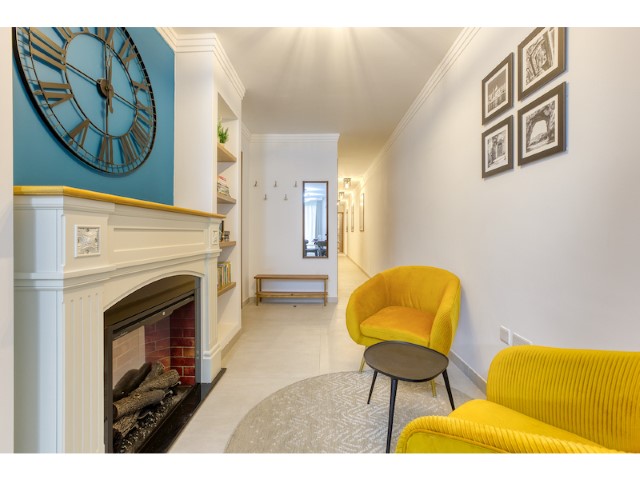
A designer 2-bedroom apartment in Gżira, close to the church, around 2 minutes from the promenade, and near Manoel Island.
View on Airbnb