
TL;DR – THE 30-SECOND VERSION
Malta’s best holiday rental is not in a hotel – it is in a self-catering apartment with a full kitchen, outdoor space, and a neighbourhood that actually feels like Malta. If you only do one thing: pick a base in the Sliema-Gzira stretch (best connectivity + evening walkability) and book on whichever platform you trust. If you want families/groups: VRBO or Travelstaytion for whole-home stays. If you want the widest choice: Airbnb. If you want Marriott Bonvoy points: Travelstaytion. If you want flexibility: Booking.com with Genius discounts. We also show our own Gzira apartment as a worked example – because we think transparency is the best advertisement.
Jump to:
Why self-catering works in Malta
Choosing your base (areas + transport)
Comparing booking platforms
Apartment checklist
Worked example: our Gzira apartment
Booking timing and pricing
Most tourists in Malta stay in hotels and wonder why the island feels like a resort brochure. If you want to actually live the Mediterranean – cooking lampuki from the Marsaxlokk market, drinking Cisk on a limestone gallarija while the church bells mark nine o’clock, walking to the harbour promenade in flip-flops – you need a self-catering apartment, not a lobby.
The problem is that most search results for holiday rentals in Malta are either platform listing pages or thin directories with no editorial help. This guide fixes that: areas, platforms, a checklist of what to look for, and our own Gzira apartment as a transparent worked example.
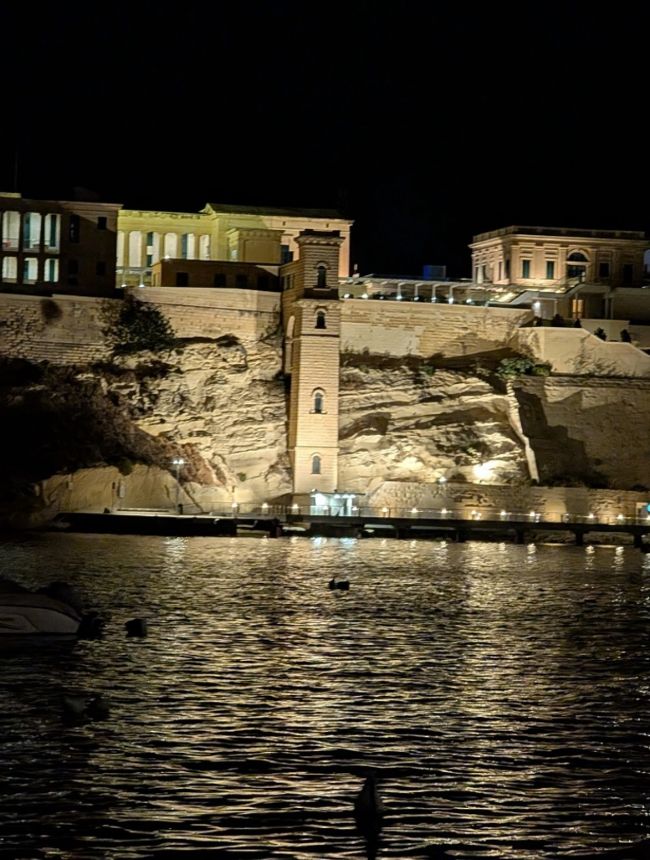
Kalkara Tower (South of Malta)
Why Self-Catering Accommodation Makes Sense in Malta
The economics, the public holidays, and the evenings.
The maths alone make the case. Dinner for two at a decent Malta restaurant runs EUR 40-80 once you add drinks and service. Do that every night for a week and you have spent EUR 280-560 on dinners alone. A family of four? Double it. A full kitchen and a trip to the supermarket at Ta’ Qali farmers market or even the neighbourhood minimarket changes the economics completely.
Then there are the public holidays – and Malta has a lot of them. Good Friday, Easter Sunday, Freedom Day (31 March), Santa Marija (15 August), plus a dozen more. On some of these days, many restaurants close – especially in quieter residential areas. If your hotel does not have its own restaurant, you are eating whatever the corner shop has left.
A kitchen is not a luxury in Malta. It is a contingency plan. And you do not need to go far for ingredients: Greens and Welbee’s in Gzira, the Pavi and Pama supermarkets across Sliema and the central belt, the Sunday fish market at Marsaxlokk, or the vegetable truck that still rolls through Gzira’s side streets – self-catering here means market shopping, not sad airport sandwiches.
Maltese evenings – the real ones, not the hotel terrace version – are about sitting outside on warm limestone, watching the street, nursing a glass of local wine. We will come back to why this matters when choosing your base. But the point is: a balcony or terrace turns a holiday apartment into the place you actually want to be at 9pm.
And if you are working remotely, a proper kitchen, fast WiFi, and a desk turn a holiday into a workation. Malta’s timezone (CET/CEST) covers European and UK business hours neatly, and the cultural calendar means there is always something to do when you close the laptop.
Where to Stay Is Where to Go: Choosing Your Malta Base
Connectivity by day, walkability by night – and why the parking rhythm matters.
Choosing an area in Malta comes down to two things: how easily you can reach the day trips, and how well your neighbourhood works in the evening. Most guides only talk about the first one. But Malta is 27km long – core trips take 20-30 minutes by Bolt, or 30-60 minutes by bus depending on route and traffic.
The real question is connectivity: which areas have the bus routes, the ferry, the Bolt coverage to get you to Valletta, the temples, the beaches, and back again without a headache? On that front, the central east coast – Sliema, Gzira, St Julian’s – is the clear winner. Direct airport buses, the Valletta ferry, major bus routes in every direction.
The second factor is the one most people do not think about until they are living it: evenings. After a day exploring Valletta or hiking Dingli Cliffs, you come back to your base. You shower. You walk to dinner. You have a glass of wine – or three. Then you need to get home.
And this is where Malta’s parking reality kicks in. Parking is competitive in the Sliema-Gzira-St Julian’s belt, especially after dark. In the morning, spaces open up as residents leave for work – that is your window to drive to the temples or the beach. By evening, everyone is home and there is nothing. If you drove to dinner, you are circling the block for twenty minutes at 11pm. If you have had wine, driving is not an option anyway. The smart rhythm is: drive your day trips in the morning, walk your evenings. Which means your base needs restaurants, a promenade, and life within walking distance after dark.
Morning parking, evening walking – that is the rhythm. Drive to the temples at 9am when spaces are free. Walk to dinner at 8pm when they are not. Your base needs to work on foot after dark.
Where the attractions sit – and how to reach them
Valletta is the anchor. UNESCO-listed, walkable in a day, packed with restaurants and museums. From Sliema or Gzira, you take the ferry across Marsamxett Harbour – about 15 minutes, stunning views, and honestly half the fun. The ferry ride alone, with Valletta’s bastions rising out of the water ahead of you, is one of the best things you will do in Malta. From most other areas, buses run frequently to Valletta’s main terminal.
Beaches are in the north. Mellieha Bay and Golden Bay are Malta’s proper sandy beaches – about 40 minutes by bus from the Sliema/Gzira area, or a morning drive with easy parking at the beach end. Rocky swimming spots with ladders are closer and scattered along the coast. Gozo has Ramla Bay. Unless beaches are your entire trip, you do not need to stay next to them – you just need a reliable route there.
The temples – Hagar Qim, Mnajdra, the Hal Saflieni Hypogeum, Ggantija on Gozo – are spread across the islands. You visit each one once, typically as a morning or full-day trip. A Bolt to Mnajdra from Gzira is about EUR 15-20. The Hypogeum is in Paola, a short bus ride from the central belt. No area puts you “near the temples” because they are everywhere – but a well-connected base means you can reach any of them and be home for dinner.
Events – festas, the La Valette Marathon, Easter processions, the summer festa season – happen across the island on different dates. The advantage of a central, well-connected base is that you can reach any event and still get home easily afterward – by bus, ferry, or a short Bolt ride.
The areas: connectivity, evenings, and who they suit
Malta’s public transport radiates from Valletta’s bus terminal. The most connected residential areas – the places where you can reach the airport, Valletta, the beaches, and the temples without a car – are along the central east coast. The airport direct buses TD3 (airport-St Julian’s via Sliema and Gzira) and TD2 (airport-St Julian’s) give you a simple link into the central east coast.
Bolt, Uber, or eCabs from the airport costs roughly EUR 18-25 and takes about 20-25 minutes. For getting around day-to-day, regular bus fares are straightforward: EUR 2 in winter and EUR 2.50 in summer for day routes (valid for two hours with transfers). Night routes and TD/Airport Direct services are EUR 3. Tallinja cards bring regular fares lower. Routes can be slow and indirect, so for most visitors a mix of buses for longer routes and Bolt for short hops after dark is the practical sweet spot.
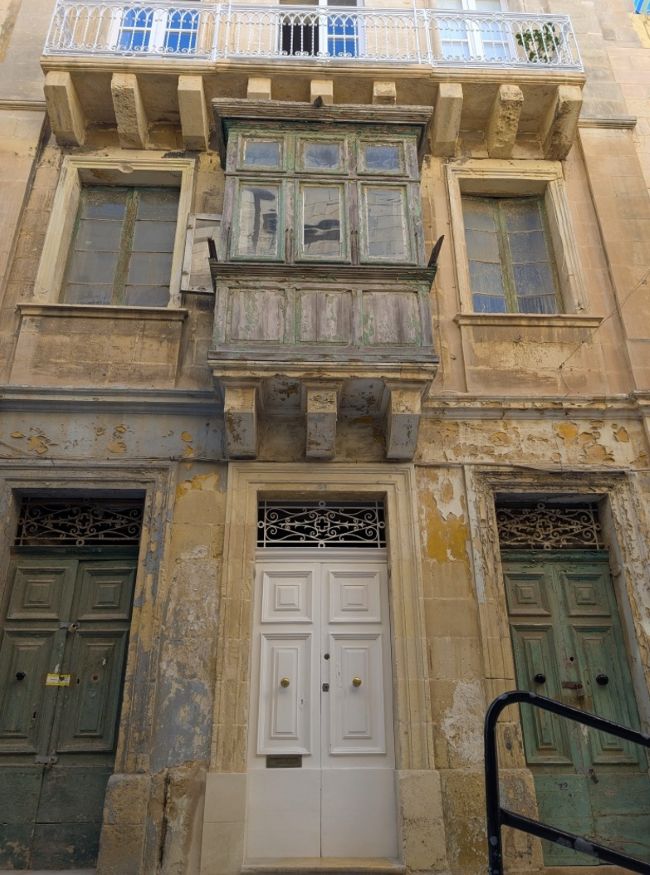
Very Old Maltese Building
(Quirky is an understatement)
Sliema: The most popular tourist base, and for good reason – restaurants everywhere, the seafront promenade, the Valletta ferry terminal right on the waterfront. Also the most expensive and the most crowded in summer. If you have a car, the morning-drive-evening-walk rhythm works here: spaces open up by 9am, but forget about finding one after 7pm. The promenade walk from Sliema through Gzira to Manoel Island is one of Malta’s best evening routines – flat, lit, harbour views the whole way. Best for: first-time visitors who want everything walkable, couples who eat out every night.
Gzira: Sliema’s quieter, cheaper neighbour – same promenade, same ferry access (10-15 minute walk to the terminal), but noticeably more residential. The food scene is growing fast: places like Roost and Culto are drawing people over from Sliema. You hear church bells instead of bar music. The vegetable truck still comes down the street. Greens supermarket is a two-minute walk; Pavi and Pama are a short bus ride for bigger shops.
From a self-catering apartment in Gzira, you can walk to dinner in Sliema, take the ferry to Valletta for an evening in the capital, or eat locally and be home in five minutes – all without a car or a parking battle. Manoel Island – Fort Manoel, the yacht marina, a waterfront walk – is right on your doorstep. (Here’s everything within reach.) Best for: families with kids, remote workers, couples who want value without sacrificing location, adult groups who need space – genuinely the most versatile base on the island.
St Julian’s and Paceville: Where Sliema’s restaurant row meets Malta’s nightlife district. Paceville specifically is loud – clubs, bars, stag parties – until 4am in summer. The rest of St Julian’s is more mixed: Spinola Bay is genuinely lovely for an evening drink. But it is more expensive than Gzira and the nightlife noise carries. Best for: nightlife, younger groups, short party weekends.
Valletta: Beautiful to walk through, atmospheric to stay in – but limited apartment stock (mostly converted townhouses), and restaurants are pricier and thinner on the ground than Sliema or Gzira. Evenings can feel quiet once the day-trippers leave, which is either a positive or a negative depending on your taste. No supermarket within the walls for self-catering – you would need to shop outside and carry bags in. Best for: culture-focused short breaks, couples who want historic atmosphere over convenience.
The Three Cities (Birgu, Senglea, Cospicua): Atmospheric, historic, and genuinely underrated. Birgu’s waterfront is spectacular for an evening walk. There is a ferry from Cospicua to Valletta – the mirror of the Sliema service – which makes the capital accessible, but the restaurant and shop options locally are limited, and wider connectivity is weaker. Quiet after dark, which suits some people perfectly. Best for: history lovers, repeat visitors, couples who prioritise atmosphere over nightlife.
Mellieha and St Paul’s Bay: Northern resort towns with sandy beach access – Mellieha Bay, Golden Bay, Ghajn Tuffieha. If beaches are your priority, this is where to be. But you are 40+ minutes from Valletta, the evening dining scene is more tourist-oriented, and day-tripping to the south of the island becomes a commitment. Best for: beach holidays, families with small children who want sand and shallow water.
Gozo: A different trip entirely. Malta’s smaller sister island is rural, quiet, and moves at its own pace. Ramla Bay is one of the best beaches in the archipelago. Victoria (Rabat) is the main town – small, walkable, with a citadel that is worth an afternoon. The restaurant scene is growing but still limited compared to Malta’s central belt. You need the ferry to get here (25 minutes from Cirkewwa), and if you are staying on Gozo, you are committing to the island for your trip – day-tripping to Valletta is not practical. Many visitors spend 2-3 nights on Gozo as part of a longer Malta stay. Best for: rural retreats, walking holidays, repeat visitors who have done the Malta circuit, anyone who wants genuine quiet.
We have published a full where-to-stay guide with deeper neighbourhood breakdowns. But the short version: if you want the best combination of day-trip connectivity and evening walkability for a self-catering holiday, the Sliema-Gzira stretch is the sweet spot. You can reach everything by day – bus, ferry, Bolt, or a morning drive – and walk home after wine by night.
Comparing the Platforms: Where to Book Your Malta Apartment Rental
An honest comparison of how each platform actually works for Malta travellers in 2026.
Most Malta travel guides do not help you choose between booking platforms – they are either a platform’s own listing page or a directory with no editorial opinion. Here is an honest comparison based on how each one actually works.
Airbnb
The biggest name in holiday rentals and the platform most Malta visitors check first. The selection is enormous – thousands of properties across the islands. The review system is mature, Superhost recognition is meaningful, and Instant Book makes quick decisions possible.
A significant change rolled out in late 2025: Airbnb moved many PMS-connected hosts to a single-fee structure, where the host absorbs the full service charge rather than splitting it with the guest. Guests now typically see fewer surprise platform charges at checkout than under the old system, where a 14-16% service fee appeared at the payment stage. That said, cleaning fees and local taxes can still appear as separate line items depending on the listing, so always check the full price breakdown before confirming. The shift means hosts now absorb a larger commission (around 15.5%), and some have raised nightly rates to compensate.
The real friction point guests email me about most? Photos that do not match reality. Airbnb’s volume means quality varies wildly. Read the reviews, not just the star rating.
Best for: Widest choice, solo travellers, budget options, easy comparison shopping.
Use Airbnb if: you want the most photos, the most reviews, and the most options to compare.
Airbnb is not currently integrated with Google Vacation Rentals – its listings generally do not appear in Google’s dedicated travel search widget. You will find Airbnb properties through airbnb.com directly or via Google’s organic search results.
VRBO
Owned by Expedia Group, VRBO focuses on whole-home rentals for families and groups – no shared spaces or spare rooms. Malta has a solid VRBO inventory, especially for whole-home stays. VRBO’s pricing structure builds host commissions into the listed price rather than adding guest fees at checkout, so what you see tends to be close to what you pay.
The recent development worth knowing: VRBO listings now distribute across Expedia’s wider network – including Expedia.com, Hotels.com, and partnerships with airlines and fintech platforms like Revolut. For guests, this means more places to discover Malta apartments. VRBO’s Premier Host programme moved to listing-level recognition in January 2026, with stricter quality standards (99% acceptance rate, zero cancellations, 4.6+ review rating). The badge should now signal genuine listing quality rather than just portfolio size.
One thing to know: VRBO withdrew from Google’s Vacation Rentals metasearch in 2021. VRBO properties generally do not appear in Google’s travel search widget – you need to search on vrbo.com or through Expedia directly. Worth the extra step for families, but easy to miss if you only search Google.
Best for: Families and groups, transparent pricing, OneKey loyalty points (shared with Expedia and Hotels.com).
Use VRBO if: you are booking a whole home for a family or group and want pricing with fewer surprises.
Travelstaytion
Smaller, curated, and selective. Travelstaytion works only with professionally managed properties – every listing is vetted before it goes live. Founded in Greece in 2013 and now London-based, the platform manages tens of thousands of professionally managed homes globally. The guest pays a 15% service fee (no cost to the host).
Two things make Travelstaytion interesting for Malta travellers. First, Travelstaytion listings can appear as booking options in Google’s travel search results for some properties – giving it visibility in a space where neither Airbnb nor VRBO currently participate. Second, Travelstaytion is an official connectivity provider for Marriott Homes & Villas by Bonvoy. Qualified properties reach Marriott’s 200 million+ loyalty members, and guests can earn and redeem Bonvoy points on stays. The audience is smaller but tends toward higher-spend travellers.
Best for: Quality-assured stays, Marriott Bonvoy members, travellers who browse accommodation through Google Travel.
Use Travelstaytion if: you would rather choose from a smaller, vetted list than scroll through thousands of uneven listings.
Booking.com
Massive platform, strongest in the European market, and most travellers already have an account. Booking.com’s Genius loyalty programme offers tiered discounts to frequent bookers, and free cancellation on many listings gives flexibility. The platform is more hotel-focused than the others, but its apartment and holiday let selection in Malta has grown significantly. Booking.com listings often appear in Google’s vacation rental search results, giving it strong discoverability in many markets. Less specialist, but hard to ignore when comparison shopping.
Best for: European travellers, Genius discounts, flexible cancellation, comparison alongside hotels.
Use Booking.com if: you have Genius Level 2+ and want one-click free cancellation as a safety net.
Direct Booking (via host website)
No platform commissions means the host can often offer a lower price – or at least keep more of what you pay. You get a direct relationship and usually faster communication. The downside: less buyer protection if something goes wrong. You are trusting the host, not a platform’s dispute resolution team. Direct booking works best when you already know and trust the property – from a previous stay, a friend’s recommendation, or a blog you trust.
Direct booking safety basics: Only pay through the host’s own website (not via bank transfer to a random email). Cross-check the same property on a major OTA to confirm it exists and has real reviews. Be wary of anyone who tries to push you off-platform mid-conversation on Airbnb or VRBO. Ask the host for their MTA licence details.
Many hosts – ourselves included – list the same property across multiple platforms and offer a direct option alongside them. That way you choose the booking method you are most comfortable with.
On mobile, swipe left to see full table details. Google Vacation Rentals visibility can change – always check live results.
| Platform | Best For | Guest Fees | Loyalty Programme | Google Vacation Rentals* |
|---|---|---|---|---|
| Airbnb | Widest choice, solo travellers | Built into price (host-only model, most listings) | – | No direct integration (usually) |
| VRBO | Families, groups, whole homes | Built into price | OneKey (Expedia, Hotels.com) | Not participating (since 2021) |
| Travelstaytion | Quality-vetted, Marriott network | 15% service fee | Marriott Bonvoy access | Some listings |
| Booking.com | European travellers, flexibility | Built into price | Genius | Often |
| Direct | Lowest price, repeat guests | None | – | – |
*Google Vacation Rentals is a metasearch product whose visibility depends on platform integrations and partner feeds – it can vary by market and change over time. Always check live Google Travel results for the most current picture.
Pro tip: Many hosts list the same property across Airbnb, VRBO, and Travelstaytion – sometimes at slightly different prices because each platform’s commission structure differs. It is worth checking all three before you book.
What to Look For in a Malta Self-Catering Apartment
The checklist I wish someone had handed me years ago.
Non-negotiable
Air conditioning. Full stop. In peak summer (June through September), daytime highs in the high 20s to low 30s are normal, with heatwaves pushing into the mid-30s – and humidity makes it worse. May and October are usually milder but can still spike. Some budget listings offer “fans provided” instead – unacceptable. If the listing does not specifically mention AC, ask before you book. If the answer is vague, walk away.
A full kitchen. Not a kitchenette with a microwave and a kettle. A proper kitchen with a hob, fridge, and basic equipment. You will use it more than you think – especially on public holidays when many places close and your only alternative is whatever the corner shop stocks.
WiFi. Remote workers need it for obvious reasons. Families need it because streaming keeps kids sane on rainy days. Malta’s mobile data is good, but apartment WiFi is still essential.
Lift access if above the second floor. Maltese buildings default to walk-ups, especially older ones. Arriving with luggage, pushchairs, or tired children up five flights of limestone stairs is nobody’s idea of a welcome. If the listing does not mention a lift, there is not one.
Worth checking
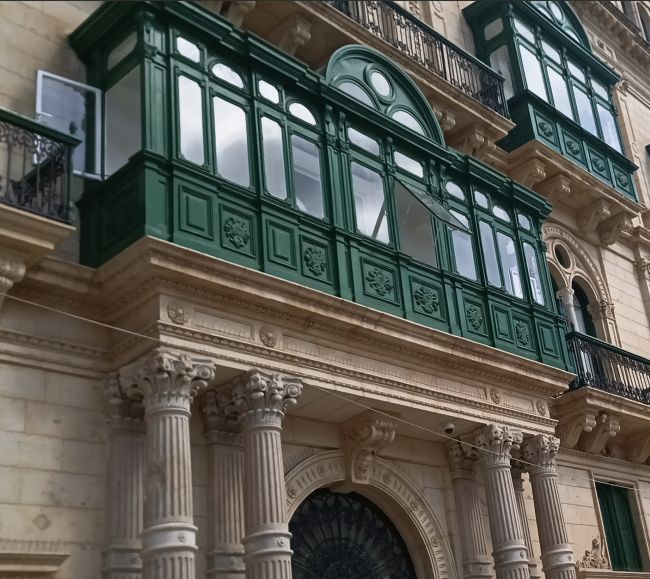
Outdoor space (but beware the balcony trap). Everyone wants a balcony. But a balcony facing a busy street in Gzira or Sliema is a dust trap with traffic noise, not a relaxation zone. The best outdoor spaces in Malta face inward – rear terraces, internal courtyards, side patios. And in older Maltese buildings, the traditional enclosed balconies (gallariji) are beautiful and full of character, but they are glazed indoor spaces, not open-air.
If the listing photos show a traditional enclosed gallarija, treat it as a charming indoor sitting area, not a terrace. If a Malta apartment with terrace matters to you, ask the host specifically: which direction does it face, and is it open to the sky?
Washing machine. Essential for stays over five nights. Not every apartment includes one.
Hot water system. Malta apartments use either a boiler (stored tank) or an instantaneous heater. Boilers can run out mid-shower if the tank is small – more of an issue in winter when demand is higher. Ask the host which type they have, especially for longer stays or larger groups.
Ventilation or dehumidifier. Malta’s humidity, particularly in coastal areas and during autumn/spring, can make apartments feel damp. Older limestone buildings are especially prone. If you see any mention of “ventilation” or “dehumidifier provided,” that is a good sign the host has thought about this.
Proximity to bus routes or the ferry terminal. Driving in Malta is stressful – narrow roads, aggressive overtaking, roundabouts that follow their own logic. Parking in Sliema, Gzira, and St Julian’s is a daily battle. Being near public transport or within easy reach of Bolt (the dominant ride app), Uber, or eCabs (the reliable local alternative, especially good for pre-booked airport transfers) makes a real difference. If your apartment is walkable to the Sliema ferry terminal, you have essentially got Valletta on your doorstep without a car.
Photos of the bathroom and kitchen. If these rooms are not in the listing photos, ask yourself what they are hiding. Fifteen photos of the living room and none of the kitchen? Red flag.
Honest truths about Malta rentals
Construction noise is real. Malta is permanently building. Cranes, jackhammers, concrete mixers – it is background noise in most neighbourhoods, especially Sliema and St Julian’s. Ask the host directly if there is active construction nearby. A good host tells you honestly.
Church bells and festa fireworks are the other kind of noise. If you are in a residential neighbourhood like Gzira, the parish church bells mark the hours and call for mass – charming for most people, but worth knowing if you are a light sleeper. During festa season (summer), the village fireworks can be startlingly loud and start early. Neither of these are negatives if you know they are coming – they are part of the texture. Just do not be surprised.
“Near the beach” is often misleading. Malta has very few sandy beaches. Most coastline is rocky. “Beach access” typically means a rocky swimming spot with a ladder into the water – perfectly pleasant, but not what most people picture. If sandy beach matters to you, Mellieha Bay or Golden Bay are your options, and they are in the north.
“Free street parking” often means “good luck – especially after dark.” If the listing does not offer a dedicated spot, understand the rhythm: mornings are manageable (spaces open up as people leave), but by evening, every spot within walking distance is taken. This is exactly why your base needs to work on foot after dinner. If you do rent a car for day trips, use it in the morning and accept that re-parking in the evening is a gamble. For most visitors in the Sliema/Gzira area, skipping the car entirely and using buses, ferries, Bolt, and eCabs is less stressful and often cheaper.
Water pressure varies in older buildings. If you care about a strong shower, ask. Maltese limestone construction is brilliant for heat insulation – cooler in summer, warmer in winter – but some older plumbing has not kept pace.
Step-free access is not standard. Many Maltese buildings have steps at the entrance even if the apartment itself has a lift. If mobility is a concern, ask specifically about the route from the street to the front door – not just the floor level. Also check whether the bathroom has a walk-in shower or a tub: older apartments often default to bathtubs, which can be difficult for anyone with mobility issues.
Some “penthouses” are just top-floor apartments with roof access. Fine for the terrace, but the apartment itself may be small. Read the description carefully and check the square metres.
The eco-tax and licensing – what legitimate listings look like
Malta charges an environmental contribution of EUR 0.50 per person per night for guests aged 18 and over, capped at EUR 5 per person per continuous stay. It is small, but it is often collected separately – or at least itemised – rather than baked into the nightly rate. Some hosts collect it at check-in, some platforms show it in the price breakdown. If it is not mentioned anywhere in the listing, ask the host how it will be collected. If they do not know what you are talking about, that is worth questioning: licensed tourist accommodation in Malta is required to collect it.
Speaking of licensing: short-term rental properties in Malta need to be registered and licensed under the Malta Tourism Authority. A legitimate host should be able to provide their MTA Holiday Furnished Premises (HFP) licence details on request – it is not always prominently displayed on listings, but you can ask. A property with a licence, a clear eco-contribution process, and a named host or management company is a property operating within the rules. That matters if something goes wrong and you need recourse.
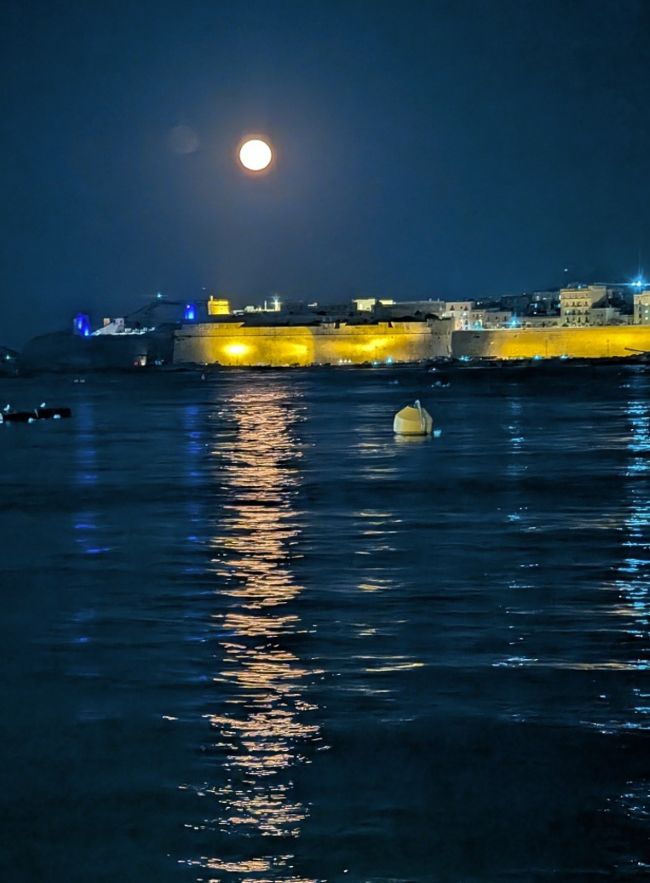
Gzira Promenade by Night
Worked Example: What a Good Gzira Accommodation Looks Like
Our own apartment, mapped against the checklist above.
Disclosure: we host the apartment below. Everything else in this guide is written to be useful even if you never book with us.
We are biased here – this is our own apartment. But we are showing it because it ticks every box above, and we think the best way to earn a booking is to be completely transparent about what we offer and what we do not.
The ManicMalta Apartment – Triq Manoel de Vilhena, Gzira
Designer-finished 2-bedroom apartment next to Gzira’s parish church. First floor with lift access. Sleeps up to 5 (two double beds plus sofa bed). Two bathrooms, one en-suite. And a games room / office.
Here is how it maps to the checklist above. AC throughout – non-negotiable, done. Full kitchen with everything you need for a proper self-catering week (the Greens supermarket is a two-minute walk). Two bathrooms, so a family of five is not queuing every morning. First floor with a lift, which matters when you are hauling luggage and a pushchair up from the street. We insist on these in our own place because without them a Malta holiday apartment fails at the basics.
The outdoor space? Traditional Maltese gallarija (enclosed balcony) at the front – it faces the street and the parish church, so it is a character piece, not a sun terrace. The actual outdoor space is the terrace at the back. No views from it, but it is open to the sky and private. Honest answer on views: there are none from the apartment. The Strand promenade – where you get the harbour panorama toward Valletta – is a short walk away, but the apartment itself looks onto a quiet residential street. We would rather you know that now than be disappointed on arrival.
For families
The family setup is where this apartment genuinely stands out. Most Malta holiday lets target couples – one bedroom, a sofa bed, done. This one has two proper bedrooms plus a dedicated playroom with a blackboard. Kids have their own space. The 65-inch TV in the living room means family movie nights on rainy days without fighting over screens (there are three TVs total).
The fixed desk and separate rooms mean one parent can work remotely while the other takes the kids to the promenade or the Sliema playground. It is a practical layout that solves real problems, not just a listing photo.
For remote workers
The fixed desk, fast WiFi, and separate rooms mean you can take a call while the rest of the household is in the living room or out on the terrace. Malta’s CET/CEST timezone covers European and UK business hours neatly. Close the laptop at 5pm and you are a 10-minute walk from the promenade.
Getting here: Bolt, Uber, or eCabs from the airport runs about EUR 18-25 depending on time and traffic, roughly 20-25 minutes. The Sliema ferry terminal is a 10-15 minute walk – Valletta via ferry in about 15 minutes, with the bastions rising out of the harbour ahead of you the whole way across.
Book or browse on your preferred platform
We list on three platforms so you can book wherever you are most comfortable. Same apartment, same host, different booking experience.
All booking links go to authorised platforms. Full details and all links at manicmalta.com/gzira.
Or start by getting to know the neighbourhood first. We have published a 9-chapter audio story series about Gzira’s history on our YouTube channel – quirky, local, and a good test of whether this corner of Malta is your kind of place. Chapter one covers Manoel Island and the Knights – start there if you like your history with a sea breeze.
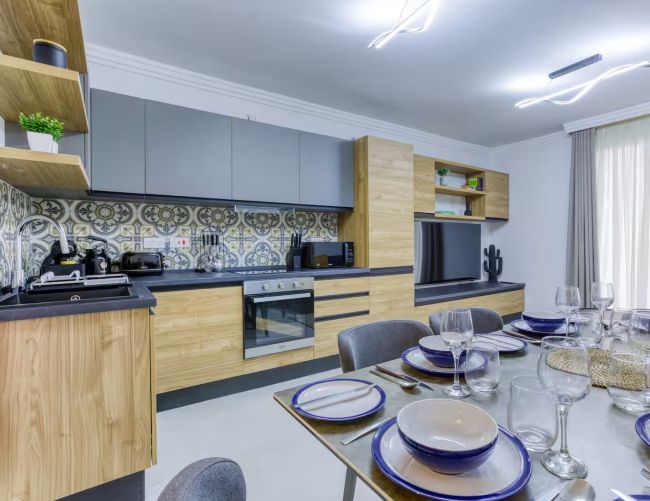
Gzira apartment interior showing designer Kitchen + with 65-inch TV and balcony light
Booking Tips and Timing
When to book, what to expect on pricing, and a few practical notes.
Malta has clear seasons, and they affect both availability and price.
Book 2-3 months ahead for Easter week, summer (July and August), and Christmas/New Year. These periods sell out – especially family-friendly properties and anything with genuine outdoor space. If you are planning around a specific event like the La Valette Marathon (22 March 2026) or the Freedom Day regatta, book as early as you can.
Shoulder season (April-May and September-October) offers the best balance of weather, price, and availability. The island is warm but not oppressive, the crowds thin out, and you will find better rates on quality apartments. March sits right on the cusp – the weather is warming, the cultural calendar is packed with events like the Spring Equinox at Mnajdra and the Maltese Song Festival, and prices have not hit summer levels yet.
Winter (November-February) means the lowest prices and mild weather – daytime highs around 15-17 degrees C, though evenings drop to 9-11 degrees C. The sea sits around 16-18 degrees C, which is too cold for most casual swimmers. Some restaurants close seasonally. Still a great time for cultural visits, history, and hiking.
Rough pricing (indicative only, based on typical OTA pricing in early 2026 when booked a few months ahead): a decent 1-bedroom apartment in the Sliema/Gzira area runs roughly EUR 80-130/night in shoulder season, rising to EUR 120-180+ in July-August. A 2-bedroom with outdoor space – the kind of place a family would want – typically sits EUR 100-170 in shoulder season and EUR 150-250+ in peak summer. Winter is significantly cheaper across the board. These ranges vary hugely by quality, location, and how far ahead you book, but they give you order-of-magnitude context when comparing against hotel rates.
Before you book: Always message the host first. Ask about construction noise, recent photos, anything the listing does not cover. A good host answers honestly and quickly – and if they do not, that tells you something. Check cancellation policies carefully: VRBO’s VrboCare and Airbnb’s AirCover offer rebooking protection if something goes wrong (terms vary by country and booking type). Direct bookings typically do not carry this safety net.
The Short Version
Malta is best experienced from an apartment, not a hotel lobby. Find a holiday let with air conditioning, a proper kitchen, and some kind of outdoor space. Book on whatever platform you trust. Message the host before you arrive.
If Gzira sounds like the right base for your trip, we would genuinely love to host you. But wherever you end up staying, self-catering is the way to do Malta properly. The markets, the balcony evenings, the freedom to eat when you want and cook what you want – that is the real island experience, and no hotel breakfast buffet comes close.
Explore more: 20 Day Trips from Sliema and Gzira| Manoel Island | Malta’s Cultural Events Calendar | Malta Weather by Month
Last updated: February 2026.
Stay in Gżira near the promenade
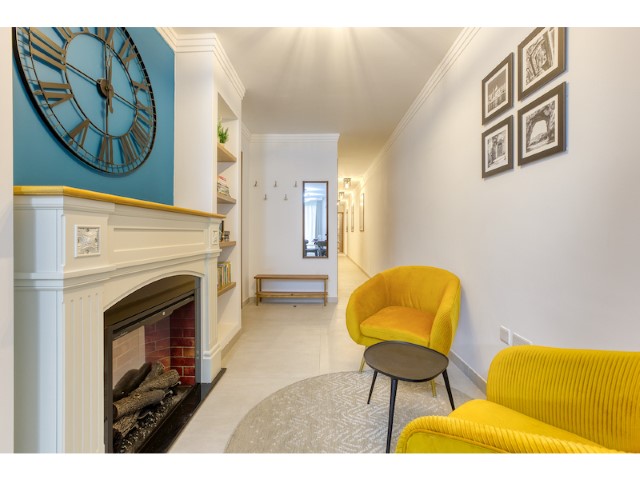
A designer 2-bedroom apartment in Gżira, close to the church, around 2 minutes from the promenade, and near Manoel Island.
View on Airbnb