
TL;DR — THE 30-SECOND VERSION
This guide helps you decide whether a hotel, Airbnb or aparthotel is the right format for your specific Malta trip — before you book the wrong one.
- If you only do one thing: check the MTA/HFP licence before paying for any private apartment.
- Best for short stays (1–2 nights): Hotel. Airbnbs are the wrong format for 36 hours.
- Best for families and groups (4+ nights): Airbnb. Two hotel rooms cost more and give you less.
- Best for babies, late arrivals, split work/holiday: Aparthotel — the space of a flat, the accountability of a front desk. Some AirBnBs work fine as well.
- Avoid: booking a north-coast beach resort if you plan to explore the whole island. You will lose hours every day to transit.
- Cleaning fee trap: a €90 fee on a 3-night Airbnb adds €30/night. Run the real comparison before assuming the apartment is cheaper.
- Eco-tax: €0.50 per person per night, capped at €5. Sometimes collected in cash by Airbnb hosts on arrival.
- Disclosure: we own a 2-bedroom Airbnb apartment in Gżira. It’s listed near the bottom. We’ve tried to make this guide useful whether you book it or not.
JUMP TO
- Quick decision table — find your trip type
- The three formats explained
- 2026: check the licence before booking
- When an aparthotel is the smartest choice
- What you’re really paying for — the Malta arithmetic
- Malta practicalities: construction, Bolt, eco-tax, scams
- Remote work in Malta — format matters
- When hotels genuinely win
- Accommodation regrets — what people wish they’d known
- Stairs, prams and older travellers
- The Airbnb case — where it wins clearly
- FAQ
Three other pages on this site cover which area to stay in, how to choose a rental apartment, and which platform to book it on. This page does none of that. It answers a different question — one most visitors don’t ask clearly enough before they book: for your specific trip to Malta, should you be in a hotel, an Airbnb, or something in between?
Get that choice wrong and the rest of the trip compensates for it. This guide covers cost comparisons, trip-type matching, the Malta-specific traps (construction noise, limestone heat, petards at 5am), and the format decisions that are genuinely different here than elsewhere.
Quick Decision — Find Your Trip Type
On mobile, swipe left to see the full table.
| Your trip looks like… | Best format | Key reason |
|---|---|---|
| 1–2 night city break or transit stop | Hotel | No check-in coordination, luggage held, works at any hour |
| Family staying 4+ nights | Airbnb | Two hotel rooms costs more and splits the group every evening |
| Couple or group staying a week | Airbnb | Kitchen + private terrace changes the daily rhythm |
| Baby or toddler in the group | Aparthotel or Airbnb with cot | Kitchenette + reception at 11pm + cot: no private Airbnb guarantees all three |
| One person working, one on holiday | Aparthotel or Airbnb | Hotel room too small for two different schedules sharing one space |
| Honeymoon with spa/pool as priority | Hotel | No Airbnb has a staffed spa and attended pool until 10pm |
| Solo business traveller | Hotel | Desk, predictable Wi-Fi, breakfast handled, bar to work alone in |
| Older traveller needing lifts and support | Hotel or Aparthotel | Maltese apartment buildings often have no lift; no exceptions |
| Remote worker staying 5+ days | Airbnb or Aparthotel | Hotel room becomes an office you sleep in by day three |
| Budget-conscious group of friends | Airbnb | One shared space, lower total bill, social structure of the holiday follows |
| Culture-heavy couple | Airbnb or boutique hotel | Consider the Three Cities (Birgu) — 8-min water taxi to Valletta, quieter, cheaper |
| Winter slow travel | Airbnb (with kitchen) or Hotel | Airbnb if it has Jan/Feb reviews; hotel if you need guaranteed heating |
The Three Formats — What They Actually Are
A hotel means a room cleaned daily, a staffed reception, breakfast available (sometimes included, usually not), shared facilities, and a standardised experience. The room is often smaller than it looks in photos. The price includes services you may or may not use. It works identically whether you arrive at 2pm or 2am.
An Airbnb or private short-let apartment means your own space — kitchen, separate living room, bedrooms that don’t share a wall with the reception lift, often a private terrace. No daily cleaning unless arranged. A host reachable by phone rather than a desk. The best ones feel like a well-stocked home. The worst ones feel under-equipped, badly maintained, or strangely absent when you need help.
An aparthotel or serviced apartment is the middle layer most visitors overlook. It combines a hotel’s reception, daily cleaning and consistent service standards with apartment-sized rooms that include a kitchen or kitchenette. More predictable than a private Airbnb, more spacious than a hotel room, less characterful than either. Common in Sliema and St Julian’s — and the right call for specific trip types covered below.
2026 Update: Check the Licence Before You Book Anything
Malta’s Tourism Authority requires all holiday short-let properties to be licensed (MTA/HFP). Before paying for any private apartment, check that the listing shows a licence number or that the host can provide one when asked.
When to Book Each Format
Summer and major festival periods: book earlier than feels necessary. The best-located family apartments, better aparthotels and the more sensible hotel rooms go first. What remains later is often overpriced, badly located, or oddly compromised.
Shoulder season (late spring, early autumn): the best balance of choice and sea weather. The format differences are easiest to feel clearly at this time of year.
Winter: availability is easier and last-minute booking less risky, but the questions change. Don’t just ask whether the apartment looks good — ask whether it has winter reviews, reliable heating, and a host who clearly rents year-round.
Gozo stays: farmhouses and smaller guesthouses disappear earlier than standard hotel rooms. If your plan depends on a specific Gozo property, lock that in first.
Best Format by Trip Type
Family beach holiday. Airbnb. Two hotel rooms for a family costs more and gives you less — separate spaces, no kitchen, no shared living room in the evenings. A two-bedroom apartment keeps everyone together and provides a washing machine for beach towels. Base yourself in Gżira or Sliema to keep beach days from becoming taxi commitments.
Culture-heavy couple’s trip. Airbnb in Gżira, Sliema or Valletta — or a boutique hotel inside Valletta’s walls if setting matters. Worth also considering: the Three Cities (Birgu, Senglea, Cospicua), across the Grand Harbour from Valletta. Quieter, more historic, genuinely Maltese in texture, and often cheaper. The water taxi to Valletta takes eight minutes. For a couple who wants to feel inside history rather than adjacent to it, Birgu is the answer most people don’t think to look for.
Nightlife weekend. Usually St Julian’s, often close to Paceville. Be clear-eyed: Paceville is loud until 4am. Wherever you stay needs to either put you inside the noise (which you want) or insulated from it (which you’ll need to check explicitly). A hotel with internal corridors is quieter than a street-facing Airbnb on the same block. If you want out by midnight and proper sleep, the format conversation matters more than it appears.
Winter slow travel. Genuinely split. An apartment with a kitchen and working heating is more comfortable for long evenings and intermittent weather. But older Maltese apartments can feel cold and damp if the owner hasn’t winterised them. The safer choice is a well-reviewed Airbnb with recent January or February reviews — not a summer listing you’re hoping translates.
Work trip (short). Hotel. Desk, reliable Wi-Fi, breakfast sorted. Clean and efficient.
Work trip (longer) or bleisure. Airbnb or aparthotel. After three days a hotel room becomes a workspace you’re also sleeping in.
Malta and Gozo combined stay. Airbnb for Malta, farmhouse or small guesthouse on Gozo. The two islands have different rhythms. Leaning into Gozo’s format is part of the point of going there.
Older couple wanting convenience. Hotel or aparthotel. Malta’s older limestone buildings are beautiful and often have no lifts. A hotel removes that uncertainty entirely.
Gozo Uses the Same Framework Differently
Gozo is not just a smaller Malta. The ferry crossing from Ċirkewwa is around 25 minutes, but the last ferry back runs around 11pm in summer and earlier in winter. Once you’re there, the island runs slower and your accommodation becomes a bigger part of the trip rather than just a base.
- Choose a farmhouse or private apartment in Gozo if the point is quiet, outdoor space, slow mornings, or disappearing for a few days. The area around Xagħra, Nadur and the outskirts of Victoria gives you countryside access without being car-dependent for basics.
- Choose a small hotel or guesthouse in Victoria (Rabat) if you want simplicity, breakfast handled, and easier parking. Victoria is central, walkable, with the Citadel overhead and a working local town — not a tourist staging area. For two or three nights, it’s the cleanest format.
- Do not use Gozo as a day-trip extension of a Malta-heavy week if you’ll want to bounce back and forth. Keep your base on Malta and visit Gozo once properly. Gozo works best when you give it its own rhythm.
In practice, the best split stay is often: central Malta apartment first, Gozo guesthouse or farmhouse second. Each island gets the format that suits it.
When an Aparthotel Is the Smartest Choice
The aparthotel category gets skipped in travel planning because it doesn’t have a dominant booking platform the way Airbnb and hotels do. That means it’s underused — and for some trip types it’s the most sensible format of the three. The short version: the space of a flat, the accountability of a front desk. For groups who can’t decide between formats, that usually ends the argument.
In Malta, easiest to find in Gżira, Sliema and St Julian’s — search Booking.com with “apartment” and “breakfast included” filters. Properties such as Grands Suites in Gżira and Sliema Tigne Suites are examples of the middle-ground format this section describes.
Parents with a baby or toddler. You need a kitchenette for bottle warming, a cot in a separate area if possible, a washing machine, and a reception desk available at 11pm when something goes wrong. No private Airbnb reliably guarantees all three together. An aparthotel does — or at least reduces the unpredictability a private rental introduces when you’re already tired and managing a young child.
One person working, one on holiday. A hotel room is too small for two people with different schedules sharing one space all day. A private Airbnb may not have the reception infrastructure the working partner needs. An aparthotel gives both people room and function without either constantly in the other’s way.
Travellers arriving late who need support. A late arrival with a family in tow, uncertain about getting into an Airbnb at midnight, who also needs a cot or extra towels on arrival: the aparthotel reception handles all of that without the coordination a private Airbnb requires.
Older visitors who want lifts and space. A standard hotel double room in Malta can feel small for two people spending significant time in it. An aparthotel room is usually meaningfully larger, with hotel-grade lift access.
What You’re Really Paying For — The Malta Arithmetic
The sticker price of a hotel room rarely reflects what you’ll actually spend. Below: a mid-range comparison for a family of four, one week in central Malta, summer 2026.
On mobile, swipe left to see full table details.
| Format | 7 nights (est. total) | Per person/night | What’s included | What catches you out |
|---|---|---|---|---|
| Two hotel doubles | €1,400–1,900 | €50–68 | Daily cleaning, reception, breakfast option | Breakfast extra (€12–18 pp/day); taxis from wrong base; minibar water |
| 2-bed Airbnb | €1,050–1,500 | €38–54 | Full kitchen, living room, washing machine, private terrace | Cleaning fee €60–120 one-off; platform service fee ~12%; licence check required |
| Aparthotel (serviced) | €1,250–1,750 | €45–63 | Reception + apartment-scale space + kitchenette + daily clean | Fewest surprise extras; usually the most all-in price |
Hotel breakfast for a family of four, seven days. Buffet breakfast at a mid-range Maltese hotel typically runs €12–18 per person. For four people over a week, that is €336–504 extra — paid at the hotel’s schedule whether anyone is hungry or not.
Taxi costs from the wrong area. Book a beach resort in the north and want dinner in Valletta? A return taxi easily costs €35–50. Do that three or four times in a week and the transport cost starts to close the gap between the resort and a centrally located apartment. Accommodation location is a transport decision as much as a comfort one.
Water costs. Malta’s tap water is desalinated seawater — technically safe, noticeably different. Every Maltese household uses bottled water or a filter jug. A hotel provides small bottles at minibar prices. A supermarket near a central apartment charges a fraction of that. Across a week for a family, the difference adds up.
Malta Practicalities That Change the Booking Decision
Transport apps vs white taxis. The article mentions taxi costs, but the calculation changes significantly with Bolt or eCabs. App fares in Malta are typically 40–60% cheaper than street or rank taxis. That changes the location-vs-cost logic: a slightly further-out apartment at a lower nightly rate can still work out cheaper in total. Download Bolt or eCabs before you land.
Eco-tax. Malta charges €0.50 per person per night, capped at €5 per person per stay. Hotels usually include it in the booking total. Private Airbnb hosts sometimes collect it separately in cash on arrival. It’s legitimate — but if you arrive with no cash and the host mentions it at the door, it feels unexpected. Know about it in advance.
Plugs. Malta uses UK-style Type G plugs. Travellers from mainland Europe often discover this on the first night with a dead phone and one adapter between four devices.
Parking. If you’re renting a car, guaranteed parking matters far more than listing photos suggest. In Sliema, Gżira and especially Valletta, street parking can turn into a nightly chore. Prioritise accommodation with a dedicated space, or choose an area where you won’t need the car every day.
Remote Work in Malta — Format Matters
Malta’s English-language environment, central Mediterranean location and solid urban fibre coverage make it a practical base for remote stays. The accommodation format shapes the working experience more than most people expect.
Hotels work for short solo work stays — desk, predictable Wi-Fi, breakfast handled. The friction comes on longer stays: nowhere to prepare food at 7pm, nowhere comfortable to decompress that isn’t also your workspace.
Airbnbs are best for a longer work-and-life rhythm. What matters practically: verified download speed (ask — “good internet” can mean 20Mbps or 200Mbps), a proper table that isn’t also the dining table, a coffee machine that works before you’ve fully woken up, and a supermarket within walking distance so lunch doesn’t require a decision each day.
Aparthotels are best when you need hotel-level support — predictable Wi-Fi, desk in the room, reception for issues — combined with a kitchenette for longer stays. For the working-holiday hybrid where one partner is in meetings from 9am–5pm, the aparthotel structure handles the separation better than a single hotel room.
Malta’s urban fibre is strongest in Gżira, Sliema, St Julian’s and Valletta. Outside those areas it becomes variable. For remote workers, base location matters more than for leisure visitors.
Five Questions to Ask Before Booking Any Format
These apply regardless of format — hotel, Airbnb or aparthotel. Different from the apartment-specific checklist on the rental guide.
- Does the listing show an MTA licence number — with recent reviews from the same season we’re visiting? A summer-only 4.9-star rating tells you almost nothing about a January stay. Both checks take under two minutes.
- Will we actually use the pool, spa or gym? If you’re out exploring from 9am to 10pm, you’re paying a daily premium for an amenity you’re rarely there to use. If the pool is the centrepiece of the holiday, it’s worth it. Be honest about which trip you’re planning.
- Are we choosing this area for photos or for our actual daily plan? A Valletta palazzo looks spectacular on Instagram. It’s also a steep walk from the bus terminus with shopping bags and not the easiest base for beach-heavy days.
- Do we need a kitchen, or are we telling ourselves we do? Some people book apartments for the kitchen and eat out every meal anyway. Think honestly about your last holiday: did you cook? The answer shapes which format makes sense.
- Will noise matter at 11pm? At 5am? Malta in summer is noisy in specific ways. Seafront apartments pick up bar traffic. Any apartment near a parish church may have petards — ground-level explosive charges — fired at dawn during the village festa. If anyone in your group is a light sleeper, this needs to be a specific pre-booking check, not a general hope.
When Hotels Genuinely Win
- Short stays (1–2 nights). No check-in coordination, luggage held at the desk. An Airbnb is the wrong format for 36 hours.
- Spa, pool and gym as core holiday infrastructure. No Airbnb offers a staffed spa, an attended pool open until 10pm, and a concierge who books your restaurants. For a honeymoon, restorative week or corporate stay, a hotel is the right format and an Airbnb isn’t competing.
- Older visitors or anyone with mobility requirements. Malta’s limestone buildings are beautiful and often difficult — narrow stairs, no lifts, uneven stone floors. A hotel provides guaranteed lift access, ground-floor options and staffed reception for immediate help.
- Solo business travel. Desk, reliable connection, breakfast sorted, a bar where working alone is unremarkable. Clean and efficient.
- People who genuinely don’t want domestic responsibility. A legitimate preference. Zero decisions about meals, cleaning or grocery runs — a hotel delivers that completely and an Airbnb doesn’t. Know which type you are before booking either.
When Hotels Fail in Malta Specifically
- Families in standard rooms. Two adults and two children in a space designed for two people to sleep in. By day three the fold-out, single bathroom and minibar-no-one-touches start to wear. A two-bedroom apartment at a similar total cost is a structurally different experience.
- Beach resort isolation. The north has genuine sandy beaches and large hotels on them. Until you want dinner with Maltese character, a day at the temples, or an afternoon in Valletta — every trip is 30–40 minutes each way. For anyone who wants to explore the whole island, that daily cost adds up fast.
- Sea view premiums that don’t pay off. You’re paying for a view you see briefly while changing clothes, on an active trip. The premium makes sense for a slow, pool-and-terrace holiday. For anyone out from early to late, it’s a significant daily charge for something you’re rarely there to appreciate.
- The kitchen problem on longer stays. Maltese food is delicious but effectively a caloric ambush. Without a kitchen, you’re reliant on the restaurant circuit for every meal. If you’re managing a food intolerance, children’s specific preferences, or simply your normal eating habits, no hotel amenity solves that.
Malta Accommodation Regrets — What People Wish They’d Known
- “We didn’t check the licence and the host disappeared.” Unlicensed short-lets in Malta exist in volume. When something goes wrong — broken boiler, booking dispute, property not as described — an unlicensed property adds avoidable risk and platform support may be your main route to resolve it. A licensed property takes 30 seconds to verify. Do it before you pay.
- “We didn’t factor the cleaning fee into the nightly rate.” A €90 cleaning fee on a 3-night stay adds €30 per night to the actual cost. Always calculate total trip cost including platform fees, not the per-night headline figure.
- “We booked the north and spent the week in traffic.” Every trip to Valletta, Mdina or the temples from a northern resort starts with 30–40 minutes of transit. Do that four days out of seven and you’ve lost significant holiday hours to a location decision made quickly on a booking site.
- “We booked Paceville and couldn’t sleep.” Loud from June to September, 10pm to 4am. Not a complaint — just the wrong base for anyone whose holiday doesn’t involve being part of that noise.
- “We booked a top-floor apartment in August and it was unbearable at night.” Malta is built on Globigerina limestone, which holds heat long after the sun goes down. In peak summer, Enemalta can experience outages during high-demand periods — no power means no AC and no lift simultaneously. First or second floor is more resilient to both.
- “We booked an apartment with one AC unit for the whole flat.” A single split unit in the hallway does not cool two bedrooms. The living room is fine. The bedrooms are not. Listing photos usually show whether each bedroom has its own unit. Easy to check, easy to miss.
- “We booked Valletta for a beach holiday.” Valletta is magnificent. It has almost no beach access. For a culture trip, brilliant. For a beach holiday, every beach day requires transport in and back to a landlocked capital — after four days of it, most families wish they’d stayed closer to the water.
- “We didn’t check the church calendar.” Petards — ground-level explosive charges — are fired at dawn, sometimes from 5am, during village festas (May–September). The festa itself is one of Malta’s genuinely memorable experiences. The 5am start is less universally appreciated.
- “We booked a rural farmhouse and ended up taxi-dependent.” Beautiful properties. Without a rental car, they can feel stranded. Taxi costs from a rural property accumulate across a week and deciding to go somewhere at 8pm becomes a logistics question rather than a spontaneous decision.
- “We stayed in a hotel in winter and wished we had somewhere to cook.” Malta in winter is when hotel infrastructure thins out — fewer restaurants open, shorter service hours, some facilities closed. A well-heated apartment with a kitchen is usually a more comfortable winter base for stays longer than a few nights.
Accessibility, Stairs, Prams and Older Travellers
Malta makes this topic more relevant than most destinations. Valletta is built on a steep limestone peninsula with significant elevation changes between streets. Mdina and the Three Cities share this characteristic. Beautiful and physically demanding in roughly equal measure.
Malta’s older apartment stock — often the most characterful properties in the most central locations — includes many buildings with narrow staircases and no lift. Difficult with luggage, impossible with a pram, genuinely hard for anyone with knee, hip or mobility issues. If this applies to your group, check floor level and lift access explicitly before booking — not as a checklist item but as a real constraint.
A hotel provides ground-floor rooms on request, lifts in most multi-storey buildings, and a staffed reception. For any group member whose comfort depends on those things, hotel is the safer format choice regardless of cost or space arguments. An aparthotel is the middle path — more space than a hotel room, more predictable access infrastructure than a private apartment.
Winter in Malta — A Different Calculation
Hotel winter advantages: the physical plant is maintained regardless of season. Heating works. The room is at a predictable temperature on arrival. Older Maltese apartments can feel cold and damp if the owner only winterises for summer letting.
Airbnb winter advantages: fewer restaurants are open in winter, particularly outside the main tourist areas. A kitchen lets you cook with still-excellent winter produce — local citrus, root vegetables, fresh fish — on your own terms. Long winter evenings in a living space with a fireplace and a book library are a different experience from a hotel room with a remote control.
Best winter bases: Valletta and Gżira remain lively year-round. Northern resort areas (Bugibba, St Paul’s Bay) go quieter in the off-season with some restaurants closing entirely. Gozo is the counter-intuitive recommendation: quieter, genuinely beautiful off-season, with a local restaurant culture that doesn’t thin out the way pure tourist infrastructure does.
The Airbnb Case — Where It Wins Clearly
Groups travel better in apartments. Six friends booking three hotel rooms pay for three separate spaces and three separate evenings that fragment by default. The same group in a three-bedroom Airbnb shares one living room, one kitchen, one terrace and usually a lower total bill. The social structure of the accommodation shapes the social structure of the holiday.
Kitchen gives you diet control a hotel can’t match. Maltese food is delicious but effectively a caloric ambush — rabbit stew, braġioli, pastizzi, fried fish, all excellent and all quite heavy. A kitchen lets you eat a salad on Tuesday so you can survive the rabbit stew on Wednesday. The Marsaxlokk Sunday fish market sells tuna, swordfish and lampuki directly from boats. The Valletta daily market has local tomatoes, fresh ġbejna cheese and seasonal produce. One practical note: the island’s smaller Convenience stores run around 30% more expensive than a Lidl or Welbee’s. Find the supermarket on day one rather than defaulting to the nearest shop.
Private outdoor space is a different category. A hotel pool is shared with dozens of other guests. An Airbnb back terrace or traditional Maltese gallarija balcony is yours alone — breakfast without company, an evening without background music, a private corner in a country where good outdoor private space is genuinely scarce.
Living in a neighbourhood, not visiting one. A hotel is a sealed environment. An Airbnb puts you in a Maltese apartment block on a Maltese street, buying bread from the same bakery as the family upstairs. Shops priced for residents. Restaurants that don’t have a tourist menu. For many people this is the difference between seeing Malta and being in it.
The Gżira promenade pools. Along the Gżira waterfront there are several outdoor pools cut into the limestone rock, open to the public, often quiet on weekday mornings, with the Valletta skyline directly across the water. This is not a hotel amenity. It’s an ambient feature of the neighbourhood that only staying in it gives you.
If this guide is pointing you towards a central Malta apartment, our Gżira place is here. Two bedrooms, first floor, individual AC in both rooms, three desk areas, walking distance to the promenade pools and the Valletta ferry.
See the Gżira apartment If it doesn’t fit your trip type, ignore it.
Disclosure: this is our own property. We earn from bookings. The rest of this guide is written to be useful whether you book it or not.
Our Apartment — Disclosed Clearly
We own this apartment. The reviews on Airbnb, VRBO and Travelstaytion are honest and unfiltered — read those, not this description, as your primary source.
Gżira 2-Bedroom Apartment
Best for: families, groups of friends, remote workers and winter visitors wanting a first-floor central base with proper space. Not ideal for a single overnight or anyone who needs a staffed reception on-site.
- 2 bedrooms, central Gżira — 5 minutes from the promenade pools, bus stops and the Valletta water ferry
- First floor — no lift dependency, better temperature management in summer
- Air conditioning in both bedrooms individually, plus the living room
- Traditional Maltese gallarija balcony at the front; private back terrace with a hanging sofa
- Proper espresso machine — not a kettle and sachets
- King bed in the master bedroom
- 65″ living room TV with backlight, plus 2 further bedroom TVs
- 3 dedicated desk areas
- Separate games room: table football and blackboard
- Electric fireplace for winter stays
- Armchair reading corner and a physical book library — Malta history, fiction, travel writing
- Maltese art and photography throughout, sourced locally
- Mid-stay cleaning available on request — ask when booking
FAQ
The Decision You’re Actually Making
Most accommodation mistakes in Malta come from the same place: people choose on aesthetics, price or habit, rather than on what the specific trip actually requires. A stunning Valletta apartment booked for a beach holiday. A beach resort booked for a cultural week. A summer Airbnb with no winter reviews booked for January. Each of these looks fine in the booking flow and becomes obvious in the first 24 hours. The format — hotel, Airbnb, aparthotel — matters more than the specific property within it.
Last updated: March 2026.
Stay in Gżira near the promenade
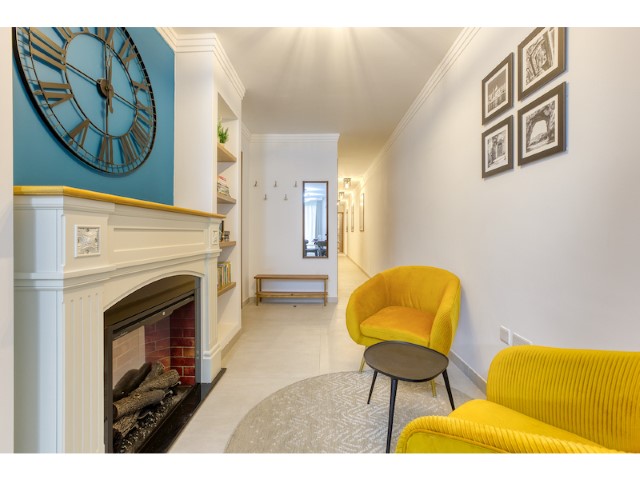
A designer 2-bedroom apartment in Gżira, close to the church, around 2 minutes from the promenade, and near Manoel Island.
View on Airbnb