
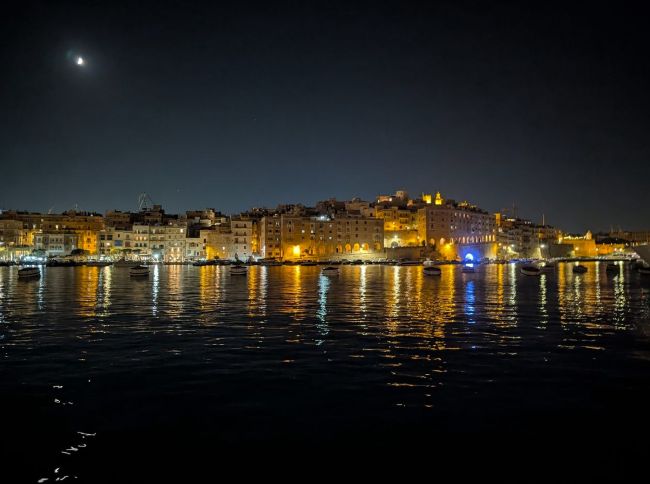

TL;DR — THE 30-SECOND VERSION
March is one of the best times to visit Malta: daytime highs around 17°C, roughly seven hours of sunshine, green countryside, and far fewer people than summer.
The 2026 calendar is strong — Mnajdra’s equinox sunrise alignment (19–22 March), Mużika Mużika (19–21 March), Freedom Day’s harbour regatta (31 March), plus a handful of rare heritage openings and smaller cultural nights in Valletta.
The poppies come first.
Sometime in late February, the Maltese countryside turns green again. By early March, red poppies are pushing through gaps in old limestone walls, purple asphodels line the footpaths near Dingli, and every neglected patch of ground seems to wake up at once.
Most Malta content online is written as if the island only exists in July and August. March is different, and in many ways better.
🎯 This is our hub guide for visiting Malta in March. We link out to our detailed guides on
day trips, Manoel Island, weather and packing, the Three Cities, and our full cultural events calendar where relevant.
Bookmark this page — we update it as new events are confirmed.
JUMP TO A SECTION
Why March · Events Calendar · Weather & Packing · Things to Do · Where to Stay · Getting There & Costs · 7-Day Itinerary · FAQ
March : The Month Nobody Books
Why shoulder season makes more sense than most people realise
Malta gets millions of visitors a year, and most of them arrive between June and September. That is when daytime temperatures push well past 35°C, hotel rates jump, restaurant bookings get annoying, and major sites feel busy from the minute they open.
March is quieter.
Highs sit around 17°C — warm enough to eat outside, cool enough to walk for hours without feeling flattened. You still get decent sunshine, the countryside is green instead of dust-coloured, and places like Ħaġar Qim or Mdina are much easier to enjoy when you are not shoulder to shoulder with half a cruise ship.
17°C
Typical March daytime highs in Malta — good weather for walking, sightseeing, ferry trips, and long lunches outside
Flights are often cheaper than peak summer fares. Apartment rates are lower too. Ask locals when they would choose to visit if they had the choice, and quite a few will say March without hesitation.
The other reason it works this year: March 2026 is not just pleasant weather. It has a strong run of events, from the equinox at Mnajdra to Mużika Mużika, the La Valette Marathon, and Freedom Day in the Grand Harbour. And with Easter falling in early April, the tail end of March brings Palm Sunday processions and the start of Holy Week as well.
What’s Actually Happening
March 2026’s event calendar, date by date — what is scheduled and what is worth a look
March in Malta is not only about mild weather and spring walks. There is enough going on to build a trip around, and not just for one type of traveller. Here is the March 2026 picture in date order, with softer items clearly marked TBC.
Fort St Angelo and the French Blockade — 8 March
One of the better early-March history events. Fort St Angelo hosts a re-enactment built around the French occupation period, and the setting does a lot of the work for you: harbour views, stone walls, uniforms, and enough atmosphere to make it feel like more than a standard museum visit.
Valletta Resounds: The Caravaggio Experience — from 10 March
A strong choice if you want a more atmospheric evening in Valletta. It takes place inside St John’s Co-Cathedral and turns a major sightseeing stop into something closer to a live cultural experience than a normal daytime visit. Pairs well with a self-guided walk through Valletta earlier in the day.
Discover Fort Delimara — 14–15 March
Fort Delimara is not one of those places you can wander into on a whim, which is why this weekend matters. The guided tours open up one of the south coast’s more interesting military sites, and it pairs well with a Marsaxlokk lunch afterwards.
St. Patrick’s Day — 17 March
Malta has a large Irish and British expat crowd, and St. Julian’s does not treat 17 March as a minor occasion. Paceville and the Sliema side of the coast fill up from mid-afternoon onwards. If that is your idea of fun, you will have no problem finding it.
Feast of St. Joseph — 19 March (Public Holiday)
This is traditional Malta rather than nightlife Malta. The 19th is a national holiday, so some shops close, buses may feel slower, and the pace changes a bit. Rabat is the main place to go, where processions, band marches, and fireworks give the day its shape. If you want the full picture of Malta’s village festas, we have a dedicated guide.
🧭 If you are in Rabat for St. Joseph’s feast, look for zeppoli ta’ San Ġużepp — fried dough pastries sold around the town for the occasion. They are seasonal and worth trying. While you are there, pastizzi from any Rabat bakery make a good second breakfast.
Mużika Mużika — 19–21 March
Malta’s big Maltese-language song festival. Three nights of live performance with full-orchestra backing, strong production values, and a crowd that actually cares about the event rather than treating it as background noise. Held at the MFCC in Ta’ Qali.
Spring Equinox at Ħaġar Qim & Mnajdra — 19–22 March
If you can only do one thing on this list, this is the one I would pick.
Mnajdra, on Malta’s southern coast, was built roughly 5,000 years ago. During the spring and autumn equinoxes, the rising sun lines up with the temple in a way that still feels precise and slightly unreal when you see it in person. It is one of those experiences that is hard to make sound normal once you think about the age of the site.
Heritage Malta runs a special programme over several mornings at both Ħaġar Qim and Mnajdra. Numbers are limited, so if this matters to you, check the official calendar and book early. We have a full guide to the spring equinox at Mnajdra with more detail on what to expect and how to get there.
Heritage Malta 2026 calendar (official source)
Watching the sunrise hit a temple chamber that was designed around it thousands of years ago is one of the few Malta experiences that really lives up to the build-up.
La Valette Marathon & Half Marathon — 22 March
This one is confirmed, not provisional. Even if you are not running, it is one of the better spectator days of the month — the finish at Fort St Angelo gives the event a much stronger setting than a generic roadside finish line. If you are running, we have a full runner’s guide to the La Valette Marathon 2026 covering the course profile, what to expect on race day, and how to sort out logistics if you are flying in to run.
Freedom Day & National Regatta — 31 March
Freedom Day marks 31 March 1979, when the last British military forces left Malta. There are official ceremonies, but for most visitors the real draw is the regatta in the Grand Harbour, where traditional rowing boats race below the bastions while supporters line the waterfront and make themselves heard.
If you want the classic view, head for Upper Barrakka Gardens and get there early.
What Else Is On
The Malta Biennale 2026 opens on 11 March and runs into May, spreading contemporary art across heritage sites in Malta and Gozo. If you like contemporary work in unusual venues, it gives a March trip a different edge.
Teatru Manoel also has a good March run — an adaptation of Orwell’s 1984 (6–15 March), a Miles Davis tribute concert (22 March), and an MPO orchestral night (27 March).
If you want something smaller and more personal, we have covered Prosecco, Piazzolla and a Priory — Valletta’s most intimate new concert series, which is a good fit for people who prefer quieter cultural evenings. And if Eco Pjazza catches your eye, we interviewed founder Zen D’Amato Gautam in Inside Eco Pjazza — worth reading for the thinking behind the market rather than just the dates.
Right at the start of the month, local entertainment had its own moment too: Jamie Cardona’s Noti Mil-Loki Ta’ Big G’s expanded beyond its original run and filled the Mediterranean Conference Centre. It is not something to plan a trip around now that those performances have finished, but it says something about the local stage scene — Maltese-language live work is pulling real crowds.
The Gaulitana music festival launches on Gozo from 28 March and runs into April with recitals and concerts across the island.
Meanwhile, village feasts pop up across Malta throughout March — bands, street food, statues, church processions, and fireworks. For the fuller picture, see our Calendar of Cultural Events in Malta.
If you are travelling with children, our Best Things to Do in Malta With Kids guide covers which of these events work best for families. Once Upon a String at Teatru Manoel (21–28 March) works well for younger kids.
📱 Swipe sideways on mobile to see the full table →
| Date | Event | Type | Location |
|---|---|---|---|
| Until 1 Mar | Falstaff (Verdi) — final performances | Opera | Teatru Manoel, Valletta |
| Until 15 Mar | Fil-Frigg wara t-Tadam — performance | Performance | Spazju Kreattiv, Valletta |
| 1 Mar | Experience Villa Frere — special opening | Heritage | Villa Frere, Pietà |
| 3 Mar | Operatic Concert — Maltese-Bulgarian legacy | Concert | Malta Society of Arts, Valletta |
| 4 Mar – 12 Apr | Thanks to Jane — photo/video/sound exhibition | Exhibition | Spazju Kreattiv, Valletta |
| 6 Mar – 3 May | For Want of (not) Measuring — group exhibition | Exhibition | Spazju Kreattiv, Valletta |
| 6–8 Mar | Her Say III — theatre + Q&A | Theatre | Spazju Kreattiv, Valletta |
| 6–15 Mar | 1984 — stage production | Theatre | Teatru Manoel, Valletta |
| 7 Mar | Echoes from the Future — organ concert | Concert | Basilica of St Dominic, Valletta |
| 7 Mar | From Carmen To Neverland — orchestral concert | Orchestral | Sir Temi Zammit Hall, University |
| 7 Mar | International Women’s Day Show Vol. 3 | Show | Malta Society of Arts, Valletta |
| 7 Mar | Echoes of Calm — yoga at Fort St Elmo | Wellness | Fort St Elmo, Valletta |
| 7 Mar | Get Funky / REWIND feat. Evi Goffin | Club night | Gianpula Village, Rabat area |
| 8 Mar | Fort St Angelo and the French Blockade | Re-enactment | Fort St Angelo, Birgu |
| 10 Mar | Schubert and Beethoven — concert | Concert | Teatru Manoel, Valletta |
| 10 Mar – 15 Jun | Valletta Resounds: The Caravaggio Experience | Music / Heritage | St John’s Co-Cathedral, Valletta |
| 11 Mar – 29 May | Malta Biennale 2026 | Art festival | Multiple sites, Malta + Gozo |
| 11 Mar – 12 Apr | Woman Grace above the Battle — Biennale exhibition | Exhibition | Floriana (Tal-Biskuttin) |
| 11 Mar – 29 May | Sitting on Waste — Biennale exhibition | Exhibition | The Bored Peach Club, Xagħra, Gozo |
| 12 Mar – 9 Apr | Entry Denied — exhibition | Exhibition | Christine X Art Gallery, Sliema |
| 12 Mar – 16 May | Ground 99 — video installation | Installation | Ground 99, Senglea |
| 13 Mar | The White Party — club night (promoter listing) | Club night | Infinity by Hugo’s, Paceville |
| 13 Mar – 25 Apr | Materia Prima — exhibition | Exhibition | Jo Borg Gallery, Sliema |
| 13 Mar – 10 May | A Few Rules for Predicting the Future — exhibition | Exhibition | Spazju Kreattiv, Valletta |
| 14 Mar | Maths Trail — interactive family activity | Family | Grandmaster’s Palace, Valletta |
| 14 Mar (TBC) | Candlelight Concerts — dates vary (see current listings) | Concert series | The Phoenicia Malta, Valletta |
| 14 Mar | Boogie Nights — 70s disco party | Club night | Gianpula Village |
| 14–15 Mar | Discover Fort Delimara | Guided tours | Fort Delimara, Marsaxlokk |
| 14–15 Mar | Baby Series: Moon — baby/parent performance | Family | Teatru Manoel, Valletta |
| 15 Mar | The Farsons Brewery Experience | Tour | Farsons Brewery |
| 15–22 Mar | European Open Classic Powerlifting Championships | Sport | St Julian’s |
| 16 Mar – 17 Apr | The Crowd — Biennale workshop | Workshop | Fort St Elmo, Valletta |
| 17 Mar | St. Patrick’s Day celebrations | Party / Culture | St Julian’s / Paceville |
| 18 Mar | Nature in Maltese Folklore — lecture | Lecture | National Museum of Natural History, Mdina |
| 18–21 Mar | Eco Pjazza — sustainable market | Market | Pjazza Jean de la Vallette, Valletta |
| 18, 19, 27–29 Mar | SA MA L-MEWT TIFRIDNA — theatre (dates as listed) | Theatre | As ticketed |
| 19 Mar | Feast of St. Joseph — public holiday (official feast list) | Religious / Culture | Rabat (main); islandwide |
| 19 Mar | 15km Walk & Swim for Hospice Malta — charity challenge | Charity sport | Siġġiewi area |
| 19 Mar | Walk with Mario Coleiro | Guided walk | Ħaż-Żebbuġ |
| 19 Mar | Weaving and Traditional Crafts — hands-on workshop | Workshop | Ta’ Kola Windmill, Xagħra, Gozo |
| 19–21 Mar | Mużika Mużika 2026 | Music festival | MFCC, Ta’ Qali |
| 19–22 Mar | Spring Equinox at Ħaġar Qim & Mnajdra | Heritage | Ħaġar Qim & Mnajdra, Qrendi |
| 20 Mar | Sip and Paint — workshop | Workshop | Inquisitor’s Palace, Birgu |
| 20 Mar | Bad Bunnies at Toy Room — club night (promoter listing) | Club night | Toy Room, Paceville |
| 21 Mar | Waslet Is-Siegħa — Passion street theatre | Street theatre | Sannat, Gozo |
| 21 Mar | Juniors’ Discovery Tour — Student Passport | Family tour | MUŻA, Valletta |
| 21 Mar | NERVE: Love Sex Magic — club night | Club night | Gianpula Village |
| 21 Mar | Hot Pool Party — club night (promoter listing) | Club night | Noru Hotel, St Julian’s |
| 21–28 Mar | Once Upon a String — strings + storytelling | Family | Teatru Manoel, Valletta |
| 22 Mar | La Valette Marathon & Half Marathon | Sport | Coastal route / finish at Fort St Angelo, Birgu |
| 22 Mar | One Hundred Miles — Miles Davis tribute | Jazz concert | Teatru Manoel, Valletta |
| 25 Mar | Exhibition On Screen: Turner and Constable | Film screening | Spazju Kreattiv Cinema, Valletta |
| 26 Mar | Em Remember — How Do We Keep Meaning Alive? (workshop) | Workshop | Inquisitor’s Palace, Birgu |
| 26–29 Mar | L-Aħħar 13 — theatre | Theatre | Spazju Kreattiv, Valletta |
| 27 Mar | Revolution and Revelation — MPO | Orchestral | Teatru Manoel, Valletta |
| 27 Mar | Wuthering Heights — film screening | Cinema | Spazju Kreattiv Cinema, Valletta |
| 27 Mar – 31 May | Nothing is Clear — exhibition | Exhibition | Attard |
| 28 Mar | The Passion Play — promenade theatre | Culture | Victoria, Gozo |
| 28 Mar | Malta International Weightlifting Open | Sport | National Weightlifting Centre, Marsa |
| 28 Mar – 26 Apr | Gaulitana: A Festival of Music | Music festival | Various locations, Gozo |
| 29 Mar | Palm Sunday processions — start of Holy Week | Religious | Malta and Gozo parishes |
| 29 Mar | Hosanna — sacred music concert | Concert | St George’s Collegiate Church, Qormi |
| 29 Mar | Explore Ta’ Bistra — guided catacombs tour | Tour | Ta’ Bistra Catacombs, Mosta |
| 31 Mar | Freedom Day & National Regatta | National / Culture | Grand Harbour / Fort St Angelo, Birgu |
| Ongoing | Village feasts (March set) — official feast list | Religious / Culture | Various localities |
| Ongoing | Spring wildflowers — countryside poppies and greens | Nature | Countryside islandwide |
Heritage Malta events sourced from the Heritage Malta 2026 calendar of events. Check heritagemalta.mt for updates and booking.
Spring, Not Summer — March Weather & What to Pack
What March weather actually feels like when you are here, and what to bring
March in Malta is spring in the normal sense of the word. It is not beach-weather fantasy, but it is not northern-European misery either. Most days are comfortable, bright, and easy to spend outdoors.
Daytime highs sit around 17°C, dropping to roughly 11°C at night. In the sun — especially sheltered spots like Mdina courtyards or a south-facing café table in Valletta — it can feel properly warm. Once the wind picks up or the sun goes down, you want a layer.
Rain does happen, but March showers tend to be brief rather than all-day affairs. Carry a compact umbrella and a light jacket and you are covered.
The sea is cold for most people, usually around 15–16°C. Some locals will be in anyway. Most visitors will be happier walking the coast than getting in the water. For more on Malta’s weather patterns month by month, we have a full breakdown.
What to Pack for Malta in March
Layers are everything. Mornings start cool, midday in the sun feels warm, and evenings drop again — sometimes all within a single walk from Sliema to Valletta. A light waterproof jacket is essential. A jumper or fleece for evenings. Comfortable walking shoes with decent grip, because limestone gets slippery after rain. Sunglasses and sunscreen — the March sun is stronger than it looks, especially near the water. A compact umbrella covers the rest.
If you are thinking about swimming, a rash vest or thin wetsuit top helps. Most visitors will not need one, but if you are the sort who gets in regardless, it takes the edge off. For the full list, see our Malta packing list.
Beyond the Events — Things to Do in Malta in March
What to do between the headline dates
Events fill specific evenings and mornings. The rest of the trip is where March starts to make even more sense. You can move around easily, the light is good, and there is enough breathing room to enjoy places without rushing.
Hike the Victoria Lines
A long British fortification line running across Malta along the Great Fault escarpment. In March, the route is at its best: cooler air, greener views, and fewer reasons to regret setting off on foot. For more multi-day and long-distance options, see our Big Five hiking guide.
Valletta Without the Cruise Crowds
Valletta in March feels more like a city and less like a queue. Take the ferry from Sliema, walk Republic Street, spend real time inside St. John’s Co-Cathedral, and sit down somewhere on or near Strait Street without fighting for every chair. Our Valletta self-guided tour maps out a route, and the museums guide helps if you want to go deeper.
The Three Cities
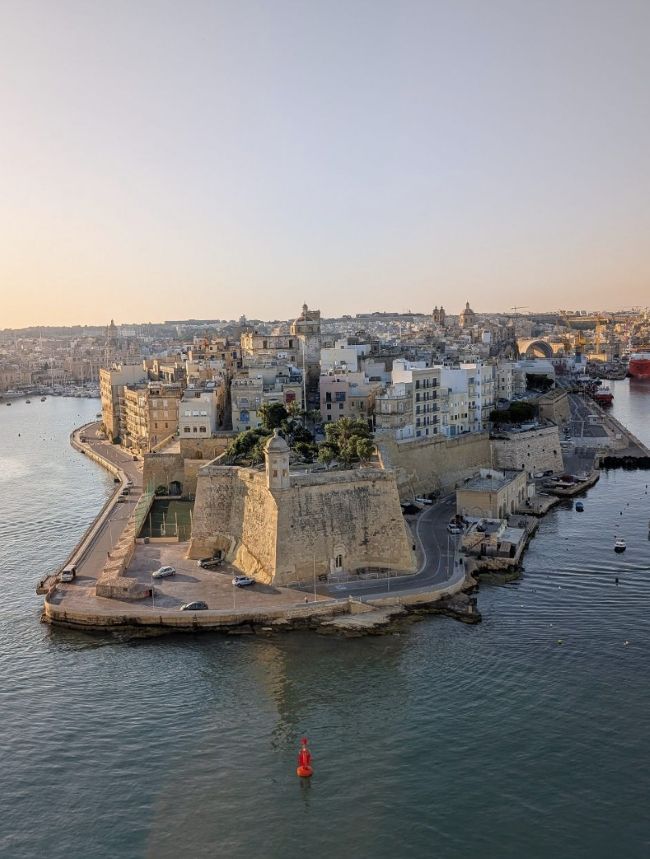
If you like water, fortifications, and walking with a purpose, the Three Cities — Birgu, Senglea, and Cospicua — are better than Mdina for a full half-day on foot. The harbour is right there, Fort St Angelo anchors the whole thing, and you can cover all three cities in a long morning or afternoon. Take a water taxi from Valletta for the best approach.
Gozo Day Trip
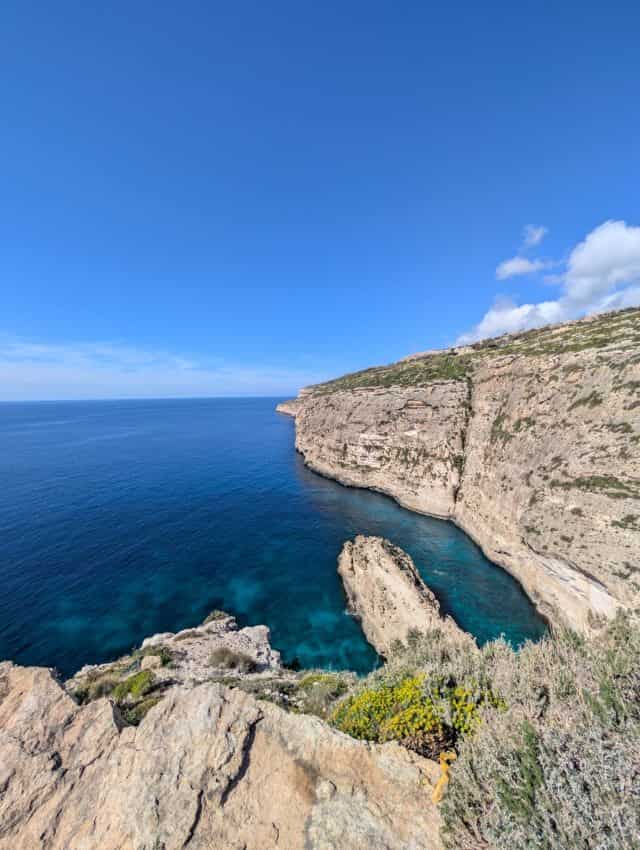
The ferry from Ċirkewwa takes about 25 minutes. Once across, you have Ggantija, Ramla Bay, the Citadel, and quieter roads almost immediately. In March, Gozo is greener and calmer than it will be later in the year.
The Promenade Walk
Sliema to St. Julian’s along the coast is one of the best free things to do in Malta, especially in shoulder season when the weather is comfortable and the seafront still feels like part of daily life rather than a crowd-control exercise. On the way, you pass the Roman-era baths — worth a quick stop. See our history of Sliema if you want the backstory on how this stretch of coast changed.
Mdina and Rabat
Mdina works in every season, but March gives you the bonus of green countryside all around it and, around St. Joseph’s feast, a livelier Rabat next door. The walled city itself is a 30-minute walk if you do not stop — but you will stop. If you have kids, there is a decent playground just outside the main gate before you go in.
Manoel Island
Linked to the coast by a short bridge, Manoel Island still feels slightly apart from the rest of the urban coastline. Fort Manoel, old quarantine buildings, sea views, and a strange half-abandoned atmosphere all in one place.
Marsascala Bay Walk
This is the off-the-beaten-track pick. Marsascala does not make it into most visitor guides, which is exactly why it works. The bay walk is flat, quiet, and local — fishing boats, clear water, a promenade that does not try to sell you anything. Good for a change of pace from the heritage-heavy itinerary.
Marsaxlokk Sunday Market
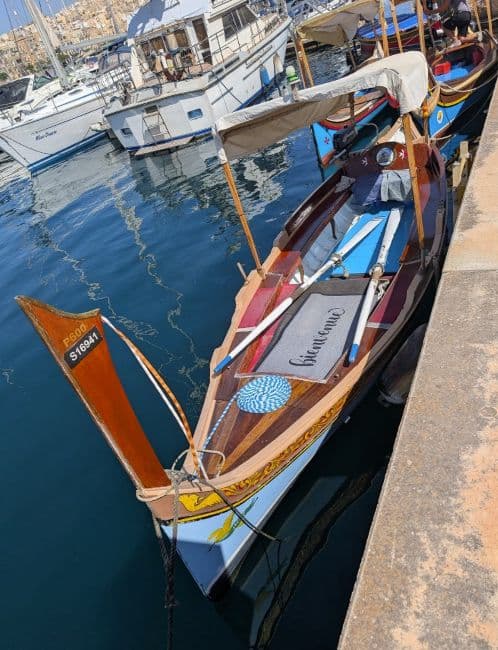
Go early. This is the real Maltese market experience — not a tourist setup, but a working fish market and street market in a harbour full of painted luzzu boats. By 10am it gets busy. By noon the best stuff is gone. If you time it on a Sunday, pair it with the Marsascala walk in the afternoon for a strong south-coast day.
🧭 Need more ideas? Our guide to 20 day trips from the Sliema area covers everything from the Blue Grotto to Marsaxlokk — all doable in a day. And if you want to hunt for street art, Malta has more of it than you would expect.
Where to Stay in Malta in March
The short version of a longer conversation
Accommodation in March is cheaper than summer and easier to find. The main decision is what kind of base you want: a hotel, an Airbnb-style apartment, or something in between. We have a full honest guide to where to stay in Malta and a separate breakdown of hotels vs Airbnbs vs aparthotels if you want the detail.
The short version: Sliema and St. Julian’s are the most popular bases for first-time visitors — lots of restaurants, close to buses and the Valletta ferry, and easy to walk between. Valletta itself suits shorter stays or anyone who wants to be inside the city walls. If you are after something quieter and more residential, the areas around Sliema’s edges or Marsascala are worth a look. If you prefer a holiday rental, we have a guide for that too.
Getting There, Getting Around & What It Costs
Flights, buses, ferries, and roughly what a week costs
Flights to Malta in March
Malta International Airport (MLA) has direct links to most major European cities. From London you are looking at about three hours. In shoulder season, fares can be noticeably better than summer if you book with a little flexibility. For the fuller picture, including routes and airlines, see our guide to getting to Malta.
Transport on the Island
Malta’s bus network covers the island well enough for most visitors. A 7-day Explore card costs €25 for unlimited standard-route travel. Buses are not always punctual, but they are useful and cheap.
The Sliema–Valletta ferry is one of the simplest transport wins on the island: quick, scenic, and often more pleasant than the bus. For taxis, Bolt is usually reliable and cheaper than old-style cabs.
You can hire a car, but for a week in March you may not need one unless you are planning a lot of out-of-the-way stops. We have an honest guide to renting a car in Malta that covers the trade-offs.
What a Week in Malta Costs in March
Malta sits somewhere in the middle by European standards. A decent restaurant meal runs €15–25 per person. Coffee is around €2. A glass of local wine is usually €3–5. Heritage sites often sit in the €10–15 range. Staying in an apartment saves money, especially if you cover breakfasts and a few simple meals yourself.
~€1,000
A comfortable week in March per person — flights, apartment, eating out most meals, and activities — from many European departure points
Seven Days in Malta in March — A Flexible Itinerary
A practical week that stays loose — swap days around to match events, weather, or how you feel
This is how I would spend a week in Malta in March. It is not a locked schedule. One of the good things about March is that you do not need to overplan. Move days around to match the event calendar above. Shuffle the order based on weather, or just based on how you feel when you wake up.
Day 1 — Arrive, Walk the Seafront
Drop your bags, do not try to sightsee. Walk the Sliema promenade in the evening, let the timezone settle, eat somewhere by the water. Valletta across the harbour looks its best at dusk and you will be there tomorrow.
Day 2 — Valletta
Take the ferry from Sliema. Start with Upper Barrakka Gardens, then St. John’s Co-Cathedral, then let the city unfold at whatever pace works. Our self-guided walking route maps it out, and the museums guide helps if you want to go deeper than the main hits. Lunch on or near Strait Street.
Valletta by night is a different animal. Strait Street has bars and live music. The upper bastions are quieter and the harbour views at night are worth the walk back. If you are here when the Caravaggio Experience is running (from 10 March), an evening session at St John’s is hard to beat.
Day 3 — Mdina, Rabat & Afternoon with a View
Head inland. Mdina itself is a 30-minute walk end to end if you do not stop, but you will stop. If you are travelling with kids, there is a decent playground just outside the main gate — let them burn energy before you go in.
For afternoon cake and views, Fontanella Tea Garden has the famous terrace overlooking the countryside. Veduta is the newer option with equally good views — call ahead and ask for a table with a view, it makes a difference.
If your timing lines up with the Feast of St. Joseph (19 March), Rabat next door will be livelier than usual: band marches, fireworks, street food, and zeppoli.
Romantic option: Come back to Mdina after dark. The gaslit streets are almost empty by 9pm and the whole city feels like it belongs in a different century. If you want a romantic Malta itinerary, Mdina by night is the centrepiece.
Day 4 — The Three Cities, or a Harbour Cruise
A harbour cruise in the morning is a good way to start — it gives you the context for everything else. You see the fortifications from the water, get the shape of the Grand Harbour, and it only takes an hour or so.
Then head to the Three Cities. If you prefer water next to you, fortress walls above you, and more walking, the Three Cities are a better pick than Mdina — though both are worth doing. Exploring all three (Birgu, Senglea, Cospicua) is a solid half-day walk. Fort St Angelo is the anchor, and the Kalkara heritage trail extends the walk if you want more.
Take the water taxi from Valletta for the best approach. It is cheap, quick, and beats the bus.
Day 5 — South Coast: Marsaxlokk Market & Marsascala Walk
If it is Sunday, start early at Marsaxlokk. The fish market and street market are the real Maltese market experience — painted luzzu boats in the harbour, vendors selling fresh catch, and locals doing their weekly shop. By 10am it gets busy. By noon the best stuff is gone.
In the afternoon, head to Marsascala. The bay walk is off the beaten track in the best way: flat, quiet, local, and nothing trying to sell you a boat trip. Fishing boats, clear water, and a promenade that feels like it is for residents rather than tourists. A good change of pace.
If you have time left in the day, the Blue Grotto works if sea conditions allow, or Ħaġar Qim and Mnajdra — especially if your visit overlaps with the equinox (19–22 March).
Day 6 — Gozo
Early ferry from Ċirkewwa — about 25 minutes across. Ggantija temples first (they open at 9am and mornings are quieter). Then the Citadel in Victoria, then Ramla Bay for lunch on the sand. If you want something more remote, San Blas Beach is a steep walk down but you will not regret it.
If you are here in late March, the Gaulitana music festival (from 28 March) adds an evening option on Gozo. Could be worth an overnight.
Day 7 — Your Pick: Mix & Match
A spare day for whatever you missed or whatever caught your eye during the week. Some options:
Manoel Island. A short walk from the Sliema area — Fort Manoel, the old Lazzaretto, sea views, and a strange half-abandoned atmosphere.
A boat party. Several operators run party boats out of Sliema and St. Julian’s — anything from catamaran day cruises to full-on nightlife on water. Check local listings closer to your dates. The pool party and boat party events in the calendar above are a starting point.
Night out with friends. Paceville in St. Julian’s is the obvious choice for clubs and late bars. But Strait Street in Valletta is more interesting, and the seafront promenade bars around Sliema are a good middle ground if you want drinks and atmosphere without the Paceville noise.
Comino if the weather cooperates. The Blue Lagoon without the summer crowds is almost unrecognisable. Too cold for most swimmers, but the walk across the island is good.
Something you missed. The Three Cities if you chose Mdina on Day 3. Mdina by night if you went to the Three Cities. That exhibition you walked past. The restaurant someone mentioned. March is forgiving — you have time.
💡 Quick Take: This itinerary works whether you are here for the equinox, a concert, the marathon, or just the spring weather. Move days around to match the event calendar above. And if you are staying longer, Easter follows straight after — Palm Sunday is 29 March, and Holy Week is one of the most intense cultural weeks on the island.
🎧 Want to get to know some Malta folklore before you arrive? Listen to our 9-part audio story series on YouTube — history, characters, and the stranger corners of the island.
Visiting Malta in March — Common Questions
Quick answers to what people actually ask
Is Malta warm enough in March?
Yes, for sightseeing, walking, and eating outside — usually very comfortably. Daytime highs are around 17°C with roughly seven hours of sunshine. It is not high summer, but that is part of the point. You can walk for hours without wilting, and outdoor lunches in the sun are pleasant. Evenings are cooler (around 11°C), so bring a jumper or light jacket.
Can you swim in Malta in March?
You can, but most visitors will find the sea cold — usually around 15–16°C. March is better for coastal walks than long swims unless you already like cold water. Some sheltered spots like St. Thomas Bay or Sliema’s rocky beaches are manageable on sunny afternoons if you are determined. For more on where to go, see our map of beaches in Malta.
Is Malta busy in March?
Much less than summer. You will not deal with cruise ship crowds at major sites, restaurant bookings are easy, and buses are less packed. Certain events like Mużika Mużika or the equinox sunrise draw crowds, but the island as a whole is easier to move around.
Does it rain in Malta in March?
It can, but March showers tend to be brief rather than all-day. Expect maybe five or six days with some rain across the whole month, usually clearing within an hour or two. A compact umbrella and a light waterproof jacket cover you. It rarely ruins a whole day of plans.
What should I pack for Malta in March?
Layers. A light waterproof jacket, a jumper or fleece for evenings, comfortable walking shoes with decent grip (limestone gets slippery when wet), sunglasses, and sunscreen. The March sun can still catch you out. A compact umbrella rounds it off. See our full packing list for more detail.
What’s the best area to stay in Malta in spring?
Sliema and St. Julian’s are the most popular bases for first-time visitors — restaurants, transport links, and the Valletta ferry are all close. Valletta suits shorter stays. For a quieter residential feel, look at the areas around Sliema’s edges or Marsascala. We have a full where-to-stay guide with more detail.
Is March a good time to visit Malta?
It is one of the best. The weather is comfortable for walking and sightseeing, the countryside is green, flights and accommodation are cheaper than summer, and the event calendar is stronger than most people expect. The spring equinox at Mnajdra alone justifies the trip.
How many days do you need in Malta in March?
Five days is a good baseline — enough for Valletta, Mdina, a day trip to Gozo or the south coast, and time to walk and eat without rushing. A full week gives you breathing room to match your trip to the event calendar, and to have a slower day or two. You will not run out of things to do.
Is Malta safe for tourists?
Yes. Malta is one of the safer places in Europe for visitors. Petty theft exists — as it does everywhere — but violent crime is rare and most areas are comfortable to walk around at night. We have a full guide to safety in Malta if you want the detail.
Malta in March is not about beach-club fantasy. It is a Mediterranean island where the countryside is actually green, the sites are not rammed, and the locals are not yet exhausted by tourists. You can sit outside for lunch, walk all day without overheating, and get into a restaurant without booking three weeks ahead. That is the version of Malta most summer visitors never see.
Stay in Gżira near the promenade
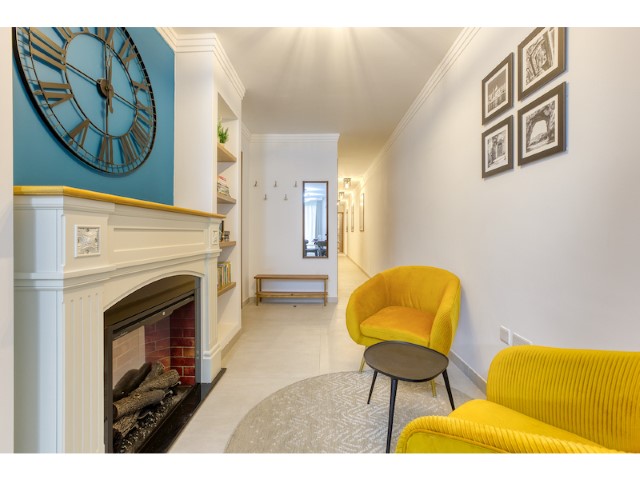
A designer 2-bedroom apartment in Gżira, close to the church, around 2 minutes from the promenade, and near Manoel Island.
View on Airbnb