
The Honest Malta Packing List (From Someone Who Lives Here)
I’ve watched thousands of tourists arrive in Malta wearing flip-flops and a tank top, then spend their first afternoon hunting for a plug adapter and after-sun cream at double the price. After living on this island since 1997, I know what works and what sits unused at the bottom of your suitcase — and I know which missing item will ruin your second day.
This packing list covers every traveller type — and the stuff other lists skip, like cockroaches in summer, uneven pavements, and why water shoes matter more than sandals. I’ve lived through all of it.
One honest warning upfront: Malta is a small island, and you can buy most things here. Don’t overpack. If you forget something, there are shops in every town. The things you really can’t replace easily — your documents, prescription medication, a good adapter, and the right shoes — are the ones that matter most.
Essentials (For Every Traveller)
Documents and Money
- Passport or ID card: EU/EEA citizens can enter with a national ID card. Everyone else needs a passport with at least six months validity. Non-EU nationals should also be aware that the European Entry/Exit System (EES) is expected to launch in late 2026, requiring biometric registration at the border.
- Digital and paper copies of your passport: Email yourself a scan and keep a paper copy separate from the original. If your passport gets lost or stolen, this saves days at the embassy.
- Travel insurance: Malta has good hospitals — Mater Dei is the main public hospital — but travel insurance covers flight cancellations, lost luggage, medical repatriation, and the random broken ankle on Valletta’s steps that nobody plans for. EU citizens should also carry their European Health Insurance Card (EHIC) for reduced-cost public healthcare. I wouldn’t travel without proper cover.
- Cash (euros): Most restaurants accept cards, and even some veggie trucks take Revolut via QR code now. But festa food stalls, small kiosks, village bars, and parking attendants still want cash. Keep €30–50 in small notes and coins. Tipping: not obligatory — Malta’s tourism authority suggests 5–10% at restaurants if service was good, and rounding up for taxi drivers.
- Accommodation confirmations: Print or screenshot your booking with the address and host contact number. Mobile signal can drop in some areas, especially rural Gozo and Comino. Maltese addresses can be confusing — streets sometimes have names in both Maltese and English — so save your host’s directions offline.
- Driver’s licence: EU/UK licences work as-is. US, Australian, Canadian, and most other visitors need an International Driving Permit (IDP) alongside their home licence. Malta drives on the left — and I’m going to be honest, Maltese driving is an experience. Narrow roads, creative interpretations of lane markings, horn usage that borders on musical, and a general attitude that indicators are optional. One thing worth knowing: rental cars have a ‘K’ as the third letter on their licence plate, and every Maltese driver knows it. Some are noticeably more aggressive toward cars they recognise as rentals. It’s not universal, but it’s worth being aware of. Read our honest guide to renting a car before you decide.
Everyday Carry
- Comfortable walking shoes with good grip: The single most important item on this entire list. Maltese pavements are limestone slabs — uneven, cracked, and genuinely dangerous when wet. Twisted ankles on Valletta’s hills happen all the time, and I’ve personally helped more than one tourist who came down hard on the steps near St Ursula Street. Thick-soled shoes with rubber grip beat sandals every time. If you’re visiting Valletta, Mdina, or the Three Cities, you’ll be walking on slopes and steps for hours. Heels on cobblestones? I’ve seen it end badly too many times.
- Daypack or small backpack: Water, sunscreen, a scarf for churches, a light layer for air-conditioned restaurants — it adds up fast. Choose something lightweight because you’ll be carrying it in heat.
- Reusable water bottle: Tap water is safe. It comes from reverse osmosis desalination, so the taste is… let’s call it functional. Not offensive, but not mineral spring either. Most hotels have refill stations. A 1.5L supermarket bottle costs about €0.50 if you prefer bottled.
- Reusable shopping bag: Plastic bags cost €0.15 each by law in Malta. A foldable bag saves hassle at supermarkets and the Sunday fish market at Marsaxlokk.
- Blackout eye mask: Malta gets 300+ days of sunshine a year, and summer daylight starts before 6 a.m. Some rentals have shutters, some don’t. An eye mask guarantees sleep — and if you’re near a village festa, the fireworks can start at dawn.
Sun Safety — Take This Seriously
I’m going to be blunt because this is the section most people underestimate. Malta sits at 35°N latitude, roughly level with Tunis and Crete. Research published in the Handbook of Climate Services (Busuttil et al., 2020) measured Malta’s UV index peaking at 11 during summer — classified as “extreme” by the World Health Organisation. The Malta Medical Journal has reported rising melanoma incidence over the past two decades. Non-melanoma skin cancer accounted for 15% of all cancers registered in Malta between 1993 and 1997, and those numbers have climbed since. The short version: the Maltese sun will burn you faster than you expect, and it doesn’t care whether you’re on a beach or walking through a city.
- Sunscreen, SPF 50+: Apply before you leave your accommodation, not when you arrive at the beach. Reapply every two hours. Water reflection and limestone glare amplify UV exposure significantly. I’ve seen people burn walking through Valletta in October. Buy sunscreen in town — beach kiosk markup is brutal.
- After-sun lotion: Even careful people get caught out. Aloe vera gel works too.
- Sunglasses with UV protection: Not just comfort — genuine protection. The limestone reflects light aggressively, especially in walled cities.
- Hat with a brim: A cap protects your face; a wide-brimmed hat protects ears and neck too. On an island with almost no tree cover outside gardens, shade is something you create for yourself.
- UV rash guard or swim shirt (UPF 50+): For men and women. Covers your shoulders and back while swimming, snorkelling, or sitting on rocks. Far more practical than reapplying sunscreen every time you get out of the water, and it dries in minutes. If you’re spending a full day at the beach or on a boat, a rash guard does more for your skin than any cream. I wear one every time I’m in the water here.
- UV umbrella: Increasingly common in Malta. Useful for rocky beaches without shade and for standing in open archaeological sites like Ħaġar Qim and Mnajdra.
- Sunglasses for driving: If you’re renting a car, don’t underestimate the sun through the windscreen. Malta’s roads face every direction, and low-angle sun in the morning and evening is blinding — especially on the coastal roads heading west. Polarised lenses make a real difference. Combine that with Malta’s driving culture and narrow roads, and you want every advantage you can get.
What to Wear in Malta (By Season)
Malta’s weather catches people off guard in both directions. Summers are genuinely brutal — 33–38°C is normal, with heatwaves pushing past 40°C. Winters aren’t freezing, but they’re windy, damp, and significantly colder indoors than you’d expect, because most Maltese buildings have no central heating. I’ve been colder inside a Maltese apartment in January than standing in the sunshine outside.
On mobile? Swipe to see the full table →
| Season | Temperature Range | What to Pack | Don’t Forget |
|---|---|---|---|
| Spring (Mar–May) | 15–24°C | Light layers, t-shirts, jeans or light trousers, a jacket for evenings | Swimwear from late April; rain jacket for March; wildflowers are gorgeous in the countryside |
| Summer (Jun–Aug) | 30–38°C | Lightweight cotton or linen. Shorts, dresses, sandals | A scarf for churches; hat and SPF 50+; a light layer for aggressively air-conditioned buses and restaurants |
| Autumn (Sep–Nov) | 18–28°C | Layers: t-shirts plus a sweater or hoodie. Light trousers | Rain jacket — autumn storms are sudden and heavy; swimwear still works through October |
| Winter (Dec–Feb) | 10–16°C | Warm layers, sweater, windproof jacket, long trousers | Waterproof jacket — rain comes in short, heavy bursts; warm socks for cold tile floors; a packable down jacket is ideal |
A note on winter specifically: Malta’s weather by month page has the full breakdown, but the key point is that a windproof umbrella is essential — standard umbrellas flip inside-out in seconds. I’ve lived through enough Maltese winters to know that furniture has been blown off roof terraces. Pack something sturdy, or bring a solid rain jacket instead.
The best time to visit, if you have flexibility, is the shoulder seasons: April–June and September–October. You get warm weather, swimmable seas, fewer crowds, and lower accommodation prices. Summer (July–August) is genuinely unpleasant — extreme heat, overcrowded beaches and buses, and everything costs more. Avoid it if you can. The travel guide covers this in more detail.
Church Dress Code — Pack a Scarf
This trips up tourists constantly. Malta is deeply Catholic — roughly 95% of the population — and the island has over 350 churches, cathedrals, and chapels. Visiting them is one of the highlights of any trip. But they’re active places of worship, and there’s a clear dress code: shoulders and knees must be covered, for both men and women. Hats and sunglasses should come off inside.
The major tourist churches like St. John’s Co-Cathedral in Valletta will lend you a wrap if you arrive underprepared. Smaller village churches won’t — you’ll simply be turned away. The solution is simple: pack a lightweight scarf or shawl. It doubles as sun protection, a picnic blanket, a cover-up for air-conditioned restaurants, and a seat on hot stone walls. It’s honestly the most versatile item in your bag.
Also: walking shirtless through Valletta, Mdina, or any town centre is frowned upon. It’s not illegal, but locals dislike it, and it signals that you haven’t paid attention to where you are. Save beachwear for the beach. Our beach dress guide covers what’s appropriate where.
Tech and Gadgets
Plugs and Power — Get This Right
Malta uses Type G plugs — the same three-rectangular-pin system as the UK. Voltage is 230V / 50Hz. If you’re coming from continental Europe, the US, Australia, or Asia, you need an adapter. This is the single item tourists most often forget, and the airport markup is painful.
- Bring at least one UK adapter from home. Hotels sometimes provide one, but it’ll be a single adapter shared between you, your partner, and three devices. Don’t rely on it.
- If you have multiple devices (phone, tablet, camera, power bank, laptop), bring a small travel power strip or a multi-port USB charger with a single UK adapter. One adapter powers everything. This is the move that seasoned travellers make.
- USB-C wall outlets are still rare in Malta — even in newer rentals. Don’t assume you’ll find one.
- Very old Maltese apartments occasionally have 2-pin round sockets (old continental European style) in bathrooms for shavers. These are rare and low-powered — don’t depend on them for phone charging.
- Tip: If you’re staying in an Airbnb or self-catering rental, check with your host whether adapters are provided. Many do provide them now, but it’s not guaranteed.
Other Tech Essentials
- Power bank (10,000mAh minimum): You’ll use your phone constantly — maps, photos, Bolt bookings, translation. Battery dies fast in heat. A decent power bank gets you through a full day without hunting for an outlet in a café.
- eSIM or roaming plan: EU residents have free roaming in Malta. Everyone else should consider an eSIM — Holafly, Airalo, and Revolut all offer Malta data plans you activate before landing. Much cheaper and faster than buying a physical SIM card at the airport. Check your phone supports eSIM before you buy.
- Noise-cancelling earbuds or silicone earplugs: Malta’s village festas run from May to September, and the fireworks and petards — essentially small explosives — can start before 6 a.m. If your accommodation is near a festa, earplugs are the difference between sleep and misery. The festa calendar tells you which towns celebrate when, so you can plan around it, or plan into it if you want the experience.
- Camera, tripod, or selfie stick: Malta is intensely photogenic. The honey-coloured limestone, the blue sea, the narrow streets, the harbour views — you’ll want something better than a shaky phone clip.
Health, First Aid, and Toiletries
- Prescription medication: Bring enough for your entire trip, plus a few extra days in case of delays. Keep medication in original packaging with the prescription label visible. Malta’s pharmacies are well-stocked, but they may not carry your exact brand or dosage.
- Basic first-aid kit: Plasters, antiseptic cream, painkillers, anti-diarrhoea tablets, antihistamines. We have a full guide on building a travel first-aid kit.
- Electrolyte sachets or tablets: Dehydration is the silent holiday-wrecker in Malta. Heat, walking, alcohol, and salty sea air all drain your fluids. Electrolyte sachets (like Dioralyte or rehydration salts) weigh nothing and recover you faster than water alone. Especially useful the morning after a night out — see the hangover warning in the sun safety section above.
- Motion sickness tablets: If you’re taking a boat trip to Comino, the Blue Grotto, or doing a harbour cruise, the sea can be choppy — especially if the Majjistral (northwest wind) is up. If you’re prone to seasickness, pack tablets and take one 30 minutes before boarding, not when you already feel queasy.
- Bug spray and after-bite cream: Mosquitoes are a fact of life in Malta, especially near standing water and from late spring through autumn. Evenings on terraces and near harbours are peak mosquito time. DEET-based repellent works best. And in summer, yes — cockroaches exist. They come with the heat and humidity. It’s not a cleanliness issue; it’s a Mediterranean island issue. An ultrasonic repeller plug-in is worth considering if you’re staying in a ground-floor rental.
- Hand sanitiser: Useful on buses, at festas, and at market stalls.
- Basic toiletries: All available in Malta if you forget. Supermarkets (Lidl, PAMA, Scotts, Valyou) carry international brands at normal prices.
- Vitamins C and Zinc: Travel, heat, and disrupted routines drain your immune system. A small supplement supply costs nothing and might save you a sick day.
Apps to Download Before You Go
Download these before you land. Airport Wi-Fi works, but you want everything ready when you step outside. I’ve included direct links to both stores — tap and install before your flight.
Essential (Install These)
- Google Maps (offline): Download the Malta and Gozo maps for offline use. Non-negotiable. Signal drops in valleys, rural Gozo, and on ferries. Android · iOS
- Tallinja: Official Malta public transport app. Real-time bus tracking, route planning, and ticket purchases. Buses are clean and air-conditioned but can be slow outside main routes — and the bus terminal at Valletta can be chaotic in summer, especially at the Ċirkewwa ferry connection. Having Tallinja open with real-time tracking helps you decide whether to wait or grab a Bolt. Android · iOS
- Bolt: Malta’s most-used ride-hailing app. Usually cheaper than eCabs and much cheaper than white taxis. Download and set up your payment method before you fly — you’ll want it working the moment you land. Android · iOS
- eCabs: Malta’s other main ride-hailing app. Sometimes cheaper than Bolt, especially for longer routes. Download both and compare prices before each journey. One thing: some visitors have reported credit card auto-charging issues mid-trip — have a backup payment method ready. Android · iOS
Strongly Recommended
- Heritage Malta app: Free offline maps, GPS-enabled audio guides, and ticket info for 25+ museums and sites. Works offline, which matters because signal is weak at some temple sites. If you’re visiting more than four Heritage Malta sites, buy the Heritage Malta Multisite Pass (€50, valid 30 days) — it pays for itself after three or four visits. Android · iOS
- Waze: If you’re driving — the local favourite for navigating Malta’s creative traffic. Android · iOS
- Google Translate: English is official and widely spoken, but the camera translation feature is handy for signs in smaller towns and for Maltese-language menus. Android · iOS
- Wikiloc: Excellent for hiking trails on Malta and Gozo with GPS tracks and user reviews. Malta’s official walking maps from the tourism office are — being honest — not reliable. Wikiloc tracks from other hikers are far better for navigation. Android · iOS
- XE Currency: Malta uses the Euro (€). Quick converter for markets and small shops. Android · iOS
Nice to Have
- Paper2Audio (text-to-speech for articles and books): Upload any article, PDF, ebook, or web page and Paper2Audio reads it to you — intelligently skipping junk like page numbers and ads. Free (up to 56 hours/week), no ads. That essay collection or short stories you’ve been meaning to get through? Let Malta’s slow buses and traffic jams do the work for you. Download your listening before the flight. Android · iOS
- Spotify or Apple Podcasts (download content offline): Malta’s bus rides are long enough for a full podcast episode. Malta’s traffic — especially the Valletta approach and main north-south routes during rush hour (avoid 7:30–9:00 a.m. and 4:00–6:00 p.m.) — can be brutal. If you time your journeys right, you’ll miss the worst. If you don’t, at least you’ll have something to listen to.
Swimming and Beach Gear
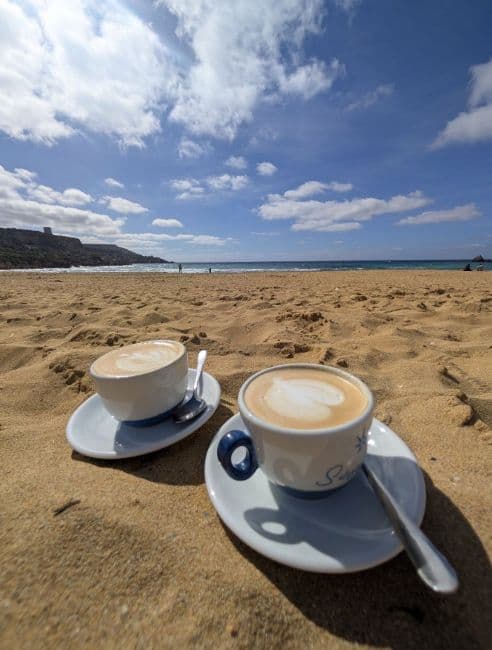
Malta’s coastline is the reason most people come. The water clarity is extraordinary. But here’s the thing every packing list should say in bold: most of Malta’s swimming spots are rocky, not sandy. If you’re expecting long stretches of soft sand, you’ll be surprised. Sandy beaches exist — Golden Bay, Mellieħa Bay, Ramla Bay on Gozo — but the majority of swimming involves rocky limestone — you’re climbing down uneven surfaces, stepping around sea urchins, and sometimes using metal ladders bolted into the rock. Pack accordingly.
- Water shoes or reef shoes: This is the item people most regret not packing. I hear it constantly — “I wish I’d brought water shoes.” Rocky entries, sharp sea urchins on submerged rocks, and slippery algae-covered surfaces make reef shoes essential. They look silly. They save your holiday.
- Swimwear (at least two sets): So one can dry while you use the other. Humidity means nothing dries fast unless you have a terrace with direct sun.
- UV rash guard or swim shirt: Already mentioned in sun safety, but it belongs in the beach bag too. Covers shoulders and back while you’re in and out of the water all day — far easier than constant sunscreen reapplication, especially after swimming. Available in men’s and women’s fits, and honestly one of the best things I ever bought for Malta swimming.
- Quick-dry beach towel: Microfibre towels pack smaller, dry faster, and repel sand better than cotton. Worth the investment.
- Snorkel mask and/or swimming goggles: The underwater visibility in Malta is genuinely world-class. Even basic goggles transform the experience. If you’re interested in what’s below the surface, our scuba diving guide and wreck diving guide cover the best sites.
- Waterproof phone pouch: Cheap, lightweight, and saves your phone from salt water.
- Beach bag: Not a luxury item — you need somewhere to carry water shoes, towel, sunscreen, water bottle, and phone pouch. A cheap foldable one works fine.
Check our interactive map of Malta’s beaches to find the right spot — family-friendly sandy bays, remote rocky coves, snorkelling spots with marine life, or quiet Gozo swimming holes that most tourists never find.
Traveller-Specific Packing Lists
Everything above applies to everyone — the sections below are extras tailored to specific travel styles, so skip to whatever matches yours.
Solo Travellers
- Portable padlock: If you’re staying in hostels or shared dorms, you need one for the lockers.
- Anti-theft bag or hidden money belt: Pickpocketing isn’t a major problem in Malta, but it happens in crowded spots — particularly Paceville (the nightlife area in St Julian’s) and busy bus routes. A crossbody bag with a secure zip beats an open tote.
- Journal or book: Malta has brilliant quiet spots for reading — the Upper Barrakka Gardens, any village square with a coffee, seafront benches anywhere along the coast.
- Noise-cancelling earbuds: For flights, buses, and blocking out hostel noise.
- Pre-plan group activities: Joining group tours, boat trips, or dive courses is one of the easiest ways to meet people here. Check Malta’s cultural events calendar for what’s happening during your dates.
Malta is generally very safe for solo travellers — our safety guide covers the full picture.
Couples
- Camera or good phone: Malta is absurdly photogenic. The Dingli Cliffs at sunset, the coloured balconies of Valletta, the Blue Grotto from a boat, the honey-coloured alleyways of Birgu at golden hour — you’ll want good photos of all of it.
- Book restaurants in advance: The best spots fill up fast, especially in summer and around Valletta. Noni, Legligin, Rubino, Ta’ Kris — book ahead or lose out.
- One smart evening outfit: Malta has excellent fine dining. Linen or a linen blend — looks smart, handles the heat, and works at any restaurant on the island.
- Spa day swimwear: Several hotels and standalone spas offer couples packages. Bring swimwear — not all spas provide it.
- Engagement ring: Malta is a ridiculously good proposal location. Sunset at the Dingli Cliffs, a private boat trip around Comino, the Barrakka Gardens overlooking Grand Harbour… just saying. Here’s why couples love Malta.
For a ready-made romantic trip, see our 3-day romantic itinerary.
Families with Kids
- Baby carrier or lightweight stroller: Strollers work on promenades and flat areas, but Valletta’s hills and stepped streets will defeat any pushchair. The streets are steep, uneven, and some have no pavement at all. Mdina is similarly difficult. A carrier gives freedom in old cities. If your child is under 3, a carrier is strongly recommended.
- Kids’ UV rash guards and mineral-based sunscreen: Children’s skin burns much faster than adult skin. Long-sleeved UV rash guards (UPF 50+) for kids are non-negotiable in Malta’s sun — they cover arms, shoulders, and torso without needing sunscreen on those areas. Pair with zinc oxide mineral sunscreen on exposed skin (face, ears, legs). This combination is far safer and easier to maintain than sunscreen alone on a wriggling child.
- Reef shoes for kids: Just as important as for adults. Most swimming spots involve rocky entries. Kids’ feet are more sensitive — reef shoes prevent tears and urchin spines.
- Snacks and small toys: Malta’s buses can be very slow — the Valletta to Ċirkewwa ferry terminal route takes about an hour, and queues at the terminal in summer can be chaotic (multiple travellers report pushing and crowding).
- Portable charger for tablets: No judgment. Screen time on a long bus-ferry-bus journey to Gozo is survival, not failure.
- Card games (Uno is a family classic): Malta’s restaurant culture is relaxed and courses take their time — kids might need entertaining between dishes.
- Foldable playmat: Useful on rocky beaches where sand isn’t an option.
- Travel games for the flight: Malta is a 2–3 hour flight from most of Europe. Activity books or sticker pads keep younger children manageable.
Read visiting Malta with kids on a budget for detailed family advice on activities, transport, and saving money.
Fitness Travellers
Malta is surprisingly good for fitness. The coastal promenades work well for running, the sea is great for open-water swimming, and the terrain suits trail running and hiking once you leave the urban strip.
- Running shoes: The coastal promenades are flat and scenic, the Dingli Cliffs path is exposed and beautiful, Gozo’s trails are quiet, and even Valletta’s waterfront stretch works for a short run. Morning runs only in summer — by 10 a.m., outdoor exercise becomes genuinely risky.
- Workout gear in breathable fabric: Cotton or technical fabric that handles sweat. Malta’s humidity amplifies everything.
- Resistance bands: Compact, lightweight, and let you do a proper strength session anywhere. Many Maltese rentals have rooftop terraces that work as outdoor gyms.
- Water bottle with filter: If the desalinated tap water taste bothers you, a filtered bottle solves it cleanly.
- Short fins: Excellent for sea swimming. Available to buy locally at sports shops. If you’re into diving, our diving guide covers gear and centres.
For running events, the La Valette Marathon is worth checking out.
Adventure and Outdoor Enthusiasts
- Hiking boots: Malta’s terrain is rocky limestone with loose gravel on many trails. Proper boots with ankle support matter, especially on the clifftop paths. Our multiday hiking routes guide covers the best options.
- Waterproof jacket: Weather changes fast October through April. A packable waterproof weighs nothing and saves you.
- Rock climbing shoes: Malta has world-class sport climbing on natural limestone. Don’t bring ropes and harnesses — too bulky, and local groups have gear. Better to connect with Malta’s climbing community.
- Cycling shorts/biking pants: Malta’s roads are rough in places, but the countryside has decent cycling routes. Our mountain biking guide covers the best trails and terrain.
- GoPro or waterproof camera: For underwater footage, boat trips, and cliff jumps. This is the one purchase tourists consistently say they wished they’d made beforehand.
- Hydration pack: For longer hikes. There are almost no water sources on Malta’s trails — carry everything you need.
- Trekking poles: Useful on steeper coastal paths, especially on Gozo.
Luxury Travellers and Yachting
Malta has a strong luxury scene — five-star hotels, excellent restaurants, and private yacht charters.
- Smart outfits in natural fabric: Valletta’s restaurant scene has grown significantly. Noni, de Mondion, ION The Harbour — these places have standards. Linen works perfectly.
- High-end skincare with SPF: The sun doesn’t care about your wardrobe. Premium SPF-rated moisturiser protects your skin without the beach-sunscreen feel.
- Stylish but comfortable shoes: Cobblestones and heels are enemies. Elegant flats, loafers, or block heels are the smart choice for Valletta.
- Portable clothes steamer: Not every hotel or rental provides an iron. A travel steamer keeps linen looking sharp.
- Luxury spa products: Face masks, essential oils, your preferred skincare routine.
Yachting and Boating Essentials
If you’re chartering a yacht or spending time on the water around Comino, the Blue Grotto, or the southern coast:
- Sailing cap and boat shoes (non-slip): You need both — deck safety and sun protection.
- Waterproof dry bag: Keeps phone, wallet, and documents safe from spray.
- Polarised sunglasses: Cuts water glare dramatically. Night-and-day difference for comfort.
- Sailing gloves: If handling ropes on a sailing yacht.
- Waterproof phone pouch: Salt spray finds everything.
- Sunscreen SPF 50+: Water reflection intensifies UV. Reapply hourly on deck.
- Quick-dry deck towel and waterproof jacket: Even summer evenings feel cold at sea speed.
Partygoers and Festival Visitors
Malta has a serious nightlife and festival scene — Paceville in St Julian’s is the main nightclub strip, and the island hosts major electronic music events through summer. Isle of MTV (free, usually July), Earth Garden, Glitch Festival, boat parties, rooftop sets, and dozens of smaller events run from May through September. Village festas are a completely different kind of party — religious processions, marching bands, fireworks, and street food — but they’re just as intense. Here’s what to pack:
- Comfortable shoes you don’t mind ruining: Paceville’s floors are sticky. Outdoor festival grounds are dusty or muddy depending on the week. Leave the nice shoes at the hotel.
- Light, breathable going-out clothes: Malta’s summer nightlife happens at 30°C+ with high humidity. Cotton or linen, not polyester. Smart-casual gets you into most venues — only a few clubs enforce a strict dress code.
- Crossbody bag with a zip or money belt: Paceville on a Friday or Saturday night is crowded and chaotic. Pickpocketing isn’t rampant, but keeping your phone and wallet secure is common sense. Leave anything you’d be devastated to lose at your accommodation.
- Earplugs (the good kind): If you’re going to multiple events or clubs across a trip, musician-grade earplugs (like Loop or Eargasm) protect your hearing without killing the music. Malta’s petardi during festas are loud — industrial-level loud. Your ears will thank you the next morning.
- Power bank: Your phone dies faster when you’re using it for maps, Bolt rides home, photos, and messaging simultaneously at 2 a.m.
- Electrolyte sachets: Already in the health section above, but worth repeating here. The combination of heat, dancing, and alcohol is a dehydration triple-threat. Rehydration salts before bed genuinely help.
- Sunscreen for the day after: See the hangover + sun warning above. If you had a big night, the next day is not the day for a six-hour beach session. Alcohol depletes your skin’s natural UV protection. Stay in the shade, drink water, eat something, and reapply sunscreen obsessively if you do go out.
- Cash for taxis home: Bolt and eCabs surge-price after midnight on weekends in Paceville. Having €15–20 in cash gives you the option of grabbing a white taxi if the app prices are insane.
Business and Conference Travellers
Malta is Europe’s iGaming capital and a growing hub for fintech, blockchain, and AI events. If you’re coming for SiGMA (November, 30,000+ delegates), SBC Summit (April, 6,000 delegates), iGaming NEXT, or any of the dozens of smaller conferences held here throughout the year, your packing list needs a few extra items. I’ve watched the conference scene grow here for years — here’s what experienced delegates pack:
- Smart-casual daytime wardrobe: Conference floors are not suit-and-tie territory in Malta. Clean chinos or trousers, a collared shirt, smart shoes. Women: blouses, smart dresses, comfortable heels or elegant flats. You’ll be standing on exhibition floors for 8+ hours — comfort matters more than formality.
- One formal evening outfit: Networking dinners, awards ceremonies (like the SBC Awards gala), and rooftop parties have a higher dress standard. A suit or cocktail dress. Linen works well for Malta’s warmth.
- Comfortable smart shoes: You will walk more than you expect. The InterContinental in St Julian’s (SBC Summit venue) and the MFCC in Ta’ Qali (SiGMA venue) both involve a lot of standing and walking. Bring shoes you can wear for 10 hours.
- Business cards: Still very much used in the iGaming and fintech world. Bring more than you think — conferences here generate serious networking volume.
- Power bank and multi-port charger: Conference Wi-Fi is often overloaded. You’ll be on mobile data, using your phone for LinkedIn, Bolt, scheduling apps, and Slack simultaneously. Battery drains fast.
- eSIM or confirmed roaming: Conference venue Wi-Fi is unreliable at scale — 6,000+ people hitting the same network. Having your own data connection is essential, not optional.
- Laptop + adapter: If you need to work between sessions. Many conference venues don’t have enough power outlets on the floor — bring your UK adapter and a power bank for the laptop if possible.
- Branded materials: If you’re exhibiting — flyers, banners, swag. Ship ahead if bulky. Malta’s postal system is fine for packages, but give it time.
What NOT to Pack for Malta
Getting this right might free up more suitcase space than the entire list above — and save you dragging things around that Malta’s heat makes you regret packing.
- Heavy winter coats: Even in January, Malta rarely drops below 8°C. Layers and a windproof jacket beat a heavy coat every time. A packable down jacket is the sweet spot if you’re coming in winter.
- Hair dryers: Every hotel and most rentals provide one. Don’t waste the weight.
- Excessive toiletries: Bring travel sizes for day one, then buy locally at Lidl, PAMA, or any pharmacy.
- Too many shoes: One comfortable walking pair, one sandal/flip-flop, one smart pair. Three covers everything. The limestone dust gets into everything anyway.
- Climbing ropes and heavy adventure gear: Local groups and centres provide equipment. Bringing your own adds bulk without benefit.
- Formal business attire: Unless you’re attending a conference (Malta hosts many — SiGMA, SBC Summit, iGaming Next), smart casual handles every situation on this island.
- Massive beach towels: A microfibre towel does the job in a quarter of the space.
- Thick guidebooks: It’s all on your phone now. Save the weight for a bottle of local olive oil or a piece of Maltese glass to take home.
Where to Use All This Stuff
No point packing all this gear if you don’t know where to use it. Here’s how your carefully chosen items connect to actual places and experiences on the island:
- Your walking shoes get their workout in Valletta (our self-guided tour covers the best route), the Three Cities, and the quiet limestone streets of Mdina.
- Swimwear and water shoes — you’ll use these at Comino’s Blue Lagoon (go early morning or late afternoon, seriously), Golden Bay, Mellieħa Bay, and San Blas on Gozo if you’re up for the steep walk down.
- That church scarf you packed? It gets you into St. John’s Co-Cathedral, the Mosta Dome, and any village church during a festa — without it, you’re standing outside looking in.
- If you brought hiking boots, the Big Five multiday routes and the Dingli Cliffs are waiting. And give Gozo at least one overnight for the coastal trails — a day trip doesn’t do it justice.
- Your camera earns its space at Malta’s street art spots, on the Kalkara Heritage Trail, and inside the prehistoric temples where the light through the megaliths is extraordinary.
- The earplugs become essential wherever your accommodation is during festa season. You’ll understand why at 5:47 a.m. when the first petard goes off.
- Got a €2 coin? Take a water taxi across the Grand Harbour between Valletta and the Three Cities — about 5 minutes, some character rowing and motoring you across, far more memorable than any bus.
- Your Heritage Malta pass (€50, valid 30 days) covers Fort St Elmo and the War Museum, Fort St Angelo in Birgu, Ħaġar Qim and Mnajdra, the Ġgantija Temples on Gozo, and 25+ other sites. Buy it at the first museum you visit and it pays for itself after three or four stops.
- If you’re here for SiGMA or SBC Summit, those business cards start working at the airport arrivals hall. Malta’s conference networking doesn’t wait for the exhibition floor.
- And your appetite — don’t leave Malta without trying pastizzi from a street vendor (about €0.50 each, best eaten warm and slightly greasy). Here’s the recipe for when you’re home and craving them.
For the big picture, our Malta travel guide ties everything together. The honest where-to-stay guide helps you pick the right base — where you sleep shapes your whole experience of the island, from what you can walk to in the morning to how easy the airport run is on the last day. And if you’re still deciding whether Malta is the right destination at all, this page gives you the honest answer.
Frequently Asked Questions
Do I need a plug adapter for Malta?
Yes. Malta uses UK-style Type G plugs with three rectangular pins. If you’re coming from continental Europe, the US, Australia, or anywhere that doesn’t use UK plugs, you need an adapter. Hotels sometimes provide them, but don’t rely on it. Buy one before you travel. More practical tips in our Malta travel guide.
Can I drink the tap water in Malta?
Yes, it’s safe. Malta’s tap water comes from reverse osmosis desalination and meets EU drinking water standards. The taste is flat and slightly mineral — not everyone loves it — but it won’t make you sick. Many locals drink it daily. If the taste bothers you, a filtered bottle or a large supermarket bottle (€0.50 for 1.5L) solves the problem cheaply. Our water trail article has more on Malta’s fascinating water history.
What should I wear to churches in Malta?
Cover your shoulders and knees — both men and women. No vest tops, short shorts, or swimwear. A lightweight scarf or shawl is the simplest solution. Major tourist churches provide wraps; village churches don’t. Hats and sunglasses off inside. These are active places of worship, not just tourist attractions. See our Valletta churches and museums guide.
Is Malta hot in winter?
No, and this is one of the biggest misconceptions. Winter means 10–16°C, wind, rain, and high humidity. It rarely freezes, but most buildings lack central heating, so it can feel properly cold indoors. Pack warm layers, a windproof jacket, and waterproof shoes. The weather by month guide gives you the full breakdown.
How strong is the sun in Malta?
Stronger than almost anyone expects. Research by the University of Malta found the UV index peaks at 11 in summer — “extreme” by WHO classification. Even spring and autumn regularly hit 6–8 (“high”). Wear SPF 50+, reapply every two hours, and avoid direct midday sun May through September. The limestone reflects light and amplifies exposure. Our travel guide covers more on health and safety.
Do I need water shoes for Malta beaches?
Strongly recommended. Most of Malta’s swimming spots involve rocky entries with sea urchins, algae, and uneven limestone surfaces. Sandy beaches exist — Golden Bay, Mellieħa Bay, Ramla Bay on Gozo — but rocky coves are far more common. Water shoes protect your feet and give grip. I tell every visitor the same thing: bring them. Our beach map shows which spots are sandy and which are rocky.
Can I buy sunscreen and toiletries in Malta?
Yes, easily. Supermarkets (Lidl, PAMA, Scotts, Valyou) and pharmacies carry international brands at normal prices. But pharmacies close on Sundays except for a few on rotation, so stock up during the week. Don’t buy sunscreen at beach kiosks — the markup is steep. Our Is Malta Right for You page covers more practical questions.
Should I rent a car in Malta?
It depends on your comfort level and plans. A car gives you freedom, especially for reaching Gozo’s quieter spots and Malta’s western coast. But the driving culture is aggressive, roads are narrow, parking is scarce, and you drive on the left. Many travellers find Bolt, eCabs, and buses cover everything they need. If you do rent, book in advance for summer. Our honest car rental guide lays out the full picture.
How many days do I need in Malta?
At least four to five. Malta looks small on a map but there’s a lot packed in — Valletta, the Three Cities, Mdina, temples, beaches, boat trips, and ideally at least one night on Gozo. A three-day trip is possible but rushed. A week lets you properly relax and explore beyond the obvious spots. Our travel guide has suggested itineraries by length.
Is Malta safe for solo travellers?
Very safe. Malta consistently ranks among the safest countries in Europe. Violent crime is extremely rare. Petty theft happens occasionally in crowded tourist areas (Paceville at night, busy bus routes), but common sense prevents most problems. Women travelling solo report feeling comfortable. Full details at our safety guide.
What’s the best time to visit Malta?
The shoulder seasons: April to June and September to October. You get warm weather (often warm enough to swim), fewer crowds, and lower prices. July and August are extremely hot, crowded, and expensive. Winter (November to March) is quieter and cheaper, with pleasant daytime temperatures for sightseeing but limited swimming. Every season has something — check the monthly breakdown for the full picture, or see the travel guide for detailed seasonal advice.
Is the Heritage Malta Multisite Pass worth it?
Yes, if you’re visiting more than three or four Heritage Malta sites — and most travellers do. The pass costs €50, is valid for 30 days, and covers 25+ museums and sites including Fort St Elmo, Fort St Angelo, Ħaġar Qim, Mnajdra, Tarxien Temples, the National Museum of Archaeology, and sites on Gozo. Individual entry to each site is typically €8–10, so the pass pays for itself after four visits. A family version is also available. Buy it at any Heritage Malta site or online. More on Malta’s historical sites.
I’m coming for a conference — what should I pack?
Malta hosts major events like SiGMA (November, 30,000+ delegates) and SBC Summit (April, 6,000 delegates). Conference floors are smart-casual — chinos, collared shirts, comfortable shoes you can stand in for 8+ hours. Bring one formal outfit for networking dinners and awards galas. Business cards are still very much used. Essential tech: power bank, eSIM (conference Wi-Fi is overloaded at scale), your UK plug adapter, and both Bolt and eCabs apps. Book restaurants before you arrive — during conference weeks, everything fills up. See our where-to-stay guide for the best areas to base yourself.
If this list saved you some stress, I’ve done my job. The best advice I can offer after all these years on Malta: pack light, bring good shoes, respect the sun, carry a scarf, and buy water shoes. Oh — and if you’re not sure where to stay, sort that out before you pack. Where you base yourself changes everything about how you experience the island.
Stay in Gżira near the promenade
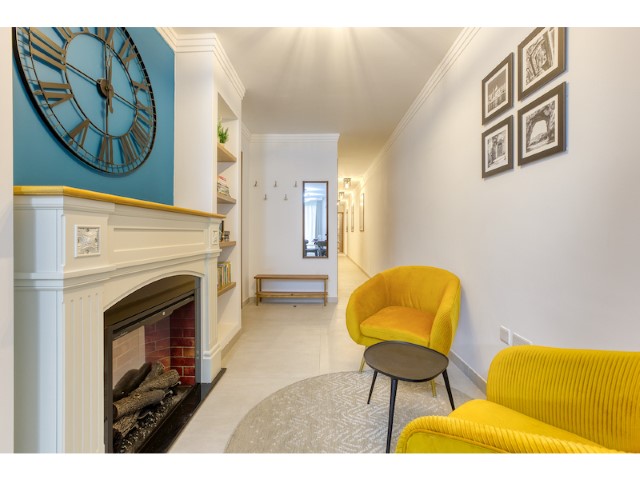
A designer 2-bedroom apartment in Gżira, close to the church, around 2 minutes from the promenade, and near Manoel Island.
View on Airbnb