
A practical guide to Malta and Gozo’s wrecks, built for real trip planning rather than a generic top-10 list.
⚠ IMPORTANT SAFETY DISCLAIMER
Scuba diving is an inherently risky activity. People have died on the wrecks described in this guide. This page is a practical overview, not a substitute for training, certification, local briefings, gas planning, weather checks, medical self-assessment, or professional supervision.
Always dive within your certification and experience limits. Use appropriate equipment. Check current access rules, sea state, and site conditions with a registered local dive centre before entering the water. Historic wrecks may be subject to legal protection and managed access. Depths and access can vary by route, sea state, and local operator practice.
For mistakes that regularly catch visiting divers out, see Common Diving Mistakes in Malta.
TL;DR — THE 30-SECOND VERSION
Malta has one of the most varied wreck-diving scenes in the Mediterranean, but the real planning question is not “Which wreck is famous?” It is “Which wreck suits my level, access style, and the conditions on the day?”
- Best beginner-friendly wrecks: HMS Maori, X127 / Carolita, P31, Tug 10, St Michael, Tug 2
- Best all-round recreational area: Cirkewwa (P29 + Rozi)
- Best big recreational wreck: Um El Faroud
- Best Gozo wreck cluster: Xatt l-Aħmar (Karwela, Cominoland, Xlendi, Hephaestus)
- Best easy training-style wreck hub: Marsaskala (Tug 10, St Michael, P33)
- Best deep prestige heritage wreck: Le Polynesien
- Independent diving possible? Yes, for many artificial reefs and standard shore-access wrecks. Managed heritage wrecks are different.
- Biggest planning mistake: treating all Malta wrecks as if they belong in one neat “holiday wreck diving” category.
Jump to:
Why Malta stands out ·
How to use this guide ·
Wrecks at a glance ·
Best recreational wrecks ·
Historic & technical wrecks ·
Aircraft wrecks ·
Other protected sites ·
Wrecks by certification ·
Heritage rules ·
Planning your trip ·
Practical logistics ·
Safety & accident patterns ·
Marine life ·
Wreck map ·
FAQ
Malta has one of the densest wreck-diving scenes in the Mediterranean. That is not hype. Within a relatively small area you get shallow World War II wrecks, purpose-sunk patrol boats and ferries, deep liners, wartime submarines, aircraft wrecks, tugboats, technical dives, and a growing layer of protected underwater cultural heritage.
What makes Malta genuinely unusual is the combination of historical range and proximity. The diveable heritage spans from ancient archaeological sites to Cold War-era aircraft, and unlike destinations such as Scapa Flow or Truk Lagoon — which represent a narrower wartime slice — Malta covers centuries of maritime history within a compact island setting. You can dive a shallow WWII destroyer bow before lunch and a scuttled tanker after it, without needing a liveaboard or expedition budget.
This guide separates Malta’s wrecks by depth, difficulty, access, management status, and type. That matters here, because some of the biggest names are realistic recreational dives, while others are deep, boat-based, heritage-managed, or firmly in technical territory. If you only remember one thing: Malta is excellent for wreck diving, but not every famous Malta wreck is a beginner wreck.
Artificial reefs vs. protected historic sites — this distinction matters
Artificial reefs and purpose-sunk wrecks: P31, P29, Rozi, Um El Faroud, Tug 2, Tug 10, St Michael, P33, Imperial Eagle, Karwela, Cominoland, Xlendi, Hephaestus.
Historic wrecks and aircraft under stronger heritage framing: Le Polynesien, HMS Southwold, HMS Stubborn, Schnellboot S-31, ORP Kujawiak, HMS Urge, HMS Olympus, HMS Hellespont, HMS Nasturtium, HMS Russell, the Blenheim Bomber, Beaufighter, Hawker Hurricane, Spitfire, Stuka Ju87, Martin Maryland, JU88, B24 Liberator, Douglas A-1 Skyraider, Fairey Swordfish, and others.
In plain English: do not assume every old wreck can be approached like a normal artificial reef. Historic sites may involve managed booking, stricter behaviour rules, and a higher threshold of respect and control underwater.
Why Malta stands out for wreck diving
Malta’s wreck-diving reputation rests on three things. First, the islands sit in a part of the Mediterranean with a heavy wartime and maritime history. Second, Malta and Gozo have a modern tradition of scuttling retired vessels as diving attractions. Third, many of the sites are reachable without the kind of long offshore expedition logistics that make wreck diving elsewhere more expensive or more weather-sensitive.
The practical effect is unusual variety. In one trip you can dive a shallow destroyer bow in Valletta, an upright patrol boat at Cirkewwa, a massive tanker off the south coast, a cluster of Gozo wrecks at Xatt l-Aħmar, and — if you have the training — deep wartime sites such as Le Polynesien, HMS Stubborn, HMS Southwold, Schnellboot S-31, ORP Kujawiak, HMS Urge, and HMS Olympus.
When divers talk about “wreck diving in Malta”, they usually mean more than shipwrecks. Malta’s wreck scene includes ships, tugs, ferries, patrol boats, submarines, lighters, and aircraft. The aircraft wrecks are not a footnote. They are part of what makes the islands exceptional. For more on Malta’s broader seafaring story, see Traditional Boats of Malta.
How to use this guide like a real planning tool
A lot of Malta wreck content is written like travel copy. Real divers plan differently. They care about the same core fields over and over again: depth, shore vs. boat access, whether a wreck is realistically independent, whether it is managed heritage, and whether the site has changed physically over time.
That is why this page does not just rank wrecks by fame. It sorts them by what actually affects a dive day:
- Access: shore, boat, or either
- Managed: whether a normal qualified buddy pair can realistically dive the site or whether it usually sits inside a heritage-managed / centre-led system
- Level: the honest working category, not the optimistic holiday brochure version
- Dynamic notes: some wrecks have shifted, broken, or degraded over time, which matters underwater
Important: this is a practical guide, not a claim that every named wreck below deserves equal priority on a short trip. Some sites matter because they are excellent dives. Others matter because they complete the real picture of Malta’s underwater heritage.
Malta and Gozo wrecks at a glance
On mobile, swipe left to see full table details. This table covers the core trip-planning wrecks and headline heritage sites rather than every minor wreck or aircraft entry in Maltese waters.
| Wreck | Area | Depth | Type | Access | Managed? | Who it suits |
|---|---|---|---|---|---|---|
| HMS Maori | Valletta / St Elmo Bay | 5–16m | Historic destroyer remains | Shore | Independent possible | Open Water+ |
| P31 | Comino | 7–21m | Artificial reef / patrol boat | Boat | Centre / charter normal | Beginners+ |
| X127 / Carolita | Manoel Island | 5–25m | Historic lighter | Shore | Independent possible | Beginners+ |
| Tug 10 | Marsaskala | 20–24m | Artificial reef / tugboat | Shore | Independent possible | Open Water+ |
| St Michael | Marsaskala | 20–24m | Artificial reef / tugboat | Shore | Independent possible | Open Water+ |
| P33 | Marsaskala | 20–24m | Artificial reef / patrol boat | Shore | Independent possible | Open Water+ / AOWD+ |
| Tug 2 | Exiles, Sliema | 15–25m | Artificial reef / tugboat | Shore | Independent possible | Open Water+ |
| P29 | Cirkewwa | 12–34m | Artificial reef / patrol boat | Shore | Independent possible | AOWD+ |
| MV Rozi | Cirkewwa | 20–34m | Artificial reef / tugboat | Shore | Independent possible | AOWD+ |
| Um El Faroud | Wied iż-Żurrieq | 15–36m | Artificial reef / tanker | Shore | Independent possible | Experienced rec |
| Imperial Eagle | Qawra Point | 32–42m | Artificial reef / ferry | Shore or boat | Independent or centre | Deep rec |
| MV Karwela | Xatt l-Aħmar, Gozo | 32–40m | Artificial reef / passenger vessel | Shore or boat | Independent or centre | Experienced rec |
| MV Cominoland | Xatt l-Aħmar, Gozo | 32–40m | Artificial reef / passenger vessel | Shore or boat | Independent or centre | Experienced rec |
| MV Xlendi | Xatt l-Aħmar, Gozo | 32–44m | Artificial reef / ferry | Shore or boat | Independent or centre | Experienced rec |
| MT Hephaestus | Xatt l-Aħmar, Gozo | 35–47m | Artificial reef / tanker | Shore or boat | Independent or centre | Advanced rec / tech |
| Beaufighter | St Julian’s Point | 38m | Historic aircraft | Boat | Centre-led normal | Deep rec |
| HMS Hellespont | Rinella | 41m | Historic paddle tug | Boat | Managed boat dive | Deep rec / entry tech |
| Blenheim Bomber | Xrobb l-Għaġin | 42m | Historic aircraft | Boat | Managed boat dive | Deep rec / tech |
| Le Polynesien | Off Marsaskala | 45–65m | Historic liner | Boat | Heritage Malta booking | Technical |
| HMS Stubborn | Off St Paul’s Bay | 57m | Historic submarine | Boat | Heritage Malta booking | Technical (trimix) |
| Schnellboot S-31 | Outside Grand Harbour | 65m | Historic torpedo boat | Boat | Heritage Malta booking | Technical (trimix) |
| HMS Southwold | Outside Marsaskala | 65–72m | Historic destroyer | Boat | Heritage Malta booking | Technical (trimix) |
| ORP Kujawiak | South-east Malta | 97m | Historic destroyer | Boat | Heritage Malta booking | Technical (hypoxic trimix) |
| HMS Olympus | Outside Grand Harbour | 115m | Historic submarine | Boat | Heritage Malta booking | Extreme technical |
| HMS Urge | Outside Grand Harbour | 110–130m | Historic submarine | Boat | Heritage Malta booking | Extreme technical |
Depths are working ranges, not promises. Exact profiles vary by route, sea state, landmark choice, and how much time you spend above, on, or around a wreck.
Best recreational wrecks in Malta and Gozo
These are the wrecks most visiting divers will realistically target. They are not all easy, but they form the real recreational circuit.
HMS Maori — Valletta / St Elmo Bay
Depth: 5–16m · Access: Shore · Managed: Independent possible · Level: Open Water+ · Why: Malta’s best shallow historic wreck
Still the best answer if someone asks for a first real Malta wreck. What remains is the bow section of the destroyer, in shallow water. Historically important, photogenic, and genuinely accessible when the bay is calm. One of the rare headline Malta wrecks that can honestly be recommended to newer divers.
P31 — Comino
Also known as: Patrol Boat P31
Depth: 7–21m · Access: Boat · Managed: Centre / charter normal · Level: Open Water+ · Why: Cleanest beginner-friendly wreck in Malta
Scuttled off Comino in 2009, sitting upright with the upper section shallow and the seabed around 20–21 metres. Clean, recognisable, and widely used for training and first wreck experiences.
X127 / Carolita — Manoel Island / Marsamxett Harbour
Also known as: X127 Lighter, Carolita, Coralita, X131
Depth: 5–25m · Access: Shore · Managed: Independent possible · Level: Open Water+ · Why: Under-hyped shallow historic wreck with real character
Oddly under-mentioned in general tourist content. The wreck lies on a slope and is one of the few genuinely shallow historic wreck dives in Malta. It was long misidentified by divers, which is why the alternative names still circulate. Not as dramatic as the offshore giants, but practical, historically interesting, and ideal for divers who want real wreck character without deep profiles.
Tug 10 — Marsaskala
Also known as: No 10, Number Ten, MV No.10
Depth: 20–24m · Access: Shore · Managed: Independent possible · Level: Open Water+ · Why: Compact, practical training wreck
One of the classic Zonqor Point tug wrecks. Small, manageable, and useful when you want a straightforward wreck dive without committing to deeper signature sites. It works well for training, buoyancy practice, navigation, and underwater photography.
St Michael — Marsaskala
Also known as: St Michael
Depth: 20–24m · Access: Shore · Managed: Independent possible · Level: Open Water+ · Why: Easy second wreck in the Marsaskala cluster
Pairs naturally with Tug 10. The attraction here is not grandeur. It is convenience. Marsaskala gives newer or less ambitious wreck divers a simple multi-wreck area without the depth and profile pressure of the bigger headline sites.
P33 — Marsaskala
Also known as: Patrol Boat P33
Depth: 20–24m · Access: Shore · Managed: Independent possible · Level: Open Water+ / AOWD+ · Why: The newer Marsaskala wreck that many older guides still miss
P33 belongs in a current Malta wreck guide. Scuttled between the existing tug wrecks in 2021, it made Marsaskala more than a two-wreck footnote. The catch is that it has degraded quickly, so this is exactly the kind of site where “latest local condition” matters more than recycled brochure text.
Tug 2 — Exiles, Sliema
Also known as: Tugboat 2, Tug Boat 2, Tuo Lun Er Hao
Depth: 15–25m · Access: Shore · Managed: Independent possible · Level: Open Water+ · Why: Quick Sliema-side wreck option with no long logistics
Not in the same league as the iconic deep sites, but genuinely useful for visiting divers who want a simple wreck day without driving across the island. The wreck was shifted into the reef by a storm in 2016, so descriptions based on its original position are already outdated. This is also one of the sites where boat traffic and DSMB discipline matter more than some casual write-ups admit.
P29 — Cirkewwa
Also known as: Patrol Boat P29, Boltenhagen
Depth: 12–34m · Access: Shore · Managed: Independent possible · Level: AOWD+ · Why: Malta’s cleanest multi-level wreck dive
One of Malta’s cleanest and most recognisable wreck dives. The former patrol boat lies about 150 metres offshore, upright, with the highest part around 12 metres and the seabed around 34 metres. It is the classic “next step” after easier wrecks. Shore divers often use a memorial stone and old anchor as navigation landmarks on the way out.
MV Rozi — Cirkewwa
Also known as: MV Rozi, Tug Boat Rozi, Rozy
Depth: 20–34m · Access: Shore · Managed: Independent possible · Level: AOWD+ · Why: Iconic, compact, photogenic
Famous for good reason — compact, upright, easy to read underwater, and a natural partner to P29. The catch is that it is often described too casually. Much of the wreck sits around 30–34 metres. This is a deeper recreational dive, not a true beginner wreck.
Um El Faroud — Wied iż-Żurrieq
Also known as: MV Um El Faroud, Um El Farud, Um El Farroud, UEF
Depth: 15–36m · Access: Shore · Managed: Independent possible · Level: Experienced rec · Why: Malta’s most famous wreck, a real multi-dive site
The iconic big Malta wreck. A former Libyan tanker, scuttled in 1998 off Wied iż-Żurrieq near Filfla, large enough that even a good dive only shows you part of it. For planning purposes, two details matter: the wreck sits roughly 150 metres southwest of the entry/exit point, with a diving helmet statue as a landmark on the way out, and the vessel broke in two during a heavy winter storm in 2005–06. That change is part of the modern site, not trivia.
It is an experienced-diver wreck because of its scale, depth, navigation, surface swim, and the temptation of penetration. When conditions line up, it is one of the great recreational wreck dives in Europe.
Imperial Eagle — Qawra Point
Depth: 32–42m · Access: Shore or boat · Managed: Independent or centre · Level: Deep rec · Why: Deep intact wreck with the underwater statue nearby
Should be approached as a serious deep recreational wreck, not as an automatic add-on for average holiday divers. Rewarding, photogenic, and often paired with other Qawra features, but profile management matters here.
MV Karwela — Xatt l-Aħmar, Gozo
Depth: 32–40m · Access: Shore or boat · Managed: Independent or centre · Level: Experienced rec · Why: Best-known Gozo staircase wreck, outstanding swim-throughs
The most photogenic of the classic Gozo wrecks, largely because of its staircase and the strong visual lines inside the wreck. One of the most memorable experienced-recreational wreck dives in the Maltese islands.
MV Cominoland — Xatt l-Aħmar, Gozo
Depth: 32–40m · Access: Shore or boat · Managed: Independent or centre · Level: Experienced rec · Why: Underrated second wreck in the Gozo cluster
Belongs on any serious Malta wreck page. Sits close to Karwela, starts around 32 metres, and is often treated like a supporting act when in reality it is part of what makes the whole Xatt l-Aħmar cluster so strong.
MV Xlendi — Xatt l-Aħmar, Gozo
Depth: 32–44m · Access: Shore or boat · Managed: Independent or centre · Level: Experienced rec · Why: Inverted wreck, more technical in feel
Lies deeper and in a less forgiving orientation than Karwela. It sits upside down, so the dive feels more awkward and more technical even before you account for the actual depth.
MT Hephaestus — Xatt l-Aħmar, Gozo
Depth: 35–47m · Access: Shore or boat · Managed: Independent or centre · Level: Advanced rec / tech · Why: The newer big Gozo wreck, deep and impressive
Scuttled in 2022. Any Malta wreck-diving guide written a few years ago is now incomplete without it. It has quickly become part of the standard conversation whenever divers discuss the Xatt l-Aħmar wreck hub.
Historic and technical wrecks that define Malta’s depth
This is where Malta separates itself from many warm-water holiday dive destinations. Deep, historically important wrecks attract technical divers, underwater historians, and serious photographers.
HMS Hellespont — off Fort Rinella
Depth: 41m · Access: Boat · Managed: Managed boat dive · Level: Deep rec / entry tech · Why: Best bridge between recreational and heritage diving
A historic wreck rather than an artificial reef, deep enough to demand discipline, but not in the same extreme category as the deepest technical sites. It works well as a bridge between conventional recreational wreck-diving and the more formal heritage layer.
Le Polynesien — off Marsaskala
Also known as: SS Polynesien, Poly, Tal-Platti, Plate Ship
Depth: 45–65m · Access: Boat · Managed: Heritage Malta authorised-centre booking · Level: Technical · Why: Malta’s signature deep heritage wreck
The French liner lies on its side, with shallower structure around 45 metres and seabed around 65 metres. Big, atmospheric, protected heritage — and a rare link to Malta’s WWI-era maritime history. You can explore a 360° virtual dive at Underwater Malta.
HMS Stubborn — off St Paul’s Bay
Depth: 57m · Access: Boat · Managed: Heritage Malta authorised-centre booking · Level: Technical (trimix) · Why: Intact upright submarine, historically rich
One of Malta’s best-known deep submarine wrecks. Historically rich and visually distinctive. The kind of site that gives Malta credibility with technical divers rather than just holiday divers looking for an extra thrill.
Schnellboot S-31 — outside Grand Harbour
Depth: 65m · Access: Boat · Managed: Heritage Malta authorised-centre booking · Level: Technical (trimix) · Why: Striking wartime wreck, also a war grave
One of the most visually and historically striking wartime wrecks in Maltese waters. Also a war grave. Treat it with the level of respect that wording implies, not as a trophy dive.
HMS Southwold — outside Marsaskala
Depth: 65–72m · Access: Boat · Managed: Heritage Malta authorised-centre booking · Level: Technical (trimix) · Why: Heavyweight WWII destroyer in two sections
Lies in two sections, stern deeper than the bow, with maximum depth around 72 metres. One of the heavyweight historic wrecks in Malta’s technical portfolio.
ORP Kujawiak — south-east Malta
Depth: 97m · Access: Boat · Managed: Heritage Malta authorised-centre booking · Level: Technical (hypoxic trimix) · Why: Shows the extreme range of Malta’s heritage
Clearly outside normal holiday wreck-diving territory. It belongs here because technical divers already know the name, and because it proves that Malta’s underwater story does not stop at the recreational and mid-tech range.
HMS Olympus and HMS Urge — the very deep end
Depth: 110–130m · Access: Boat · Managed: Heritage Malta authorised-centre booking · Level: Extreme technical · Why: Part of Malta’s real underwater story
Not mainstream dives for almost anyone reading a travel article. They belong in an authority guide because they are part of the real underwater history of Malta. Leaving them out gives the false impression that Malta’s wreck scene stops at the recreational and mid-tech range.
Aircraft wrecks
A lot of “wreck diving in Malta” articles focus almost entirely on ships. That misses one of the islands’ biggest strengths.
The reason there are so many aircraft on the seabed is tied to Malta’s wartime geography. The island was small enough that crash-landing a damaged aircraft on land was often extremely difficult. Pilots routinely ditched into the sea, hoping for rescue launches. The result is an unusually dense aircraft-wreck layer for such a small area.
Blenheim Bomber — Xrobb l-Għaġin
Depth: 42m · Access: Boat · Managed: Managed boat dive · Level: Deep rec / tech · Why: Best-known aircraft wreck in Malta, with recognisable structure
Deep enough to demand planning, but still within the range where many experienced divers can realistically aspire to it with the right training, gas, and operator support.
Beaufighter — off St Julian’s Point
Depth: 38m · Access: Boat · Managed: Centre-led normal · Level: Deep rec · Why: Atmospheric inverted airframe on sand
Upside down on sand, much of the airframe partly buried. Becomes more rewarding the more wreck context you already have. This is one of those dives that means more to divers who appreciate the history rather than just ticking off another depth profile.
Other notable protected wrecks and aircraft
The Heritage Malta / Underwater Malta ecosystem includes far more than the headline names. The current public virtual-museum layer includes sites such as:
- Hawker Hurricane
- Supermarine Spitfire
- Martin Maryland
- Stuka Ju87
- JU88 South
- B24 Liberator
- Douglas A-1 Skyraider
- Fairey Swordfish
- HMS Nasturtium
- HMS Russell
- HMS Trusty-Star
- SS Luciston
- Tower Wreck
Most do not need full subsections in a practical article like this, but their existence matters. It is part of what makes Malta’s underwater heritage unusually complete rather than just “good for a few famous wrecks”.
Best Malta wrecks by certification level
| Certification / experience | Best-fit wrecks |
|---|---|
| Open Water (OWD / BSAC Ocean Diver) | HMS Maori, P31, X127 / Carolita, Tug 10, St Michael, Tug 2, P33 in the right hands and conditions |
| Advanced Open Water (AOWD / BSAC Sports Diver) | P29, MV Rozi, Um El Faroud with experience and planning |
| Deep / experienced recreational (to around 40m) | Imperial Eagle, Karwela, Cominoland, Xlendi, Hephaestus edge cases, HMS Hellespont, Blenheim Bomber, Beaufighter |
| Technical / trimix | Le Polynesien, HMS Stubborn, HMS Southwold, Schnellboot S-31, ORP Kujawiak, HMS Olympus, HMS Urge, HMS Russell, HMS Nasturtium, deeper aircraft and protected heritage sites beyond normal recreational depth |
Wreck law and heritage rules
Malta’s underwater heritage is not just a nice museum-side extra. It has legal consequences. Under the amended Cultural Heritage framework, cultural remains more than 50 years old on the seabed fall within Malta’s underwater cultural heritage regime. The bodies you will see referenced most are the Superintendence of Cultural Heritage as regulator and Heritage Malta, including the Underwater Cultural Heritage Unit (UCHU), as the operator and public-facing access structure.
What the law changes in practical terms
Do not assume every historic wreck can be approached like a standard artificial reef. Some of the deep wartime sites and aircraft wrecks sit inside a managed access system designed to protect the site and monitor visits.
How managed access usually works
Most visiting divers book protected sites through a local dive centre authorised for that system. The centre handles the booking and vessel logistics. That is very different from renting tanks and driving off for a normal independent shore dive.
For Malta residents
Malta residents with a local ID card, permanent Malta or Gozo postal address, and local club access can join the Heritage Malta Shipwreck Club for an annual fee of €30. That opens year-round access to historic wrecks through registered local dive clubs — but even then, it is not a free-for-all.
Behaviour underwater on protected sites
The broad rule set is simple even if the administration behind it is not:
- No contact with the wreck
- No penetration unless specifically allowed in that framework
- No anchoring on historic wrecks
- No tying lines or markers directly to the wreck
- Keep groups controlled
- Maintain excellent buoyancy and secure all loose equipment
That matters because some of these sites are both heritage assets and war graves, not just scenic dive attractions.
Planning your Malta wreck-diving trip
Best areas for different wreck styles
- Valletta / Marsamxett: HMS Maori, X127 / Carolita, plus the deeper historic layer outside Grand Harbour.
- Cirkewwa: P29 and Rozi, with easy reef add-ons such as the Arch and Susie’s Pool.
- Wied iż-Żurrieq: Um El Faroud plus West Reef, East Reef, the valley, and Blue Grotto-side options.
- Marsaskala: Tug 10, St Michael, P33 for easier wreck days, with deeper heritage offshore such as Le Polynesien and Southwold.
- Qawra / St Paul’s Bay: Imperial Eagle and the deeper northern technical orbit including HMS Stubborn offshore.
- Xatt l-Aħmar, Gozo: Karwela, Cominoland, Xlendi, and Hephaestus — the strongest concentrated wreck cluster in the islands.
Best 2-dive or 3-dive combinations
- Cirkewwa day: P29 + Rozi, with Arch or Susie’s Pool as a shallower second / third dive.
- South coast day: Um El Faroud + West Reef or East Reef.
- Marsaskala day: Tug 10 + St Michael + P33 if visibility and energy allow.
- Gozo wreck day: Karwela + Cominoland, or one of those plus Xlendi depending on gas, profile, and shore logistics.
For help choosing a base, see Where to Stay in Malta and Holiday Rentals in Malta.
Shore dives versus boat dives
Malta’s shore-diving reputation is deserved, but do not confuse “shore dive” with “easy dive”. Some entries are awkward, the surface swim can matter, and exits can feel much worse with heavy kit after a deep profile. Some of the most famous deep heritage sites are boat dives or are effectively managed that way.
Weather and conditions
Malta often delivers excellent visibility, but wind direction, swell, and recent weather still matter. Good visibility does not cancel out surge, a messy entry, or a difficult surface exit. Ask about the site exposure on the day, not just whether “the vis is good”.
Why local operators still matter
Even confident divers benefit from local knowledge in Malta — for route planning, conditions, heritage access, current site practice, and realistic wreck selection. The best trip is the one where the wreck choices actually fit the weather and the team.
Current-condition rule: when a wreck has shifted, broken, silted, or deteriorated over time — Tug 2, Um El Faroud, P33 and others — local briefing quality matters more than polished website copy.
Practical logistics: independent diving, gear, and safety
Independent vs. guided diving
Malta is unusual in the Mediterranean because it has a genuine independent-diving culture. Qualified buddy pairs can rent tanks and weights from local centres and complete shore dives without a guide on many standard sites. You will usually need a rental car to reach those sites efficiently. Medical and liability paperwork still applies.
If you are planning deep or technical dives on the historic wrecks, you will almost certainly need a boat charter and a licensed structure due to heritage protection, vessel logistics, and the practical realities of the sites.
Exposure protection and water temperatures
| Season | Months | Temp | Suit recommendation |
|---|---|---|---|
| Winter | Jan–Mar | 14–15°C | Drysuit or high-quality semi-dry |
| Spring / Autumn | Apr–Jun, Oct–Dec | 16–22°C | 5mm to 7mm wetsuit or semi-dry |
| Summer | Jul–Sep | 24–28°C | 3mm shorty or full suit |
Tech diver note: at 60m+ depths, the temperature is effectively cool year-round. Plan decompression thermal protection accordingly, even in August.
The hard-sole rule
If you are shore diving wrecks like X127, HMS Maori, P29, Tug 2, or Um El Faroud, do not show up in thin neoprene socks and hope for the best. Malta’s coastline is sharp limestone. You need sturdy boots with hard soles for safe entries and exits. This is one of the most common avoidable equipment mistakes visitors make.
Technical infrastructure and gases
Trimix, Nitrox, and Oxygen are widely available at major centres. Rebreather support is also common, but book ahead to make sure the consumables and cylinders you want are actually in stock. Twinsets and sidemount cylinders are standard rental asks at technically oriented shops.
Medical safety and the hyperbaric chamber
The main hospital, Mater Dei near Msida / Valletta, houses Malta’s hyperbaric unit. In a decompression emergency, call 112 immediately. For more on the broader emergency context, see Malta in an Emergency.
Safety and accident patterns: what the record actually shows
An authority guide should not pretend that wreck diving in Malta is risk-free. Malta has a well-documented history of diving fatalities — partly a function of volume and partly a function of the depth, cold-water stress, awkward shore logistics, and overconfidence that visiting divers sometimes bring with them.
Three broad patterns matter more than the dramatic headlines.
Cardiac and medical events at Cirkewwa
A disproportionate number of serious incidents at Cirkewwa involve older divers suffering cardiac events or immersion-related medical problems. The combination of cold water, exertion from the surface swim, and depth-related stress is not theoretical here.
Panic ascents and barotrauma on deeper recreational wrecks
The Gozo wreck cluster and deeper recreational sites can create a false sense of security because they are so well known. Shore access does not make a 35–40m wreck a casual dive. Once panic, narcosis, task loading, or gas stress enters the picture, bad outcomes can develop very quickly.
Technical wreck incidents at depth
On sites such as Le Polynesien, HMS Stubborn, and Southwold, the risk profile shifts. At these depths, issues like rebreather malfunction, oxygen toxicity, CO₂ buildup, current, shot-line discipline, and separation are the kinds of problems that matter.
Um El Faroud penetration and exertion risk
The Um El Faroud is a spectacular wreck, but it invites exactly the kind of overreach that gets divers hurt. The wreck is large, the shore logistics matter, the swim is not trivial, and the internal spaces can become confusing. Treat it as a serious dive site, not as a scenic attraction with scuba gear.
The point is not to frighten anyone away from Malta’s wrecks. It is to make the case that honest self-assessment, medical fitness, weather awareness, and real profile planning matter more here than in many easier warm-water destinations.
Marine life: what to actually expect
You do not come to Malta for reef life alone. That is worth saying clearly. If you are expecting tropical colour or Red Sea density, the Mediterranean will disappoint you.
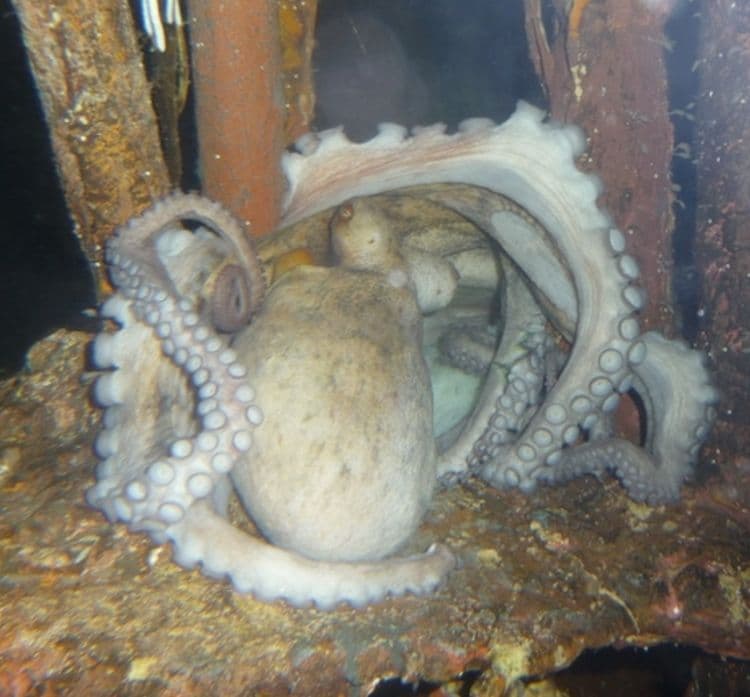
What you will see on the wrecks is typical Med fauna: scorpionfish, moray eels, two-banded sea bream, octopus, nudibranchs, fireworms, and occasional grouper. Barracuda turn up on deeper sites. The artificial wrecks often attract more concentrated life than the open reef because the structure provides shelter and feeding surfaces. It is not empty, but the wrecks themselves are the main attraction.
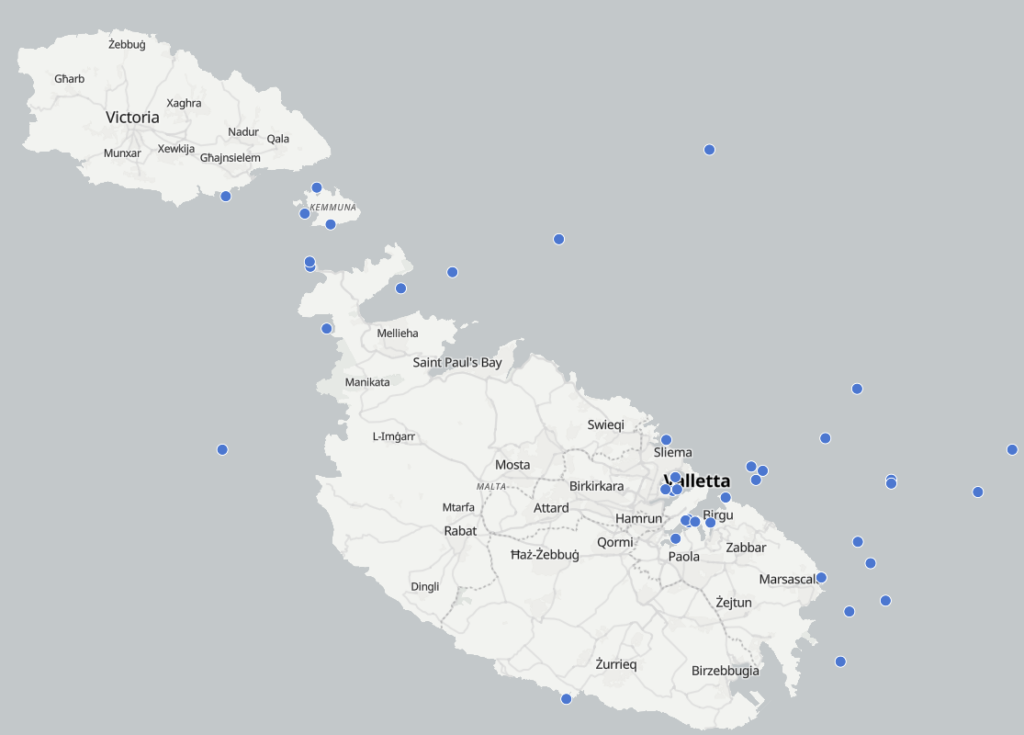
Wreck map of Malta and Gozo
For a visual overview of where the major wrecks sit, use the official underwater heritage map. It is especially useful for understanding the real geographic logic of the wreck scene: Valletta and Marsamxett, Cirkewwa, Marsaskala and the south-east coast, Wied iż-Żurrieq, and the Xatt l-Aħmar wreck hub in Gozo.
Many of the protected heritage wrecks also have 360° virtual dives available through Underwater Malta.
FAQ: wreck diving in Malta
Is Malta good for beginner wreck diving?
Yes, but with limits. Malta has genuine beginner-friendly options such as HMS Maori, P31, X127 / Carolita, Tug 10, St Michael, Tug 2, and in some cases P33. The mistake is assuming every famous Malta wreck belongs in the same category.
What is the best all-round wreck area in Malta?
Cirkewwa is the cleanest all-round answer because P29 and Rozi give you a strong two-wreck combination with good shore logistics. Xatt l-Aħmar in Gozo is the strongest concentrated wreck cluster. Marsaskala is the best easy multi-wreck training-style area.
What is P33 and does it matter?
P33 is a patrol boat scuttled in Marsaskala in 2021 between the existing tug wrecks. It matters because many older guides do not mention it at all, which immediately makes those guides feel dated.
Do you need technical training for Malta wrecks?
Not for all of them. Many of Malta’s best-known wrecks are recreational. But Le Polynesien, HMS Stubborn, HMS Southwold, Schnellboot S-31, ORP Kujawiak, HMS Olympus, and HMS Urge sit firmly in technical territory.
Can you penetrate wrecks in Malta?
Depends on the wreck. Some artificial reefs are commonly explored more freely by properly trained divers. Protected historic wrecks may fall under stricter no-contact and no-penetration rules. Always check the current rule set for the specific site.
Can I dive Malta’s wrecks independently without a guide?
For standard artificial-reef wrecks accessible from shore, often yes — qualified buddy pairs can rent tanks from a dive centre and complete the required paperwork. For heritage-protected wrecks and many deep boat-based sites, you normally need an authorised structure or operator.
What is the single most famous Malta wreck?
For recreational divers: Um El Faroud. For deep historic prestige: Le Polynesien. For broad beginner recognition: HMS Maori.
Where should I start for one wreck-diving trip?
Be honest about your level. Beginners should look at HMS Maori, P31, X127 / Carolita, Tug 10, St Michael, Tug 2, and maybe P33. Experienced recreational divers should look at P29, Rozi, Um El Faroud, Imperial Eagle, and the Gozo cluster. Technical divers already know the names that matter.
What water temperature should I expect?
Winter is roughly 14–15°C and feels cold enough to matter. Summer is warm at the surface, but deeper water and long decompression exposures still change the comfort picture quickly.
Is there a hyperbaric chamber in Malta?
Yes. Malta’s hyperbaric capability is based at Mater Dei Hospital near Msida / Valletta. In an emergency, call 112 immediately.
For a broader Malta diving overview beyond wrecks, see Scuba Diving in Malta: A Primer to the Best Underwater Adventures. For another way to experience Malta’s limestone coastline, see Rock Climbing in Malta.
Last updated: March 7, 2026.
Stay in Gżira near the promenade
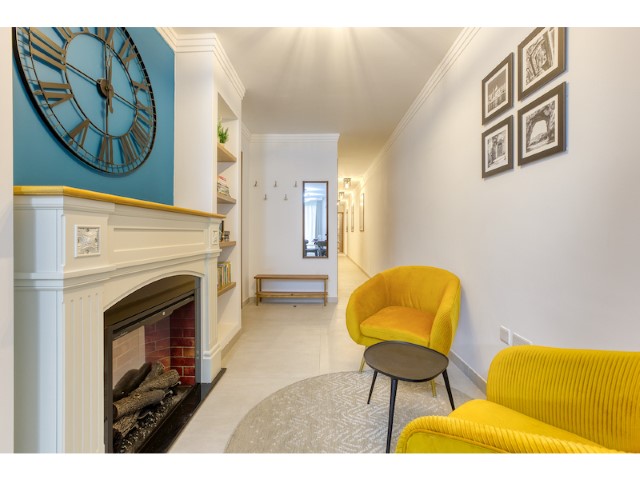
A designer 2-bedroom apartment in Gżira, close to the church, around 2 minutes from the promenade, and near Manoel Island.
View on Airbnb