
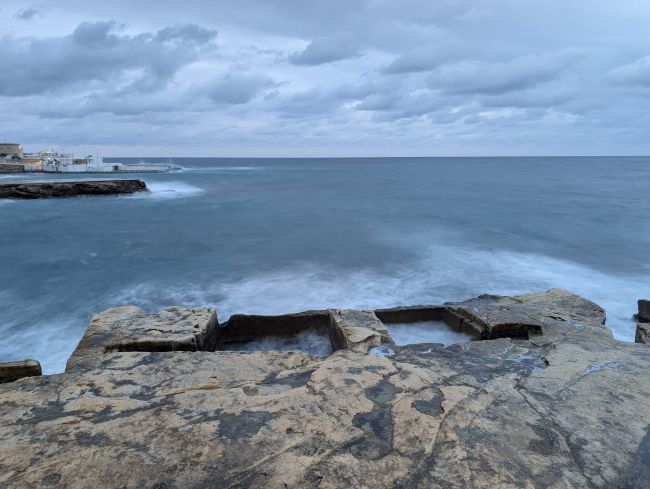

So here’s the thing about Sliema’s famous “Roman Baths”—they’re not actually Roman. Not even close. But don’t let that stop you from visiting, because these Victorian-era rock pools carved into Malta’s golden coastline are genuinely one of the island’s coolest (and most underrated) spots for a swim.
The water’s crystal clear, they’re completely free to use, and there’s something weirdly satisfying about floating in the same pools where British colonial officials once took their “therapeutic dips” back in the 1800s.
Let me break down everything you need to know.
Wait, Why Are They Called Roman Baths Then?
Good question. Nobody’s entirely sure how the name stuck, but it’s probably just romantic association—the pools look old, Malta has plenty of actual Roman ruins elsewhere, and “Roman Baths” sounds more exciting than “Victorian Swimming Holes.”
The Maltese government has actually clarified this: these pools were carved during the Victorian era, roughly between 1837 and 1901, when Malta was a British colony. If you’re curious about how the British came to rule the island, the brief history of Malta covers the key transitions.
If you want to see genuine Roman baths in Malta, head to Għajn Tuffieħa near Mġarr. That site was discovered by accident in 1929 when some workers digging irrigation ditches hit ancient stonework. It’s got the real deal—a warm room (tepidarium), cold plunge pool (frigidarium), heated room with underfloor heating (caldarium), mosaic floors, and even a communal toilet with nine stone seats. Dates back to the 1st or 2nd century CE. Heritage Malta manages it, though it’s sometimes closed for conservation work.
How a Fishing Village Became a Victorian Resort
The history of Sliema is kind of fascinating.
Before the mid-1800s, this was basically nothing—a handful of fishermen’s cottages clustered around a chapel. The name means “peace” in Maltese (it comes from the Hail Mary prayer, actually). Then the British showed up, decided Malta’s capital Valletta was too hot and crowded in summer, and wealthy officials started building vacation villas along Sliema’s coastline.
By the 1870s and 80s, it was the place to be. Elegant Victorian townhouses lined the promenade. And with the British came their obsession with sea bathing.
The Victorians Were Really Into “Therapeutic” Swimming
This was the era when doctors genuinely prescribed saltwater dips for all sorts of ailments—nervous conditions, gland problems, general malaise. Sea bathing wasn’t recreation; it was medicine.
But here’s the catch: most Victorians couldn’t actually swim. And women especially weren’t supposed to be seen in bathing attire. So what do you do?
You carve private pools into the soft coastal rock.
The Sliema pools were designed with all this in mind:
- Shallow enough to stand in (about 1.3 metres deep)
- Walls to block waves and create calm water
- Corner posts for wooden frames that held canvas privacy screens
- Stone steps for easy entry
- Channels connecting to the sea so fresh water could flow in
Maltese folklorist Arthur Grima wrote in 1992 that women’s bathing was so restricted, “whenever you see a woman at the sea you would have thought that she had fallen in—as she would have been fully clothed.” This attitude apparently lasted into the 1930s.
The pools we swim in today are the eroded remnants of this Victorian modesty culture. The privacy screens are long gone, but if you look carefully, you can still spot the holes where the posts used to go.
About That Golden Stone
You can’t really understand these baths without knowing a bit about Malta’s geology. That honey-gold colour you see everywhere on the island? That’s Globigerina Limestone, and it’s kind of remarkable.
The stone formed 14 to 23 million years ago from the shells of tiny marine organisms called Globigerina—basically ancient plankton. Billions of them lived, died, and settled on the seafloor, eventually compacting into this soft, workable limestone that covers about 70% of Malta’s surface.
It’s the same stone used to build:
- The megalithic temples at Ħaġar Qim and Mnajdra (which predate the Egyptian pyramids, by the way)
- Valletta’s massive fortifications, built by the Knights of Malta
- Pretty much every historic church on the island
The softness that made it easy for Victorian workers to carve swimming pools also means it erodes fairly quickly. The baths look quite different now than they did 150 years ago—edges rounded, steps worn down, some pools deeper and more irregular than originally intended.
Finding the Baths
The main cluster is at Fond Għadir Bay on Tower Road in Sliema, right near a restaurant called Surfside. You’ll see stairs leading down from the promenade to the rocky shore. More pools are scattered eastward along the coast toward St. Julian’s.
How to get there:
- From Valletta, take the ferry across the harbour (five minutes) and walk along the promenade—maybe 10 to 15 minutes to reach the main baths
- Buses run frequently along Tower Road
- If you’re driving, there’s street parking, but good luck finding a spot in summer
Not sure how to reach Malta in the first place? Check our guide on how to get to Malta.
No tickets, no fees. Open all the time.
What’s It Actually Like?
Honestly? Pretty great, especially if you pick the right conditions.
The pool walls do an impressive job blocking waves. Even when the Mediterranean’s kicking up outside, the water inside stays relatively calm. You can float around, watch fish dart through the channels that connect to the open sea, maybe spot a crab hiding in a crevice. Kids tend to love the crab-hunting aspect (though I’ve heard of at least one child who was absolutely terrified of them—fair enough).
The water clarity is excellent. You can see right to the bottom.
At sunset, when the limestone catches the golden light, it’s genuinely beautiful. The modern apartment blocks of Sliema tower overhead, which creates this strange contrast—21st century development looming over 19th century bathing pools. There’s something almost surreal about it.
A Few Practical Notes
Bring water shoes. I cannot stress this enough. The rocks are slippery with algae in places, there are occasional sea urchins, and some edges are sharper than they look. Reef shoes or sturdy sandals make a real difference. Our guide to what to wear on Maltese beaches has more tips.
Get there early. The most accessible pools fill up fast on summer weekends. Before 9 AM is your best bet for snagging a good spot. Weekday mornings are obviously quieter.
Check the weather. There are no lifeguards here. On rough days, waves can and do crash over the walls. If the sea looks angry, save your visit for another day. You can check the weather in Malta by month to plan ahead.
Other stuff to bring:
- Sunscreen (the limestone reflects a lot of light)
- A waterproof bag for your phone
- Snorkelling mask if you’ve got one
- Water and snacks—you might not want to leave once you’ve claimed a pool
- Towel or mat to sit on the rocks
For a full checklist, see our Malta packing list.
Don’t be that tourist: Take your rubbish with you, don’t carve anything into the stone, and generally treat the place with respect. These aren’t formally protected heritage sites, but they’re part of Malta’s history and they’re eroding fast enough without help.
Other Things Worth Seeing
While you’re in Sliema, it makes a great base for exploring. Here are some day trips from Sliema worth considering:
- The Three Cities — Birgu, Senglea, and Cospicua, where the Knights first settled and where the Great Siege of 1565 was fought
- Mdina — Malta’s ancient walled capital, eerily quiet and atmospheric
- Ġgantija in Gozo — Megalithic temple complex, possibly older than the pyramids
- Comino and the Blue Lagoon — Malta’s famous turquoise swimming spot
- Għar Dalam — A cave with fossils dating back hundreds of thousands of years
If you’re after more beaches, we’ve got a full map of beaches in Malta, plus detailed guides to spots like Golden Bay, Mellieħa Bay, and Paradise Bay.
Travelling with little ones? Our guide to things to do in Malta with kids might help.
Final Thoughts
Look, the “Roman Baths” name is misleading. These pools are Victorian, not ancient. But that doesn’t make them any less worth visiting.
There’s something genuinely special about swimming in the same carved rock pools where British colonials once took their therapeutic dips, surrounded by marine life, with the Mediterranean stretching out beyond the walls. It’s free, it’s unusual, and it connects you to a piece of Malta’s layered history that most tourists never discover.
Just… seriously. Water shoes. Trust me.
Stay in Gżira near the promenade
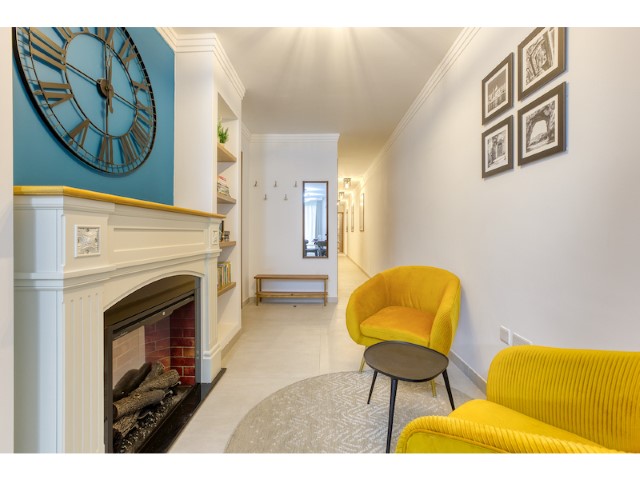
A designer 2-bedroom apartment in Gżira, close to the church, around 2 minutes from the promenade, and near Manoel Island.
View on Airbnb