
TL;DR — THE 30-SECOND VERSION
Markus Divinus is a boutique winery based at Zafrana in Dingli, on Malta’s western edge. Twenty years in, producing ten wines in small volumes. The recommended tasting is the Winemaker’s Share — a guided session through multiple wines, styles and vintages. Visits are personal, not mass-market. Book ahead through the winery directly — this is not a walk-in.
Jump to:
The interview · The tasting experience · Dingli and Zafrana · Planning your visit · Before you go · FAQ
Malta’s wine scene gets more attention than it used to, but most of it still goes to the bigger producers — the names you see on restaurant lists and airport shelves. The smaller operations tend to stay quiet, and that is partly by design.
Markus Divinus is one of those. Based at Zafrana in Dingli — the highest point on the main island, close to the cliffs and a long way from the tourist circuit — it started twenty years ago as what the wine world calls a garagiste project. Small-batch, hands-on. Two decades later it is still small and still hands-on, but the portfolio has grown to ten wines and the work behind them is more serious than it was.
We put a set of questions to the winemaker about what has changed, what has not, and what visitors should expect if they make the drive out to Dingli. The answers are his own words, unedited.
| Detail | What to expect |
|---|---|
| Location | Zafrana, Dingli — Malta’s western ridge, near the cliffs |
| Best tasting | The Winemaker’s Share — guided, multi-wine, multi-vintage |
| Time needed | 1.5–2 hours for the tasting, plus 30–40 min drive from Valletta/Sliema |
| Walk-in? | No — advance booking essential |
| Best season | Spring (Apr–Jun) and autumn (Sep–Nov); summer evenings work too |
| Getting there | Car is easiest; buses reach Dingli village but last stretch needs a taxi |
| Book via | markusdivinus.com |
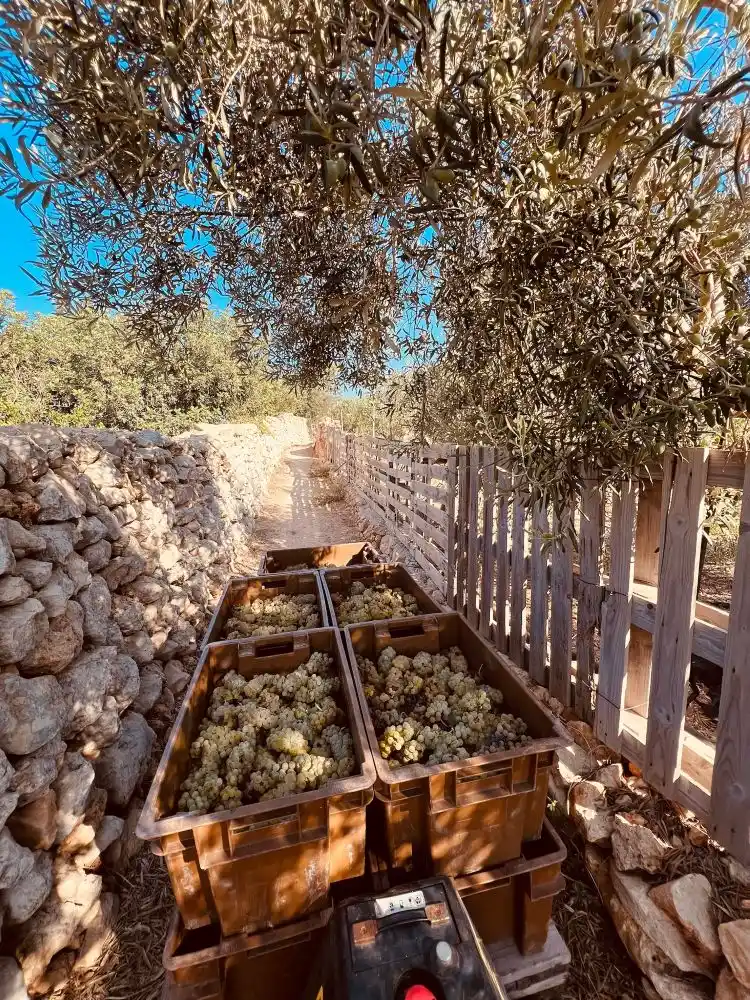
White grapes between a rubble wall and a gate — harvest time at Zafrana
We sat with Mark Borg, owner and winemaker, to tell us more about Markus Divinus.
The Interview
Two decades of boutique winemaking
Your journey began with garagiste roots and now marks two decades of boutique winemaking. What changed most over those years, and what did you refuse to change?
Mark Borg: What changed most was the mindset. What began as a passion project gradually evolved into a serious commitment—one that carries responsibility. Today, we produce a portfolio of ten wines, each crafted in small volumes yet with a high level of precision and complexity. Maintaining that level of detail across multiple wines has been one of the biggest shifts.
What I refused to change is the essence of being artisanal. The scale remains intentionally small, decisions remain hands-on, and every wine is still treated as an individual expression rather than part of a system.
You individually number each bottle and keep aside the first 24 bottles of every vintage. What does that ritual mean to you?
Mark Borg: It represents identity and continuity. Numbering each bottle reinforces the uniqueness of every release—no two bottles feel anonymous.
Keeping the first 24 bottles is a personal archive. It’s about safeguarding the future of the winery while preserving its past. These bottles allow us to observe the evolution of each wine over time, almost like chapters in an ongoing story.
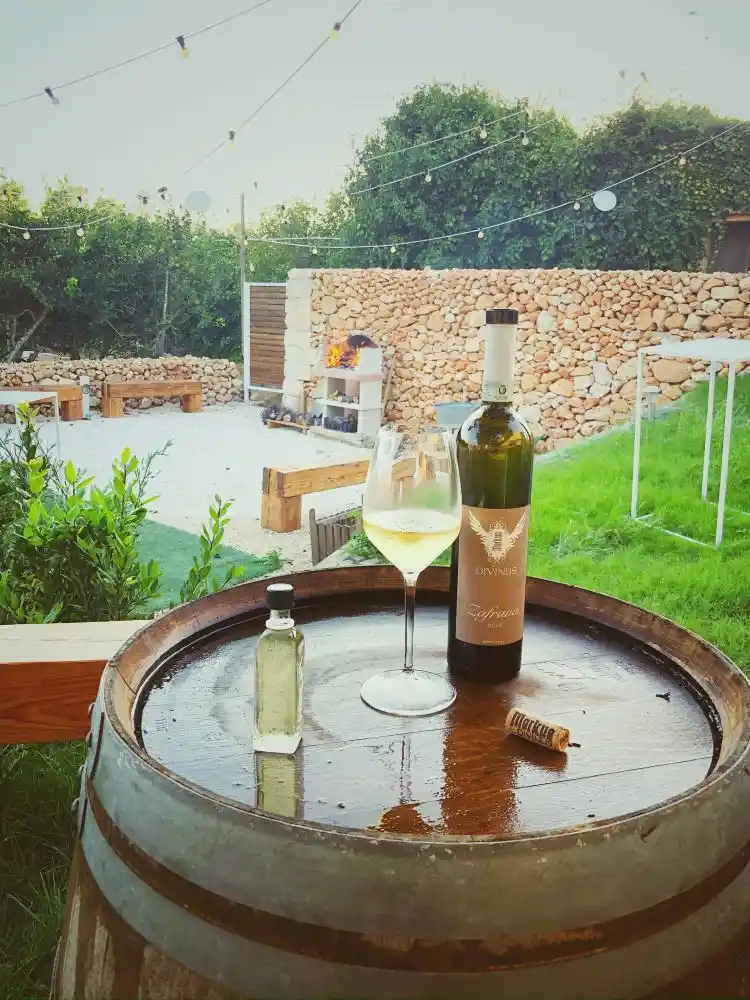
Wine and glass on an oak barrel at Zafrana
The tasting experience and what to expect
A tasting at a large Maltese producer and a session at a small countryside operation are different things. At Markus Divinus the scale is personal, which changes what you get when you show up.
For a visitor with limited time in Malta, which tasting experience gives the best introduction to Markus Divinus?
Mark Borg: The Winemaker’s Share experience offers the most complete introduction. It brings together a selection of our wines that each deserve their moment of explanation and exploration.
It’s not just a tasting—it’s a guided journey through styles, vintages, and philosophies, giving visitors a clear and personal understanding of both Markus Divinus and Maltese wine as a whole.
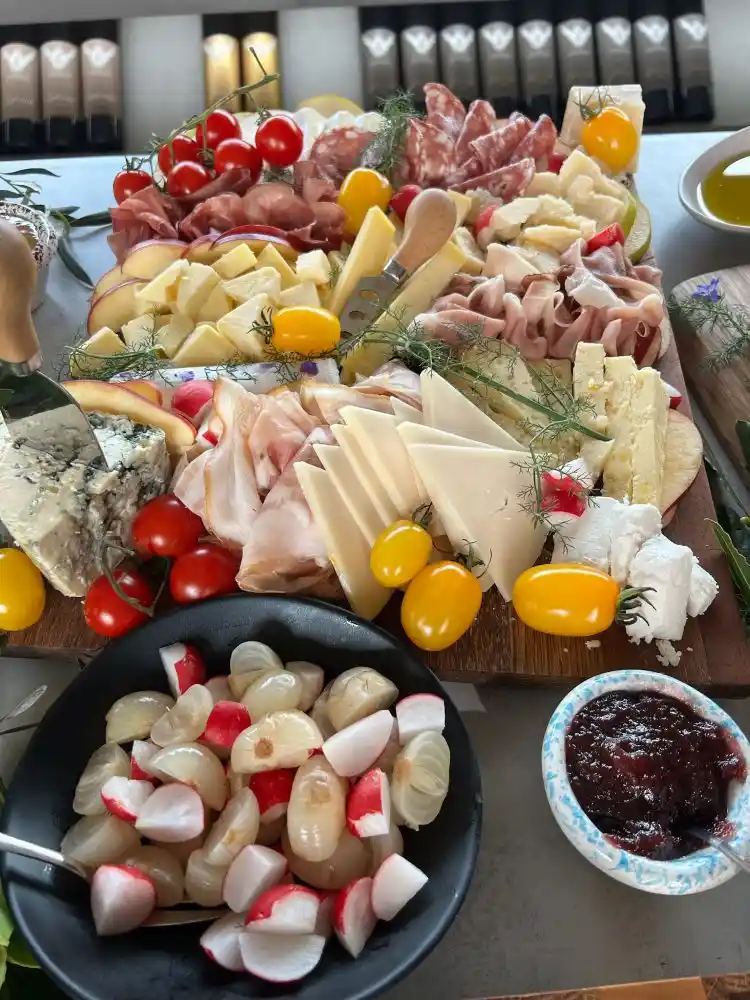
Local platter served alongside the tasting
What do visitors usually assume about Maltese wine before they arrive, and what tends to surprise them once they taste it?
Mark Borg: Many visitors are surprised to discover that Malta is even a wine-producing country. There is often little expectation of vineyards on the island.
What surprises them most is the uniqueness—both in terms of indigenous varieties and the distinct character shaped by our climate and soils. The quality and individuality of the wines tend to exceed expectations.
Which single wine best expresses the Markus Divinus philosophy?
Mark Borg: Adon is perhaps the clearest expression of our philosophy. It brings together indigenous Maltese varieties with international grapes, grown on different soils and handled with both traditional and modern winemaking techniques.
It’s a wine that allows for a certain level of improvisation while still maintaining structure and identity. In many ways, it reflects our approach: respectful of tradition, but not limited by it.
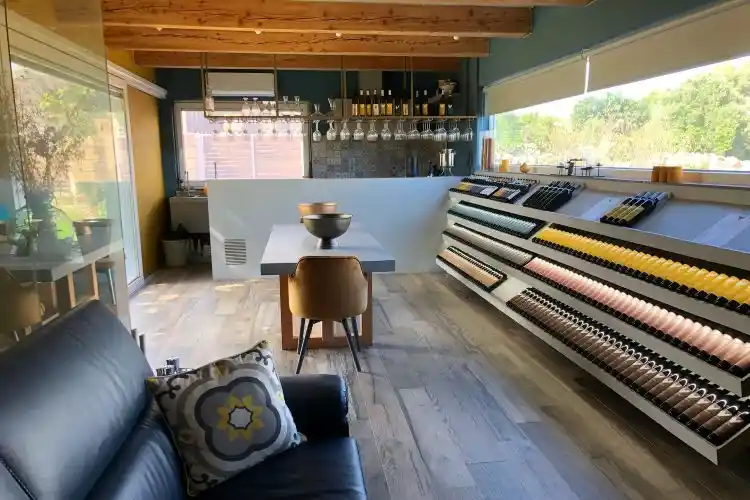
The tasting bar at Zafrana
Dingli, Zafrana and visiting in person
Dingli is not where most tourists end up. It sits on the western ridge of Malta, above the cliffs, surrounded by garigue scrubland and dry-stone walls. More rural than anywhere else on the main island. If you have done the usual heritage stops and want something quieter, this is the direction to head.
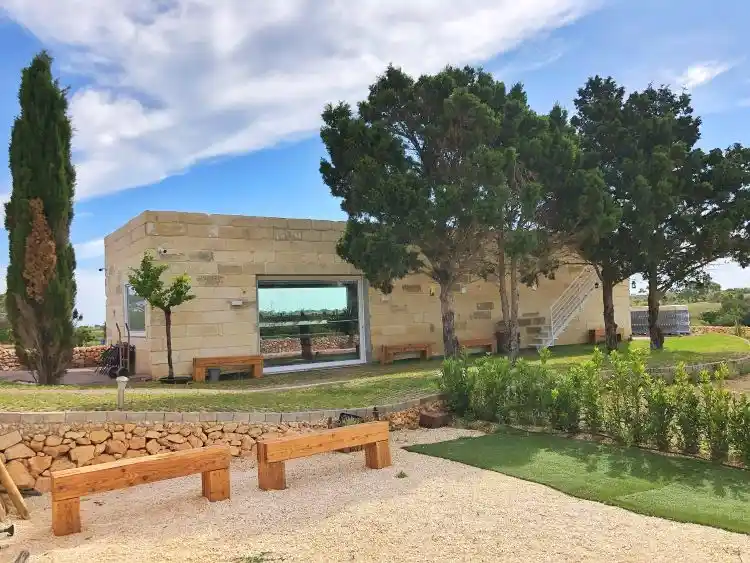
The outdoor setting at Zafrana — open space, clear views, countryside
How much does the Dingli setting matter to the overall experience? Does the place shape how people understand the wines?
Mark Borg: Dingli is fundamental to the experience. It has a raw, natural character, yet there is also a sense of refinement.
The winery itself is located in a place where expectations are initially low—but once visitors arrive, the setting reveals itself as something quite special: secluded, intimate, and almost unexpected. Tasting the wines outdoors, surrounded by the landscape, creates a strong emotional connection.
There is something about the local garrigue—the wild herbs, the air—that people often recognise in the wines themselves.
If someone had one afternoon in Malta and wanted a personal wine experience rather than a mass-market tour, what should they expect from a visit to Zafrana?
Mark Borg: A sense of exclusivity and genuine hospitality. I would want them to feel welcomed, not processed.
More than anything, I would hope they leave with a lasting impression of the experience as a whole—perhaps even struggling to choose which wine they enjoyed most, because each one offered something memorable.

The Markus Divinus tasting experience
Planning Your Visit
Heads up: Exact pricing, booking links, and session times should be confirmed with the winery before your visit — details can change.
📍 Where: Zafrana, Dingli — on Malta’s western ridge, near the Dingli Cliffs. Search on Google Maps. Not a main-road location and there is limited signage. You will likely need directions from the winery once you book.
What to book: The Winemaker’s Share is the recommended tasting. It covers a selection of wines across styles and vintages with guided explanation from the winemaker.
Booking: Contact the winery directly. This is not a walk-in operation — sessions are personal and group sizes are small, so advance booking is essential. During peak season (May–October), book as far ahead as you can. markusdivinus.com
Time commitment: Allow at least 1.5 to 2 hours for the tasting itself, plus travel time. From Sliema or Valletta, the drive is roughly 30–40 minutes depending on traffic. From Mdina or Rabat, closer to 10 minutes.
Best time of day: Late afternoon works well. The tasting is outdoors and the Dingli ridge catches a decent breeze once the worst of the heat fades. You can walk the Dingli Cliffs beforehand and arrive ready to sit down.
Best season: Spring (April–June) and autumn (September–November) are the most comfortable for an outdoor tasting. Summer works too, but the afternoon heat is real — an evening session would be better. Winter is possible on mild days, though wind and rain are more likely on this exposed ridge. Check Malta’s weather by month for more.
Getting there: Easiest by car. Parking is not a problem — you will not be competing for spaces. Public buses do serve Dingli village, but the last stretch to the winery may need a short walk or taxi. If you are weighing up whether to rent a car in Malta, a visit like this is one of the better arguments in favour.
Who it suits: People who prefer a slower, quieter experience over a high-volume group tour. Works well for couples, small groups, or solo visitors with an actual interest in wine or in seeing a less-visited part of Malta. Still deciding whether Malta is right for you? That page helps with the bigger picture.
Who it may not suit: If you want a large social gathering, a wine-and-dine evening with a full meal, or something within walking distance of a hotel — probably not the right fit. The location is remote by Maltese standards, the experience is quiet and conversational, and you need transport sorted in advance. Anyone with mobility concerns should check with the winery about the outdoor setup and terrain.
What to bring: Comfortable shoes (the area is rural), a light layer for the breeze — Dingli is the highest and most wind-exposed point on the island — and sun protection if visiting in summer. If you are continuing elsewhere afterward, sort out a designated driver or taxi beforehand. For a broader Malta packing list, that page covers the basics.
Combine it with: The Dingli Cliffs walk is minutes away. On a clear day you can see Filfla — the uninhabited islet off the southern coast. Mdina is a short drive east and makes a natural first stop if you are building a half-day around the western side of the island. Dingli village itself has a few small spots for coffee or a simple lunch — nothing fancy, but enough.
Local tip: This part of Malta is quiet. That is the draw, but it also means there is not much within walking distance of the winery. Treat it as a destination rather than a quick stop between other things.
Before You Go — Quick Checklist
- Book ahead. Small operation, limited spots. Do not assume availability on the day.
- Arrange transport. Car is best. If relying on buses or taxis, confirm return options before you head out — Dingli is not well served after dark.
- Check the weather. The tasting is outdoors. A windy or rainy day on the Dingli ridge will feel very different to a calm one.
- Bring a layer. Even in summer, the breeze picks up in the late afternoon at this altitude.
- Allow enough time. Two hours for the tasting, plus 30–40 minutes each way from central Malta.
- Designated driver or taxi. If you plan to taste properly, sort this out before you go.
Final thought
Malta has plenty to do but not many experiences that feel this personal. A visit to Markus Divinus at Zafrana is unhurried, shaped by the winemaker and by the place itself, and deliberately small.
FAQ
Can you buy Markus Divinus wines outside the winery?
They are produced in small volumes — ten wines, all limited quantities — so availability elsewhere can be patchy. Your best bet is to check with the winery directly about current retail stockists, or whether you can buy bottles on-site during a tasting. For a broader overview of where to find Maltese wines, see the Maltese wine guide.
How do you get to Dingli from Valletta or Sliema without a car?
Public buses run to Dingli village from Valletta (check the Malta Public Transport route planner at publictransport.com.mt). Zafrana is outside the village centre though, so you may need a taxi for the last stretch. If you are planning several rural stops in one day, a rental car or a pre-booked driver is easier. More on that decision here.
Is the tasting suitable for someone who does not know much about wine?
Yes. The Winemaker’s Share is guided and explained throughout — you do not need background knowledge to follow it. The group sizes are small enough that you can ask questions as you go. You do not need to be an expert to get something out of it.
What else is there to do near the winery in Dingli?
The Dingli Cliffs are the obvious pairing — a short coastal walk with open views toward Filfla. You are also within easy reach of Mdina if you want to combine rural and historical stops in one afternoon. The Maltese food guide may help if you are looking for somewhere to eat nearby.
How far in advance should you book?
At least a few days, and more during peak months (May–October). This is not a large venue with daily public sessions — availability depends on the winemaker’s schedule and groups are kept small. The earlier you get in touch, the more likely you are to get a time that works.
Last updated: March 2026.
Stay in Gżira near the promenade
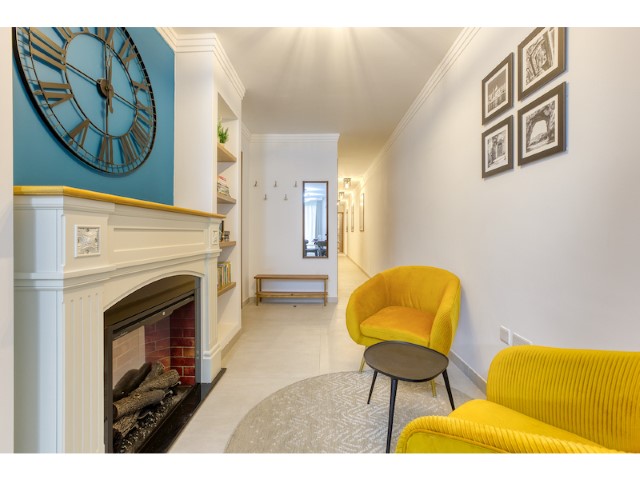
A designer 2-bedroom apartment in Gżira, close to the church, around 2 minutes from the promenade, and near Manoel Island.
View on Airbnb