

Mattia Preti is one of the key reasons Baroque art feels so present in Malta. His paintings are not locked away in a distant museum context. They are still part of the churches and cathedrals they were made for, which is what makes seeing them here different. If you want to understand his work properly, Malta is one of the best places to do it.
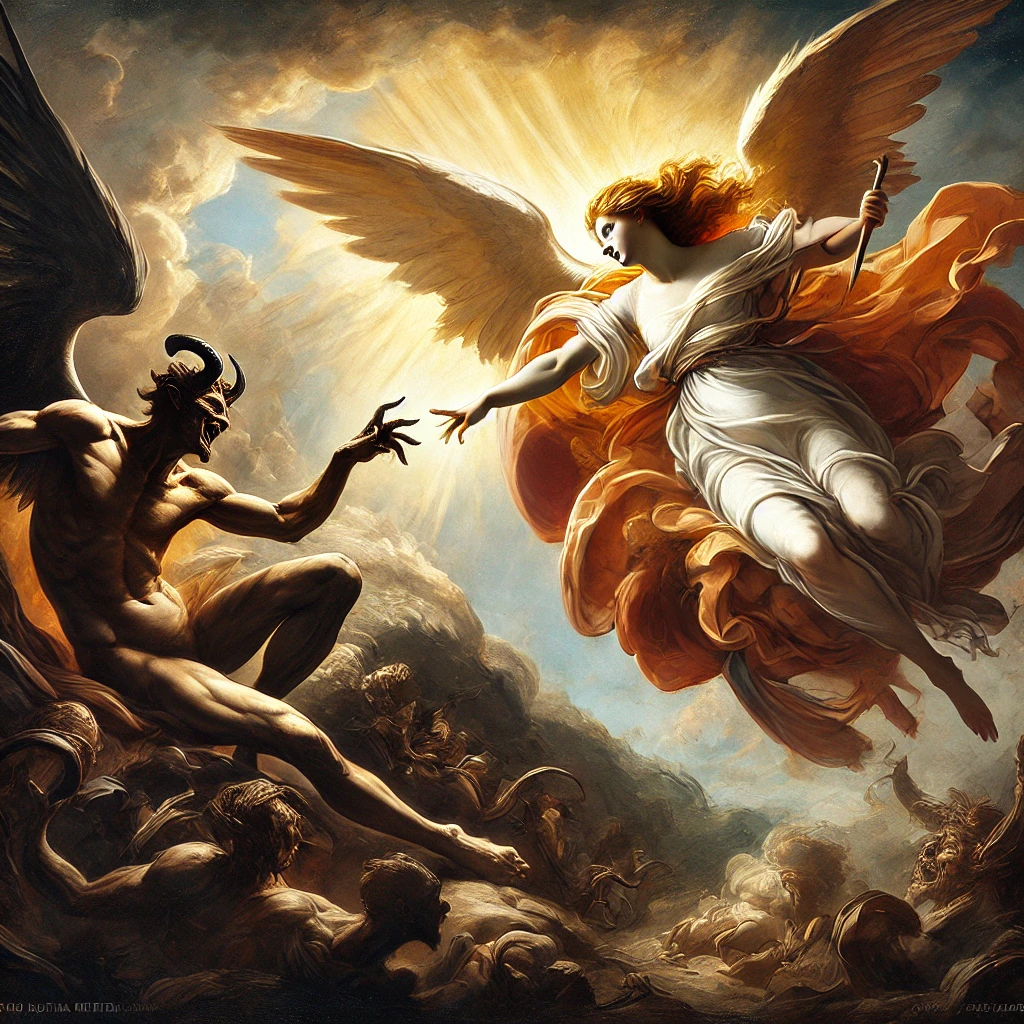
The featured image at the top is not an original work by Preti, but an AI-generated interpretation inspired by his style.
1. The Life and Art of Mattia Preti
Mattia Preti was born in Taverna, Calabria, in 1613 and became one of the best-known painters of the Baroque period. He is often associated with strong contrasts of light and shadow, dramatic movement, and large religious scenes that were built to hold attention. His work shows the influence of artists such as Veronese, Tintoretto, Guercino, Lanfranco, and Poussin, but his style still feels distinctly his own.
He arrived in Malta in 1661 and became closely tied to the Order of St. John. From that point on, Malta became the main setting for the final and most important stretch of his career. He stayed on the islands until his death in 1699, leaving behind a body of work that still shapes how many of Malta’s major churches are seen today.
2. Lesser-Known Facts About Mattia Preti
He also worked as a designer: Preti was not limited to painting. He is linked to the design of the Church of the Immaculate Conception in Floriana, which is usually described as the only building attributed to him.
He used oil on stone at St. John’s: The ceiling of St. John’s Co-Cathedral in Valletta was painted in oil on stone rather than as a standard fresco. That choice helped make the project unusual, ambitious, and technically demanding.
His art was tied to moments of crisis: During the plague of 1676, Preti produced paintings of plague saints commissioned by the Confraternity of the Holy Souls in Purgatory and by Grand Master Nicolas Cotoner. These works were devotional, but they also reflected the fears and needs of the period.
3. What Preti’s Story Still Shows Us
He adapted without losing himself: Moving from Italy to Malta meant entering a different artistic and social world. Preti managed that shift well and produced some of his most lasting work here.
Art can serve a public role: In hard periods, his paintings were not just objects of beauty. They were also part of how communities processed fear, devotion, and loss.
Big work is rarely done alone: Like many artists of his time, Preti relied on assistants for large commissions. That does not weaken his achievement. It shows how major projects were actually made.
4. The Best of Mattia Preti: A Journey Through His Art
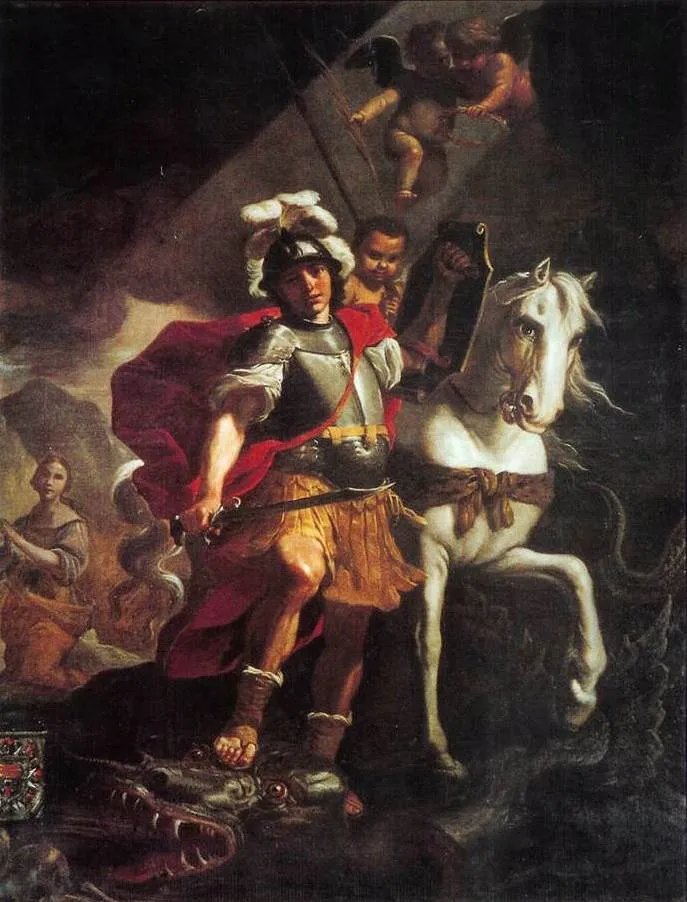
St. George and the Dragon – St. John’s Co-Cathedral, Valletta: This is one of those works where Preti’s sense of motion and tension is immediately clear. The subject is dramatic to begin with, and he leans fully into that.
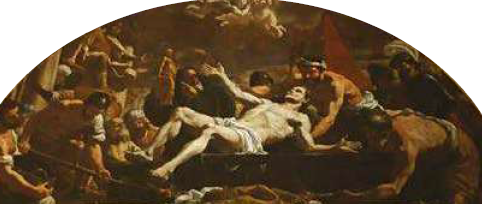
The Martyrdom of St. Lawrence – Collegiate Church of St. Lawrence, Birgu: This painting is direct, dark, and emotionally forceful. Preti was very good at making religious scenes feel immediate rather than distant.
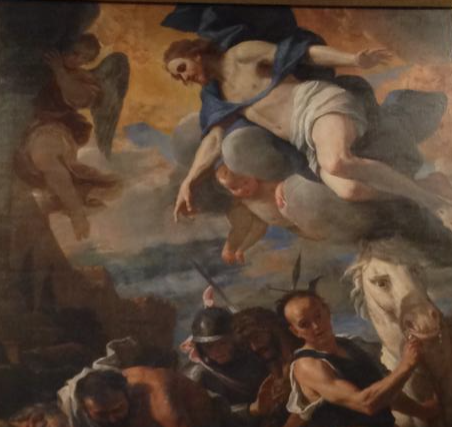
The Conversion of St. Paul – Cathedral of St. Paul, Mdina: This is a good example of Preti’s ability to organise movement, contrast, and attention inside a single scene without letting it become chaotic.
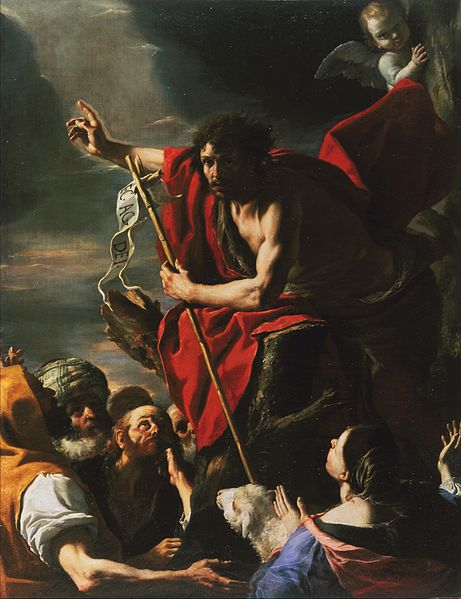
The Apotheosis of St. John the Baptist – St. John’s Co-Cathedral, Valletta: This ceiling is one of the clearest reasons to take Preti seriously in Malta. The scale is huge, the detail is dense, and the setting still does a lot of the work.
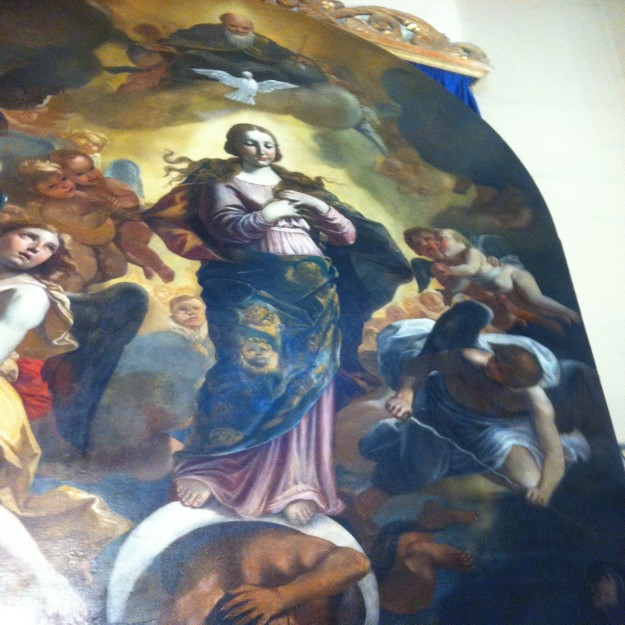
The Immaculate Conception in Glory – Church of the Immaculate Conception, Floriana: This work is often read through the context of the plague years, which gives it extra weight beyond its visual appeal.
5. Why Mattia Preti Still Matters Now
Preti is not just important because he was important once. His work is still being studied, restored, and discussed. In late 2025, St. John’s Co-Cathedral launched a long-term restoration project focused on his ceiling, together with a lighting upgrade that makes the vault easier to read and appreciate in person.
Research has also widened the picture. Scholars have looked not only at his famous works in Valletta, but also at how his style influenced churches outside the capital. Technical studies have examined paintings such as The Conversion of St. Paul in Mdina using modern scientific methods, which helps conservators understand materials, condition, and past interventions more precisely.
There is also an international dimension. In 2026, paintings tied to Malta’s Baroque and plague-era religious culture were exhibited in Naples, which helped place Preti and his wider Maltese context back into a broader Mediterranean conversation.
For visitors, that gives his work an added layer. You are not only looking at old paintings. You are looking at works that are still part of ongoing research, conservation, and cultural memory.
6. Where to See Mattia Preti’s Works in Malta
St. John’s Co-Cathedral, Valletta – The main place to start, especially for the ceiling and the scale of Preti’s work inside one setting.
Cathedral of St. Paul, Mdina – Known for The Conversion of St. Paul and The Martyrdom of St. Peter, with the wider setting of Mdina adding to the experience.
Church of the Immaculate Conception, Floriana – Worth seeing for The Immaculate Conception in Glory and for its direct association with Preti.
Basilica of St. George, Gozo – An important stop for anyone wanting to see Preti’s reach beyond the main island, including St. George and the Dragon and The Holy Souls in Purgatory with Donors.
Preti’s work is deeply embedded in Malta and Gozo. That is part of what makes him so interesting here. His paintings are not isolated objects. They are still part of the islands’ churches, spaces, and cultural identity.
Stay in Gżira near the promenade
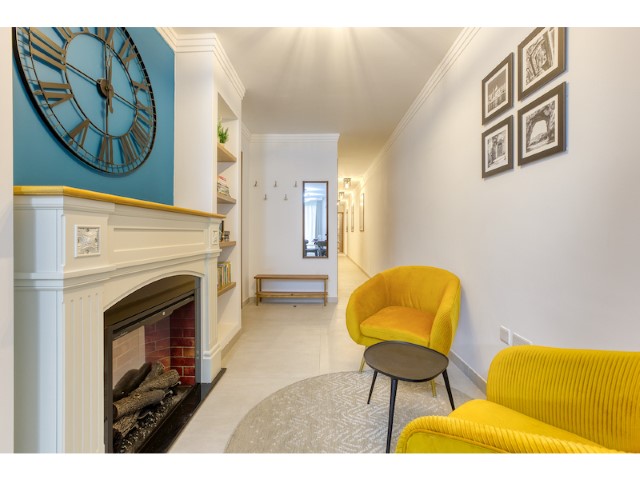
A designer 2-bedroom apartment in Gżira, close to the church, around 2 minutes from the promenade, and near Manoel Island.
View on Airbnb