

Should You Rent a Car in Malta? The Honest Local Guide
What driving, buses, parking, ferries, and scooters are actually like in Malta, and when a rental car makes sense.
This guide describes what you are likely to encounter on Malta’s roads, including habits and situations that can catch visitors out. Where local behaviour is described, it is for awareness and safety only, not as advice to copy it. Always follow Maltese traffic law. Nothing here is legal, financial, or insurance advice. For current rules, fares, and official guidance, check Transport Malta, Malta Public Transport, CVA Valletta, Malta Police, and LESA.
TL;DR – THE 30-SECOND VERSION
Most visitors do not need a rental car for the whole trip. They need the right base, a realistic plan, and maybe a short car rental for the harder-to-reach days.
- Best for most visitors: Rent a car for 2 to 3 days for Mdina, remote beaches, the south coast, or a proper Gozo day.
- Skip the full-trip rental if: You are staying in Valletta, Sliema, Gzira, or St Julian’s. Buses, ferries, ride-hailing, and walking cover most of the trip.
- Free public transport is available to holders of a personalised Tallinja Card. Adult registration is EUR25.
- Parking is the real enemy. Traffic is annoying. Parking is what drains your soul.
- Scooter option: A 125cc scooter can make sense for solo travellers with the right licence, proper protective gear, and genuine confidence on two wheels.
- Do not drink and drive. The legal alcohol limit is 0.5 g/l, penalties are severe, and it is not worth the risk.
- Use the Tallinja app for buses and live tracking. For driving, many visitors prefer Waze for road closures and awkward one-way systems.
Disclosure: We operate a rental apartment in Gzira and include one clearly marked sponsored placement in this article.
JUMP TO A SECTION
Malta is tiny, but that does not mean it is frictionless. A short drive can be easy at 10:30am and ugly at 8:15am. Distance is rarely the problem here. Timing is everything.
Ancient street layouts, dense traffic, one-way systems, and patchy parking all matter more here than the map suggests. This guide covers buses, ferries, ride-hailing, scooters, bicycles, car rental, and the nomad question. By the end, you should know whether you need a car at all, and if you do, for how long. If you have not picked a base yet, start with our Where to Stay in Malta guide.
What Kind of Traveller Are You?
The answer depends less on Malta and more on how you travel.
The Rush-and-Dash Explorer. Five days. Blue Grotto, Mdina, Marsaxlokk, Dingli Cliffs, a beach or two, and maybe Gozo. Get a car for part of the trip. It buys flexibility you will feel every single day.
The Slow Workation Traveller. Three weeks, laptop, coffee habit, no desire to wrestle with parking every afternoon. If you are based in Valletta, Sliema, or Gzira, the bus-plus-ferry-plus-Bolt combination is often enough.
The Romantic Escape. Long breakfasts, sea views, late dinners, no heroic logistics. You probably do not want a full-trip rental unless you are staying well outside the main corridor.
The Family Expedition. Children, bags, towels, snacks, car seats, and changing plans. Families benefit more than almost anyone from door-to-door convenience. A car can absolutely be worth it.
The Party Squad. If the trip revolves around St Julian’s and late nights, do not rent a car for the whole stay. That is not freedom. That is an administrative burden you will resent by day two.
Drink-driving warning: Do not drink and drive in Malta. The alcohol limit for drivers is 0.5 g/l, and penalties can include a substantial fine, licence disqualification, and possible imprisonment. If you are going out drinking, use Bolt, Uber, eCabs, a bus, or your feet.
The Solo Deep-Diver. If you like moving slowly, noticing details, and letting a place reveal itself, buses and ferries can actually enrich the trip. You lose speed, but you gain texture.
The Digital Nomad. Staying for weeks instead of days changes the calculation completely. Skip ahead to the nomad section.
Where Are You Staying? The Location Factor
This is the biggest variable in the whole car decision.
On mobile, swipe left to see the full table.
| Location | What is there | Bus access | Car needed? |
|---|---|---|---|
| Valletta | Museums, restaurants, harbour, culture | Excellent | Not for the full trip. Walk daily. Rent short-term if you want south and west coast freedom. |
| Sliema | Seafront, shopping, cafes, rocky beaches | Excellent | Usually no. Strong base without a car. Rent for a couple of strategic days if needed. |
| St Julian’s / Paceville | Nightlife, restaurants, Spinola Bay | Good | Usually no. Parking is a headache and most visitors stay local. |
| Gzira | Central, waterfront, practical base | Very Good | Usually no. One of the easiest places to stay car-free. |
| Bugibba / Qawra | Resort feel, sea access, boat trips | Decent | Maybe. Fine without one, but south and west Malta become slower. |
| Mellieha | Sandy beach, northern scenery, quieter pace | Limited | Often yes. Beautiful, but less forgiving without a car. |
| Mdina / Rabat | History, quiet streets, inland base | Moderate | Usually yes. Staying inland is easier with your own wheels. |
| Marsaskala | Laid-back south-eastern base | Moderate | Maybe. Fine if you move less. More frustrating if you want full-island freedom. |
| Gozo | Rural, slower, better for scattered exploring | Basic | Usually yes. Gozo is possible without a car, but much easier with one. |
| Three Cities | Harbour views, history, ferry access | Good | Not for the full trip. Great for daily life, then add a short rental if you want the rest of the island. |
Rule of thumb: the closer you are to the Valletta-Sliema-St Julian’s corridor, the less you need a car full-time. The further north, inland, or into Gozo you stay, the more useful a car becomes.
If your accommodation has guaranteed parking, a rental car becomes more attractive. If the host is vague about parking, or says free parking, that usually means street parking. Fine in theory. Time-consuming in practice.
If you are still comparing bases, pair this page with our Where to Stay in Malta guide, our Sliema guide, and our Three Cities guide.
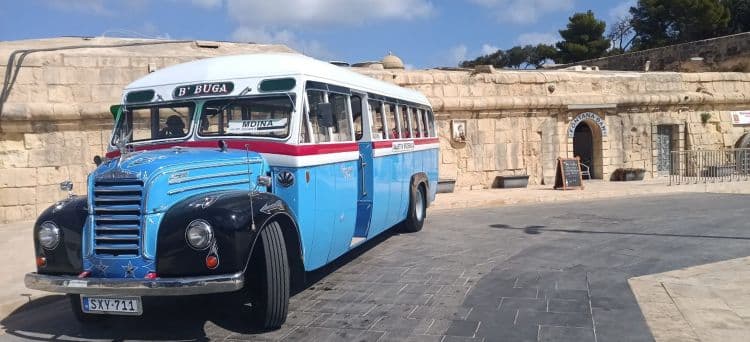
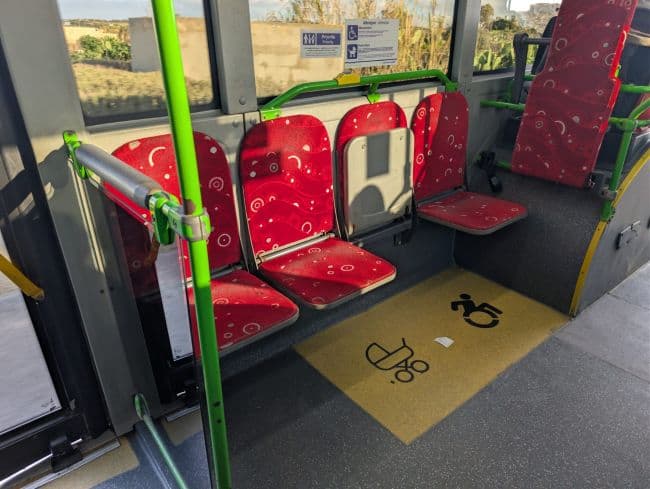
The Bus: Useful, Cheap, and Sometimes Chaotic
Malta’s bus network covers a lot of ground. It is workable. It is often good value. It is also very capable of testing your patience at the exact wrong moment.
Jokes aside, the bus lets you see parts of Malta that a rental car does not. It is one of the easiest ways to feel the island as it actually functions. Students, pensioners, hospitality staff, office workers, tourists, and new arrivals all get folded into the same moving box. For some visitors that sounds grim. For others, it is part of the point.
What You Need to Know
- Download the Tallinja app. It is the most useful transport app on the island for buses. Google Maps can help, but live Tallinja tracking matters more.
- Use live tracking, not blind optimism. If a bus is not showing, have a backup plan.
- Wave the bus down. Do not stand there radiating intent. Put your arm out.
- Buses can fill up. This matters most on airport runs, peak summer routes, and popular commuter times. If the driver says full, arguing will not create space.
- The school-run effect is real. Around Birkirkara, Attard, and Mosta, school traffic can make the network feel much slower than the map suggests.
- TD routes are faster. Tallinja Direct routes are not part of the free travel scheme, but they can save time if you are choosing speed over cost.
- The airport bus is not always the smartest move. Sometimes it is. Sometimes a fixed-price ride is worth the money after a flight.
- The Barrakka Lift trick: if you arrive in Valletta from the Three Cities ferry, the lift is the painless way up.
- Walking can beat traffic. On the seafront corridor, short walks are often faster than short drives. If you base yourself there, our 20 day trips from Sliema and Gzira shows how much you can do without wrestling a car all week.
Heat rule: In summer, build walking plans around the morning and late afternoon. Midday heat in Malta is tough. Sunscreen, hat, water, and a sense of self-preservation all help. If you are choosing dates, our weather in Malta by month guide helps set expectations.
Free Transport: Yes, But Only If You Have the Right Card
Public transport in Malta is free for holders of a personalised Tallinja Card. That includes day routes, night routes, select special services, Valletta ferry services, and the Barrakka Lift.
For Residents and Longer-Stay Visitors
- How to get a card: Register online at publictransport.com.mt.
- Registration fee: EUR25 for adult, student, and Gozo cards. EUR5 for child and concession cards.
- Delivery: Cards are typically delivered within about two weeks. Postage charges apply.
- What is not free: Tallinja Direct routes, On Demand services, and other paid mobility services.
For Tourists Without a Personalised Card
- Single bus tickets: EUR2 in winter / EUR2.50 in summer, valid for 2 hours on day routes.
- 7-day Explore Card: EUR25.
- 12 Single Day Journeys card: EUR19.
- Some travel products can be bought at Malta Public Transport sales offices, ticket machines, and authorised outlets.
Important: Personalised Tallinja cards are not transferable, and you must validate the card when boarding. If you travel without a valid ticket or fail to validate properly, Malta Public Transport says you can face a EUR50 penalty, and a personalised card may be confiscated until the fine is paid.
If you are booking around transport convenience rather than just views, read our holiday rentals in Malta checklist and our alternatives to Airbnb in Malta before you commit to an area.
Sponsored stay
Our sponsor’s designer 2-bedroom apartment in Gzira sits on one of the easiest transport corridors on the island. Valletta, Sliema, and St Julian’s are all easy to reach without a car.
Sponsored placement.
Ride-Hailing: The Middle Ground
- Install more than one app. Bolt, Uber, and eCabs can price differently at the same moment.
- Use fixed-price app rides rather than hailing taxis at random.
- Friday and Saturday nights surge. Especially around St Julian’s.
- Pin your pickup carefully. Old streets, walls, and awkward corners can confuse pickup points.
- Ride-hailing is excellent as backup. As your only transport strategy for an entire trip, it can get expensive fast.
Ferries People Underuse
Malta is one of those places where the water can make transport feel much more sensible than the roads.
- Sliema-Valletta ferry: quick, practical, and included with the personalised Tallinja Card.
- Three Cities ferry: one of the nicest transport shortcuts on the island. If that area is on your shortlist, read our Three Cities guide.
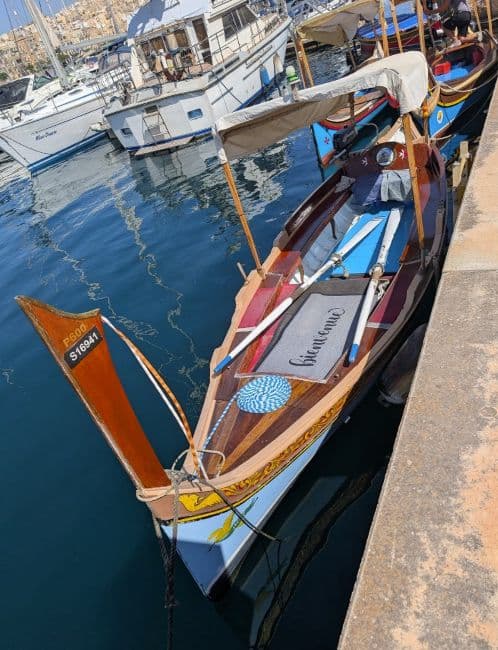
- Dghajsa boats: scenic harbour crossings when operating.
- Gozo Channel ferry from Cirkewwa: takes cars. Standard fare for a car plus driver is EUR15.70, paid from Gozo on the return leg.
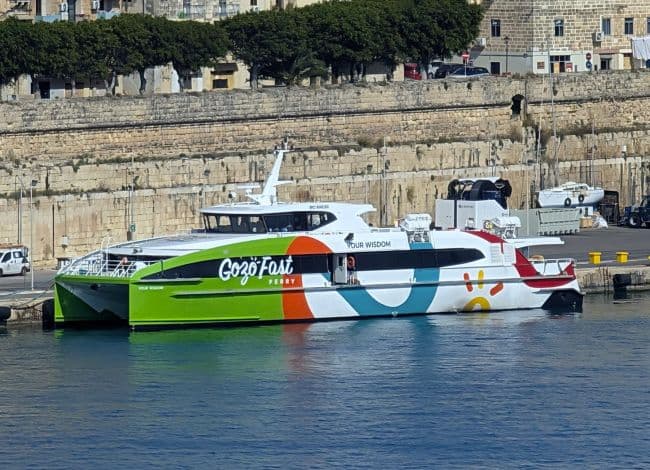
- Gozo Highspeed from Valletta: foot-passenger service that gets to Mgarr in under 45 minutes. If your sea day is really a beach day, use our Comino and Cominotto guide and our map of beaches in Malta.
If You Do Rent a Car: The Survival Guide
If you have decided to rent, the smart move is not to romanticise it. It can be useful. It can also be mildly exhausting.
The Rental Reality
- Book the smallest car you can tolerate. Narrow roads and parking make this matter.
- Photograph everything before you leave the lot. Panels, wheels, bumpers, windscreen, roofline, everything.
- Check the deposit terms properly. The cheap headline rate is rarely the full story.
- Do not leave valuables visible in the car.
- Non-EU visitors can drive in Malta for up to 12 months from their last entry with a valid licence. Rental companies may still have their own documentation rules, so check before flying.
- Hire vehicles in Malta are commonly associated with QZ plates. You may still spot older hire-plate patterns in circulation.
Driving on the Left
Malta drives on the left. If that is new to you, roundabouts will demand your full attention for the first couple of days.
- Mental anchor: keep yourself close to the centre line, not the kerb.
- The most dangerous moment is false confidence. Day one feels scary, so you stay alert. Day three is often riskier than day one.
- At roundabouts, commit clearly and stay calm.
Road behaviour warning: Malta rewards defensive driving. Assume indicators may be late, lane discipline may be imperfect, and someone else may make a poor decision with total confidence. Keep space around you whenever you can.
What Catches Visitors Out
- Narrow village streets. GPS does not always understand what is theoretically drivable versus what is practically miserable.
- The village-core trap: navigation apps can send you into roads that look more like a test of character than a sensible route.
- One-way systems. A wrong turn can mean a long, annoying loop.
- One wrong turn snowballs. In Sliema, St Julian’s, and Valletta approaches, one missed turn can turn into a five-minute loop. Do not panic. Loop back cleanly.
- Parking pressure. This is often worse than the driving itself.
- Unclear lane positioning at junctions. Read signs early. If you miss the exit, miss it cleanly and loop back.
- Pedestrian crossings. As a driver, stop properly. As a pedestrian, still make eye contact.
The Phone Rule
Do not use your phone while driving or while stationary in traffic. Malta increased penalties for this in 2023.
For standard motorcycles, mopeds, e-kick scooters, and M1/N1 vehicles, the fine is EUR200. For larger vehicles and drivers carrying passengers for hire or compensation, the fine is EUR300. Use a proper mount and set navigation before moving.
For navigation, a lot of drivers in Malta prefer Waze because it can be better with closures and awkward one-way systems. Still, always sanity-check any app if a route looks absurd. For broader trip-planning concerns beyond transport, see our Is Malta Safe? guide.
Parking: The Real Pain Point
Traffic is irritating. Parking is what changes your mood.
The Practical Reality
- In Sliema and St Julian’s, parking can be the whole game.
- Read the signs carefully. Do not assume a painted bay tells the full story.
- Fold your mirrors on tight streets.
- Do not block garages or access points.
- At beaches, the best spaces are gone early.
- In summer and on Sundays, coastal parking gets uglier fast.
The Valletta Question
- CVA charges apply on weekdays between 08:00 and 18:00.
- The first 30 minutes are free.
- After that, charges start at EUR0.82 and can rise up to a maximum of EUR6.52.
- No CVA fees apply after 14:00 on weekdays, and Saturdays and public holidays are free.
- Floriana Park and Ride is usually the saner option.
Weather, Speed, and Other Traps
- First rain after a dry spell makes roads greasy. Slow down.
- There are no real motorways. Malta feels more like a dense urban road network than a country built for easy cruising.
- Tunnels require lights.
- Summer festas can close roads unexpectedly. Leave margin in your day.
- Rush hour is about congestion, not distance.
Accident protocol: If it is a front-to-rear collision, Malta Police says you should complete the Front-to-Rear Form at the scene and, if possible, move the vehicles to avoid obstruction. If there are injuries, government property is involved, or the accident is not front-to-rear, contact the authorities and follow the official procedure.
Walking, Scooters, Cycling, and E-Bikes
Walking
Valletta is highly walkable. The Sliema-Gzira-St Julian’s seafront is one of the easiest stretches on the island. Outside the main urban core, pavements can become inconsistent or disappear altogether.
Scooters and Motorbikes
A 125cc scooter can be a very smart Malta vehicle for the right person. It helps with congestion and parking, and it can cost less than a car rental. It is not a beginner’s paradise.
Two-wheel warning: Malta is not a gentle place to learn road confidence. If you are not already comfortable on a scooter or motorbike, this is not the island to discover that about yourself in traffic.
Bicycles and E-Bikes
Cycling in Malta can be rewarding in the right places and stressful in the wrong ones. Quiet morning routes, promenades, and parts of Gozo are the friendlier options. Busy arterial roads are not.
The Digital Nomad Car Question
If you are staying for several weeks, the issue stops being tourism and becomes lifestyle design.
Smart first move: if budget allows, rent for a few days at the start and test different parts of the island before you commit emotionally to your first base.
- Gzira / Sliema / St Julian’s: social, practical, lively, and easy without a car.
- Gozo: calmer, slower, and more car-friendly if you want deep work and less noise.
- Hybrid approach: live car-free most of the time, rent only when you want range.
If you are staying for months, the economics shift. Continuous rental gets expensive. For shorter nomad stays, however, the bus-plus-ride-hailing model is usually easier than owning a problem on four wheels. Before you commit, read our remote work from Malta guide, our holiday rentals checklist, and our alternatives to Airbnb in Malta.
The Decision Matrix
Get a car if:
- Your trip is short and ambitious
- You are travelling with children or mobility needs
- You are staying outside the main urban corridor
- You care a lot about flexibility
- You want to explore Gozo or remote beaches properly
“`
Skip the car if:
- You are based in Valletta, Sliema, Gzira, or St Julian’s
- Your trip is mostly urban and coastal
- You hate parking stress
- You are coming for nightlife
- You are happy to move a little slower
Recommended for most visitors: rent a car for only part of the trip, not the whole thing.
For solo travellers with confidence on two wheels: a scooter can be the leaner option.
For longer stays: go car-free first, then add wheels only if your real routine proves you need them.
A simple rule: if your trip is mostly Valletta, Sliema, Gzira, St Julian’s, and a few easy day trips, you do not need a full-trip rental. If you want freedom for beaches, west-coast viewpoints, inland stops, and Gozo, a short rental starts to make sense.
One Last Thing
Do not let transport become the story of your trip. The bus is cheap and workable. A car is flexible but comes with stress. Ride-hailing is easy but adds up. Ferries are underused and often delightful.
Pick the transport style that matches the holiday you actually want, not the one you think you are supposed to have.
Frequently Asked Questions
Is public transport really free in Malta?
Yes, for holders of a personalised Tallinja Card. Malta Public Transport says free travel covers day routes, night routes, select special services, Valletta ferry services, and the Barrakka Lift. Tallinja Direct and some other mobility services are excluded.
Can I drive in Malta with a non-EU licence?
Transport Malta says a person holding a licence issued outside Malta and the EU may drive in Malta for up to 12 months from the date of last entry, provided the licence is valid. Rental companies can still impose their own document requirements, so check before you travel.
What is the fine for using a phone while driving?
For standard motorcycles, mopeds, e-kick scooters, and M1/N1 vehicles, the fine is EUR200. For larger vehicles and drivers carrying passengers for hire or compensation, it is EUR300.
How much does it cost to drive into Valletta?
Under the CVA system, the first 30 minutes are free. After that, charges begin at EUR0.82 and can rise to a maximum of EUR6.52. No CVA fees apply after 14:00 on weekdays, and Saturdays and public holidays are free.
Should I use Google Maps or Waze for driving in Malta?
A lot of drivers in Malta prefer Waze because it can handle closures and one-way systems better. Whichever app you use, sanity-check any route that looks strange before committing to it.
Can I take a rental car to Gozo?
Yes. The Gozo Channel ferry takes cars. The standard fare for a car and driver is EUR15.70, and vehicle fares are paid from Gozo on the return leg.
Is a scooter a good option in Malta?
For experienced riders travelling light, yes, it can be a very efficient option. For nervous or inexperienced riders, Malta is not the place to learn traffic confidence from scratch.
What should I do after a minor collision?
If it is a front-to-rear collision, Malta Police says you should complete the Front-to-Rear Form at the scene and, if possible, move the vehicles to avoid obstruction. If there are injuries, government property is involved, or the accident is not front-to-rear, follow the official police and authority procedure.
What is the drink-driving limit in Malta?
The legal alcohol limit for drivers in Malta is 0.5 g/l. If you are drinking, the safer answer is simple: do not drive.
Is cycling safe in Malta?
It depends heavily on where you ride. Promenades, quieter roads, and parts of Gozo are much more forgiving than Malta’s busier arterial routes.
Information in this guide was checked and updated in March 2026, but fares, rules, and enforcement practices can change. Always verify current details with Transport Malta, Malta Public Transport, CVA Valletta, and Malta Police. This guide is for practical orientation only and does not override Maltese traffic law, rental terms, or insurance conditions.
Last updated: March 2026.
Stay in Gżira near the promenade
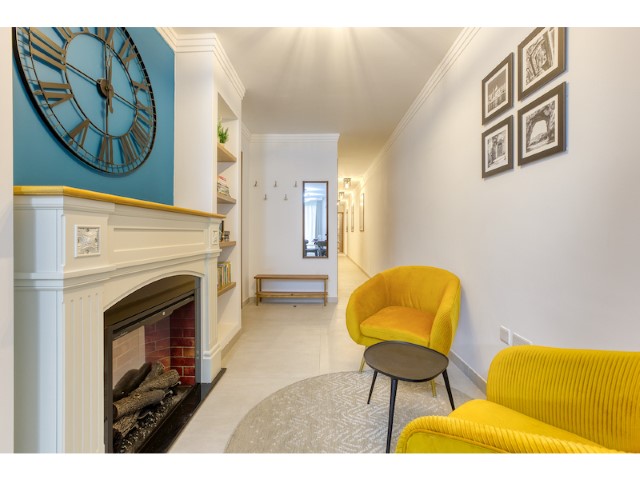
A designer 2-bedroom apartment in Gżira, close to the church, around 2 minutes from the promenade, and near Manoel Island.
View on Airbnb