
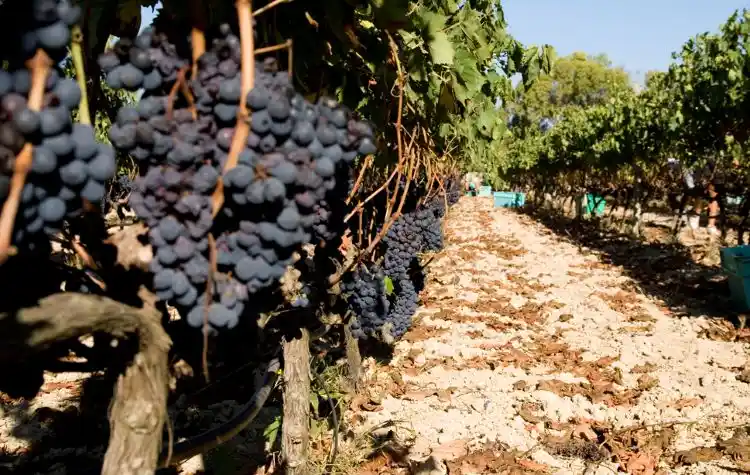

Most visitors drink Maltese wine for the first time in a restaurant. Probably a Marsovin or Meridiana with dinner. These are very fine wines, but there is more wine out there worth exploring…
Let me tell you about a small winery in Għarb, Tal-Massar — the western edge of Gozo, where the roads get narrow and the tourist coaches do not go. Anthony Hili runs it with his wife Marisa and their son Gabriel. His grandfather Carmelo started the operation in 1934 after coming back from the States.
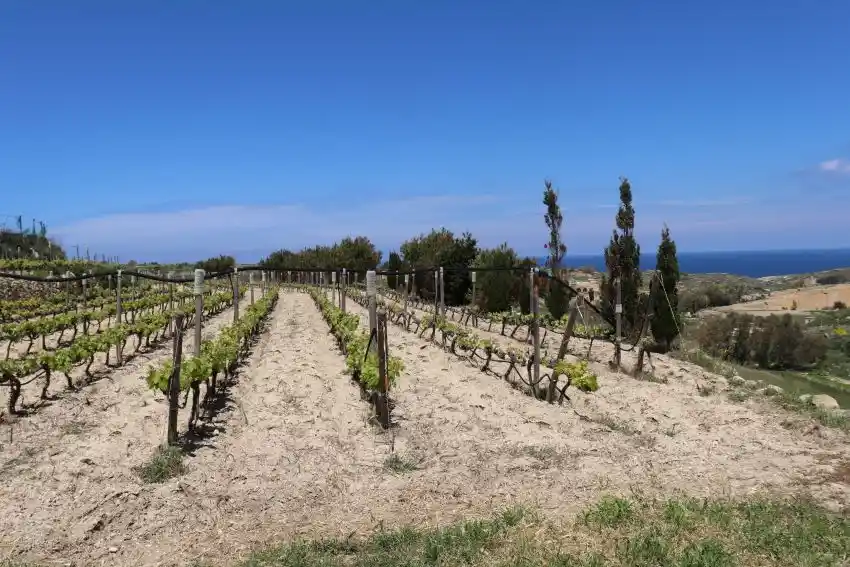
The family has been growing grapes on the same terraced limestone plots ever since. The vines sit on shallow, wind-battered calcareous soil — not much depth, but what is there matters. Anthony is converting the whole vineyard to organic, the first in Gozo to do it.
I got in touch with Anthony to put together a short Q&A for people planning a Gozo trip. His answers are unedited — he writes the way he talks, which is to say he gets to the point.
The Hili family and Tal-Massar’s roots
Tal-Massar goes back to 1934, when Carmelo Hili returned from America and founded the winery. Which part of that original spirit still feels most alive today?
The winery has remained family-owned and family-managed, which means visitors can come and feel a warm setting. We want to keep a good relationship with our people, hear their feedback, and give them the best. Our wine is managed by us from the soil to the bottle.
Guests may be hosted by Anthony, Marisa, or Gabriel. How much does that family element shape the experience people remember?
This enterprise was founded with the intention to give the visitor a taste of what agriculture and environmental stewardship is all about, and at the same time provide economic sustainability. Quite difficult to balance between all three. The best stories are always heard from the horse’s mouth. Visitors will hear a lot about challenges past, present and future — well, a realistic appreciation of life!
That last line is Anthony being modest. What actually happens is that a tasting at Tal-Massar turns into a conversation about Gozo itself — how the geology shapes what can grow here, why anyone would choose to farm on a limestone rock in the middle of the Mediterranean, and what it actually costs a small family to stay independent when bigger producers can undercut you on every shelf. One visitor described it as getting a history lesson, geology lecture, science class, and wine tasting crammed into a single evening. People who do not care much about wine still come back saying it was a standout night of their trip.
Għarb terroir and the organic conversion
Your vineyards are planted on terraced, lime-rich soil in Għarb. In simple terms, what does that give your wines that a visitor might actually notice in the glass?
The terroir of Għarb is unique. You have shallow calcareous soils with high exposure to wind and very good ventilation. In fact, these soils offer a good opportunity for organic farming. Our vineyard is the first vineyard in Gozo to be in conversion to organic. This, combined with unique winemaking practices, produces a wine which is nice and well balanced in the mouth with a lot of fruit on the nose.
You produce in relatively small quantities. What does staying small let you do better?
Our quantities have increased with demand. Today we produce 30,000 bottles every year, which is still small relative to industry standards. The aim is to increase to 100,000 every year — that would be the manageable limit for a family business that focuses on quality.
For context, Marsovin — Malta’s biggest producer — puts out over a million bottles a year. At 30,000, Tal-Massar makes less wine than most restaurants pour in a busy season, which tells you something about the attention each bottle gets. Anthony does not use herbicides on the land, and the rubble walls lining his five kilometres of vine rows are rebuilt by hand. He enrolled in formal viticulture and oenology courses when he replanted the vineyard in 2004, studying under Maltese winemaker Roger Aquilina. The operation won its first competition in Bordeaux in 2011, and the wines now turn up in Michelin-starred restaurants.
What a wine tasting at Tal-Massar actually involves
For someone visiting Gozo for the first time, what makes a tasting at Tal-Massar different from simply ordering Maltese wine in a restaurant?
Here, visitors can enjoy a wine appreciation experience narrated by the owner or his family in the original birthplace of the wine — the vineyard. It’s a unique experience, immersed in nature and the Hili family, nature’s stewards.
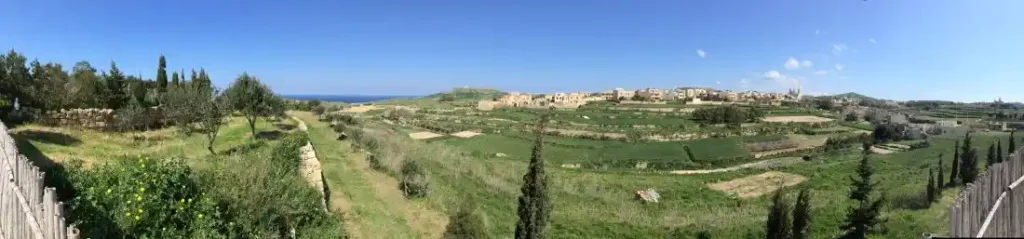
Anthony is not the type to sell himself, so here is what he leaves out. You sit outside on the family terrace with near-360-degree views over the Għarb countryside. Groups are small — typically around ten people, sometimes fewer. You taste four wines: white, rosé, red, and a dessert wine or port. There is a Gozitan platter alongside — local ġbejniet (peppered sheep’s-milk cheeselets), sundried tomato paste on Gozitan bread, olives, cured meat, and galletti (the savoury water biscuits you see everywhere here). Do not eat a big lunch beforehand — there is a lot of food. The session runs about two hours, costs €60 per person, and Anthony or Marisa or Gabriel walks you through each wine. After the formal tasting ends, the bottles stay open. Nobody kicks you out.
Bring cash if you want to buy bottles — they run €12 to €15, the port around €20. There is no hard sell at the end, which I appreciate. You can also arrange private dinners outside the regular sessions if you ask — at least one family has had a pasta and risotto meal laid on as a farewell-to-Gozo evening.
One practical thing: you will be drinking properly, so do not plan to drive back. Ask the winery about taxi options when you book — they have recommended TRAC to visitors before, and Anthony has been known to meet people at the nearest bus stop if they are coming without a car.
If an overseas visitor wanted to understand Gozo through one bottle, which Tal-Massar wine would you pour first, and why?
Definitely the Tanit white wine — a wine which combines balance, freshness and taste in the mouth in a unique way. It represents the character of the winemaker: young and fresh, appealing to everybody.
I would have guessed he would say one of the reds, so this caught me off guard. But it makes sense once you try it — the Tanit is clean and dry, no performance, just what the Għarb soil and sun actually produce. The Garb dessert wine is the one that collectors ask about — a Nero d’Avola aged in cherry-wood barrels with a faint chocolate note that I have not come across anywhere else in Maltese wine. If you only bring one bottle home, the Tanit is the crowd-pleaser. If you are bringing two, add the Garb.
When to visit Tal-Massar (and when not to)
When is the best time of year for a wine-loving traveller to visit, and what do they see then that they would miss in another season?
Best time is mid-season, when the temperature is moderate and the environment is all green and lush. Summer tends to be busy and stressful, with August being the worst month due to harvest.
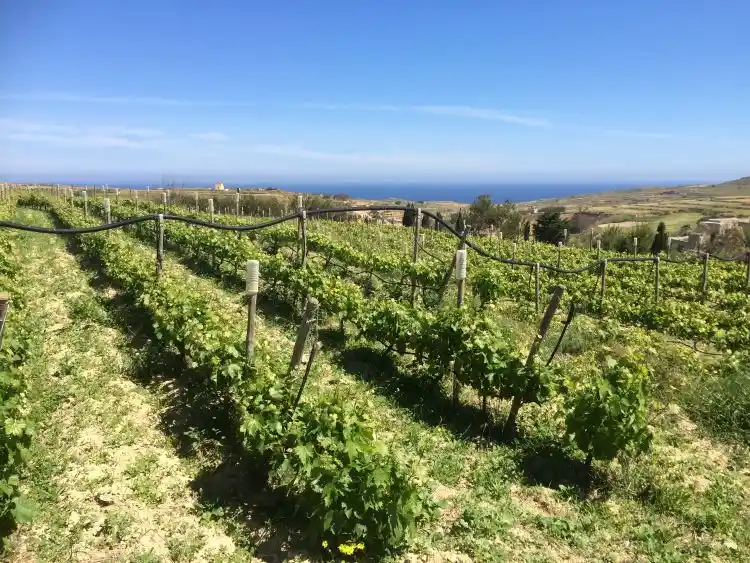
I tell people the same thing about Gozo generally. April, May, October, early November — that is when you get the green fields and comfortable walking weather. By July the landscape has baked to yellow. By August the Hilis are deep into harvest and not running tastings. Every year I hear from visitors who planned their tasting for the last day of a summer trip and got told no — so book early in your stay, not late.
The winery opens after Easter. Sessions have typically run on Tuesdays and Saturdays, but check directly as this can shift with the season. Solo visitors are welcome — several people have reported turning up alone and having a good evening.
How to get to Tal-Massar and what to know before you go
Għarb is on the western side of Gozo, about ten minutes by car from Victoria. There is a bus (route 311) but it drops you in the village, not at the winery, and the last stretch on foot is not obvious. A rental car, scooter, or taxi is the sensible option. If you are coming from San Blas 📍 or Ramla Bay 📍 on the east coast, give yourself at least thirty minutes.
Book ahead. I cannot say this enough. People turn up unannounced and find the gate locked, then complain online about it. This is a working winery with three family members running the whole thing — they are not sitting around waiting for walk-ins. One warning from a visitor who learned the hard way: Google Maps may route you down a narrow track through the vineyards rather than to the terrace where the tasting happens. Ask for directions when you book.
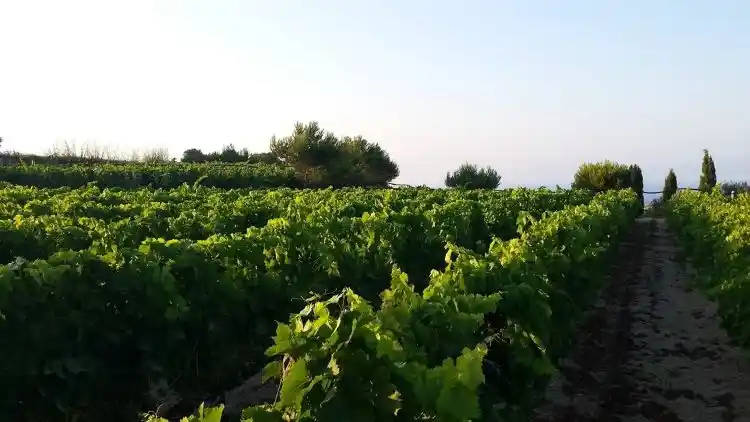
One thing to be honest about: this is not a slick, corporate wine-tour setup. There is no gift shop, no branded tote bag, no curated photo spot. You are sitting on a family terrace drinking wine that was grown in the field behind you. That is either exactly what you want or it is not, and only you know the answer to that.
What else to do near Tal-Massar
Għarb and the western side of Gozo have enough to fill a full day around a late-afternoon tasting.
The formation that replaced the Azure Window in most people’s itineraries is Wied il-Mielaħ Window 📍, a natural rock arch on the north coast above Għarb. Free, open all hours, and someone has arranged old monoliths into picnic furniture at the top. The road in is narrow and steep — take it slow.
Ta’ Pinu Basilica 📍 is about two minutes’ drive from the winery — Gozo’s national shrine, and striking from the outside even if you do not go in. Walk up the hill opposite for the Stations of the Cross path and a wide view back toward Victoria. No entrance fee, open daily from 7am.
For a morning swim before wine, Dwejra and the Inland Sea 📍 are five minutes away. The Inland Sea is a sheltered lagoon connected to the open Mediterranean through a tunnel in the cliff face, and you can take a small boat through it for a few euros. This is also where the Azure Window stood before it went into the sea in 2017. Bus 311 from Victoria goes there too.
Between Għarb and San Lawrenz you pass Ta’ Dbiegi Crafts Village 📍 — handmade leather goods, blown glass, local honey, and Gozitan food products in a cluster of workshops. Low-key, not a tourist trap, and the ice cream shop is genuinely good. Open Monday to Saturday, 10am to 4pm. If you carry on into San Lawrenz itself, the parish church 📍 is worth five minutes — you can climb to the roof for a view across western Gozo that most visitors never see.
I have written separately about wine tasting across Malta and about the best Maltese wines worth trying if you want the broader picture. Tal-Massar is where I send people who want the specific one.
Tal-Massar winery — common visitor questions
How much does a wine tasting at Tal-Massar cost?
€60 per person. The session runs about two hours and includes four wines plus a Gozitan platter of ġbejniet, sundried tomato paste, olives, bread, and cured meat. Wine continues flowing after the formal tasting ends.
Do I need to book a tasting at Tal-Massar in advance?
Yes — always. This is a working family winery, not a tasting room with regular walk-in hours. Contact them through massarwinery.com or email [email protected]. Do not leave it to the last day of your trip.
How do I get to Tal-Massar winery from Victoria?
Drive west toward Għarb — it takes about ten minutes. Bus route 311 goes to Għarb village but not to the winery itself, so a car, scooter, or taxi is more practical. Ask the winery for directions when you book — Google Maps can send you down the wrong track.
What wine should I try first at Tal-Massar?
Anthony Hili recommends starting with the Tanit white — a dry, balanced wine he considers the best introduction to what Għarb’s terroir produces. The Garb dessert wine is the collectors’ favourite.
When is the best time to visit Tal-Massar?
Spring (after Easter) or autumn. The countryside is green, the weather is comfortable, and the winery is not in harvest mode. Avoid August — the family is picking grapes and tastings are unlikely to be running.
Can I buy wine at Tal-Massar?
Yes. Bottles run €12 to €15, port around €20. Bring cash. There is no pressure to buy.
Is Tal-Massar winery organic?
The vineyard is in conversion to organic — the first in Gozo. The shallow, wind-exposed calcareous soils in Għarb are well suited to it. Anthony does not use herbicides on the land.
What grape varieties does Tal-Massar grow?
The indigenous Maltese Girgentina, plus Vermentino, Nero d’Avola, Syrah, Merlot, and Sangiovese. All wines carry IĠT or DOK Gozo designation.
Can I visit Tal-Massar as a solo traveller?
Yes. Solo visitors join one of the regular group sessions and several have reported having a good evening on their own.
What else is there to do near Tal-Massar?
Wied il-Mielaħ Window, Ta’ Pinu Basilica, the Inland Sea and Dwejra, Ta’ Dbiegi Crafts Village, and San Lawrenz Parish Church are all within a few minutes’ drive.