

The sea around Malta is an invisible wall.
You cannot see it the way you see a fence or a checkpoint. No barbed wire. No passport control at the waterline. But it is there: thick, old, and final. It protects us, whether we admit it or not. It separates us from everything else. And over a few thousand years, it made us us.
Stand anywhere on these islands and you are minutes from it. The sound. The wind carrying salt and silence and something older than language. And when you get in — really get in, with goggles and nothing else — you enter the closest thing to space a human body will ever know. Not metaphorically. Your body lifts. Direction dissolves. The blue takes your peripheral vision and suddenly the only reference point is your own breathing.
Dive under. Twist. Lose your sense of up and down. Astronauts pay billions for this feeling. Here, all it costs is a Sunday morning and the nerve to walk down to the rocks.
We Don’t All Get In
Some newcomers to the islands underestimate the sea. They see it as scenery, as a backdrop to a rooftop aperitivo, as something pretty to photograph from Valletta’s bastions. They don’t understand it as force, as presence, as the engine behind everything that has happened here for millennia.
But here is the strange part: plenty of locals don’t get its full benefit either. People born here, raised here, surrounded by it on every side, might go a whole year without getting in. Some go longer. They live on a rock in the middle of the Mediterranean and treat the sea like a painting on the wall — something they walk past every day without really seeing.
Those who do get in know something the others don’t. They know the particular calm that comes from floating in water so clear you can count stones on the bottom three metres down. They know the way salt water resets whatever has gone wrong in your head that week. Over time, you get better at it — at reading the currents, knowing which side of the island to swim from depending on the wind, understanding the sea as a living, moody, daily negotiation.
The Wall That Made Us
Without that wall of water, we would be an extension of mainland Europe. A suburb of Sicily. A footnote to the Italian south — another stretch of limestone coast with good weather and old churches, absorbed into someone else’s story.
But the sea created friction. And friction created difference.
Every fleet that wanted Malta had to earn the crossing. The Arabs came and stayed long enough to plant their language in our mouths. The Knights of St. John came and built fortifications so heavy they changed the shape of the harbours. The British came and left us driving on the left and arguing in English. Each arrival was filtered by that stretch of water — slowed down, diluted, never quite total. No single force could hold these islands completely, because there was always that buffer of blue between us and whoever was in charge on the mainland.
Our language is the living proof. Maltese is what happens when Arabic roots get layered with Sicilian and Italian and English, but none of them wins outright. The sea gave the language room to breathe. It let this strange, beautiful hybrid evolve in its own pocket, not overwhelmed by any single direction. A language that could only have come from an island — shaped by everyone who crossed the water, owned by none of them.
Our food, our family structures, our relationship with religion, our particular way of being Mediterranean — none of it is borrowed wholesale from anywhere. Not because we invented it from nothing, but because the sea gave us just enough isolation to remix everything that arrived into something distinctly Maltese.
The Wall Works Both Ways
Here is what no one talks about enough: the same sea that protects our identity also limits our reinvention.
On a continent, you can fail and move. You can be one person in Munich and another in Lisbon. You can shed your skin, start fresh. The runway for reinvention is long when motorways and rail lines stretch in every direction, when the next city is a few hours of driving and a fresh set of strangers.
On an island, the runway is short.
Reinvention comes down to three things: how you see yourself, how you earn your living, and how others see you. Change all three and you have real transformation. But on an island this small, those three things are tangled together in ways they simply aren’t on a continent.
The circles here are tight. Your butcher knows your mother. Your accountant went to school with your ex. The guy who rejected your loan application will be at the same festa next month. Everyone carries a file on everyone else, updated in real time, stored permanently.
Ħu il-fama u mur orqod. Take your reputation and go to sleep. It cuts deep because it is true here in a way it isn’t true in London or Milan. Your reputation is not something you build — it is something that builds around you, brick by brick, and good luck tearing it down. The sea makes the island small, and smallness makes reputation sticky. You can announce a new you all you want. The old you is still sitting in every conversation you are not part of.
This shrinking runway happens everywhere as people age. At twenty, the world is all possibility. At forty, choices have narrowed. At sixty, you are mostly who you became. But on an island, it happens faster and harder, because there are fewer stages to perform on, fewer audiences who haven’t already seen the previous act.
This is not all bad. It keeps people honest. Your word matters because you cannot outrun it. Trust, once built, is real — the person who trusts you will see you at the shops tomorrow and the day after that and the day after that.
But it also means the kid labelled a troublemaker at fourteen carries it into his thirties. The woman who left her husband is defined by that decision for decades. Real personal transformation requires a kind of courage here that mainlanders never have to find, because mainlanders always have the option of simply leaving.
The Horizon
The sea does one more thing to how we think, and it is so constant most of us have stopped noticing.
It gives us the horizon.
Every day, in every direction that is not land, we look at the line where water meets sky. The end of the road. The point where everything we know stops and everything we don’t know begins.
Someone in Frankfurt looks outward and sees autobahns, towns, borders, more of the same stretching to Poland or France. Their view promises continuity. Ours promises nothing — just blue reaching into blue, and then whatever is on the other side. Italy, maybe. Tunisia. The open Atlantic.
That horizon trains something in you. You cannot walk to it, you cannot drive to it, but you see it every day of your life. Living with that permanent visible edge — that daily reminder you are on a small rock in a vast sea — does something to how you measure things. How you balance ambition against contentment. How you hold your place in the world.
What the Water Brings
And yet the same sea that walls us off is the reason anyone comes here at all.
Without that mass of water, many times the size of the actual island, we would have no tourism, no diving industry, no harbours that have driven our economy for millennia. Every person who arrives by plane looks down at it first. Every person who leaves watches it shrink behind them.
The sea brings the outsiders, and the outsiders bring change. This has always been true. The difference now is speed. Ships took weeks. Flights take hours. And digital culture crosses the water instantly, with zero friction.
This is new, and it matters. For thousands of years, the sea filtered what reached us. It gave us time to absorb, to adapt, to make things our own. Now a kid in Birkirkara is watching the same YouTube shorts as a kid in Brooklyn, absorbing the same slang, the same aesthetics, the same aspirations. Walk through Sliema on a Friday night and half the conversations between teenagers switch between Maltese and English mid-sentence — not the old code-switching their grandparents did with Italian, but something faster, more American-inflected, shaped by algorithms rather than geography. The wall is still there for bodies, for cargo, for the physical. But for the invisible forces that shape how people think and talk and want, the wall has holes it never had before.
Our language survived because the sea gave it time. Whether it can survive the frictionless crossing of digital culture is a question none of us can answer yet.
The Small Space
The sea creates a small space. A small space creates a particular kind of life.
You cannot hide here, but you also cannot be anonymous. You are known, for better and for worse. The Sunday swim and the village festa and the family lunch are not quaint traditions but load-bearing walls — the rituals that hold together a community too small to survive on formality alone.
The locals who really live here — not just reside, but live — carry an atlas in their heads no GPS can replicate. They know which side of the island to swim from today without checking an app. They know the smell that means the gregale is coming. They know this rock, this water, this light.
The sea made all of it. The language we speak, the food we eat, the way we greet each other, the way we judge each other, the way we forgive each other — slowly, if at all. The beauty and the cage. The protector and the jailer.
And every morning, it is still there. Blue and patient and ours.
Stay in Gżira near the promenade
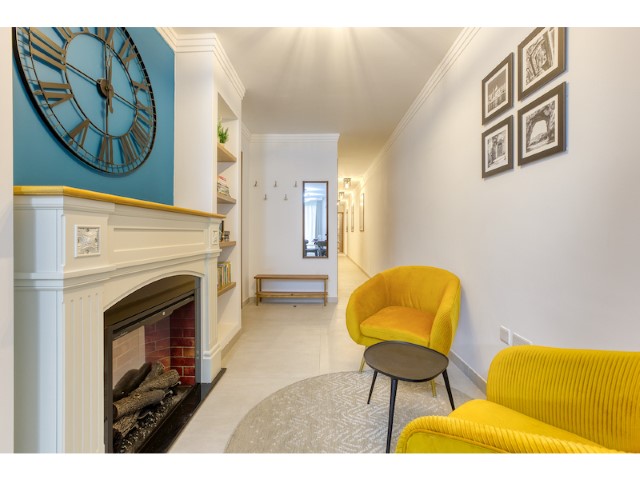
A designer 2-bedroom apartment in Gżira, close to the church, around 2 minutes from the promenade, and near Manoel Island.
View on Airbnb