
Valletta is one of those cities that rewards you for slowing down. The entire capital — all 0.55 square kilometres of it — has been a UNESCO World Heritage Site since 1980, packed with 320 monuments that the Knights Hospitaller and their successors left behind. It’s the most concentrated historic area in Europe, and honestly smaller than you’d expect for a capital city.
I put this route together after walking it dozens of times over several years, adjusting the order so you work mostly downhill from the City Gate toward Fort Saint Elmo, saving the uphill slog for the end when you can reward yourself with the best harbour view on the island. Fair warning: the walk back up to Upper Barrakka is a proper climb, especially in summer. But the view at the top earns every drop of sweat.
If you’re planning a broader trip, start with our Malta Travel Guide and check How to Get to Malta for flights and ferry options. For context on what you’ll see today, our Malta History hub pulls it all together.
- Before You Walk: Practical Planning
- 1. Triton Fountain
- 2. City Gate
- 3. Parliament Building and Pjazza Teatru Rjal
- 4. National Museum of Archaeology
- 5. Hastings Gardens
- 6. Republic Street
- 7. St. John’s Co-Cathedral ★
- 8. Republic Square ☕
- 9. Grandmaster’s Palace and Armoury
- 10. Casa Rocca Piccola
- 11. Strait Street 🍽️
- 12. Church of St. Paul’s Shipwreck
- 13. Fort Saint Elmo — National War Museum
- 14. Siege Bell War Memorial
- 15. Lower Barrakka Gardens
- 16. Vista Point for the Three Cities
- 17. Upper Barrakka Gardens and the Saluting Battery
- Evening Options: Cultural Shows
- Frequently Asked Questions
Before You Walk: Practical Planning
A few things worth knowing before you set off. The full route runs about 3 km and takes 3–4 hours at a comfortable pace, longer if you go inside the museums. I’d budget a full day if you want to enter St. John’s Co-Cathedral, the Grandmaster’s Palace, and Fort Saint Elmo without rushing.
- By bus: Most routes on the island pass through the Valletta terminus, just outside the City Gate.
- By car: Use the MCP underground car park on Saint Anne Street in Floriana (postcode FRN 1460) — it fills up by mid-morning in summer, so arrive early.
- From Sliema: The cross-harbour ferry drops you at the Valletta Waterfront; take the Barrakka Lift (€1 up, free down) to reach the city above.
- Cruise passengers: Ships dock at the Grand Harbour Waterfront — take the same Barrakka Lift up.
At a glance:
- Distance: ~3 km one way (City Gate to Fort Saint Elmo and back via Upper Barrakka)
- Duration: 3–4 hours walking only; 5–6 hours with museum entries
- Terrain: Flat limestone streets with a gentle downhill slope toward the peninsula tip. The return is uphill. No major staircases are unavoidable.
- Best time to start: 9:00 AM to beat the crowds. By 11:00 AM the Cathedral queue can stretch 30+ minutes in peak season.
- Best day: Avoid Tuesdays — Fort Saint Elmo is closed. Sundays close the Co-Cathedral and Casa Rocca Piccola.
What to bring: Rubber-soled shoes (leather soles slide on polished limestone), water, a scarf or shawl for church entry, and sunscreen. For a detailed checklist, see our Malta Packing List. Check the weather by month to plan your layers.
Entry fees (approximate, 2026):
- St. John’s Co-Cathedral — ~€15 (audio guide included)
- Grandmaster’s Palace and Armoury — ~€10
- Fort Saint Elmo / National War Museum — ~€10
- Casa Rocca Piccola — ~€10 (guided tour included)
- National Museum of Archaeology — ~€5
- Upper Barrakka Gardens, Hastings Gardens, Lower Barrakka, Siege Bell — all free
Save money: The Heritage Malta multi-site pass covers the Archaeology Museum, Grandmaster’s Palace, Fort Saint Elmo, and several other sites at a discount. Worth it if you’re entering three or more.
Valletta is generally very safe for tourists — I’ve never had an issue walking here at any hour. More on that in Is Malta Safe? For where to sleep nearby, see Where to Stay in Malta.
1. Triton Fountain
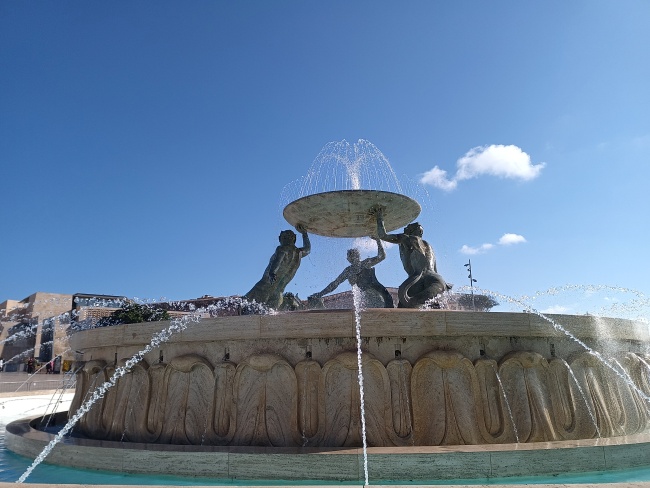
The Triton Fountain catches the morning light beautifully — try to arrive before the tour groups do.
Just outside the City Gate, the Triton Fountain is where most people get their first real look at Valletta. Sculptor Vincent Apap and draftsman Victor Anastasi created it in 1959 — three massive bronze Tritons, Greek sea gods, hoisting a wide basin above a travertine base. It’s a nod to Malta’s long relationship with the sea, drawing inspiration from Rome’s Fontana delle Tartarughe. Two Tritons sit while one kneels, all facing the gate.
The fountain has had a rough life:
- Its basin collapsed during a celebration in 1978
- A central column was added in the 1980s as a temporary fix
- Full restoration came in 2017, when restorer Kenneth Cauchi dismantled the whole thing into 54 separate pieces
- It was ready just in time for Valletta’s year as European Capital of Culture in 2018
The Valletta bus terminus sits right behind the fountain, so this is where most visitors naturally begin. You’ll also find the main taxi rank here.
Tip: Come at sunrise for a golden-lit, crowd-free photo. The morning light on the bronze is worth getting up for.
📍 Open in Google Maps · Time needed: 10 minutes · Entry: Free
2. City Gate
The City Gate is Valletta’s front door, and it’s been rebuilt five times — which tells you something about how seriously Malta takes its entrances:
- 1566–1569: Francesco Laparelli’s original San Giorgio Gate, part of Valletta’s founding fortifications
- 1632: Tommaso Dingli’s ornate replacement
- 1853: The British arched Reale Gate
- 1964: A modernist version from an unfinished project — widely disliked
- 2014: Today’s fifth gate, designed by Italian architect Renzo Piano
Piano’s clean, modern design splits opinion — some locals love the minimalism, others think it clashes with the Baroque surroundings. I think it works. The 60-metre steel blades frame the view down Republic Street and let you look down into the dry moat as you cross the bridge, which is surprisingly dramatic at 18 metres deep.
For more on why and how the Knights built this city from scratch after the Ottoman siege, read A Brief History of Malta.
Tip: Pause on the bridge before crossing to look down into the moat. Most people rush straight through.
📍 Open in Google Maps · Time needed: 5 minutes · Entry: Free
3. Parliament Building and Pjazza Teatru Rjal
On the right as you walk in: Renzo Piano’s New Parliament Building (2015) stands on stilts — two massive limestone blocks with laser-cut windows and solar panels on the roof. It cost around €90 million and generated fierce debate. But looking at what was here before — a derelict car park on the bombed-out site of the Royal Opera House — most people agree the area is better for it.
On the left: The ruins of that Royal Opera House have been reborn as Pjazza Teatru Rjal, an open-air performance venue. The original was designed by Edward Middleton Barry (who also built London’s Covent Garden Theatre) and was considered one of the Mediterranean’s most beautiful buildings before Luftwaffe bombs destroyed it in 1942. Piano’s redesign kept the surviving columns as a good backdrop for summer concerts.
Just behind the Opera House ruins, tucked to the right, is the Church of Our Lady of Victories — the first church completed in Valletta (1566) and the original burial place of Grand Master Jean de Valette himself. His remains were later moved to St. John’s Co-Cathedral. Most visitors walk right past without noticing it.
Tip: Check the calendar of cultural events — Pjazza Teatru Rjal sometimes hosts free evening performances during summer.
📍 Open in Google Maps · Time needed: 10 minutes · Entry: Free (exterior only)
4. National Museum of Archaeology
Housed inside the Auberge de Provence on Republic Street — one of the original “inns” where Knights from different European regions lived — this museum takes you back thousands of years before the Knights ever arrived. The building itself dates to 1571 and is one of the first structures erected in the new city after the Great Siege.
The collection covers Malta’s prehistoric period from roughly 5200 BC through the Phoenician era. What to watch for:
- The “Sleeping Lady” — a small clay figurine from the Ħal-Saflieni Hypogeum, barely 12 cm long but weirdly expressive for something so small, dating to around 3000 BC
- Temple-period carved figures and altar fragments that predate the Egyptian pyramids by roughly a thousand years
- Phoenician-era finds including pottery and jewellery
A quick 20–30 minutes is enough for the highlights, though archaeology enthusiasts could spend longer. Covered by the Heritage Malta multi-site pass. For more on Malta’s ancient story, read about the Hypogeum and the Phoenician period. For more Valletta museum options, see Best Museums in Valletta.
Tip: Bring a small notebook to sketch or jot notes on your favourite finds — photographs don’t always capture the scale and texture of the carvings.
📍 Open in Google Maps · Time needed: 20–45 minutes · Entry: ~€5 · Hours: Daily 9:00–17:00
5. Hastings Gardens
From the museum, double back toward the City Gate and head up the steps on the left (as you face the gate) to reach Hastings Gardens, perched atop Saint John’s and Saint Michael’s Bastions. This garden honours Lord Hastings, a British governor who died in 1826 and is buried here. Locals love to tell how the Maltese supposedly built the gardens in just four hours — unlikely, but the story captures the island’s spirit.
What most guides don’t mention:
- A 2009 Armenian khachkar (carved stone cross) thanking Malta for providing shelter to Armenian refugees in 1375 and again in 1915
- The Sette Giugno monument, moved here in 2010, marking the June 1919 bread riots when British troops fired on a crowd, killing four Maltese civilians — a turning point in Malta’s independence movement
You get big views across Marsamxett Harbour toward Sliema, Manoel Island, and Floriana. This side of the peninsula is quieter than the Grand Harbour side and usually much less crowded.
Tip: Come at sunset if you’re visiting in the evening — the light on the harbour is good and most people have gone home.
📍 Open in Google Maps · Time needed: 15 minutes · Entry: Free
6. Republic Street
Time needed: As long as you like — you’ll be on and off this street the whole walk
Stretching 1 km from City Gate to Fort Saint Elmo, Republic Street (Triq ir-Repubblika) is Valletta’s pedestrian spine and the backbone of this entire walk. The street has changed names almost as often as Malta has changed rulers:
- San Giorgio Street after the 1565 siege
- National Street under the French
- Royal Road and later Kingsway under the British
- Republic Street after World War II
The street follows the grid plan designed by Francesco Laparelli in 1566 — he deliberately made Valletta’s roads wide and straight so cannons could be moved quickly between bastions. The side effect, centuries later, is that you can walk the whole city without getting lost — the grid means you always know roughly where you are relative to the water on either side.
You’ll notice the traditional Maltese wooden balconies (gallariji) painted in greens, reds, and blues along side streets. These are worth a detour — some of the most photogenic corners of Valletta are one block off Republic Street. Our street art guide covers some of the modern additions too.
Tip: Grab a flaky pastizzi from a street vendor — ricotta (rikotta) or pea (piżelli). They cost under €1 and are a legitimate meal in Malta. For the full recipe and history, see Maltese Pastizzi: Traditional and Variations.
7. St. John’s Co-Cathedral ★
This is the single most important stop on the walk. If you visit only one thing in Valletta, make it this. The plain limestone exterior, designed by Girolamo Cassar and built between 1573 and 1578, gives absolutely nothing away. Step inside and it’s a lot. Walls, ceiling, floor, every column — all of it covered in gilt, marble, carved stone, and painting. There’s nowhere for your eyes to rest.
Grand Master Jean de la Cassière commissioned the cathedral for the Knights Hospitaller as their conventual church. The painted vault ceiling is the work of Mattia Preti, the Calabrian artist who spent the last 40 years of his life in Malta. He carved and painted directly into the stone — 18 episodes from the life of Saint John the Baptist stretching the length of the nave.
The Caravaggio: The real draw is in the Oratory — The Beheading of Saint John the Baptist (1608). At 3.7 by 5.2 metres, it’s the largest canvas Caravaggio ever painted and the only work he signed — his name written in the blood pouring from the Baptist’s severed neck (signed “f. Michelang.o,” the f marking his brief status as a Knight). Art historian Jonathan Jones has called it one of the ten greatest works of art ever made.
Caravaggio painted it in lieu of entry fees to the Order, while on the run from a murder charge in Rome. Within months of completing it he’d brawled with another knight, been imprisoned in Fort Saint Angelo, escaped, and fled Malta. The Oratory also holds his Saint Jerome Writing.
Also look for:
- Flemish tapestries donated by Grand Master Perellos — the only complete set of their kind, covering over 780 square metres of woven thread
- Around 400 inlaid marble tombstones of Knights in the floor, each individually designed — some of them are genuinely beautiful pieces of art in their own right, and people step all over them without looking down
The cathedral is divided into eight langues chapels, each one decorated by a different nationality of Knights. The Italian chapel and the Aragonese chapel are probably the most elaborate, but honestly it’s hard to pick — they were all trying to outdo each other.
For the Knights’ broader story, see The Knights of Malta and How the Knights Survived 900 Years of European Politics.
Tip: Pick up the audio guide — it unpacks stories you’d completely miss otherwise, especially the symbolism in the tombstone floor. Photography without flash is allowed.
📍 Open in Google Maps · Time needed: 45–90 minutes · Entry: ~€15 (audio guide included) · Hours: Mon–Fri 9:00–16:15, Sat 9:00–12:30, Sun closed
☕ 8. Republic Square — Coffee Break
You’ve been walking for about 2 hours at this point, and if you went inside the Cathedral your feet are probably telling you about it. This is a good place to stop.
This open square has had more names than Republic Street: Treasury Square under the Knights, Queen’s Square when the British added a marble Queen Victoria statue (1891), and now Republic Square. Most locals still call it Pjazza Regina.
The Victoria statue commemorates her Golden Jubilee — she never visited Malta, but she once ordered “eight dozen pairs long and eight dozen pairs short mitts, besides a scarf” in Maltese lace, which locals credit with reviving the island’s dying lace industry. Look closely at the carved shawl on Victoria’s lap — it’s rendered in Maltese lace detail.
Around the square:
- Northwest: The Casino Maltese, originally the Knights’ Common Treasure House, now a private club
- Southeast: Stefano Ittar’s 1796 National Library — one of Europe’s last remaining collections of Hospitaller archives
- Centre: Cafe Cordina (Maps), a Valletta institution since the 1800s, operating from an old palazzo
- South: The Grandmaster’s Palace facade and a shopping arcade — easy to miss the arcade entrance if you’re not looking for it
Prices at Cordina are reasonable for a tourist square. The coffee tradition here is older than you’d think.
Tip: Sit at one of Cordina’s outdoor tables, order a coffee, and let your feet recover before the next stretch.
📍 Open in Google Maps · Time needed: 15–20 minutes for coffee · Entry: Free
9. Grandmaster’s Palace and Armoury
This massive building spans the full length of Saint George’s Square and has been the seat of power in Malta for over four centuries. Girolamo Cassar began the design in the 1570s, and successive Grand Masters expanded it through the 18th century. The Knights ran the place, then Napoleon’s French briefly occupied it, then British governors moved in, and now it houses the office of Malta’s President. It’s had more tenants than most buildings on this island. If you want the economic backstory of how the Knights funded all this, see The Knights After the Great Siege and The Business of Making Cannons.
Don’t miss:
- The State Rooms — lavishly decorated with frescoes, tapestries, and painted friezes depicting the Great Siege
- The Armoury (housed in the former stables) — one of the world’s largest collections of arms and armour still displayed in its original building, including Ottoman weapons captured during the siege
- The Palace Clock (installed 1745) — shows hour, date, month, and lunar phase, with four jacquemarts (mechanical figures) striking the bells
- Two internal courtyards — accessible for free, one featuring a Neptune statue
Tip: The State Rooms involve stairs — a lift is available if mobility is a concern. Even if you normally skip weapons exhibits, this armoury is worth the entry fee.
📍 Open in Google Maps · Time needed: 45–90 minutes · Entry: ~€10 · Hours: Daily 10:00–18:00
10. Casa Rocca Piccola
This 16th-century noble palace is still in private hands — the de Piro family has lived here since 1580, and they open over 50 rooms to visitors. What makes this different from the bigger museums is that people actually live here — there are family photos on some of the shelves, and the parrot squawks at you from a perch in one of the rooms.
Highlights:
- Libraries, dining rooms, a chapel, and a silver collection
- Malta’s largest private collection of antique costumes and Maltese lace
- A WWII bomb shelter carved into the rock beneath the house, connecting to Valletta’s tunnel network
- Kiku the parrot — the household pet that reviewers consistently mention
Guides are chatty and happy to share family stories. It feels like visiting a wealthy Maltese aunt’s house.
Tip: Ask your guide about the bomb shelter specifically — the WWII stories are genuinely moving, and most people rush through that part.
📍 Open in Google Maps · Time needed: 45 minutes (guided tour) · Entry: ~€10 · Hours: Mon–Sat 10:00–17:00, Sun closed
🍽️ 11. Strait Street — Lunch Stop
Turn off Republic Street onto Strait Street (Strada Stretta) for a detour most self-guided tours skip — and also for lunch, because it’s probably 12:30 or so by now and you’ve got more walking ahead. During British rule, this narrow lane was Valletta’s notorious red-light district and nightlife strip — sailors from the Mediterranean Fleet spent their shore leave in its bars and music halls. The street went quiet after the British fleet left in 1979 but has been gradually reviving since the 2010s with wine bars, live music venues, and restaurants.
Where to eat:
- For a quick lunch: Look for ftira (Maltese flatbread stuffed with tuna, capers, and tomato) from bakeries on side streets off Republic Street — it’s the local lunch of choice and costs €3–5. If you want something sit-down instead, Strait Street restaurants like Noni and Legligin do good Maltese-Mediterranean food, though Noni isn’t cheap.
- For a drink: Any of the wine bars along Strait Street with outdoor tables
The old painted signs and faded bar fronts are still visible above the new establishments. At night, this is where locals actually go. Check if anything is happening during your visit — Valletta Lunchtime Concerts sometimes take place nearby.
Tip: Don’t skip lunch. The afternoon stretch includes Fort Saint Elmo and the walk back uphill — you’ll want fuel.
📍 Open in Google Maps · Time needed: 45–60 minutes for lunch
12. Church of St. Paul’s Shipwreck
Among Valletta’s oldest churches, this 1582 building by Girolamo Cassar celebrates Saint Paul, Malta’s patron saint. According to the Acts of the Apostles (28:1–10), Paul was shipwrecked on Malta in AD 60, and the event sits at the centre of Maltese Christian identity.
Inside you’ll find a 1659 wooden statue of Saint Paul by Melchiorre Cafà — it gets paraded through Valletta’s streets every February 10th for the feast day, which shuts down traffic and is worth seeing if you happen to be here. There are also works by Attilio Palombi and Giuseppe Calì, and relics attributed to Paul including a wrist bone and a fragment of the column on which he was reportedly beheaded in Rome. Whether you believe the relic provenance or not, the church takes it seriously.
Dress code enforced: covered shoulders and knees. No shorts, no bare shoulders.
Tip: Toss a light scarf in your bag before you leave the hotel. The church is small — easily missed from outside, so watch for the facade on St. Paul Street.
📍 Open in Google Maps · Time needed: 15 minutes · Entry: Free (donations welcomed)
13. Fort Saint Elmo — National War Museum
At the tip of the Sciberras Peninsula, Fort Saint Elmo guards both harbours and has been doing so since a watchtower was first raised here around 1488. The current star-shaped fort evolved through the 1552 expansion and the devastating 1565 siege, when the fort held out for 28 days against the full force of the Ottoman army before falling. The Ottomans lost an estimated 8,000 men taking it. Grand Master de Valette reportedly said of the Ottoman victory: “If so small a son cost so dear, what price the father?”
Key exhibits in the National War Museum:
- Ottoman armour from the Great Siege
- A Gloster Sea Gladiator biplane — one of the legendary three (Faith, Hope, and Charity) that defended Malta in WWII’s earliest days
- Eisenhower’s Jeep, used during his Malta visit
- The George Cross awarded to the entire island by King George VI in 1942
Be aware that portions of the fort — including the Harbour Fire Command and Bofors Gun Experience — are sometimes closed for restoration. Check before visiting. The Mediterranean views from the ramparts are free and impressive, though winter winds off the open sea can be sharp.
For deeper reading: Fort Saint Elmo’s history and Malta’s WWII role.
Tip: Bring binoculars to pick out details across the harbour — Fort Ricasoli, the Valletta Breakwater, and on clear days, Sicily on the horizon.
📍 Open in Google Maps · Time needed: 60–90 minutes · Entry: ~€10 · Hours: Mon, Wed–Sun 9:00–17:00; closed Tuesdays
14. Siege Bell War Memorial
Unveiled in 1992 by Queen Elizabeth II on behalf of the George Cross Island Association, this memorial marks the 50th anniversary of Malta’s WWII George Cross award. Sculptor Michael Sandle’s design is deliberately stark — a large bronze bell under a simple limestone structure, overlooking the Grand Harbour. It honours the approximately 7,000 civilians and military personnel who died during the 1940–1943 siege, when the islands endured over 3,000 bombing raids.
The bell rings daily at noon. If you’re nearby at midday, it hits harder than you’d expect. The sound carries right across the water. Cover your ears if you’re standing directly underneath — it’s genuinely loud.
Tip: Time your visit for the noon bell. It’s over in a minute. Bring earplugs if you’re right underneath.
📍 Open in Google Maps · Time needed: 10 minutes · Entry: Free
15. Lower Barrakka Gardens
These quieter gardens sit along the Grand Harbour and offer a less crowded alternative to their famous sibling at the other end of Valletta. The centrepiece is an 1810 Neo-classical temple by Giorgio Pullicino, built in the style of Athens’ Temple of Hephaestus, honouring Sir Alexander Ball — the British naval captain who helped expel the French from Malta. For that chapter, see The French Invasion of Malta.
Commemorative plaques mark the EU’s 50th anniversary and the 1956 Hungarian Revolution. A small cafe operates in the gardens.
The views stretch across to the Three Cities — Vittoriosa (Birgu), Senglea (Isla), and Cospicua (Bormla) — where the Knights first established themselves before building Valletta. More in our guide to Senglea and history of Bormla.
Tip: Grab a cold drink from the kiosk, find a bench, and sit for ten minutes. After all that walking, you’ve earned it.
📍 Open in Google Maps · Time needed: 15 minutes · Entry: Free
16. Vista Point for the Three Cities
Time needed: 5–10 minutes · Entry: Free
Near Fort Saint Elmo, a lookout point offers what I think is the most complete panorama of the Three Cities and the Grand Harbour. Vittoriosa’s Fort Saint Angelo juts into the water, flanked by Senglea’s Gardjola watchtower and the rooftops of Cospicua rising behind. From here you can actually see the defensive logic of the whole harbour system — Valletta controls the ridge, the Three Cities guard the flanks, and there’s basically no way in that isn’t covered by at least two sets of walls.
According to UNESCO’s evaluation, the fortification network was designed as an integrated system, with Valletta as the “inner keep” and the Three Cities as the outer works. Looking at it from up here, that description makes a lot more sense than it does on paper.
If you have time, the Three Cities are a short ferry ride away from the Valletta Waterfront (~€2.80 return, ferries every 30 minutes). See our Three Cities guide.
Tip: Late afternoon gives you softer light and thinner crowds.
17. Upper Barrakka Gardens and the Saluting Battery
I’d save this one for the end of the walk. It’s the best view in Valletta — possibly on the entire island — and you’ll appreciate it more after the climb back uphill. The gardens were created in 1661 on Saint Peter and Paul Bastion as a private retreat for the Italian Knights and opened to the public in 1800.
The upper terrace has arched colonnades along both sides and overlooks the Grand Harbour and the Three Cities. Monuments commemorate Winston Churchill, Gerald Strickland, and others.
The Saluting Battery:
- Fires a cannon at noon and 4:00 PM daily
- The tradition dates back to the Knights’ era, revived for visitors in the 2000s
- Standing right beside the cannon when it fires is louder than you think — the smoke cloud rolling across the harbour looks great in photos
- €3 to be on the lower level with the guns, or watch free from above
The Barrakka Lift, reopened in 2012, connects the gardens to the waterfront ditch below — useful if you want to catch the Three Cities ferry or head to the cruise terminal. It’s €1 going up, free heading down. A local tip: the lift is free in both directions if you show a valid Three Cities ferry ticket.
From this terrace you can see traditional Maltese boats bobbing in the harbour below. For the Knights’ military context, read The Maltese During the Great Siege.
Tip: Get to the upper terrace by 11:50 AM if you want the noon cannon. Or time the end of your walk for 3:45 PM to catch the 4 PM firing and golden-hour light on the harbour.
📍 Open in Google Maps · Time needed: 20–30 minutes · Entry: Gardens free; Saluting Battery €3 for lower level (or watch free from above)
Evening Options: Cultural Shows
If you’re spending the night in Valletta — and I’d recommend it for at least one evening, since the city is a different place after dark — two historic venues anchor the cultural scene. For accommodation options, check Where to Stay in Malta. For couples, reasons to visit Malta as a couple covers the romantic angles.
Manoel Theatre
Built in 1731 by Grand Master António Manoel de Vilhena on Old Theatre Street near Republic Square, the Manoel Theatre is Europe’s third-oldest working theatre. The exterior gives little away, but inside it’s a gorgeous little auditorium seating just over 600. It’s home to the Malta Philharmonic Orchestra and hosts classical music, plays, opera, and pantomime throughout the year.
The cultural events calendar lists current shows.
Tip: Book tickets online ahead of time. This is a tiny theatre and seats go quickly.
Mediterranean Conference Centre (Sacra Infermeria)
Originally the Knights’ Great Hospital (Sacra Infermeria), built in 1574 near Fort Saint Elmo, this building once housed one of Europe’s most advanced hospitals during the Renaissance. At its peak, the Great Ward stretched 155 metres — patients ate from silver plates as part of the Order’s commitment to caring for the sick, regardless of religion. It served as a hospital until 1918.
Today it hosts concerts, exhibitions, and performances. For more on the Knights’ medical legacy, see The Knights of Malta Today and The Knights of Malta.
Tip: Arrive 20 minutes early to wander the historic halls before the performance starts.
Frequently Asked Questions
How long does it take to walk around Valletta?
The self-guided route in this article covers about 3 km and takes 3–4 hours at a comfortable pace, not counting time inside museums. If you want to enter St. John’s Co-Cathedral, the Grandmaster’s Palace, and Fort Saint Elmo, budget a full day. Valletta is Europe’s smallest capital, so nothing is far from anything else.
Is Valletta accessible for wheelchair users and people with mobility issues?
The main streets (Republic Street, Merchants Street) are flat and paved, but many side streets have steps and uneven limestone surfaces. The Barrakka Lift provides step-free access between the waterfront and Upper Barrakka Gardens. St. John’s Co-Cathedral offers wheelchair access to some areas, though parts are restricted. The Grandmaster’s Palace has a lift. Fort Saint Elmo is more challenging. Overall, the main route is doable with planning.
What are the entry fees for Valletta’s main attractions in 2026?
St. John’s Co-Cathedral costs around €15 (audio guide included), Grandmaster’s Palace and Armoury around €10, Fort Saint Elmo / National War Museum around €10, Casa Rocca Piccola around €10, and the National Museum of Archaeology around €5. The Heritage Malta multi-site pass covers several museums at a discount. Upper Barrakka Gardens, Hastings Gardens, and the Siege Bell Memorial are free. Prices change — check Heritage Malta’s site before visiting.
What should I wear when visiting churches in Valletta?
Covered shoulders and knees are required at St. John’s Co-Cathedral and the Church of St. Paul’s Shipwreck. No bare feet, no swimwear. Pack a light scarf or shawl that you can throw on over a tank top. Men in knee-length shorts are generally fine at most churches but not at the Co-Cathedral.
Can I do this walking tour from a cruise ship?
Yes, and Valletta is one of the best cruise ports in the Mediterranean for a self-guided walk. Ships dock at the Grand Harbour Waterfront, directly below Upper Barrakka Gardens. Take the Barrakka Lift up (€1) and you’re inside the city in minutes. With a typical 6–8 hour port call, you can comfortably complete this entire route, though you’ll need to be selective about which museums to enter. I’d prioritise St. John’s Co-Cathedral. Start early to beat the other cruise groups.
Is a guided tour or self-guided tour better for Valletta?
A self-guided tour gives you freedom to linger. A guided tour (usually 1.5–2.5 hours, from free to around €18) adds context and stories — local guides are well reviewed for making the Knights’ history come alive with humour. My suggestion: do a guided tour on your first morning to get oriented, then use this self-guided route to go back to the places that grabbed you.
What is the best time of year to visit Valletta?
Spring (April–June) and autumn (September–November) are ideal — warm enough for comfortable walking, cool enough that you won’t melt. Summer (July–August) is hot and the cathedral queues are longest. Winter (December–February) is mild by Northern European standards (12–16°C) but can be rainy and windy, especially at Fort Saint Elmo. I actually prefer November — fewer tourists, pleasant temperatures, and the city feels more like itself.
Where should I eat during the Valletta walking tour?
For a quick stop, grab pastizzi from any street vendor (under €1). Cafe Cordina on Republic Square is the classic sit-down option. For something more substantial, Strait Street has several good restaurants. For ftira (Maltese flatbread stuffed with tuna, capers, and tomato), look for it in bakeries on side streets off Republic Street — €3–5 and it’s the local lunch of choice.
If you’re planning a longer stay, pair this walk with a Knights of Malta tour or a trip to the Three Cities. For the bigger picture of why Malta matters on the world stage, that article connects the dots from the Knights through WWII to today.
One last practical note: download an offline map of Valletta before you arrive. Mobile data can be patchy inside some of the older stone buildings, and you don’t want to be squinting at a paper map in the rain trying to find Strait Street. Enjoy the walk.
Stay in Gżira near the promenade
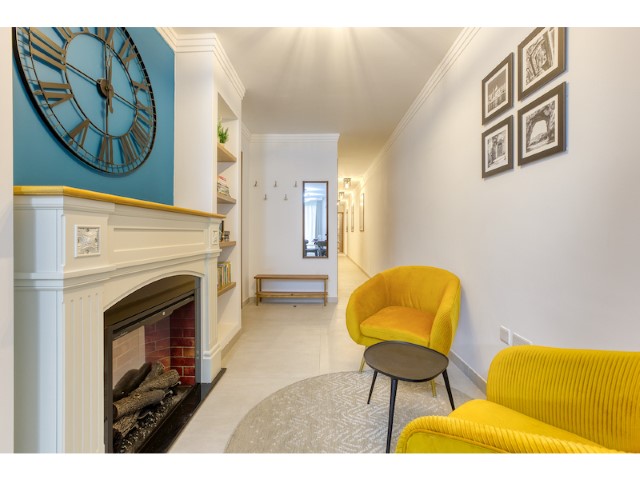
A designer 2-bedroom apartment in Gżira, close to the church, around 2 minutes from the promenade, and near Manoel Island.
View on Airbnb