

Why this poem is still a perfect Valletta first impression
Some travel writing tells you what to do. This poem tells you what happens to you.
Letitia Elizabeth Landon (L.E.L.) wrote Valetta, Capital of Malta in 1836 for Fisher’s Drawing Room Scrap Book (published 1837). The poem spells it “Valetta”; today you’ll usually see “Valletta.” Both are correct. The format mattered. Scrap Books paired images with verse—curated, aesthetic, built for a reader who might never travel there but wanted the feeling of travel. Think of them as the Instagram carousel of the 19th century. The comparison is not perfect, but it’s close enough.
Quick version: Start on the ferry to Valletta (Grand Harbour approach from Birgu is best). Read stanza 1 on the water. Read stanza 2 at the Upper Barrakka balustrade. Walk into the grid and read stanzas 3–4 on a quiet street near the cathedral. Optional: finish at Fort St. Elmo. Total: 60–90 minutes, best at dawn.
Yet the poem does something deeper than description. It starts as a travel arrival and ends somewhere sharper: a private decision. The city is the stage. The plot is internal.
That is why it works so well as a modern Valletta experience. You can read it where it happens. You can feel the shift from view to vow in under an hour. And you can use the poem as a gentle reminder that our imagined futures are persuasive but unreliable.
We arrive with pictures in our head. Then the real world corrects them. That correction is not failure. It is the moment life begins again, in the only place it ever exists: right now.
The poem (full text)
Valetta, Capital of Malta Letitia Elizabeth Landon (L. E. L.) From Fisher’s Drawing Room Scrap Book, 1837
The vessel swept in with the light of the morn,
High on the red air its gonfalon borne;
The roofs of the dwellings, the sails of the mast
Mixed in the crimson the daybreak had cast.
On came the vessel:–the sword in his hand,
At once from the deck leapt a stranger to land.
A moment he stood, with the wind in his hair,
The sunshine less golden–the silk was less fair.
He looked o’er the waters–what looked he to see!
What alone in the depths of his own heart could be.
He saw an old castle arise from the main,
The oak on its hills, and the deer on its plain.
He saw it no longer; the vision is fled;
Paler the prest lip, and firmer the tread.
He takes from his neck a light scarf that he wore;
‘Tis flung on the waters, that bear it from shore.
‘Twas the gift of a false one;–and with it he flung
All the hopes and the fancies that round it had clung.
The shrine has his vow–the Cross has his brand;–
He weareth no gift of a woman’s white hand.
A seal on his lip, and an oath at his heart,
His future a warfare–he knoweth his part.
The visions that haunted his boyhood are o’er,
The young knight of Malta can dream them no more.
Who was L.E.L.?
Letitia Elizabeth Landon (1802–1838) was one of the most celebrated English poets of the 1820s and 1830s. She published under the initials “L.E.L.” and was famous for verse that explored romantic disillusionment, duty, and the gap between expectation and reality.
Her life ended in mystery. In 1838, just months after her wedding, she died at Cape Coast Castle in what is now Ghana—her husband’s colonial posting. The cause was never resolved. Possibly accidental overdose. Possibly suicide. Possibly murder. She was 36.
There is resonance in that biography. A woman who wrote constantly about the pain of broken attachments, who gave her stranger a “gift of a false one” to throw into the sea, who understood that vows sometimes replace dreams because dreams have failed. She knew the territory.
How Malta appears in the poem (and what the imagery means)
This poem is short, but it moves in clear acts:
- Stanza 1 is pure arrival optics: dawn, a moving vessel, the city rising, roofs and sails mixing in one frame. The “gonfalon” is a ship’s banner or pennant—a visual flourish that signals the vessel’s identity. If you have ever approached Valletta by water—perhaps arriving at what some call the world’s most enchanting cruise port—you know the exact feeling.
- Stanza 2 turns the camera into a person: a stranger lands with a sword, pauses in the wind, and looks out. But the poem makes it clear he is not looking at Malta only. He is looking for something personal—an “old castle” with “oak on its hills.” Home. England. The life he left behind.
- Stanzas 3 and 4 are the real story: the vision fades (“paler the prest lip”—that is, pressed lip, a sign of resolve). He throws a scarf into the water—a gift from someone who betrayed him—and with it, all the hopes attached to it. Then the crucial turn: “The shrine has his vow—the Cross has his brand.”
The Knights of Malta context
This last line is not metaphor. It is history.
Malta was headquarters of the Knights of St. John (also called the Knights Hospitaller) from 1530 to 1798. These were crusading warrior-monks who wore the eight-pointed Maltese cross as their insignia—sometimes literally branded onto their bodies or armor. When Landon writes “the Cross has his brand,” she means it. This stranger has taken religious and military vows. He belongs to the Order now. (For more on their surprisingly complex economics and 900-year political survival, see our other articles.)
The Knights defended Malta during the Great Siege of 1565, one of the most famous battles in European history. Fort St. Elmo, where this route optionally ends, was where the first wave of knights died holding the harbor against the Ottoman fleet. The siege lasted months. The fort fell. The Order held.
So the poem’s closing image—”the young knight of Malta can dream them no more”—is not romantic melancholy. It is a statement of institutional belonging. The stranger has traded private longing for collective purpose. Whether that is noble or tragic, the poem leaves open.
Valletta is not only scenery here. Valletta is a hinge. A place where you arrive and a version of you quietly ends.
A short on-site experience route in Valletta (exact, practical, and timed)
This route is designed to match the poem’s structure:
- motion and arrival
- panoramic reveal
- inward pivot inside the street grid
- optional ending at the fort
Total time: 60 to 90 minutes Best time: morning, ideally within 2 hours after sunrise (the poem is literally morning). Malta sunrise varies from approximately 5:00 in June to 7:00 in December—check the exact time for your visit. If you are visiting in winter, our Malta in February guide covers what to expect.
Bring:
- the poem saved offline on your phone
- water
- one earbud optional (if you want to record a short voice note of your reading)
Route A (best): do it by water, like the first line
Step 1: Read stanza 1 on the ferry approach
Start point: For the most authentic Grand Harbour approach, take the ferry from Birgu (Vittoriosa) in the Three Cities. This crosses the Grand Harbour directly and lands you at the Valletta waterfront with the fortifications rising above you—exactly the poem’s perspective. Birgu itself is worth exploring; this is where the Knights first settled and where Fort St. Angelo still stands.
Alternative: The standard Sliema–Valletta ferry crosses Marsamxett Harbour (the north side), not the Grand Harbour. Still beautiful. Still arriving by water. But the angle is different. The Grand Harbour panorama comes later, from Upper Barrakka. (If you are staying in Sliema, this is the convenient option.)
Exact moment to read: as the ferry begins to slow and angle into the landing, read Stanza 1 once. Not twice. Once.
What to look at (very specific):
- waterline at the bottom of your frame
- the bastion edge cutting a clean line above it
- rooflines and masts visually overlapping (the poem’s roofs and sails in one shot)
Quick photo prompt: one photo only. Wide. Include both boats and rooftops if you can.
Step 2: Read stanza 2 at Upper Barrakka balustrade
Exact path: from the landing, take the Barrakka Lift up to the city level. Walk to Upper Barrakka Gardens and stand at the main balustrade facing the harbor.
What to read here: read Stanza 2 from “On came the vessel” down to “The oak on its hills, and the deer on its plain.”
What to do while reading: let your eyes move slowly left to right across the harbor as you read. Do not stare at the phone. Use it like a cue card.
Optional sound cue: if the Saluting Battery is active (they fire at noon and 4pm daily), pause for the sound. It makes the “sword” line feel less abstract. Worth timing if you can.
Step 3: Read stanzas 3–4 in the grid (Merchant Street option)
Exact path: walk into the city via Republic Street toward St John’s Co-Cathedral.
Where to stand for the scarf scene (choose one):
- Option 1 (quiet and symbolic): Turn onto Triq il-Merkanti (Merchant Street), the narrow street running parallel to Republic Street behind the cathedral. Look for carved stone doorways, iron knockers, religious motifs carved into lintels. Find a cross emblem on stone. Stand there.
- Option 2 (water still present): Walk to the bastion edge at Hastings Gardens or return to the Upper Barrakka corner where you can glimpse the sea again, even partially.
What to read here: read Stanzas 3 and 4 fully. This is the heart of the poem.
Glosses for the difficult lines:
- “paler the prest lip” — pressed lip, meaning determined, resolute
- “the Cross has his brand” — the Maltese cross insignia, worn or branded as a mark of the Order
- “a seal on his lip” — a vow of silence or discretion; his words are now bound
What to look at:
- not the skyline
- look at detail: heavy doors, worn steps, carved stone, plaques
- the poem ends in discipline and identity, not in scenery. Your eyes should follow.
Step 4 (optional): Read final lines at Fort St. Elmo
Exact path: walk to Fort St. Elmo and read the last four lines again.
Why this works: Fort St. Elmo is where the Knights of St. John died defending the harbor in 1565. The poem ends with “the young knight of Malta.” Ending at the fort makes that line land. You do not need to add commentary.
Route B (no boat): same emotional arc, starting inside the city
If you cannot arrive by ferry, you can still keep the poem’s structure.
Step 1 (Act 1 replacement): start at City Gate. Walk forward for 60 seconds into the grid while reading Stanza 1.
You are replacing vessel motion with body motion. Same idea: arrival as movement.
Then:
- go to Upper Barrakka and do Act 2 exactly as above
- do Act 3 exactly as above
What changed between 1837 and today (and what did not)
In 1837, most readers encountered Malta through a curated image and a curated poem. Today, we land with a camera in our pocket and a feed full of pre-made expectations.
Different technology. Same habit.
The habit is this: we build a picture of the future before we arrive.
Landon gets that. Her stranger steps off the vessel with a story already in him. He looks outward, but the poem admits the truth: what he expects to see is really inside his own heart.
Then the vision fades.
That is the honest part. It does not fade because he failed. It fades because the world is not obligated to match our private script. It never was.
The scarf is the turning point. He throws it into the water and chooses a new identity with fewer illusions. That is the poem in one sentence: the moment you release the fantasy, your life becomes real.
Did Landon predict our world? Not literally. She did not foresee mass tourism, short flights, or algorithmic attention.
But in a deeper sense, yes. She recognized a permanent human pattern: we arrive carrying imagined futures, and the real moment edits them. Sometimes gently. Sometimes harshly. Always finally.
A reflection on life itself (without trying too hard)
There is a quiet cruelty in “he saw it no longer; the vision is fled.”
We do this constantly. We picture a future self, an outcome, how it will feel, who will be beside us. We picture how the world will finally become stable. Then the moment arrives. It is not the picture. It is real. Weather. Friction. Ambiguity.
And the strange thing is: real is better.
Real is the only thing that can be lived. The moment is not all we have in a sentimental way—it is all we have in a factual way. You can plan. You should. But you cannot live in a plan. You can imagine. You should. But you cannot live in an image.
You can only live in the next step. That is not a slogan. It is physics.
Valletta is just unusually good at making this obvious. It is built around thresholds: sea to stone, view to street, spectacle to detail. The poem understood that about the place nearly two centuries ago.
A simple way to use the poem as a personal prompt
Try this after you finish reading:
- Identify your vision What picture have you been carrying lately? A version of your future? A relationship outcome? A career change?
- Name your scarf What small thing are you clinging to that keeps the fantasy alive? A habit, a story, a plan you refuse to revise?
- Choose one vow for the next week Not a grand vow. One practical one. Write it as a single sentence in your phone’s Notes app. Set a 7-day reminder to check in.
Examples:
- “I will stop refreshing for reassurance and do one tangible action a day.”
- “I will stop waiting for a perfect moment and book the first step.”
The poem’s final line is blunt: the knight can dream them no more. At some point, the dream must become a life.
What to photograph (one shot per stanza)
To keep your photos coherent (and not a random Valletta photo dump):
- Stanza 1: a wide frame that includes water and the city rising. Roofline plus boats if possible.
- Stanza 2: a panoramic harbor view from above.
- Stanza 3: a detail shot: stone carving, cross motif, worn step, heavy door.
- Stanza 4: a straight street line disappearing into distance, or a fort edge that looks like a boundary.
FAQ
Who was L.E.L.? Letitia Elizabeth Landon (1802–1838) was one of the most popular English poets of the 1820s and 1830s. She published under the initials “L.E.L.” and was known for exploring themes of romantic disillusionment and duty. She died under mysterious circumstances in West Africa shortly after her marriage—the cause was never resolved.
Is “Valetta, Capital of Malta” public domain? Yes in the EU. It was published in 1837 and the author died in 1838 (life plus 70 years has long passed).
Where can I read the original poem source? Wikisource provides the poem and points to the scanned Scrap Book pages. Google Books hosts bibliographic and scanned volume records for Fisher’s Scrap Book editions.
What does “gonfalon” mean? A gonfalon is a type of banner or pennant, typically displayed from a ship’s mast. It signals the vessel’s identity or allegiance.
What does “the Cross has his brand” mean? The Knights of St. John (Knights of Malta) wore the eight-pointed Maltese cross as their insignia. “Brand” here means the mark or emblem he now bears—possibly literally branded, certainly symbolically. He belongs to the Order.
How long does the on-site route take? About 60 to 90 minutes, depending on whether you add the optional fort stop.
What is the best time of day to do it? Morning, ideally early. The first stanza is written for dawn. Sunrise in Malta ranges from about 5:00 (June) to 7:00 (December).
Which ferry gives the most authentic approach? The Three Cities ferry from Birgu (Vittoriosa) crosses the Grand Harbour directly—closest to the poem’s perspective. The Sliema ferry crosses Marsamxett Harbour instead, but you still arrive by water and get the Grand Harbour view from Upper Barrakka.
Do I need to be into poetry for this to work? No. The poem is short. It reads like a scene, not like a puzzle.
What else should I know about Malta’s history? If you want more context before your visit, our brief history of Malta covers the key periods. For the Great Siege specifically—which the poem’s “young knight” would have been preparing to face—we have several deep dives including the military tactics and how the Maltese themselves experienced it.
Sources (URLs)
Primary text (poem): https://en.wikisource.org/wiki/Letitia_Elizabeth_Landon_(L._E._L.)_in_Fisher%27s_Drawing_Room_Scrap_Book,_1837/Valetta,_Capital_of_Malta
Scrap Book scanned compilation (PDF at Wikimedia): https://upload.wikimedia.org/wikipedia/commons/e/ea/Landon_in_Fisher%27s_Drawing_Room_Scrap_Book_1837.pdf
Scrap Book bibliographic record (Google Books): https://books.google.com/books/about/Fisher_s_Drawing_Room_Scrap_Book.html?id=39BbAAAAQAAJ
L.E.L. biography (Poetry Foundation): https://www.poetryfoundation.org/poets/letitia-elizabeth-landon
Stay in Gżira near the promenade
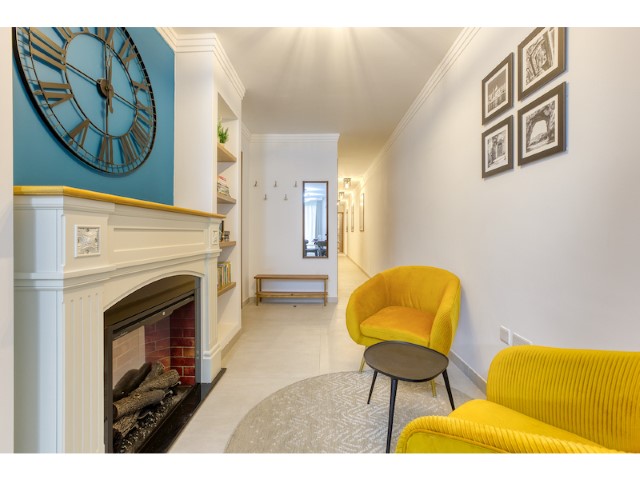
A designer 2-bedroom apartment in Gżira, close to the church, around 2 minutes from the promenade, and near Manoel Island.
View on Airbnb