
There’s a line in Landman, Taylor Sheridan’s drama about oil and money and the cost of building something in unforgiving terrain, that stopped me mid-episode.
Someone T,L (Sam Elliott) asks the question everyone eventually asks Chyaenne (Francesca Xuereb, who happens to have a Maltese surname!)
“What do you want?”
And the answer is the simplest thing anyone’s ever said:
“What we all want. Find love and see the world.”
That’s it. No five-year plan. No complicated framework for meaning. Just the two things every human being is chasing underneath all the noise. Someone to be with. Somewhere to be.
I put the phone down over coffee in Birgu. One of those mornings where the Three Cities are so quiet you can hear water lapping against the docks and the limestone holds the early sun like it’s been saving it for you. And I sat there thinking about how those two things, love and place, are never really separate. The love you find shapes the world you see. The place you’re standing when you find it shapes the love.
And I thought about this island, Malta.
This isn’t a travel guide. It’s what I’ve noticed about life phases, about love, about how places shape us, seen through the years I’ve spent on these islands. Take what’s useful.
Because most people think travel is about places. Pins on a map. Passport stamps. That photo you took at the temple, the cliff, the bar at 3am somewhere in Southeast Asia.
It’s not.
Travel is about phases of who you are when you arrive somewhere. The place you land during a particular phase of life shapes you in ways the next place never could, because you’ll be different by then. Different needs. Different fears. A different definition of the word “enough.”
Malta isn’t the goal. It’s not the climax.
It’s the chapter where life slows down long enough for things to change.
Before Your Mid-Thirties: The World Is a Menu
Your twenties have a script. Cross continents. Take the photo. Fall in love fast and recover faster. Surround yourself with fun people, party people, people who make the nights longer and the mornings irrelevant.
It’s a season. Supposed to be exactly that. Temporary.
Some people are meant for a season, not a lifetime. The friend who convinced you to take that ferry in Greece. The person you kissed on a rooftop in Lisbon and never saw again. The stranger who became a travel companion for eleven days and then dissolved back into the world like they were never there.
That’s travel doing what travel does.
Malta might appear in this phase as a long weekend. A stopover between Sicily and wherever you’re going next. You’ll see Valletta, eat pastizzi, swim somewhere blue, and leave thinking you understood the place.
Or maybe you won’t leave. Not yet.
Because maybe you meet someone at 11pm at MadAsia in Gzira , and at 3am you’re still exchanging life stories under the stars, the moon hanging over the Mediterranean like a secret third party to your conversation. Listening. Saying nothing. Just holding the light. And if you’re lucky enough, the morning after you’ll take the boat to Comino and swim together in the Blue Lagoon, and when your fingers touch underwater that jolt of electric love and fear and connection will charge you to take stupid decisions and make memories etched at the back of your brain for the rest of your life.
That’s finding love and seeing the world in the same breath.
And that’s the season talking. Beautiful. Reckless. Gone before you know what it was.
You didn’t understand Malta. But Malta understood exactly what phase you were in.
Malta as the Pause
Somewhere between thirty and forty, if you’re paying attention, something shifts. Speed drops. Routine stops feeling like a cage and starts feeling like structure. The decisions you make begin to carry weight. Not the fun kind. The real kind. Where you live. Who you’re with. What you do on a Tuesday morning when nobody’s watching.
Malta fits this phase in a way that’s hard to explain until you’ve lived it.
The island is small enough that you can’t hide from your own life. There’s no sprawling city to lose yourself in, no anonymous crowd to disappear into. It holds you. The same promenade. The same coffee spot. The same view of the harbour that somehow looks different every morning depending on the light, your mood, whether you slept well or fought the night before.
And then there’s the sun. You don’t think about it while you’re here. It’s just there, every day, doing its work on you. You only notice what it gives you when it’s gone. When you’re in Luxembourg or Brussels in January under a grey sky that promises nothing but more of itself for the next three months, and the weight of that greyness sits on your shoulders and shortens your conversations. That’s when you miss Malta. Not the beaches. Not the restaurants. The light. The open space that only the sea can give you when there’s nothing between you and the horizon.
The winter sun here hits your bones and warms you from the inside out. You sit outside with your coffee and something in your body just unclenches. Maybe it’s the vitamin D. Maybe it’s simpler than that.
In summer, the sun is a different thing entirely. Hard and strong. Walking at noon without sunscreen, forget it. You learn to respect it. Early mornings, long evenings, two hours in the middle of the day where the island goes quiet and even the cats find shade. It’s a trade-off, and after a few grey Januaries elsewhere, you stop complaining about it.
And that repetition, the thing that sounds boring on paper, is exactly what makes it work. Because within that rhythm, you start to notice things. About the place. About yourself. About the person sitting across from you at breakfast who you thought you already knew.
Love Shifts. So Should Your Expectations.
Nobody told me this about relationships. Malta taught it to me slowly, over years, over coffee, over arguments on the promenade that felt enormous at the time and small by the following morning.
Love is not one thing. At least it hasn’t been for me. It’s moved through phases, and each phase has asked for something different.
The early phase felt chemical. Endorphins. Infatuation. The pull of attraction doing what it’s always done. It felt like a foundation at the time. Looking back, it was a spark. Sparks don’t last.
Then it got practical. I noticed that the fun partner and the partner you build a life with aren’t always the same person. The things that started to matter were different. Emotional intelligence. The ability to disagree without destroying things. Someone who made good decisions when the stakes were real.
Then it got physical in a way I didn’t expect. The willingness to endure the unglamorous reality of pregnancy, birth, sleepless years. I noticed that quiet strength mattered more than charm in this phase. Not everyone experiences this, but for those who do, it changes what you look for.
Then came the conversation phase. This caught me off guard. When your children are young, your world contracts. The dinner parties thin out. Your friend group shrinks to the people who are also awake at 6am on a Saturday because a toddler decided it was time. Your partner becomes the person you talk to most. Ten thousand conversations over ten thousand coffees.
This is where curiosity starts to matter more than anything else.
Not curiosity as performance. Curiosity as a quality of attention. Someone who can hold a conversation about dark matter for ten minutes, not because they’re an astronomer, but because the universe is interesting and they haven’t stopped finding it so. Someone who can express their feelings without making you responsible for them. Someone who listens and then adds something you didn’t expect.
We are stardust. All of us. And love, the kind that survives all these phases, is finding the stardust that came from the same star. The same resonance. The same frequency humming underneath everything else. You can’t fake that. You can only recognise it when you’re quiet enough to hear it.
I’ve noticed that kind of resonance imprints on kids. They don’t learn values from lectures. They learn from watching. A child who grows up seeing two people who are actually interested in the world absorbs that interest like language. It becomes native to them.
Why Malta Works for Young Families
If you have children between zero and six, Malta is one of the best places in Europe to raise them. Almost nobody talks about this.
The English angle matters. Malta is English-speaking. Not tourist-English. Not menu-English. Actual, functional, daily-life English. Street signs, school systems, government services, playground conversations. For any family coming from an English-speaking country, the integration friction is close to zero. Your child can start nursery within a week and understand what’s happening around them from day one.
But it goes beyond English. There’s a French school. A German school. International schools with multiple language tracks. Your child can grow up trilingual without you engineering it. Just by being here.
And then there’s the island itself. Playgrounds everywhere, more per square kilometre than you’d guess. Promenades that are long, flat, stroller-friendly. Beaches you can reach year-round. The sea is always right there and children develop a relationship with it the way inland kids develop a relationship with parks. It becomes part of how they see the world.
Toddlers learn to walk on these promenades. They learn the rhythm of the sea before they learn the map of the world. There’s something right about that. I can’t explain it better than that.
Malta is small enough that nothing is far. A sick child at 2am doesn’t mean an hour-long drive to a hospital. A weekend trip to the beach doesn’t need planning.
The Honest Part: Ages Twelve to Twenty
This is where I tell you the thing most relocation blogs won’t.
Malta can feel small for teenagers.
The same intimacy that makes it work for young families becomes a constraint for adolescents who need scale, chaos, anonymity. The freedom to make mistakes in a city that doesn’t remember their name.
There are real limitations. University options are narrow. If your child wants to study medicine in Munich or engineering in London or film in Paris, Malta won’t provide that. Deep fluency in French or German requires immersion that Malta, despite its schools, can’t fully replicate. You can study French grammar in Valletta. You can’t absorb French culture there.
The digital world has made some of these limitations less severe than ten years ago. But in my experience, Malta, for some families, is a chapter of childhood. Not the whole book.
That’s not a failure. That’s the thesis.
Building a Life That Holds Together
Back to Malta. Back to the promenade.
There’s a way of living here that’s hard to find in bigger places. Not because bigger places lack activities. But here, activities become rituals. And rituals become the thing that holds a shared life together.
Canoeing on a Sunday. Climbing the limestone near Dingli. Coffee every morning at the same place where the barista knows your order and your child’s name. Exploring Comino when the tourists thin out in autumn. Joining a heritage walk through Mdina and learning something about the island you’ve lived on for three years and somehow never knew.
Weekend trips to Gozo. The ferry crossing alone is its own ritual. The way the wind hits. The kids leaning over the railing. Gozo rising from the sea like a place that exists slightly outside of time.
These aren’t bucket-list experiences. They’re the things you do again and again until they become part of who you are. Shared reference points between two lives.
Memories as Currency
Somewhere in your fifties, the currency changes.
Youth fades. Energy becomes something you budget rather than spend. Beauty changes its meaning.
Money matters more in ways you swore it wouldn’t. Health choices from your thirties come back. The grandfather who sealed his fate with every cigarette wasn’t unlucky. He was predictable. The bullet you don’t see coming is a myth. You watched the gun load for decades.
What remains are memories. Not the dramatic ones. The small ones. The sea reflecting in someone’s eyes on a Gozo cliff. A child’s first word on a promenade. Coffee that tasted different because the light was doing something new to the harbour.
Malta is a place where memories accumulate quietly. Layered. Like limestone. Built slowly, in a place that rewards people who stay long enough to notice.
Before You Leave
If you’re on your world tour, and you should be if the season of your life demands it, come to Malta. But don’t treat it like a one-night stand.
Stay longer than a week. Walk the same promenade three mornings in a row. Notice what changes. Sit in a village square long enough to hear a real conversation. Let the island show you a version of yourself that only appears when life slows down.
And be honest about language. If you don’t speak Maltese, your relationships with locals will have a ceiling. This is true everywhere. Move to Slovakia without Slovak and your world is small. Malta’s gift is that English breaks this barrier more than almost anywhere else in Europe. Your world here can be large, functional, real. In English.
Whether Malta is your chapter for six months, a year, or the first six years of your children’s lives, it will give you something you didn’t know you were looking for. Because it asks you to slow down. And in the slowing down, things change.
When you leave, and chapters do end, you’ll carry this place differently than you expected. Not as somewhere you visited. As someone you became.
Find love and see the world. Malta is where those two things stop being separate.
Stay in Gżira near the promenade
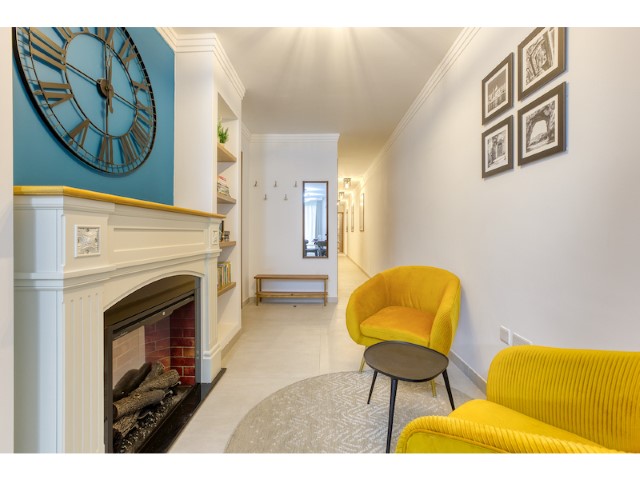
A designer 2-bedroom apartment in Gżira, close to the church, around 2 minutes from the promenade, and near Manoel Island.
View on Airbnb