
(And How to Actually Experience It)
You walk into what looks like a casual folk-music setup: a few men, a couple of guitars, people chatting, beers on the table. If you’re a visitor, your brain labels it instantly: “nice local folk show.”
That label is exactly what makes you miss the point.
In its most alive form, għana is closer to a rule-based sung debate than a staged performance. It’s witty, sometimes sharp, often funny, and packed with local references that the room understands instantly. UNESCO’s own description explicitly frames it as a platform for informal debate and reflection on shared history — not just entertainment. (ICH UNESCO)
This post gives you the tourist decoder ring, plus a practical answer to the key question: can you actually see it, and where?
Spelling note: You’ll often see the official Maltese spelling with a special character (għana, pronounced roughly “ah-na”). This post uses both forms, and sometimes writes “Ghana” in plain ASCII for searchability.
What you’re actually seeing .. (not what you think you’re seeing)
Three related forms, three different experiences
UNESCO describes għana as three related types of rhymed folksong, with the “quick-wit” form being the most popular today. (ICH UNESCO)
What that means in practice:
Spirtu pront (quick-wit)
The crowd-pleaser. An improvised duel — often one versus one, sometimes pairs — built around argumentation, rhyme, and clever rebuttals. If you don’t speak Maltese, you can still “read” it by watching the room’s reactions: laughter, murmurs, sudden silence, applause.
Think of it as competitive rhetoric set to music. The game is: who lands the sharper line? Who controls the exchange? Who wins the room?
In spirtu pront sessions, two or more għannejja (singers) are paired together and take part in an improvised song duel. If four singers are involved, the first will sing with the third, and the second with the fourth — this arrangement gives each singer more time to compose a response. The subject of the duel usually emerges early, with singers provoking their adversary. (Ciantar)
Tal-fatt (narrative / “about the facts”)
More like sung storytelling: people, events, episodes, memory. This is the closest thing għana has to an oral newspaper. A melancholic ballad style involving one għannej recounting a story about well-known local identities, events, or recent interesting or humorous Maltese folktales and legends.
The oldest documented traditional Maltese song is the ballad “L-Għarusa ta’ Mosta” (The Bride of Mosta), based on events in the 1500s and still sung today. If you’re interested in other Maltese oral traditions, see our piece on legends and myths in Malta.
Bormliza (high register)
Less common to stumble upon, but it appears in curated settings and is extremely distinctive in sound. Taking its name from the city of Bormla where it was popular, this style requires extraordinary vocal power and control — singers must reach into high soprano ranges without breaking into falsetto.
Bormliza mimicked the early informal għana sung by women, but due to its extreme vocal demands, this style is very seldom practiced today.
A social arena with rules (not background music)
In spirtu pront, the rules matter: turn-taking, a shared structure, and a kind of “verbal sparring etiquette.” That’s why tourists misread it. You see guitars and singing; locals see a contest of rhetoric and reputation.
What makes a line “win”? Several things, and locals score all of them simultaneously:
- Speed of response — how quickly can you pivot from their line to yours?
- Cleanness of the rhyme — did you nail it, or did you stretch?
- The pivot itself — did you take their point and flip it, or did you dodge?
- Callback — did you reference something from earlier in the exchange?
- Risk — did you go for a safe line or swing for something that could backfire?
Tourists see two men singing. Locals see a chess match at speed.
The local references are not decoration — they’re the core
A big part of għana’s “spark” is that lines carry in-jokes, village memory, or cultural cues that don’t translate. If you approach it like a concert, you miss the fact that the audience is participating silently — through reaction, approval, and social context. (Ciantar)
Why tourists misread it (and how to avoid the usual mistakes)
The five common tourist misunderstandings
“This is a folk show, so I can talk over it.”
When it heats up, it becomes a listening culture. Treat it like live theatre, not background ambience. When spirtu pront is running hot, the room knows. You will be noticed.
“If I don’t understand Maltese, it’s not worth watching.”
Wrong. Watch the timing, the handover, the crowd response, and the singer’s body language. You can feel the “point landed” moments without understanding a word.
“The guitarist is just accompaniment.”
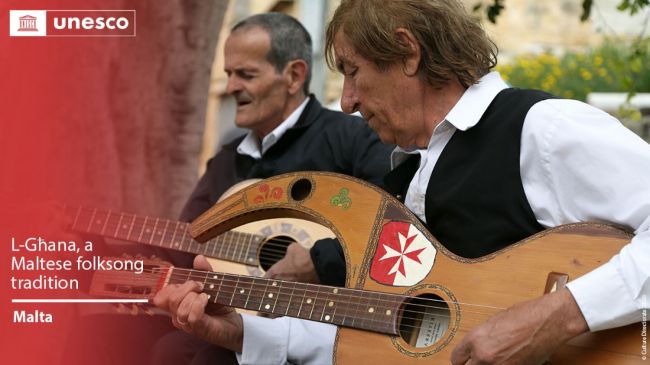
Often the guitar is the stabilising frame: tempo, mood, transitions, and tension management. The trio of guitarists consists of il-prim, who improvises around traditional motifs, and two daqqaqa akkompanjaturi who play in accompaniment. The prim guitarist is doing real work — pacing, transition signals, emotional underlining.
“It’s all friendly and sweet.”
It can be friendly, but it can also be sharp. The craft is “controlled sharpness,” not chaos. Academic work describes the exchange explicitly as botta and risposta — riposte and counter-riposte.
“Video first, respect later.”
At public festivals, filming is usually fine. In informal rooms, it can be sensitive. Ask before going close-range. There’s also a subtler consideration: improvised performances mean performers might not want a mediocre exchange immortalised.
Because the room is part of the performance
In the settings where għana lives most naturally, the audience isn’t passive. Relationships in the room — who knows whom, what the local dynamics are, what kind of audience showed up tonight — can shape how the performance unfolds.
This is why tourists can feel “outside the code” even when everyone’s being friendly. You’re watching a local social system operate at full speed.
Because moving it to a stage changes it
A staged performance can be excellent, but it behaves differently from a local session. When għana shifts from informal spaces to curated stages, the social function and incentives shift too. Pacing changes. Risk-taking calibrates differently. What feels appropriate isn’t quite the same.
Tourists often meet the staged version first, then later encounter a local session and misread the intensity as aggression. It’s not aggression — it’s just that the gloves are off.
Because sessions don’t start at full intensity
If you arrive mid-session, you might catch għana at full heat. But if you’re there from the beginning, you’ll notice a warm-up period — performers feeling each other out, the room settling, the energy building. The first twenty minutes often look very different from the last twenty.
How to watch għana without speaking Maltese
Watch the room, not the lyrics
- Laughter that arrives fast — a twist landed.
- A sudden quiet — a line hit hard, or the room is giving respect.
- People leaning in — attention is locked.
- Small murmurs and head shakes — agreement, disbelief, appreciation.
- The handover between singers — who controls the rhythm of the exchange? Who’s rushing, who’s taking their time?
Watch the performers, not just the sound
The singers themselves tell you a lot:
- Eye contact or avoidance — are they locked in or playing to the crowd?
- Leaning in — confidence, about to push harder.
- A slight smile before responding — they’ve got something.
- Turning to the guitarist — buying time, or about to shift gears.
Compliment the craft if you speak to someone after
These land well even across language barriers:
- “Fast thinking”
- “Clean rhymes”
- “Strong control”
- “The guitar work was tight”
- “Good recovery” (if someone stumbled and pivoted well)
You don’t need fluent Maltese to show you understood what you were watching.
What happens when a line bombs?
Not every line lands. Sometimes a rhyme stretches too far. Sometimes a reference falls flat. Sometimes someone just blanks for a second too long.
What happens next is part of the skill. A good performer recovers with grace — maybe a self-deprecating pivot, maybe a harder swing to make up for it. The room decides whether to give mercy or pile on. And the other singer decides whether to exploit the opening or let it pass.
Watching a recovery is sometimes more impressive than watching a clean exchange.
Where tourists can actually see għana live
Yes, it’s accessible — but “accessible” means two different things with għana:
- Curated, public performances (easy for tourists)
- Informal sessions (more local, sometimes harder to stumble into unless you know where/when)
Most accessible: public, tourist-friendly festivals
Festgħana (21-24 May 2026)
This is the cleanest “first għana experience” for tourists. Organised by Festivals Malta, Festgħana was designed explicitly as a platform focused on għana, celebrating Maltese heritage with particular focus on local folk singing. (Festivals Malta)
The festival is scheduled, approachable, with clear venues and mixed audiences. Typical setting: performances in and around Floriana, often connected with the Argotti Gardens area.
Why it works for tourists: Program listings, predictable venues, you know when to show up.
For more summer festival options, see our guide to Malta festivals and music summer 2025.
Għanafest
A long-running, explicitly għana-centred festival. Historically hosted at Argotti Gardens in Floriana, walkable from Valletta — useful for tourists staying central.
Għanafest serves as a prime platform for Maltese folk musicians and singers to expose their talents to wider audiences. Although traditionally għana is performed in the intimacy of bars in Maltese and Gozitan villages, the festival organisation is committed to supporting a continual revival within a creative dialogue between past, present, and future.
The festival typically runs for two days in June, featuring:
- Għana (Maltese folk song)
- Local bands and artists
- International world music acts from Mediterranean countries
Note: Għanafest and Festgħana have overlapping histories — the festival programming has evolved over the years, with Ritmu Roots Festival transitioning into Festgħana.
L-Imnarja at Buskett Gardens (June 28-29)
L-Imnarja is one of Malta’s oldest feasts, with roots stretching back to the Roman period — part of Malta’s brief history that predates even the Knights. The name derives from the Latin luminaria, referring to bonfires traditionally lit during the festival. It’s held at Buskett Gardens near Rabat, close to Mdina’s lesser-known gems.
This is a “culture + atmosphere” night, not only a music night. The feast combines:
- Traditional għana performances
- Folk music and dancing
- Agricultural fair and exhibitions
- Horse and donkey races
- Traditional food (especially fenkata — rabbit stew). For more on Maltese cuisine, see our food in Malta guide.
The 28th June (eve of L-Imnarja) features a parade of karrettuni and karozzini (carts and carriages) from Saqqajja Hill to Buskett, followed by exhibitions, traditional games, and Maltese għana until midnight.
On the 29th, events start at 6am and continue through midday, including Mass at the Grand Master’s hunting lodge and the agricultural show.
Practical tip: Thousands of people flock to the gardens. It was traditionally said that every bride had the right to demand her new husband take her to celebrate Mnarja at Buskett Gardens. Arrive before sunset to experience it with locals.
Other public contexts
Village festas throughout the year sometimes feature għana, particularly during the week building up to the festa. Check our calendar of cultural events in Malta for specific dates. For background on Maltese festas, see our piece on the history of Maltese carnival.
Traditional evenings (lejliet tradizzjonali) in summer, especially around harbour towns and the Three Cities, occasionally feature għana performances. The history of the Three Cities is deeply connected to għana’s working-class roots.
Sometimes accessible: local-first, but you can still get in
Workshops and bootcamps tied to Festgħana
These are explicitly meant to train and surface new performers, and some participants end up performing publicly at Argotti Gardens during Festgħana. If you want the “local meaning” angle, these are great because they show transmission, not just performance.
Harder (but highest “authentic local” payoff)
Informal sessions in village bars
This is where għana lives year-round — in wine bars and każini (social clubs) around Malta.
Here’s the reality: għana sessions are hardly ever publicised on official media or national cultural calendars. Sessions take place every Sunday morning in a few wine bars around Malta, and the enthusiasts who follow għana are well aware of these hubs. Every fortnight or so, other sessions are organised — disseminated simply by word of mouth.
How to find them:
- Ask your host or a local bartender. Use the phrase “spirtu pront tonight?” and name the area you’re in.
- Search YouTube for the town name + “spirtu pront” — you’ll often see repeated venues referenced in video titles (clubs, bars, local rooms). That gives you real-world leads.
- Sunday mornings are traditional — if you’re near a village bar and hear guitars, investigate.
Towns historically associated with għana include Żejtun, Qormi, and villages in the harbour region.
Honest note: Most tourists never get past the public festival layer. That’s fine. You’re still watching a UNESCO-inscribed tradition that’s genuinely alive. Don’t feel like you’ve failed if you don’t find a midnight bar session.
The tourist trap question
Yes, there are “Maltese folklore evenings” that package għana alongside other traditions for tour groups. Some are quite good. Some are not.
How to tell the difference:
- The performers’ engagement with each other — are they actually responding to what was just said, or cycling through prepared material?
- Room reaction — is there one? Do locals seem to be paying attention, or is it entirely tourists?
- Length of exchanges — spirtu pront should have genuine back-and-forth, not just two solo performances interleaved.
- Risk — does it feel like anyone could say something unexpected, or is everything safely on-script?
A good staged performance still has these qualities. A packaged tourist show often doesn’t.
A small modern hack: can AI help translate għana live?
Yes, in a limited but surprisingly useful way.
Think of it as “gist support,” not translation.
A simple workflow to test at home
- Play a għana clip on YouTube.
- Put one earbud in so you still hear the music naturally.
- Use a live tool to catch the thread:
- ChatGPT voice mode: ask for a rolling summary every 20-30 seconds.
- Any live transcription/translation app: aim for topic-level understanding, not word-for-word.
What works best
Tal-fatt (storytelling) is more linear, so summaries tend to make sense. You can often follow the narrative arc — who the story is about, what happened, how it resolves.
What will fail often
Spirtu pront depends on wordplay, local references, and rhetorical scoring. Even a good translation can miss why a line “won.” The pun doesn’t translate. The callback doesn’t land. The local reference means nothing to you.
The right expectation
AI can help you follow the direction of the exchange. The room’s reaction helps you understand what actually landed. Use them together.
The guitar players: more than accompaniment
A note most għana coverage skips: the guitarists are doing real work.
The accompaniment is provided by three guitars, usually strumming Western-influenced tonic to dominant chordal progressions. This gives għana its unusual sound — not quite Eastern, but not quite Western.
The trio consists of:
- Il-prim — improvises around traditional motifs
- Two daqqaqa akkompanjaturi — play in accompaniment based on simpler patterns
In the introductory section, a series of rhythmic and intervallic structures are created and developed. This same material is then reiterated by both the għannejja and the lead guitarist. The frequent use of syncopation and descending melodic movements form part of the formal structure.
The tone quality of locally produced għana guitars is described as “very compact, with very low bass resonance” — better suited to the technical demands of creating new motifs and variations.
Watch the interplay between singer and guitarist. A well-matched pair has nonverbal communication running constantly.
Why the UNESCO listing matters (and its tensions)
Għana was inscribed on UNESCO’s Representative List of the Intangible Cultural Heritage of Humanity in 2021, following unanimous approval at the 16th meeting of the UNESCO Intergovernmental Committee in Paris.
It joined the Maltese ftira (inscribed 2020) and later the Maltese festa (inscribed 2023) as Malta’s recognised intangible heritage.
The application required consent from the communities concerned — signatures were collected from għannejja and għana enthusiasts, with a group even submitting a video emphasising their support in għana form.
But here’s the tension: għana’s power comes partly from being informal, local, unscripted. The bars-and-feasts ecosystem isn’t easily preserved by institutional efforts. You can’t UNESCO your way to a midnight session where two guys with a grudge go at each other over something that happened in 1987.
The listing helps ensure għana doesn’t disappear entirely. It probably also changes what għana becomes. Whether that’s good or bad depends on what you think traditions are for.
For tourists, the practical upside is clear: more public performances, more documentation, easier to find and learn about.
A brief history: from rooftops to bars
Understanding where għana came from helps explain what you’re watching.
One of the earliest mentions of għana on record is from 1791. A French knight, François-Emmanuel Guignard, published Malte par un Voyageur Français, which included lyrics of three għanjiet (songs) as transcribed by a Maltese librarian, Gioacchino Navarro.
Throughout its history, informal għana occurred among both men and women. Women practiced għana on rooftops or in old communal wash houses (għajn tal-ħasselin). Across the flat roofs typical of Maltese houses, women took part in informal and unaccompanied għana sessions — essentially a pseudo-community across the skyline of residential Malta.
Post-World War II, għana saw a shift: the spirtu pront variety became steadily popular, men took over the art, and transported it to bars and każini. The true catalyst was when Ġużè Cassar Pullicino organised the first-ever Maltese Folklore Festival in 1953 — an event that inadvertently altered għana forever by formalising competition rules.
Today, spirtu pront is performed mainly in village bars and clubs by working-class men. But there are signs of evolution: the youngest protagonist is seven-year-old Nordai Desira from Żejtun, who sings with his grandfather Joseph Muscat “in-Nizza.”
For more on Malta’s cultural evolution through different periods, see the lasting impact of Arab rule on Malta.
Mini spotter’s guide: what you’re hearing
If you want a fast decoder:
- If it feels like a duel — back-and-forth, quick responses, the room reacting in real time — you’re probably hearing spirtu pront.
- If it feels like one person telling a story — that’s likely tal-fatt.
- If the vocal sound is unusually high and expansive — you may be hearing bormliza.
With spirtu pront, you can sometimes catch the “winner” just from room energy, even without understanding a word.
FAQ
What is Maltese għana?
Għana is a Maltese folk singing tradition with multiple forms, including improvised duels (spirtu pront), narrative songs (tal-fatt), and a high-register vocal style (bormliza). It was inscribed on UNESCO’s Intangible Cultural Heritage list in 2021. (ICH UNESCO)
Is għana “aggressive”?
It can sound intense to outsiders because spirtu pront is competitive and sharp by design. But it’s structured and rule-driven — closer to verbal sparring than a fight. The sharpness is the point, and performers typically have mutual respect even when exchanges get heated.
Do I need Maltese to enjoy it?
No. You can follow the performance through timing, room reaction, and the rhythm of the exchange. You’ll miss specific meaning, but you’ll still see who controls the moment, when lines land, and what the emotional arc looks like.
Where is it performed?
Public festivals (Festgħana in May, L-Imnarja in June), village bars and każini, at popular feasts, and during traditional evenings in summer. Sunday morning sessions happen in wine bars around Malta, known to enthusiasts but rarely publicised.
When does it happen?
Festgħana: 21-24 May 2026. L-Imnarja: 28-29 June (annual). Sunday morning sessions year-round in village wine bars. Traditional evenings peak in summer and around festa periods.
Can I record video?
In public festival contexts, recording is usually expected. In informal settings, norms vary. Ask first in tight local rooms.
Can AI translate it live?
It can help with gist, especially for narrative songs. It will often miss jokes, wordplay, and local references in spirtu pront. Use it as support rather than a substitute for watching the room.
How is għana different from freestyle rap?
The comparison is reasonable — both involve improvised competitive wordplay. But għana has fixed melodic structures, strict rhyme schemes, and centuries of local tradition embedded in the references. The skill overlap is real, but the forms aren’t interchangeable.
Is għana dying?
Complicated. The informal bar culture has declined from its mid-20th-century peak. Fewer young people participate than a generation ago. But the UNESCO listing, academic interest, and formal preservation efforts have created new contexts for għana to survive. It’s evolving more than dying.
Pre-watch list: YouTube videos that teach you something
Before you go, watch a few examples so your ear knows what to listen for:
- UNESCO overview — best first watch for context
- Għanafest recordings — clean audio, staged context, good examples of spirtu pront
- Informal bar sessions (search “spirtu pront Żejtun” or similar) — shows the room dynamic
- Buskett / L-Imnarja atmosphere clips — good for understanding where it lives
- Tal-fatt examples — for contrast with the duel format
Search strategy: YouTube + town name + “spirtu pront” often reveals repeated venues.
A visitor-friendly plan (copy/paste)
If you want one solid cultural night with high odds of success:
- Check Festgħana first if you’re visiting late May 2026.
- If visiting late June, aim for L-Imnarja at Buskett (28-29 June).
- If you want something more intimate, use the informal session strategy: ask locals and use YouTube titles as venue clues.
- For historical context, visit the Three Cities or Bormla — these harbour areas are historically associated with għana.
- For general trip planning, see our Malta travel guide.
YouTube videos to start with
- UNESCO – L-Ghana, a Maltese folksong tradition
https://www.youtube.com/watch?v=Qx_vH7SmTro - MĠARR MALTA: l-Ghana Maltija – Spirtu Pront – Hidmet Missirijietna
https://www.youtube.com/watch?v=GPy88ySh14Q - malta. ghana malti spirtu pront fuq id do re
https://www.youtube.com/watch?v=5HVfptChqv4 - Ghana Spirtu Pront – Ghanafest 2019
https://www.youtube.com/watch?v=W9Eop2R2tXQ - Ghana spirtu pront (Ganna Bar, Zejtun, March 2005)
https://www.youtube.com/watch?v=PJeQMz2Nmig - GHANA SPIRTU PRONT DO RE GHAWDEX IX-XEWKIJA 29-8-16
https://www.youtube.com/watch?v=EFzI5TCW31Y - GHANA SPIRTU PRONT HAZ-ZABBAR (Club tal-Bocci) 18-9-16
https://www.youtube.com/watch?v=nWuzIjsUnqU
YouTube videos (tal-fatt / narrative)
- L-Imnarja – Ghana tal-fatt
https://www.youtube.com/watch?v=haZQ8FgMZYs - Ghana tal-Fatt minn Kelinu fuq (Pawlu l-Ghannej)
https://www.youtube.com/watch?v=4YPGLRxS8g8 - simshar ghana tal fatt minn kelinu (kitarristi…)
https://www.youtube.com/watch?v=JynX5dWWf24 - malta ghana. fatt minn salvu il-kalora (id-destin krudil)
https://www.youtube.com/watch?v=adsxAHXmyV8 - Ilsienna – Folklor – Ghana: Tal-Fatt
https://www.youtube.com/watch?v=79aHBVPbixY - Il-Fatt ta l-Ghagin (John Laus)
https://www.youtube.com/watch?v=DZFf1OS5bhE
YouTube videos (bormliza / fil-gholi)
- Ghanja fil-gholi – La Bormliza – live at Ritmu Roots Festival 2023
https://www.youtube.com/watch?v=Zz12tgF8eNU - Ilsienna – Folklor – L-Ghana: Fil-Gholi jew La Bormliza
https://www.youtube.com/watch?v=ZNh-FtO2nPc - MALTA FOLK SUPER STAR… GHANA FI-GHOLI
https://www.youtube.com/watch?v=txXKhXj3r_k - Daqq Bil-Vjolin Ghana La’Bormliza
https://www.youtube.com/watch?v=BqEFLnpCQoU - Tisqifa għall-Ghana Taghna – Episodju 71 (Mikiel Cumbo l-Izgej u l-ghana la Bormliza)
https://www.youtube.com/watch?v=vHVQf4rvyNo
Extra videos (context / documentary / longer sessions)
- L-GHANA: Tradizzjoni rikonoxxuta mill-UNESCO
https://www.youtube.com/watch?v=ls9Noeex_KQ - ghana – Traditional Maltese Singing
https://www.youtube.com/watch?v=Dnjrfmuq_qg - Maltese Folk Music 60 Minute Session Part 1 – Music Ghana
https://www.youtube.com/watch?v=4-skh1T_8Pc - Ghana Malta 15.9.1989
https://www.youtube.com/watch?v=ltKaraUhYxA - Tisqifa għall-Ghana Taghna – Episodju 18 (Serata ta’ Ghana…)
https://www.youtube.com/watch?v=fnY_7TPUfhs - Serata ghana hal-ghaxaq (Jean Claude – Etienne Pawney – Joe…)
https://www.youtube.com/watch?v=9-A2Ei1zSnE - A Love Song – Ghanja lin-Namrata (Emmanuele Cilia)
https://www.youtube.com/watch?v=9o9jHBqtiTA - MALTA GHANA spirtu pront fuq id do re
https://www.youtube.com/watch?v=kglxt-o-UGg - ghana malti spirtu pront minn kalc u leli (fl-Awstralja)
https://www.youtube.com/watch?v=tDY0_f4UfuE - Ghana mil Awstralja part 1
https://www.youtube.com/watch?v=WiM-zld2BSQ - Ghana tal-Fatt (Instrumental)
https://www.youtube.com/watch?v=K6-_C94xYJ0 - Ghana – Ghanja tal-fatt – Mariele Zammit – KorMalta
https://www.youtube.com/watch?v=GVA0v6D2HzI - Ghanja Maltija – Il-Bormliza – Mariele Zammit
https://www.youtube.com/watch?v=XSD3ziFpsWk - L-Ghana – A Maltese folksong tradition – Mariele u Mikiel “Zgej”
https://www.youtube.com/watch?v=yZQxe0lzIiQ
References :
UNESCO
Main listing:
Multimedia explainer:
Nomination file (deep detail, references, safeguarding):
UNESCO committee decision
Festivals Malta
Festgħana page
Ritmu/Festgħana announcement
Arts Council Malta
Għanafest archive pages:
https://artscouncilmalta.gov.mt/en/ghanafest-world-music-festival-2016/
https://artscouncilmalta.gov.mt/en/ghanafest-2017/
University of Malta
Ciantar, “From the Bar to the Stage” (PDF):
Ciantar record page
Mifsud-Chircop, “Għana — A Living Culture in Malta” (PDF)
UMBC Malta Archives
Ciantar section on għana in Maltese culture and society:
https://www2.umbc.edu/MA/index/number5/ciantar/cia_0.htm
https://www2.umbc.edu/MA/index/number5/ciantar/cia_1.htm
Tourism
Visit Malta L-Imnarja listing:
https://www.visitmalta.com/de/events-in-malta-and-gozo/event/mnarja-2022
Stay in Gżira near the promenade
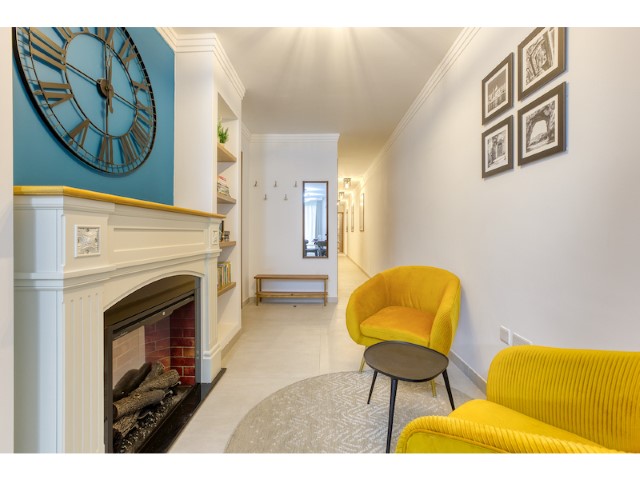
A designer 2-bedroom apartment in Gżira, close to the church, around 2 minutes from the promenade, and near Manoel Island.
View on Airbnb