
TL;DR — THE 30-SECOND VERSION
This guide helps you decide whether Malta is a good remote-work base, whether you need the Nomad Residence Permit, where to live first, and what the real trade-offs look like once the honeymoon period wears off.
If you only do one thing: come for two weeks first, stay in a practical area, and test your workday before you commit to a longer lease.
Best for: people who want an English-friendly, compact, European base that is easy to understand quickly.
Avoid if: you need open space, silence, big-country variety, or you get claustrophobic fast.
Permit reality: the Nomad Residence Permit is for third-country nationals, not for EU/EEA/Swiss citizens.
Tax reality: 12-month income-tax exemption, then 10% flat rate on authorised work. Genuinely competitive — but get proper advice before relying on it.
Disclosure: ManicMalta also has a short-let apartment in Gżira, but this page is written to be useful whether you stay there or not.
Jump to
Who this guide is for
Quick decision table
How Malta compares
Nomad Residence Permit
Tax
Cost of living
Where to base yourself
The honest downsides
Why Malta works better for some remote workers than others
Coworking
Community and social life
Getting around
What few guides mention
FAQ
I’ve lived in Malta long enough to watch the remote-work story here shift from a niche expat pattern into a formal government programme with its own residence permit, tax rules, and a small industry around it. I’ve also watched a lot of guides get written about it by people who spent a few days in the harbour corridor and called it research.
This page is not that. It is built around the questions that actually matter once you stop scrolling Instagram and start planning: whether you even need the permit, how Malta compares with real alternatives, what it costs to live here in 2026, where to start, and which common complaints are fair versus outdated versus the predictable result of never leaving Sliema.
Who this guide is actually for
Before anything else, there is one split that most Malta remote-work guides bury or handle badly.
- If you hold an EU/EEA/Swiss passport: the Nomad Residence Permit is not your route. You have freedom of movement. You can live and work in Malta without applying for anything beyond standard residence registration. If you plan to stay longer than three months, you register your residence and obtain an eResidence document. The tax rules still apply to you if you stay long enough to become tax resident (183 days), but the permit itself is irrelevant. If you’re German, French, Dutch, Spanish, or from anywhere else in the EU — just come.
- If you are from outside the EU/EEA/Switzerland: the Nomad Residence Permit is the main legal route for staying in Malta as a remote worker beyond tourist-entry rules. It is real, it works, and the process is clear enough to plan around. The income threshold is real, the paperwork is real, and the details matter.
- If you only want to test Malta for a few weeks: skip the permit sections. Go straight to where to base yourself and cost of living. Most short-stay nomads are operating on tourist entry rules and a laptop.
Practical rule: if you are not sure whether Malta works for you, do not start with paperwork. Start with a two-week test stay in a practical area and learn the island properly before committing to anything.
Quick decision table
On mobile, swipe left to see full table details.
| If this matters most to you | Malta verdict | Why | What to do next |
|---|---|---|---|
| English, short distances, easy daily setup | Strong fit | This is Malta’s real edge. | Read the location section before booking. |
| Silence, space, huge landscapes | Weak fit | Malta is dense and small by nature. | Compare carefully with Cyprus, Greece, or Asia bases. |
| One-country business hub with polished infrastructure | Compare with Dubai | Dubai is usually stronger for scale and business-first convenience. | Read Malta vs Dubai for Remote Workers. |
| A fast two-week test before deciding | Good fit | You can understand Malta faster than most alternatives. | Book a short stay, then test your daily routine properly. |
| Low-cost Asia base with strong nomad scene | Compare with Thailand or Malaysia | Malta wins on Europe-facing access; Asia often wins on cost-value and ecosystem. | Read the comparison section below. |
How Malta compares with other remote-work bases
Every Malta guide compares the island with the same handful of places and says almost nothing useful. The real question is not whether Malta is “better.” It is whether its particular mix of compactness, English, density, and European access suits the way you actually live and work.
Malta vs Portugal
Portugal gives you more city choice, a broader long-stay ecosystem, and a bigger remote-work culture overall. Malta’s advantage is speed. You can learn the island quickly, English is more universally useful in daily life than in Lisbon or Porto, and the island feels simpler to test in one short first stay. Portugal’s NHR tax regime has been reformed and is less generous than it was; Malta’s 12-month exemption plus 10% flat rate is now arguably more straightforward for qualifying nomads. If you want breadth, Portugal usually wins. If you want a compact European base that becomes familiar fast, Malta often feels easier.
Malta vs Greece
Greece offers something Malta physically cannot: variety. Bigger cities, more islands, more landscapes, more room to move when you get restless. Malta’s advantage is consistency — it stays functional through winter, the infrastructure is less seasonal, and the amount of homework needed before choosing a base is lower. Many Greek islands become ghost towns from November to March. Malta does not. If you are the kind of person who gets bored in one place after a few months, Greece will usually suit you better.
Malta vs Cyprus
This is the closest real Mediterranean comparison. Both are small English-speaking EU islands with growing nomad communities. Cyprus usually feels more spacious and more spread out. Limassol has a significant tech and finance cluster that Malta’s iGaming scene around St Julian’s mirrors in some ways. Malta usually feels more compact and walkable if you choose the right area. If you want a car-based lifestyle with bigger apartments and more breathing room, Cyprus may win. If you want a place where a short first stay tells you almost everything you need to know, Malta often wins.
Malta vs Dubai
Dubai is stronger if your work depends on global connectivity, polished services, and a business-first environment. Malta feels more Mediterranean, more local, and less deliberately engineered. I’ve written a separate Malta vs Dubai comparison that covers this in more detail.
Malta vs Thailand / Malaysia
Thailand and Malaysia are stronger on cost-value, scale, and ecosystem size. Malta is stronger if you need Europe-facing access, EU legal protection, and an English-friendly base in the CET time zone. Thailand’s DTV visa allows stays of up to 180 days per entry; Malaysia’s DE Rantau pass runs 3 to 12 months with a renewal option. Different propositions entirely. If your life and clients face Asia-Pacific, Malta is probably the wrong starting point.
| Base | Strongest if you want | Main upside vs Malta | Main trade-off vs Malta |
|---|---|---|---|
| Malta | Compact Europe, English, quick setup | Fast to understand and test | Dense, small, can feel claustrophobic |
| Portugal | Bigger remote-work ecosystem | More city choice and depth | Less compact, less instantly readable |
| Greece | Variety and landscape contrast | More room to move and reset | Seasonal, more homework before choosing |
| Cyprus | Island life with more breathing room | Feels less compressed | More car-dependent in practice |
| Dubai | Business-first global hub | Infrastructure and global connectivity | Higher cost, less local texture |
| Thailand | Asia value and bigger nomad scene | Cost-value and ecosystem scale | Wrong time zone for European clients |
| Malaysia | English-friendly Asia hub | Regional scale, better English than expected | Not a quick European test base |
The Nomad Residence Permit: what you actually need to know
Malta’s Nomad Residence Permit is managed by the Residency Malta Agency. It is issued for one year and may be renewed three times, for a maximum total stay of four years, at the Agency’s discretion.
Who qualifies
You must be a third-country national (non-EU, non-EEA, non-Swiss), aged 18 or over, able to work remotely, and you must fit one of three categories: employed by a foreign company, a partner or shareholder in a foreign business, or freelancing for clients whose permanent establishments are outside Malta.
The part that catches people: you cannot provide services to Maltese companies or clients, even indirectly. If your employer is registered in London but the actual work is for their Malta subsidiary, you do not qualify. The Residency Malta FAQ is explicit about this.
The hard requirements
- Minimum gross yearly income: €42,000 (€3,500/month). You demonstrate this with bank statements covering at least three months of consistent income. Applicants who applied before April 2024 still hold the older threshold of €32,400, but any new application uses the higher figure.
- Valid travel document
- Health insurance covering risks in Malta and other European countries
- Valid rental or purchase agreement — you cannot live in a hostel or on a boat (both are explicitly ruled out in the official FAQ)
- Police conduct certificate from your country
- Background verification check
Nationals of Afghanistan, North Korea, Iran, DR Congo, Somalia, South Sudan, Sudan, Yemen, Venezuela, Russia, and Belarus are currently ineligible. This list can be revised by the Agency.
How the process works in practice
You apply online through the Residency Malta portal. After the initial document check, you pay a non-refundable €300 administrative fee per person via bank transfer from the main applicant’s account. Official processing is 30 working days from receipt of funds, but that does not include visa-issuance time. In practice, allow longer. Bureaucracy here is not fast.
If approved in principle, you have 30 days to submit proof of accommodation and health insurance. After final approval, you travel to Malta, book a biometrics appointment, and the residence card takes three to four weeks to arrive. The card fee is €100 per person, payable by card only at Residency Malta’s offices in Qormi. No cash.
Dependants and renewal
You can include a spouse and children (minor or adult dependants) in the initial application. Each pays the same €300 fee. You cannot add dependants after paying — the only exception is newborns. You can add family members at renewal.
For renewal, you need to apply two to three months before expiry and prove you actually lived in Malta for at least five cumulative months during the permit year, demonstrated through bank statements showing local transactions. The permit can be renewed three times — four years total.
Important: temporary accommodation (Airbnb, hotels) can get you through the approval stage. But the residence card itself cannot be issued on a temporary address — you need proof of a one-year residential arrangement for the card. This trips people up. Plan for it.
What the permit does NOT give you
It does not count toward permanent residency or citizenship. Years on the Nomad Residence Permit are not included in the five-year residency requirement for those routes. It does not give you the right to work for Maltese employers or serve Maltese clients. And after four years, this particular route is exhausted — if you want to stay longer, you need a different residency pathway (the Malta Retirement Programme and the Global Residence Programme are two of the more common ones).
For the official source, always check the Residency Malta eligibility page and the official FAQ (version 13.5, last updated February 2026). Do not rely on summaries alone — including mine.
Tax: the part most guides get wrong
Malta’s tax framework for digital nomads is genuinely competitive, but it took years to get the rules properly codified and it remains the area most likely to be misunderstood. Here is what actually applies as of 2026, based on the Nomad Residence Permits Income Tax Rules that took effect on 1 January 2024.
First 12 months: income from your “authorised work” — the remote work you declared on your permit application — is exempt from Maltese income tax. Zero. You need to file a written declaration with Residency Malta confirming your residence is not merely casual. This is real and in the law, but Residency Malta themselves are careful to say that being issued the permit does not automatically mean you fall under the special tax rules — you still need to meet the conditions.
After 12 months: your authorised work income is taxed at a flat 10%. Compare that with Malta’s standard progressive rates, which go up to 35%. The 10% flat rate is a significant advantage and one of the better deals in Europe for qualifying remote workers.
Double taxation relief: Malta has tax treaties with around 80 countries. If you are already paying at least 10% tax on your remote work income in another country that has a treaty with Malta, you may owe nothing additional here. Residency Malta forwards proof of your foreign tax payment to Malta’s Commissioner for Revenue.
Other income: the exemption and 10% rate only apply to authorised work. Rental income from Maltese property, local business income, or anything else that is not your declared remote work activity is taxed at standard progressive rates (up to 35%). If you have multiple income streams, this matters.
Non-domicile rules: if you establish tax residency in Malta (183+ days) but remain non-domiciled — which as a nomad you almost certainly are — you only pay Maltese tax on local-source income and foreign income you actually remit to Malta. Foreign capital gains are not taxed even if remitted. This is a genuinely useful feature of the Maltese system that interacts favourably with the nomad permit rules.
The spouse gap nobody mentions: the 12-month exemption and 10% flat rate apply only to the main applicant’s authorised work. If your spouse earns income and brings it into Malta, standard tax rules apply to them. Most guides skip this completely.
My honest take: get proper tax advice. I am not a tax professional and this is not legal counsel. The Maltese system has genuine advantages, but the interaction between nomad permit tax rules, non-dom status, and your home country’s obligations is specific to your situation. A consultation with a Malta-based tax adviser is worth the money. Sites like Digital Nomad Tax cover Malta-specific analysis in more depth than I can here.
Accountants and practical tax help
For finding a tax adviser, Yellow Malta’s accountants directory is a neutral starting point. Sheltons Malta and CSB Group are two firms that visibly position themselves around tax, accounting, and relocation-related work for international clients. I have no commercial relationship with either — they are simply firms I see referenced regularly in expat and nomad circles here.
Cost of living: actual numbers, not averages
Every guide says “€1,100 to €2,000 per month.” That is technically defensible and practically useless. What you spend depends almost entirely on where you live and whether you cook. Here is a more honest breakdown based on what I see in 2026.
Rent
This is the biggest variable. A one-bedroom in Sliema or St Julian’s runs €1,000 to €1,500 per month on a standard long-term lease. Valletta is similar or slightly higher for well-located places. Gżira is often slightly cheaper than Sliema while being a short walk from the same amenities. Move inland — Mosta, Birkirkara, San Ġwann — and you can find decent one-bedrooms for €700 to €900. Gozo is roughly 30–40% cheaper than the main harbour corridor: €600 to €900 for a one-bedroom.
Short-term rates (Airbnb-style, one to three months) run significantly higher — often 40–80% above long-term lease prices. That is standard here. If you are testing for two weeks, expect to pay holiday rates. If you are committing to six months or more, the numbers drop considerably.
Real estate agents typically charge half a month’s rent plus VAT as a fee, which makes them pointless for stays under three months. For short stays, use platforms directly or check Facebook groups for sublets — “Malta Sharing Accommodation / Rooms to Rent and Roommates” is one of the more active groups.
Everything else
Beyond rent, a single person can expect roughly €700 to €900 per month on daily life. That puts total monthly spend at roughly €1,500 to €2,200 depending on area and habits. Specifics:
- Groceries: €250 to €350 per month if you cook regularly. Lidl, PAMA, and Valyou cover basics well. Local produce at open-air markets (Marsaxlokk Sunday is the famous one) is good and reasonably priced. Imported specialty items cost more than mainland Europe because everything comes by sea or air.
- Eating out: a pasta dish or burger at a mid-range restaurant runs €12 to €18. A proper dinner with wine is €30 to €50 per person. Pastizzi are still €0.50 to €1.00 and remain the best value meal on the island.
- Utilities: electricity, water, and gas average €60 to €100 per month for a one-bedroom, but this can spike in summer if you run air conditioning heavily.
- Internet: home broadband runs around €25 to €35 per month. Providers are Melita, GO, and Epic. Malta ranks well for European average download speeds and 5G coverage is widespread. Internet is one area where Malta genuinely delivers.
- Mobile: prepaid SIM cards from Melita, GO, or Epic cost €15 to €25 per month for data packages that cover most people. Pick one up at the airport on arrival.
- Transport: bus fares are €2.00 in winter and €2.50 in summer for a single journey valid for two hours, including transfers. Personalised tallinja cards give Maltese residents free travel on most routes. Bolt is the main ride-hailing app. A car rental adds €400 to €700 per month — useful for weekends but not necessary if you are well-located.
- Health insurance: basic private coverage for a non-EU nomad starts around €25 to €40 per month. GP visits at private clinics run about €20; specialists around €40 to €60.
- Coworking: hot desk prices range from €10/day at smaller spaces to €200 to €350/month for dedicated desks at the larger operators.
Where to base yourself — and why many remote workers get this wrong
Here is something I see constantly: people arrive, book into Sliema or St Julian’s because every guide recommends them, and then complain that Malta feels crowded, expensive, and samey. They eat at the same waterfront restaurants, walk the same promenade, and after three months declare that Malta is “too small.”
Malta is small. That is a fact. But it is not just Sliema, St Julian’s, and Valletta. If those are the only areas you experience, you have seen maybe 5% of what the island actually offers.
The harbour corridor: Sliema, Gżira, St Julian’s
This is where most nomads land and it is a perfectly reasonable starting point. Walkable, full of restaurants and cafés, well-connected by bus and ferry. Sliema has the most variety of apartments. Gżira is slightly cheaper and has more of a local feel while being a short walk from Sliema’s amenities — I like it as the better practical compromise. St Julian’s has the nightlife and the iGaming offices, which means younger crowds and more English speakers.
The downside: these areas are the most developed, most trafficked, and most tourist-heavy parts of Malta. Construction noise is common. The seafront promenade is lovely but the streets behind it can be dense and charmless. Pick the wrong specific street and you will hear traffic and construction from morning until evening.
Best for: your first two weeks while you learn the island. Also fine long-term if you prioritise walkability, convenience, and social life over quiet and space.
Valletta
The capital. UNESCO World Heritage Site. One of the most characterful small cities in Europe. Working from Valletta feels different from working in Sliema — there is a sense of place that modern harbour developments do not have. If you want a feel for it before arriving, see our Valletta self-guided walking tour.
The downside: apartments are smaller and pricier for what you get. Parking is essentially impossible. Grocery shopping requires more planning — no large supermarket inside the city walls. Quieter at night than some people want.
Best for: people who value character, history, and cultural density over convenience and modern apartment layouts.
The Three Cities: Birgu, Senglea, Cospicua
Across the Grand Harbour from Valletta, connected by the harbour ferry. These are underused by remote workers and I think that is a mistake. Birgu in particular has incredible historical depth — Fort St Angelo, the Inquisitor’s Palace, quiet waterfront restaurants. More genuinely Maltese than the tourist corridor. Usually cheaper too.
Best for: people who want a quieter, more authentic base and do not mind being slightly off the main transport routes. The ferry to Valletta is quick.
Central Malta: Mosta, Birkirkara, San Ġwann, Naxxar
Cheaper rent, bigger apartments, more car-dependent but well-connected by bus. These towns have their own character, local restaurants, and a rhythm that does not revolve around tourists. Mosta has the famous Rotunda and a village square that comes alive in the evenings.
Best for: people who want more space for less money and do not need the sea at the end of the street.
The north: St Paul’s Bay, Buġibba, Mellieħa
The most affordable coastal area. Large expat community (particularly British). Mellieħa is quieter, more scenic, and has one of Malta’s best sandy beaches. Rents can be €200 to €400 per month less than Sliema for comparable apartments.
Best for: tighter budgets and coastal living without harbour-area prices. Expect a longer bus ride into Valletta.
Gozo
Malta’s sister island. Smaller, greener, slower, and meaningfully cheaper. Victoria (Rabat) is the main town. Gozo suits people who want genuine quiet, countryside walks, and a pace of life that Sliema cannot offer. The trade-off is the ferry (25 minutes) to reach the main island and some services being less accessible.
Gozo has become increasingly popular with remote workers precisely because it is not the main island. If you have done three months in Sliema and feel restless, a month in Gozo might change your perspective entirely.
Best for: people who actively want quiet, rural scenery, and lower costs. Not ideal if you need daily access to main-island infrastructure.
Useful next reads on ManicMalta
Where to Stay in Malta — An Honest Guide
Holiday Rentals in Malta
Airbnbs in Malta
Airbnb Alternatives in Malta
The honest downsides — and which ones are outdated
I read negative reviews about Malta from nomads regularly. Some of the complaints are fair. Some are outdated. And some are the predictable result of spending three months in one neighbourhood and never exploring the rest of the island. Let me address the common ones directly.
“Power cuts in summer”
This was a real issue a few years ago. In 2025 and into 2026, power cuts have been rare to non-existent. The electricity infrastructure has been upgraded significantly — the interconnector to Sicily and new generation capacity have made the grid much more reliable. If a cut happens at all now, it tends to be localised and resolved within an hour or two. I would not list this as a serious risk factor anymore. It is not 2019.
“Flooding when it rains”
Partly fair. Malta’s drainage infrastructure struggles with heavy downpours, particularly in low-lying areas. When it rains hard — and in autumn and winter it can rain very hard — some roads flood temporarily. This is not a daily issue. It happens a handful of times per year, usually clears within hours, and is more of an inconvenience than a crisis. If you are based in an upper-floor apartment with good Wi-Fi, a rain day barely affects your work. It affects driving more than anything else.
“Malta is overcrowded and small”
Malta is small. That is not a downside to manage — it is the fundamental character of the place. If you need vast open spaces and the ability to drive for hours without seeing the same town twice, Malta is not for you. Full stop.
But “overcrowded” almost always means “I stayed in Sliema and St Julian’s.” Those areas are dense and busy — that is their nature. Malta has quiet countryside, coastal walks where you will see almost nobody, and villages with genuine charm that most nomads never visit because they never leave the harbour corridor. Dingli Cliffs, the Xemxija heritage trail, Dwejra in Gozo, the salt pans at Marsalforn, the silence of Ħaġar Qim at dawn — Malta has all of this. You just have to go looking for it.
The claustrophobia complaint is real for some people after several months. If that is you, build in trips. Malta’s location makes weekend flights to Sicily, Sardinia, Tunisia, and mainland southern Europe cheap and quick. That is one of the genuine advantages of using Malta as a base rather than as your whole world.
“Traffic is terrible”
Fair. Traffic congestion is a genuine problem, particularly on the main arteries during rush hours. The island has a lot of cars for its size. This matters less if you are working remotely and not commuting, and even less if you chose a walkable base. But if you plan to drive daily during peak hours, yes, you will be frustrated. Structure your day to avoid it.
“You can’t find a quiet beach in summer”
The popular beaches — Golden Bay, Mellieħa Bay, Pretty Bay — are packed in July and August. True. But Malta has dozens of rocky swimming spots and smaller bays that most tourists never find. If you are willing to walk ten minutes past the obvious spots, or take a bus to the south coast, the crowd thins dramatically. Gozo’s beaches are always quieter than the main island’s. Our interactive beach map covers the full island.
“Limited shopping”
Partly fair. Malta does not have the retail breadth of a large European city. Electronics, specialist items, and some clothing brands are harder to find or more expensive. For everyday needs — food, household goods, pharmacy — the island is well served. For bigger purchases, many residents order online from EU retailers with reasonable delivery times.
Why Malta works better for some remote workers than others
Most remote-work guides stop at the same checklist: weather, internet, cost of living, visa. That checklist is useful, but it reads identically for every Mediterranean destination. Here is what I think Malta actually offers that none of the other guides mention — and why the island works dramatically better for some nomads than others.
Malta has a real local economy behind the lifestyle layer
Nobody writes about this because it contradicts the nomad fantasy. But fantasies break. Clients disappear. Contracts end. Income dips below €3,500 a month for a stretch. What then?
In Bali, Chiang Mai, or on a Greek island, the answer is usually: leave, burn savings, or hustle new remote clients from a place whose local economy has no use for you. Malta is different. The NSO reported unemployment at 3.1% in November 2025, and the Central Bank of Malta recorded 9,798 vacancies in Q3 2025. The iGaming sector, fintech companies, compliance firms, and maritime services all hire English-speaking foreigners — that is how those industries function here.
A critical legal point: the Nomad Residence Permit does not let you work for a Maltese employer. If you wanted to pivot to local employment, you would need to switch to a proper work permit through the normal immigration route. That is not instant and not guaranteed. But the demand for English-speaking professionals in Malta’s key industries means the route exists here in a way it does not in most nomad destinations. A base with a real economic layer behind the lifestyle layer is a fundamentally different proposition from one without.
Industry adjacency: who Malta disproportionately suits
Malta does not suit every remote worker equally. It disproportionately suits people whose work touches or could eventually connect to the industries concentrated here: iGaming, fintech, blockchain regulation, maritime services, and AML/KYC compliance.
If you are a freelance copywriter serving health food brands, Malta offers you good weather and a nice promenade. The island’s local economy gives you nothing extra. But if you are a developer, designer, compliance analyst, marketer, or project manager whose skills are transferable into gaming or fintech — or if you are even mildly curious about those sectors — Malta has a dense cluster of relevant companies, conferences, and people. SiGMA Euro-Med drew 12,000 delegates to Malta in 2025. The coworking spaces are full of people working in these fields. That concentration is unusual for an island this size.
What this means in practice: you meet people doing this work everywhere. At SOHO, at meetups, over coffee. If your current remote gig is stable but you are starting to think about what comes next — a career shift, a product idea, a consultancy — being surrounded by the right industry beats any number of Slack groups. Proximity is how most career transitions actually start.
Malta is stronger for regulation-heavy work than for commodity freelancing
AI tools are compressing the income of remote workers who sell tasks that are becoming cheaper to automate: first-draft writing, basic translation, simple design, routine development. This is location-independent — it hits you in Sliema the same as in Chiang Mai. Malta’s dominant local industries — gaming regulation, financial compliance, maritime law, licensing — are built on human judgment, regulatory interpretation, and relationship management. If your freelance income is under pressure and you are thinking about what to pivot into, being physically present inside a cluster of regulation-heavy professional work offers more proximity to opportunity than most nomad bases can.
From freelance to founder
Plenty of nomads eventually outgrow freelancing. They want to incorporate, hire people, invoice European clients through a proper company, or build a product. Most popular nomad destinations offer nothing useful for that transition. Malta does.
You can register a company online through the Malta Business Registry. The MBR publishes its fee structure directly. The standard private limited company is a straightforward setup. For corporate tax structuring, Malta is known for its holding-plus-trading company refund mechanism — but that is an area where professional advice is essential before you commit to anything.
Malta Enterprise, the government’s economic development agency, offers startup grants (including Micro Invest Scheme tax credits) and advisory support. There is also a separate Startup Residence Programme for non-EU founders — a different route from the Nomad Residence Permit, aimed at people building companies rather than freelancing for foreign clients.
The failure modes nobody writes about
What if your income drops below €42,000 during the permit year? The permit does not automatically revoke mid-year. But at renewal you need to show you still meet the threshold. If your income is variable, plan for this from the start.
What if your main client disappears? The Nomad Residence Permit does not cover local employment — you would need a separate work permit to take a Maltese job. But the demand for English-speaking professionals in iGaming, fintech, and compliance means a route exists here that does not exist in most nomad destinations. It would take time and paperwork, but it is not a dead end.
What if remote work just stops working for you? In most destinations, that realisation strands you somewhere with no local relevance to your career. In Malta, you are a short walk from industry meetups, potential employers, and a professional community that is used to integrating international talent. The island’s size, which can feel limiting socially, becomes an advantage professionally — everyone is reachable.
What if you hate Malta after a month? Start with a short test stay. Two weeks at Airbnb rates costs much less than breaking a one-year lease.
Bottom line: Malta’s advantages go deeper than weather and Wi-Fi, but they are not universal. The fallback economy, the industry cluster, and the company formation infrastructure are real edges — for the right person. If your work has nothing to do with gaming, fintech, compliance, or European business, Malta is still a perfectly good base. You are just not using its strongest hand.
Coworking and work infrastructure
Malta’s internet is good. Not marketing-good — actually good. It consistently ranks in the top tier for European download speeds, 5G coverage is widespread, and home broadband from Melita, GO, or Epic handles video calls and heavy file work without drama.
If you need a workspace outside your apartment — and many people do, especially in older Maltese flats where every neighbour is audible and the acoustics turn calls into an echo chamber — here are the options worth checking first.
- SOHO Office Space: locations in Gżira (The Strand and Savoy Gardens) and St Julian’s. They publicly list coworking and dedicated desk memberships, run regular networking events, and report a community of 850+ members. If you want a consistent daily workspace rather than café-hopping, SOHO is usually the first name people try.
- Spaces (IWG): locations in Sliema, Valletta, and St Julian’s. More corporate feel, higher prices, polished environment. The kind of place where your background on a client video call looks like you have your life together.
- Grand Central, Valletta: two sites in the capital, both with rooftop terraces overlooking the harbours. Dual internet connection, shower facilities, pet-friendly. Reviews from nomads are consistently strong. Day passes available.
- 230 Works, Mosta: coworking café format — hot desks, private booths, meeting rooms. One of the more affordable options on the island. Central-island location, away from the harbour hustle.
- Mindo, Qormi: newer entrant, serviced offices and coworking. All-inclusive pricing, 24/7 access. Qormi has none of the traffic stress of the Sliema/St Julian’s corridor.
Coliving option: Evolve Coliving in San Ġwann combines accommodation with on-site coworking, a pool, and a community of remote workers. If you are arriving alone and want a social structure from day one, it is worth looking at — especially for the first few months. Coliving is not for everyone (shared kitchens, housemate dynamics), but if the social side matters to you, it solves a problem that a studio apartment does not. Check their current site for room rates and availability.
Café working is possible but limited. A handful of places around Gżira, Sliema, and Valletta tolerate laptop workers, but Malta’s café culture is more about the conversation than the Wi-Fi. Do not arrive expecting to run your business from a coffee shop.
Community and social life
One thing Malta does well that does not show up in comparison tables: it is easy to meet people. The island is small enough that communities overlap. The expat and nomad population is large relative to the island’s size, which means you will find meetup groups, language exchanges, sports clubs, and social events without much effort.
Malta Digital Nomads on Meetup is one of the more active groups. InterNations Malta covers broader expat networking. English Café Malta runs regular language-exchange meetups. Facebook groups for expats and nomads are active and genuinely useful for practical questions.
Making Maltese friends takes more time — Maltese social life revolves heavily around family and long-standing friendships. But the expat-to-expat connections happen quickly. If you have experienced the loneliness problem in other nomad destinations, Malta’s density actually helps here.
The flip side of that density is the small-town effect. After six months, you start seeing the same faces. Whether that feels like community or claustrophobia depends entirely on your personality.
Getting around
Malta drives on the left (a legacy of British rule). Roads are generally fine but narrow in older areas, and driving culture takes some adjustment. Most remote workers do not need a car if they have chosen their base well.
- Buses: the main public transport option. Current fares are €2.00 for a single journey in winter and €2.50 in summer, valid for two hours including transfers. Personalised tallinja cards give Maltese residents free travel on most day routes. The main hub is Valletta, so many journeys require a transfer there. Good for routine movement if you are patient.
- Ferries: the Sliema–Valletta harbour ferry is fast and pleasant (about 5 minutes). The Gozo ferry runs frequently from Ċirkewwa. Both are useful supplements.
- Bolt: widely available. Useful for airport runs, late nights, and shopping-heavy days. Costs add up if you use it daily.
- Car rental: best for weekend exploration and the island’s quieter areas. Not recommended as a daily default in Sliema, Valletta, or similar areas. Parking ranges from annoying to impossible. See our honest guide to renting a car in Malta.
Malta Public Transport has route planning and fare information.
What to do after work
Malta’s real advantage is not any single activity — it is that a lot of different things are reachable within 30 minutes of shutting your laptop. You do not need a full-day excursion to do something interesting.
Swimming from roughly May to November. History that is genuinely world-class (the Hypogeum, the megalithic temples, the Knights’ fortifications). Diving that ranks among the best in the Mediterranean. Food that deserves more attention than it gets — rabbit stew, ftira, fresh fish at Marsaxlokk, local wines that are better than their reputation. And weekend flights to Sicily, Sardinia, Tunisia, and mainland southern Europe are cheap and quick.
Useful next reads on ManicMalta
Food in Malta
Scuba Diving in Malta
Rock Climbing in Malta
Mountain Biking in Malta
The Best Wines in Malta
Calendar of Cultural Events in Malta
What few guides mention before you arrive
- Malta drives on the left. UK-style. Matters immediately if you rent a car.
- Type G plugs (UK 3-pin). Bring an adapter if you are coming from continental Europe or the Americas.
- The language is Maltese. It is a Semitic language with heavy Italian and English influence, and it is the national language. English is the second official language and widely used. You will not struggle with English, but this is not a placeless expat bubble. Respect that.
- Short distances can take longer than expected. The island is 27km long, but traffic can stretch a 15-minute drive into 45 minutes during rush hour.
- Church bells and festas are part of life. If you are near a parish church, expect bells. During festa season (summer), expect fireworks — sometimes at 6am. This is Maltese culture, not a nuisance to be managed.
- Tap water is safe but heavily treated. Most long-term residents use filtered or bottled water for drinking.
- Older flats are variable. Photos can look fine while the acoustics, light, ventilation, and furniture quality tell a different story. Test before you commit to a long lease.
- Summer restructures your day. July and August are hot. Working midday indoors with AC is fine, but plan outdoor time for early morning or late afternoon.
- Banking can be slow. Opening a local account (BOV, HSBC Malta) is possible but not fast. Many nomads use Wise or Revolut and only open a local account if they are settling properly.
FAQ
Do EU citizens need the Nomad Residence Permit?
No. The permit is for third-country nationals. EU/EEA/Swiss citizens have freedom of movement and just need to register residence if staying longer than three months.
What is the current income threshold?
€42,000 gross per year (€3,500/month) for new applications.
How long is the permit valid?
One year, renewable three times, for a maximum of four years total.
Can I use Airbnb at the start?
Yes, for the approval stage. But the residence card cannot be issued on a temporary address — you need a one-year residential lease for the card itself.
Do I need a car?
Not if you choose your base well. Cars become more useful for weekend exploration or if you live somewhere less central.
Is Malta a good choice if I hate crowds?
Only if you choose carefully. The harbour corridor is dense and busy. The Three Cities, central Malta, and Gozo feel very different. But Malta is small and close-textured by nature.
Is the tax treatment automatically 0% then 10%?
That is the headline structure for qualifying authorised work income, but Residency Malta explicitly says permit holders should not assume they automatically fall under the special rules. Independent tax advice matters here.
Are power cuts still a problem?
Not in 2025 or 2026. The electricity grid has been significantly upgraded. Cuts are now rare to non-existent. This complaint is outdated.
Can I include my family in the permit?
Yes — spouse and children can be included in the initial application. You cannot add dependants after payment except for newborns. Additional dependants can be added at renewal.
Does the permit lead to permanent residency or citizenship?
No. Time spent on the Nomad Residence Permit does not count toward the five-year residency requirement for permanent residency or citizenship. After four years on this permit, you need a different pathway if you want to stay.
Which types of remote workers benefit most from Malta?
Malta disproportionately suits people whose work touches iGaming, fintech, compliance, blockchain, maritime, or online regulation — because those industries are physically concentrated here. If your skills are transferable into those fields, the industry density and networking opportunities are a genuine edge. If your work is entirely unrelated, Malta is still a solid base but you are not using its strongest features.
Can I start a company in Malta while on the Nomad Residence Permit?
The Nomad Residence Permit is for remote workers employed by or freelancing for foreign entities. If you want to launch a Malta-based business, there is a separate Startup Residence Programme managed by Malta Enterprise and Residency Malta. Company registration is done through the Malta Business Registry.
What happens if my income drops during the permit year?
The permit does not automatically revoke if your income dips temporarily. But at renewal, you need to demonstrate you still meet the €42,000 income threshold. If you cannot, your renewal will not be approved.
Final note
Malta works best for remote workers who want a base that is compact, English-friendly, well-connected to Europe, and straightforward to understand quickly. The tax framework is genuinely competitive for qualifying nomads. The cost of living is reasonable by western European standards. The infrastructure — internet, transport, healthcare — is solid. And the things you can do after work are better than most people expect when they first look at the map.
It is weaker if you want vast landscapes, complete silence, big-city cultural breadth, or a place where you can drive for hours. It is also weaker if you plan to stay in Sliema for three months and never explore the rest of the island — because if that is your plan, you will get bored and you will blame Malta for it.
The smarter approach: treat Malta as what it is. A small, dense, historically rich Mediterranean base with real practical advantages and very predictable trade-offs. Use the first two weeks to learn it properly. Explore beyond the harbour corridor. Get the permit details right if you need them. And do not mistake the size of the island for the depth of the experience.
Last updated: March 2026. Permit criteria, tax rules, coworking prices, and transport details can change — always verify directly with official sources before making decisions.
Disclosure: ManicMalta.com has been covering Malta since 1997. I operate a short-let rental apartment in Gżira for visitors who want a real base. This guide is written to be useful regardless of where you stay.
Stay in Gżira near the promenade
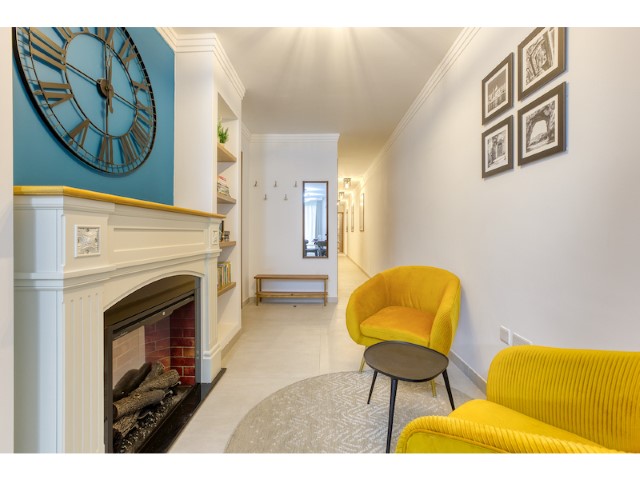
A designer 2-bedroom apartment in Gżira, close to the church, around 2 minutes from the promenade, and near Manoel Island.
View on Airbnb