
A practical guide to Malta, Gozo and Comino’s best caves, reefs, tunnels and shore dives, with honest notes on who each site suits.
TL;DR – THE 30-SECOND VERSION
This guide helps you choose the best natural dive sites in Malta, Gozo and Comino without wasting dive days on the wrong site for your level or the wrong coast for the weather.
If you only do one headline dive: Blue Hole and Inland Sea in Gozo are still the obvious pair.
Best for newer divers: Santa Maria Caves, Qawra Point and Mgarr ix-Xini are easier places to start than the deeper exposed sites.
Best for experienced divers: Lantern Point, Reqqa Point and Double Arch Reef are where the bigger drama starts.
Avoid this mistake: do not pick Malta dive sites from photos alone. Wind and entry conditions matter more than the postcard view.
Best base for a mixed holiday: stay in Malta, then day-trip to Gozo or Comino for the bigger natural sites.
Thing to respect: many of the best shore dives start over rough limestone, not a soft beach entry.
Disclosure: ManicMalta is supported by a short-let apartment in Gzira, mentioned below only as a practical base for divers.
Jump to
Why Malta works so well for natural diving
Quick decision table
Best non-wreck dive sites
How to plan the trip
Where to base yourself
Mistakes people make
FAQ
Most people hear Malta and think wrecks. Fair enough. The islands are famous for them.
But if you skip the natural sites here, you miss half the point of diving Malta. Some of the best dives are not wrecks at all. They are caves, chimneys, arches, tunnels, reef edges and rocky shore entries that feel very different from the usual holiday dive routine.
This guide sticks to the non-wreck side of Malta, Gozo and Comino. It is built for people trying to choose where to spend actual dive days, not just scroll through pretty names. You will find which sites are better for newer divers, which ones need more experience, and how to think about Malta as a real trip rather than a wish list.
Important: this article is about choosing the right natural dive sites. For a more safety-focused read, see Common Diving Mistakes in Malta. That avoids repeating the same ground here.
Why Malta works so well for natural diving
Malta is strong because the diving does not all feel the same. One morning you can drop through a rock opening into open sea. The next day you can do a shallow cave system full of light. After that you can go looking for walls, reef edges or an easier bay dive if the weather shifts.
The other thing that matters is access. Plenty of good sites are shore dives. That keeps the trip flexible and often cheaper. It also means Malta rewards people who take entries seriously. A site can be completely fine underwater and still feel awkward or tiring before you even get there.
- Good for variety: caves, tunnels, reefs, walls and light-filled caverns.
- Good for short trips: you can fit a lot into a few days.
- Good for mixed groups: there are beginner-friendly sites and properly demanding ones too.
- Less good for careless planning: weather and coast choice can make or break the day.
Quick decision table
On mobile, swipe left to see full table details.
| Site | Why people choose it | Typical depth | Access | Best for |
|---|---|---|---|---|
| Blue Hole, Gozo | Classic Gozo scenery and a dive that feels like an event | About 15-25m on common routes | Shore | Intermediate to advanced |
| Inland Sea Tunnel, Gozo | Natural tunnel and a very memorable exit to open water | 5-30m | Shore | Intermediate |
| Santa Maria Caves, Comino | Bright cave diving and easy wow-factor | 5-18m | Boat | Beginner to intermediate |
| Lantern Point, Comino | Chimney, cavern feel and more serious profile | 6-50m | Boat | Advanced |
| Reqqa Point, Gozo | More exposed feel, wall diving and deeper options | Variable | Shore | Advanced |
| Ghar Lapsi, Malta | Easy half-day natural diving from Malta | 5-18m on common routes | Shore | Beginner to intermediate |
| Qawra Point, Malta | Simple logistics, good check or refresher dive | 5-25m | Shore | Beginner |
| Mgarr ix-Xini, Gozo | Sheltered bay and easier-paced dive day | 5-15m plus | Shore | Beginner to intermediate |
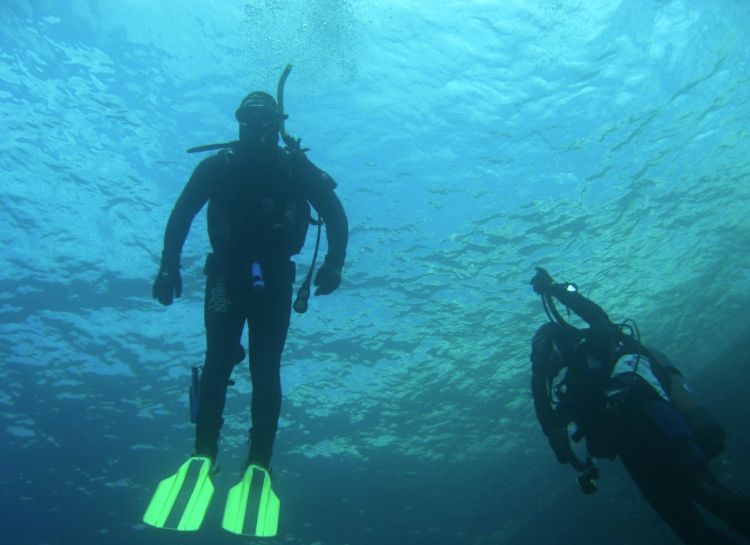
Two divers in clear blue water off Malta.
Best non-wreck dive sites
Blue Hole, Gozo
This is the site most divers picture first, and it has earned that status. You start in a rocky opening, move out through the arch and then get proper open-sea scenery almost immediately. On a good day it feels special. On a bad day it feels like work, which is exactly why conditions matter so much here.
- Why go: classic Gozo underwater scenery in one dive.
- Who it suits: intermediate to advanced divers.
- What to respect: entry and exit over rock, plus surge if the sea is not settled.
Inland Sea Tunnel, Gozo
If Blue Hole is the postcard, Inland Sea is the dive people remember because of the route itself. The tunnel takes you from calm inland water into open sea in a way that still feels dramatic even when you know it is coming.
- Why go: the tunnel gives the dive real shape.
- Who it suits: divers who want something striking without going straight to the most demanding profiles.
- What to respect: a torch helps, and sea conditions still decide whether it is a good idea.
Santa Maria Caves, Comino
This is one of the easiest natural dives to recommend. The cave system is shallow, bright and visually rewarding without needing the same level of commitment as the deeper sites. It also works well for mixed groups where not everyone wants a hard dive every day.
- Why go: easy cave scenery and good light.
- Who it suits: beginner to intermediate divers.
- What to respect: boat access depends on the weather window.
Lantern Point, Comino
Lantern Point is where the tone changes. The site is known for its chimney and more adventurous feel. If you like underwater terrain that makes you pay attention, this is one of the better natural dives in the islands.
- Why go: chimney, caverns, boulders and more depth.
- Who it suits: advanced divers.
- What to respect: this is not the dive to force just because it sounds exciting.
Reqqa Point, Gozo
Reqqa has a rougher edge to it. That is part of the appeal. It feels less like a crowd-pleasing classic and more like a site you appreciate once you have done enough easy dives to know the difference.
- Why go: structure, exposure and the chance for a more serious dive.
- Who it suits: experienced divers comfortable with more demanding sites.
- What to respect: shore access does not mean beginner-friendly.
Cathedral Cave, Gozo
The draw here is mood. The cavern space, the air dome and the light give it a very different feel from a plain reef route. It is one of those dives that reminds you why natural sites can beat wrecks for atmosphere.
- Why go: one of the most atmospheric natural spaces underwater in Gozo.
- Who it suits: divers who like scenery as much as the route.
- What to respect: best done with local guidance rather than guesswork.
Ghar Lapsi, Malta
Ghar Lapsi is useful because it is scenic and practical. You can do a good natural dive there without turning the whole day into a logistical mission. For visitors based in Malta, that matters.
- Why go: caves, rocky features and easier Malta logistics.
- Who it suits: beginner to intermediate divers, depending on conditions.
- What to respect: calm on land does not always mean calm enough for the entry.
Double Arch Reef, Gozo
This one is for divers who like geology as much as fish. The arch formation is the reason to go. It is not a site you squeeze in casually. It makes more sense later in the trip when everyone is settled and diving well.
- Why go: the rock formation is the whole attraction.
- Who it suits: advanced divers.
- What to respect: depth and whether the conditions really justify it.
Qawra Point, Malta
Qawra is not the most glamorous site on the list, but it is useful. That makes it valuable. It works for check dives, refreshers and the kind of first-day dive where you want to settle in rather than perform.
- Why go: simple, accessible and dependable.
- Who it suits: beginners and anyone easing into the trip.
- What to respect: easy does not mean pointless.
Mgarr ix-Xini, Gozo
This is a good site for a quieter dive day. The bay is more sheltered than the bigger-name exposed sites, and that can be exactly what you want if you are travelling with mixed abilities or simply want a calmer pace.
- Why go: easier bay diving and marine-life watching.
- Who it suits: beginner to intermediate divers.
- What to respect: it is better as part of a smart trip plan than as a bragging-rights dive.
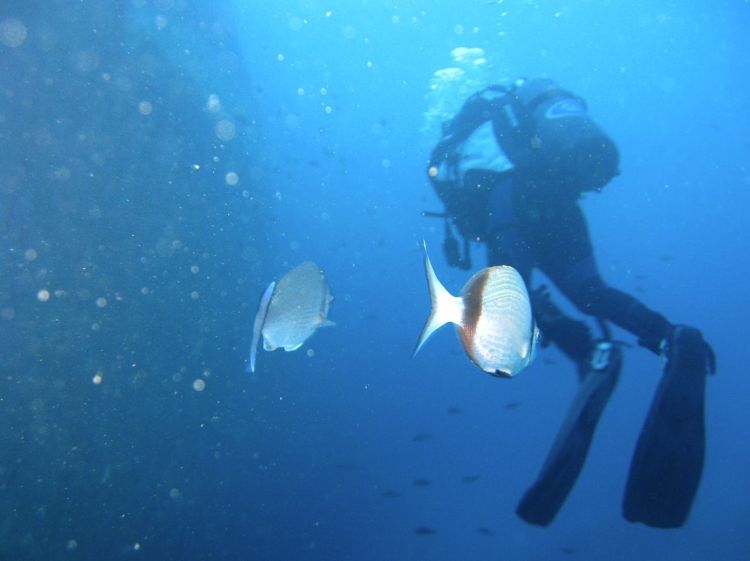
A diver in Malta with a curious fish following behind.
How to plan the trip
The smartest way to plan a Malta diving holiday is not to chase every famous name. It is to build in range. A simple Malta shore dive on day one, a stronger Gozo day after that, then Comino if the conditions line up well enough. That approach usually works better than stacking the hardest sites back to back.
If you are not certified, book an introductory or supervised experience with a licensed dive centre. If you are certified, stay inside your actual training and comfort level rather than treating the trip like a test.
- Short trip: do one Malta day and one Gozo day well.
- Longer trip: add Comino when the forecast supports it.
- Mixed group: keep at least one easier site in the plan.
- First time in Malta: leave room for operators to switch coast or site.
Where to base yourself
If the trip is mainly diving and you want to wake up closer to Gozo sites, staying in Gozo can make sense. But many visitors do better based in Malta, especially if the holiday includes normal life things as well: eating out, walking, a bit of city energy, and not disappearing into a pure dive bubble.
For that kind of trip, Gzira is a sensible base. It is not sold here as some fantasy dive village. It is simply practical: central enough, easy to live from, and workable if you are heading out early and coming back tired.
Need a Malta base for a diving trip?
The ManicMalta site sponsor is a short-let apartment in Gzira. It suits people who want a practical Malta base rather than a resort setup.
Useful related reads
Mistakes people make
- Picking the site from Instagram instead of from the weather.
- Treating Malta shore entries like an afterthought.
- Booking a packed schedule with no flexibility for sea conditions.
- Assuming Gozo and Comino are tiny add-ons with no real time cost.
- Trying to make every dive the “big one” instead of mixing easier and stronger days.
Local reality: one of the least glamorous but most useful Malta diving skills is learning when to stop forcing the wrong plan. The operator who changes your site choice is often saving your day, not ruining it.
FAQ
Is Malta worth diving if I do not care about wrecks?
Yes. The natural diving is strong enough on its own, especially if you like caves, tunnels, rocky scenery and varied shore dives.
Which Malta dive sites are best for beginners?
Santa Maria Caves, Qawra Point and Mgarr ix-Xini are usually easier starting points than the deeper or more exposed sites. The best choice still depends on conditions that day.
Do I need to stay in Gozo for the best natural dives?
No. Many visitors stay in Malta and do Gozo as a dive day. Staying in Gozo is useful for a more dive-heavy trip, but it is not the only sensible option.
Can I dive in Malta if I am not certified?
Yes, through introductory or supervised dives with a licensed centre. Do not treat the famous natural sites as casual first tries without proper guidance.
When is the easiest time for a Malta diving holiday?
Late spring through early autumn is the easiest window for many visitors. Early autumn is especially attractive because the water is often warm and the trip can feel less hectic than peak summer.
Is Gzira a good base for divers?
Yes, if you want a practical Malta base with everyday convenience and you are happy to travel out to dive points. It works well for a mixed holiday.
Should I lock in every dive before I arrive?
Only up to a point. It is smarter to leave some room for weather and operator judgment than to force a rigid list of sites.
Last updated: March 2026.
Stay in Gżira near the promenade
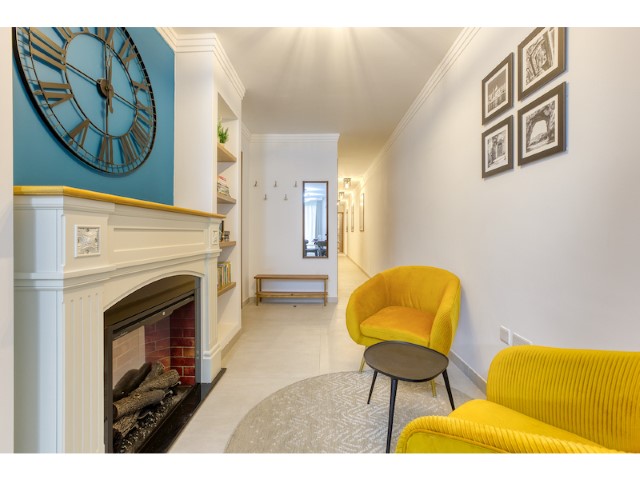
A designer 2-bedroom apartment in Gżira, close to the church, around 2 minutes from the promenade, and near Manoel Island.
View on Airbnb