
TL;DR — Where you should stay in Malta depends on how long you’re here, what you want to do, who you’re with, and when you visit. This guide walks you through those decisions before pointing you to eight areas — each with honest pros and cons.
- Short cultural trip (2–5 nights)? Valletta / The Three cities
- Comfortable base for a week? Sliema, Gzira, or Valletta depending on your priorities.
- Beach holiday with family? Mellieħa / Golden Bay
- Budget beach holiday? Bugibba / St Paul’s Bay / Qawra
- Party holiday? St Julian’s / Paceville.
- Quiet and local on a budget? Marsascala.
- Medieval atmosphere? Mdina / Rabat (but not in winter).
- Extended escape? Gozo.
Disclosure: The author operates a rental apartment in Gzira, clearly marked below. No other accommodation or booking platform mentioned has any commercial relationship with this site.
| Trip Goal | Best Area | Why It Works |
|---|---|---|
| Short cultural trip (2–5 nights) | Valletta | Walkable UNESCO fortress city; restaurants, museums, and evening atmosphere all within the walls. |
| Comfortable base for a week | Sliema, Gzira, or Valletta | Central location; nothing more than 20–30 minutes away; daily-life amenities within walking distance. |
| Beach holiday with family | Mellieħa | Biggest sandy beach; shallow water for children; Golden Bay and Għajn Tuffieħa nearby. |
| Budget beach holiday | Bugibba / St Paul’s Bay | Hotels at every budget; full-board options; close to northern beaches. |
| Quiet and local on a budget | Marsascala | Authentic Maltese town; good-value Airbnbs; Peter’s Pool and coastal hikes nearby. |
| Extended escape (week+) | Gozo | Slower pace; farmhouses with pools; excellent food scene; best value for groups. |
Jump to:8 Areas Compared · Budget Guide · Getting Around · How Long Are You Staying? · What Do You Want to Do? · Who Are You Travelling With? · Malta’s Geography · When to Visit · Daily Life vs. Day Trips · FAQ
Most “where to stay in Malta” guides jump straight into listing neighbourhoods. Valletta is historic. Sliema is modern. Bugibba is cheap. Done.
That’s useless.
Because where you should stay in Malta depends entirely on you — how long you’re here, what you actually want to do, who you’re travelling with, and what kind of trip this really is. Malta is just 27km long and 14.5km wide, but it’s ridiculously varied for its size — over 7,000 years of continuous human habitation packed into an area smaller than most cities. Getting your base wrong can genuinely mess up your holiday.
So before we talk about areas, let’s talk about you.
First Question: How Long Are You Staying?
This is the question. Everything flows from it.
A Few Days (2–4 Nights)
You’re here for a taste. You want the highlights — maybe a day in Valletta, an afternoon at a temple or the Blue Grotto, dinner with a view. You don’t need a car. You don’t need a kitchen. You need a base where you can walk out the door and be in it.
With only a few days, you’re not exploring — you’re curating. Pick one area and commit to it. Trying to “do everything” in three days is how you end up spending half your trip in traffic on Tower Road.
A Week
Now we’re talking. A week is the sweet spot for most visitors. You’ve got time to see Valletta properly, take a day trip to Gozo, hit a beach or two, wander Mdina at sunset, and still have a lazy morning drinking coffee on a promenade somewhere.
A week means your location matters more, because you’ll be going back and forth. You want somewhere that nothing is more than 20–30 minutes away from, but comfortable enough that you’re happy coming home to it every evening.
A Few Weeks
You’re settling in. This changes the equation completely. Now you care about having a proper kitchen, a good supermarket nearby, maybe a gym. You’ll develop routines — a favourite café, a go-to wine bar, that one bakery with the pastizzi you like.
You’re not a tourist anymore. You’re a temporary local. And that means the neighbourhood matters as much as the apartment.
A Month or More
Welcome to the long-stay game. You might be working remotely, doing a workcation, or just taking an extended break. Malta has become a popular destination for digital nomads — the Nomad Residence Permit scheme launched in 2021 — and the infrastructure for remote work has grown with it.
Either way, you need a base, not just accommodation. That means reliable wifi, a desk, proximity to daily essentials, and a location where the novelty doesn’t wear thin after two weeks. You’re going to need variety within walking distance — restaurants for when you don’t want to cook, a promenade for morning walks, maybe a co-working space nearby.
The longer you stay, the more you need the practical stuff. The Instagrammable Valletta apartment with the harbour view loses its appeal when the nearest supermarket is a 15-minute walk uphill and the wifi drops during video calls. Equally, a farmhouse in Gozo might sound idyllic until you realise the nearest decent café is a 10-minute drive.
Second Question: What Do You Actually Want to Do?
Be honest with yourself here. Malta has an absurdly rich offering for an island this size — three UNESCO World Heritage Sites, a coastline packed with swimming spots, and a food scene that punches well above its weight. Reflecting on what you actually want for five minutes will save you from booking the wrong area.
“I Just Want to Chill”
Fair enough. But what kind of chill? Because Malta offers very different flavours of it.
Beach chill — sandy toes, turquoise water, maybe a lido with a cocktail. You want the north: Mellieħa Bay, Golden Bay, Għajn Tuffieħa. Or in summer, pretty much anywhere along the coast.
Urban chill — good coffee, a promenade, watching boats, aperitivo at sunset. That’s Sliema, Gzira, and the Strand. The whole waterfront strip from Gzira to St Julian’s is built for this.
Deep quiet chill — switching off completely, no crowds, no noise. That’s Gozo, full stop. Or one of Malta’s smaller villages in the south like Marsaxlokk, where the painted fishing boats (luzzu) bob in the harbour and Sunday morning moves at its own pace.
“I Want to See Everything”
Then you need to think about centrality. Malta’s highlights are spread across the island — megalithic temples in the south, sandy beaches in the north, Valletta and the harbours in the middle-east. Staying somewhere central means nothing is far away, but staying in the right outlying area and committing to it works too — especially if you have a car.
“I’m Here for the Culture and History”
Malta will absolutely deliver. The Knights of St John built a fortress civilisation here. The megalithic temples at Ħagar Qim and Mnajdra predate the Egyptian pyramids by over a thousand years. Caravaggio painted his largest work in St John’s Co-Cathedral in Valletta. Baroque churches sit around every corner. Your ground zero is Valletta and the Three Cities, with Mdina and the temples as essential day trips.
“I’m Here for the Nightlife”
If you’re in your twenties and want clubs: Paceville in St Julian’s. That’s where it happens. It’s loud, it’s messy, and it’s concentrated in about three streets.
If you’re an adult who wants good wine bars, live music, and cocktails without getting trampled by hen parties: Valletta has increasingly become the evening destination of choice, with the Sliema/Gzira waterfront as an alternative. Completely different energy from Paceville.
Third Question: Who Are You Travelling With?
Solo
Are you solo and loving it — wanting to meet people, make friends, stumble into conversations? Stay central and social: Sliema, St Julian’s, or Valletta where the bars and communal spaces are. Hostels in Sliema and Valletta are solid for this.
Or are you solo and savouring it — fed up with people, recharging, wanting your own space and silence? An apartment in Gzira, a farmhouse in Gozo, or a quiet Airbnb in one of the southern villages will serve you better than a hostel ever could.
Couple
Most couples want some mix of romance and adventure. Valletta’s got the romance — candlelit dinners in 400-year-old buildings, harbour views, that golden limestone glowing at sunset. Gozo offers a different kind of romance — more rural, more intimate, with stone farmhouses and hidden bays. For adventure, you want a base that lets you reach beaches, temples, and both islands without too much hassle.
Group or Family
Groups need space, and space in Malta’s historic centres comes at a premium. You might be better off with a villa in the north (near beaches), a larger apartment along the central strip, or a farmhouse in Gozo where there’s room to spread out. The group dynamic matters too — does everyone want to do the same thing? If not, central is king, because people can split up and come back together easily.
What’s Where: Malta’s Geography in 60 Seconds
Malta’s small — about 27km long — but it packs a lot in. Here’s the rough layout:
The Centre-East (Sliema, Gzira, St Julian’s): The main commercial and social strip. Restaurants, shopping, promenades, marina views, wine bars, cafés. The waterfront walk from Gzira to St Julian’s is one of the best urban walks on the island. This is where most of daily life happens for residents and long-stay visitors.
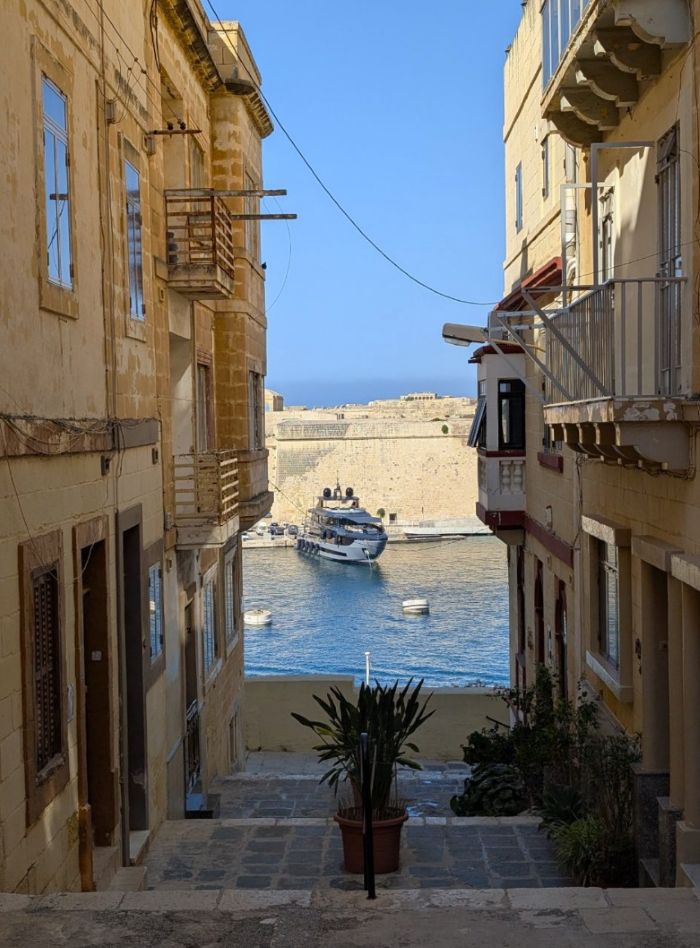
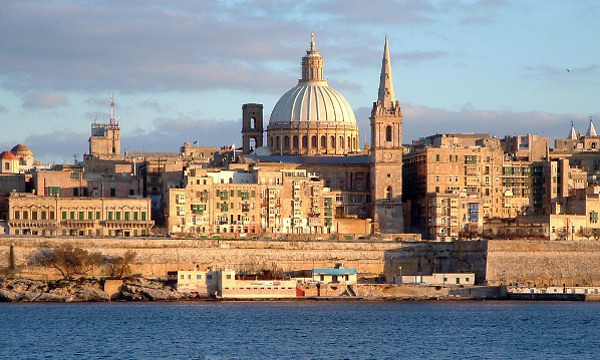
Valletta (The Capital): A UNESCO World Heritage fortress city built on a grid-plan peninsula by the Knights of St John after the Great Siege of 1565. Museums, churches, restaurants, theatres, and more character per square metre than anywhere in Europe. Beautiful but compact — living here means stairs, narrow streets, and limited parking. The city has undergone significant regeneration in recent years, with new restaurants, boutique hotels, and cultural spaces opening regularly.
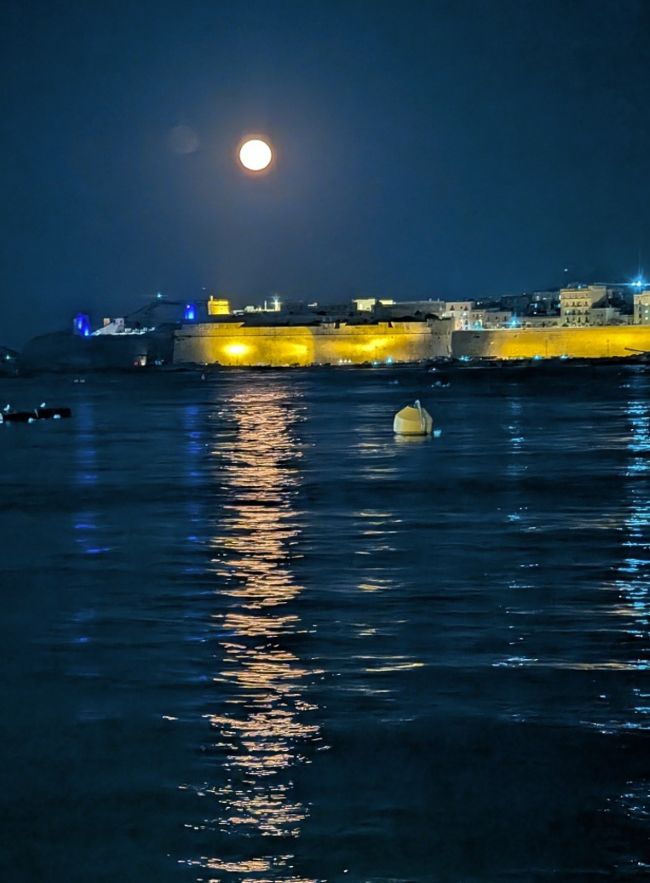
The Three Cities (Vittoriosa, Senglea, Cospicua): Across the Grand Harbour from Valletta. Arguably more authentic, less touristy, and steeped in Knights-era and wartime history — Vittoriosa was the Knights’ original base before they built Valletta. Quieter at night, fewer restaurants, but stunning. The waterfront at Birgu (Vittoriosa) — home to Fort St Angelo — is one of the most beautiful settings in Malta.
The North (Mellieħa, Bugibba, St Paul’s Bay): Where the sandy beaches are. St Paul’s Bay has its own sandy beach with the photogenic St Paul’s Islands offshore, and you’re closest to Golden Bay, Paradise Bay, and Mistra Bay from here. Bugibba is the main tourist hub — hotels at every price point, but more resort-y and less authentically Maltese. Mellieħa village sits on a ridge above the island’s biggest beach, with a parish church that dominates the skyline and a handful of good restaurants. The further north you go, the further you are from everything else.
The Centre (Mdina, Rabat, Mosta): The old medieval capital and its surroundings. Mdina — known as the “Silent City” — was Malta’s capital for centuries before the Knights arrived. Gorgeous to visit, but living here means you’re inland, elevated, and away from the action. Rabat is notably the coldest and windiest spot on the island — something to factor in if you’re visiting outside summer. Better as a day trip for most, but some people fall in love and want to stay.
The South (Marsaxlokk, Marsascala, Blue Grotto area): Fishing villages, dramatic coastline, megalithic temples, and the Ħal Saflieni Hypogeum — an underground prehistoric burial site dating to around 4000 BC that’s one of the most extraordinary things on the island (book tickets months ahead, they sell out — Heritage Malta releases them in batches). Marsascala has a lovely waterfront and a more local, lived-in feel than the tourist centres. Authentic and beautiful down here, but remote. You’ll need a car.
Gozo: Malta’s sister island. Quieter, greener, more rural — with about a tenth of Malta’s population spread across an island that feels much further away than the 25-minute ferry crossing suggests. The Citadel in Victoria dominates the skyline, and the island’s food scene — centred on local cheese, rabbit, and fresh fish — is some of the best in the archipelago. Farmhouses, hidden bays, excellent restaurants. The ferry limits spontaneity but rewards you with genuine peace.
Comino: The tiny island between Malta and Gozo with the famous Blue Lagoon. Day trip only — there’s virtually no permanent accommodation or infrastructure.
When You Visit Changes Everything
This doesn’t get said enough. Malta in July and Malta in January are practically different countries.
Summer (June–September): Beaches are the main event. The north comes alive. It’s hot — properly hot, 35°C+ — and you’ll want air conditioning and beach access. Valletta bakes but the harbour breeze helps. Nightlife peaks. Summer festivals run throughout. Book early, prices spike. Malta attracts over 3 million visitors a year, and the summer months carry the heaviest concentration.
Shoulder Season (April–May, October–November): The secret sweet spot. Warm enough for swimming (especially October, when the sea retains summer heat), cool enough for walking. Prices drop. Crowds thin. Best time for cultural exploration, hiking, and seeing the island without competing for space.
Winter (December–March): Mild by European standards (12–18°C) but grey and rainy at times. Beaches are off the table for most people. This is when your accommodation choice matters most — you want indoor options, restaurants, culture, walkable surroundings. The north feels deserted. Valletta and the central strip come into their own. Gozo, meanwhile, has a quiet winter charm that appeals to a particular type of visitor — fewer people, dramatic seas, and cosy restaurants with fireplaces.
The Thing Nobody Tells You: Daily Life vs. Day Trips
Here’s something worth thinking about before you book anything.
You’ll visit the temples once. You’ll go to Mdina once. You’ll take the ferry to Gozo once, maybe twice. The Blue Grotto, the Three Cities, the Hypogeum — these are one-time experiences. Incredible, but you do them and they’re done.
But you know what you do every single day?
You eat breakfast. You pick a restaurant for lunch or dinner. You go for an evening walk. You sit somewhere with a coffee or a glass of wine and watch the world go by. These daily rituals — the small, repeated pleasures — are what actually shape how your holiday feels.
Think About Your Ordinary Evening
So when you’re choosing where to stay, don’t just think about what you want to visit. Think about what you want your ordinary evening to look like.
Do you want to shower after a day of exploring, get changed, and walk out your door straight onto a promenade with restaurants and a sea breeze? Or are you happy to get in the car again — or call a Bolt, or wait for a bus — to get to dinner?
There’s no wrong answer. Some people love the variety of driving to a different village every evening. They don’t mind the logistics. They want Marsaxlokk for Sunday lunch, Valletta for Tuesday dinner, Mdina for wine on Thursday. That’s a great way to experience Malta, and if that’s you, it doesn’t matter much where your base is — as long as you have a car.
But if you’re being honest — and especially if you’ve been out all day walking temples in the heat or chasing a toddler around the Blue Lagoon — there’s something to be said for having a shower, putting on fresh clothes, and being right where you want to be. No keys, no parking, no fifteen-minute drive. Just… walk outside and you’re there. That applies equally to Valletta (if your thing is baroque streets and wine bars), Mellieħa village (if your thing is a quiet square overlooking the bay), or the Sliema/Gzira waterfront (if your thing is a long coastal promenade with options).
The Cost of Getting to Dinner
It’s also worth doing the maths. Bolt and Uber-style rides in Malta are reasonable — maybe €8–15 a trip depending on distance. But if you’re taking two rides a day to get to and from dinner, that’s €20–30 a day. Over a week, that’s €150–200 just on getting to restaurants. Over a month, it’s serious money. Choosing accommodation in a walkable area — whichever area suits you — isn’t just convenient, it’s cheaper.
This isn’t about one area being “better” than another. It’s about matching your base to how you actually live on holiday, not just what you want to tick off a list.
Getting Around: The Transport Reality
Let’s be honest about this, because it affects where you stay.
Public Transport (Tallinja bus): Malta’s bus network is run by Malta Public Transport and covers the whole island on a single fare system (currently €1.50 per journey, or €21 for a 7-day Explore card). Routes are extensive but slow, and unreliable during peak hours. All routes radiate from Valletta, so cross-island trips often require a transfer there. Fine for getting to major attractions, frustrating for daily commuting.
Bolt / Uber-style apps: Bolt works well in Malta. Cheaper than taxis, available almost everywhere, and the island is small enough that most rides are €8–15. If you’re staying a week, this plus public transport covers you.
Car Rental: Gives you maximum freedom, especially for the north, south, and Gozo. But parking in Sliema, Gzira, and Valletta is genuinely difficult. If you’re staying in a walkable area, don’t bother with a car for the whole trip — rent one for a day or two when you want to explore the coast or the south.
Ferry: The Sliema-Valletta ferry (and the Gzira-Valletta water taxi) are cheap, scenic crossings that take about 10 minutes. The Malta-Gozo ferry runs regularly from Ċirkewwa in the north (about 25 minutes). Both are part of the experience and worth building into your plans.
The transport takeaway: If you don’t want to rent a car, stay somewhere walkable. Several areas work for this — Valletta, the Sliema/Gzira strip, or Mellieħa village if you’re focused on beaches. The further out you go, the more you depend on a car.
Accommodation Types and Budget
Malta offers a wide range of accommodation at every price point. Here’s a rough guide to help set expectations:
| Type | Price/Night | Best For | Notes |
|---|---|---|---|
| Hostels | €15–35 | Social solo travellers | Best in Sliema & Valletta. Quality varies — check reviews. |
| Budget Hotels | €50–90 | Budget travellers | Cheapest in Bugibba / St Paul’s Bay. Location trade-offs. |
| Mid-Range Apartments | €80–150 | Week+ stays, remote workers | A kitchen saves a fortune. Check wifi speed ratings. |
| Boutique Hotels | €150–300 | Short stays, couples | Valletta excels here. Mdina too, trading sea views for atmosphere. |
| Luxury Hotels | €300+ | Luxury travellers | St Julian’s, Valletta, and the north. |
| Gozo Farmhouses | €80–200 | Groups, couples, long stays | Stone-built, often with pools. Centuries old. Best value in the islands. |
Choosing Your Area: Eight Options Compared
Here’s where I’d point you based on everything above. I’ve tried to be genuinely honest about each area — including the one where I happen to have my own accommodation (clearly marked).
Option 1: Valletta — The Culture Lover’s Pick
Best for: Short stays (2–5 nights), couples, history and culture buffs, foodies, photographers, and the over-30 crowd who want culture by day and a civilised night out.
Not great for: Long stays (limited supermarkets, brutal parking, daily logistics get tiring), families with small kids (lots of stairs and few playgrounds), beach lovers (no beach nearby), anyone who needs a car.
The vibe: Walking through a living museum. Every street is a postcard. Restaurants range from hole-in-the-wall pastizzerias to fine dining — and the food scene has improved dramatically in the last decade. The Grand Harbour views from the Upper Barrakka Gardens are staggering. St John’s Co-Cathedral alone is worth the trip. But it’s dense, vertical, and living there daily requires commitment to navigating steep streets and stone stairs.
Where to look: Valletta has some genuinely stunning boutique hotels — converted palazzos with rooftop terraces, 400-year-old stone walls, and that golden light. If you’re here for a few nights and want to feel the history, an upscale Valletta hotel is probably the most memorable accommodation experience on the island. Airbnbs here range from charming to cramped, so check the staircase situation and noise levels before you book — some streets get lively at night.
Evening life: Valletta has quietly become the best place for evening atmosphere in Malta. Wine bars, live music, people sitting on the old stone steps with a drink, candlelit restaurants in baroque courtyards. The Manoel Theatre — one of the oldest working theatres in Europe, built in 1731 — anchors a cultural nightlife scene that nowhere else on the island can match. If your trip is focused on culture by day and going out at night, Valletta might be all you need.
Option 2: Sliema/Gzira — The Practical All-Rounder
Best for: Week-long stays, workcations, solo travellers, couples who want balance between comfort and access to the rest of the island.
Not great for: Beach purists (rocky coast here — sandy beaches require a trip north), nightclub culture (that’s Paceville), anyone wanting rural quiet, historic charm, or a traditional Maltese village feel.
The vibe: Urban Mediterranean. Promenade walks, marina views, plenty of restaurants and cafés, supermarkets, pharmacies, gyms — the daily-life infrastructure that makes a holiday run smoothly. The Sliema-Valletta ferry connects you to the capital in 10 minutes. It’s not the most “charming” area — it’s modern and functional — but that’s exactly why it works for visitors who want a comfortable base for exploring the whole island.
Sliema is actually two-sided — one waterfront faces Valletta and the harbour (dramatic, historic skyline), while the other faces out toward St Julian’s and the open sea. Gzira faces the Valletta side, with the Manoel Island marina and a large public park alongside it — proper green space with trees and shade, which is rarer than you’d think in Malta. If you’ve got kids, the playground at Qui-si-Sana in Sliema is one of the better ones on the island.
The whole coastal walk from Gzira through Sliema to St Julian’s is about 30 minutes end to end — joggers in the morning, families and couples in the evening, people-watching the entire way. It’s one of those walks where you set out for a quick stroll and end up going the whole distance without noticing.
The trade-offs: Sliema and Gzira are modern — there’s no getting around it. If you came to Malta for honey-coloured stone and baroque silence, this strip will disappoint you. Construction is ongoing in several spots. Traffic on Tower Road is some of the worst on the island. And the rocky coastline, while great for swimming off the rocks in summer, isn’t a beach. People who want sand underfoot and shallow water for children should look north.
Where to look: Hotels, Airbnbs, and serviced apartments at every price point. The waterfront stretch is long, so location within the area matters — the Gzira end is quieter and more residential with the park and marina, the Sliema centre is busier with shopping, while the St Julian’s end gets livelier and noisier.
Disclosure: I run a 2-bedroom apartment in Gzira. I include it here for transparency. It’s on a mostly pedestrian street next to the parish church, about five minutes’ walk from the waterfront promenade and very close to Manoel Island. It’s a well-equipped base designed for couples, remote workers, or small groups staying a week or more — good wifi, a proper kitchen, a desk, a balcony. I’d recommend it only to visitors whose priorities match what this area offers.
You can find it ManicMalta.com/gzira
But I’ll be straight with you: it’s not the right fit if you want sandy beaches outside your door (nearest is a bus ride away), if you’re on a tight backpacker budget, if you want the historic atmosphere of Valletta, or if you’re looking for resort-style amenities with a pool and room service. For those, keep reading.
Option 3: St Julian’s / Paceville — The Social Hub
Best for: Young travellers, English language students, groups who want clubs and late nights.
Not great for: Light sleepers, anyone over 30 who wants a civilised evening, families, remote workers (noisy area).
The vibe: Paceville is Malta’s party district — concentrated, loud, and unapologetic about it. If you want discos and late-night clubs, this is where they are. It attracts a young crowd, including a lot of English language students (Malta is a major destination for English language learning), and the energy is very much quantity over quality. The area has changed over the years — parts of it have taken a seedier turn, and the overall atmosphere isn’t what it once was. St Julian’s around it is more upscale with some good restaurants and the Portomaso marina, but Paceville itself is firmly a young person’s game.
Valletta vs. Paceville for evenings: If you’re over 30 and looking for evening atmosphere rather than clubs, Valletta has increasingly become the place people choose. It’s a completely different scene — wine bars, live music, people sitting on the old stone steps with a drink, candlelit restaurants in baroque courtyards. The trade-off is practical: getting transport within Valletta can be awkward — taxis and Bolts can only pick up at the city gate or along the waterfront, so you’ll be walking the steep streets on the way out. Fine after a couple of glasses of wine, less fun if it’s raining.
A note on views and dining: Valletta’s restaurants and bars are mostly tucked into narrow streets. The harbour views are spectacular from the Barrakka Gardens and a few rooftop spots, but most of your dining will be between stone walls rather than overlooking the sea. Along the central strip (Sliema, Gzira), waterfront restaurants with sea views are the norm rather than the exception. In Mellieħa, you can eat overlooking the bay. In Marsaxlokk, the harbour is right there. If you don’t have the luxury of living by the sea, eating by the sea is something worth seeking out — and several areas deliver this, not just one.
Getting between areas at night: The water taxi from Gzira to Valletta runs across the harbour — a scenic 10-minute ride that makes it easy to enjoy Valletta’s nightlife from a different base. Public transport stops early, but Bolt is reliable for late-night trips across most of the island.
Option 4: St Paul’s Bay / Bugibba — The Budget Beach Base
Best for: Budget-conscious travellers, families who want beach access without breaking the bank, package holiday visitors, anyone who prefers a full-board or half-board setup.
Not great for: People who dislike a touristy atmosphere, foodies who want variety, anyone wanting upscale dining or independent shopping.
The vibe: Bugibba is Malta’s most established tourist zone. It’s got hotels at every budget — many offering full or semi board, which can be great value if you don’t want to think about meals. St Paul’s Bay itself has a sandy beach with the picturesque St Paul’s Islands in the background, and you’re closer to Golden Bay, Paradise Bay, and Mistra Bay than anywhere else on the main island. Mellieħa village is a short drive away.
The trade-off is that it feels noticeably more touristy than other areas — more souvenir shops, fewer independent restaurants, and shopping options are limited. There are some playgrounds, though they’re smaller and more basic than what you’ll find elsewhere. It’s a place built for holidaymakers rather than a real town that happens to welcome visitors. For some people, that’s exactly what they want — everything geared toward tourists means less friction. For others, it feels generic.
⚠️ Heads-up for 2026: Major infrastructure works have been ongoing in Bugibba since winter 2026 — expected to be completed by the end of the year. Check the latest situation before booking, as it may affect promenade access and noise levels. The finished result should improve the area significantly, but during construction it’s disruptive.
Option 5: Mellieħa — The Sandy Beach Pick
Best for: Families, beach holidays, summer visits, anyone who prioritises sand and sea above everything else, nature lovers.
Not great for: Winter visitors (the area goes dead quiet), carless travellers (you’ll struggle without one), culture-focused trips (everything historical is a drive south).
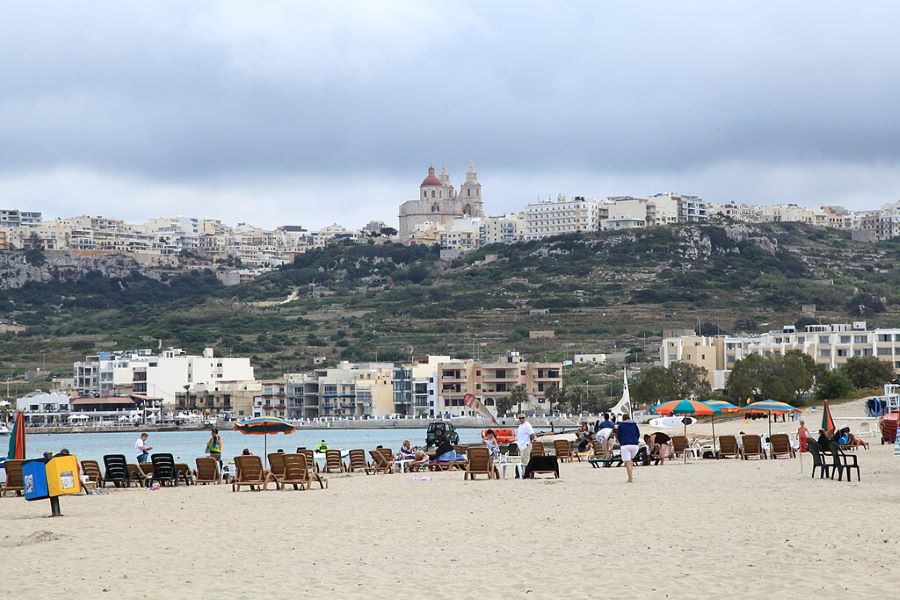
The vibe: The closest Malta gets to a classic beach holiday. Mellieħa Bay is the island’s biggest sandy beach — a long, gently sloping stretch that’s particularly good for families with small children because the water stays shallow for a long way out. Golden Bay and Għajn Tuffieħa are nearby, each with its own character (Għajn Tuffieħa requires a steep staircase descent but rewards you with a more rugged, less crowded setting). The Marfa Ridge area at Malta’s northern tip has dramatic coastal walks and access to the Gozo ferry at Ċirkewwa.
Mellieħa village itself is charming — perched on a ridge with a cluster of good restaurants, a prominent parish church, and more character than Bugibba. On a still evening, you can eat on a terrace overlooking the bay while the sun drops. In summer it’s paradise. In November it’s a ghost town. You’re committing to the north, and everything else — Valletta, the Three Cities, the temples — requires a 30–45 minute drive, depending on traffic.
Where to look: A mix of hotels, holiday apartments, and villa-style rentals. The village has more personality than the beach strip. If you want to be right on the sand, there are options along Mellieħa Bay itself, though these tend to be more resort-oriented.
Option 6: Marsascala — The Quiet Local Pick
Best for: Travellers who want an authentic Maltese neighbourhood, budget-conscious visitors, hikers, anyone who’d rather be around locals than tourists.
Not great for: Anyone without a car (public transport is infrequent), visitors who want a busy restaurant and bar scene, short stays where you need to be near the main sights.
The vibe: Marsascala is what Malta looks like when it’s not performing for tourists. It’s a real working town with a lovely waterfront, a handful of honest restaurants, and a pace that’s distinctly Maltese. During the week it’s very quiet — almost sleepy — and on weekends it picks up as locals come out for the promenade and the restaurants fill. Nightlife is limited — there are a few bars, but if you want a proper night out you’re heading elsewhere. For some visitors, that weekly rhythm is exactly what they’re looking for: calm days with a bit of weekend buzz, without the relentless energy of the tourist areas.
There’s a nice new hotel on the seafront, and the Airbnbs here are good value — often significantly cheaper than Sliema or Valletta for comparable quality.
It’s also your closest base for Peter’s Pool (one of Malta’s best natural swimming spots — a flat limestone shelf with deep, clear water) and some excellent coastal hikes in the south-east. The area has a rugged, less manicured beauty that rewards exploration on foot.
The distance factor: Marsascala sits at the far south-eastern end of the island. Getting to Valletta, Sliema, or anywhere in the centre means dealing with Malta’s traffic, and it adds up. A journey that looks short on the map can easily take 30–40 minutes in peak hours. If you’re planning daily trips out, that commute will start to wear on you. If you’re happy staying local most days with occasional excursions, it’s not an issue — and the lower accommodation costs help offset the transport budget.
⚠️ Heads-up for 2026: As of winter 2026, there are extensive works on the Marsascala promenade. Worth checking the status before you book if waterfront walks are important to your daily routine.
Option 7: Mdina / Rabat — The Medieval Immersion
Best for: History lovers who want to live inside the atmosphere, couples seeking something dramatically different, photographers, anyone who doesn’t need nightlife or beach access.
Not great for: Long stays in winter, anyone who wants coastal life, travellers without a car, families with young children who need beach access.
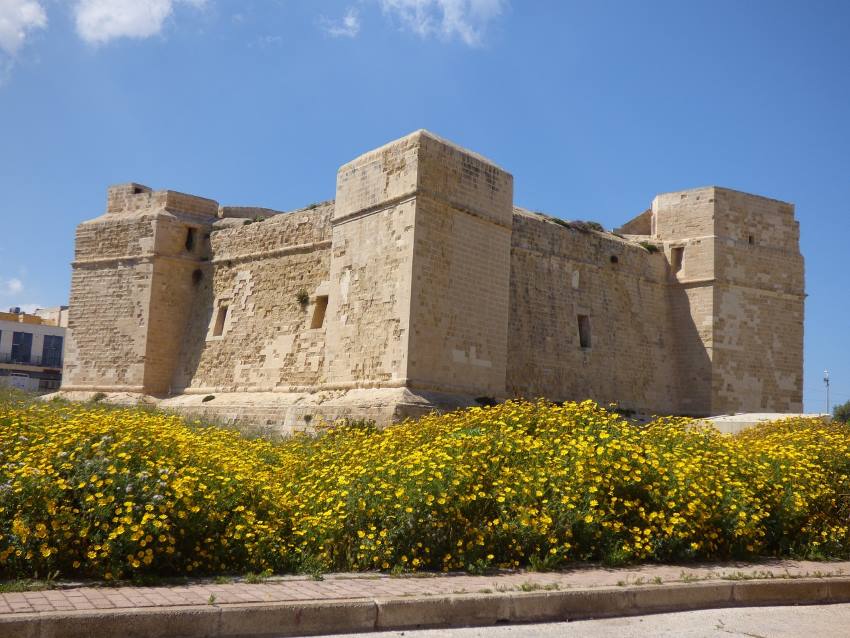
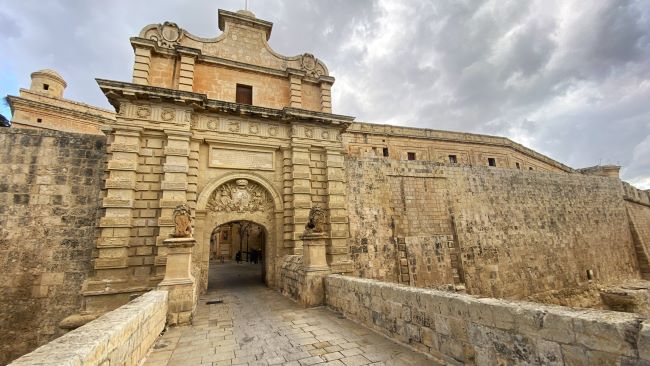
The vibe: Mdina is Malta’s ancient walled capital — known locally as the “Silent City,” it was the seat of power for centuries before the Knights of St John built Valletta. After the day-trippers leave in the late afternoon, the narrow streets empty out and the city becomes almost eerily beautiful — golden stone, wrought-iron balconies, and the occasional cat crossing the road. The views from the bastions stretch across most of the island on clear days.
Staying inside the walls or in nearby Rabat puts you in a world that feels centuries removed from the coast. There are a few boutique hotels and guesthouses that make the most of the medieval setting — some with rooftop terraces overlooking half of Malta. Rabat itself is a real, lived-in town with bakeries, churches, and the catacombs of St Paul. Kalkara, nearby, is another quiet gem worth exploring.
⚠️ The winter reality: Rabat is the coldest spot in Malta — exposed and elevated, it catches the wind that the coastal areas are sheltered from. More importantly, Maltese homes typically don’t have central heating (most rely on portable heaters and air conditioning units in reverse), so if you’re visiting between November and March, expect to feel it indoors. This catches a lot of visitors off guard. The coast is noticeably warmer.
The trade-off: You’re inland, on a hill, and genuinely isolated from everything else once the sun goes down. No waterfront, limited evening dining options, and everything requires a car. But for the right person — someone who wants atmosphere over convenience — that’s exactly the point.
Option 8: Gozo — The Escape
Best for: Extended stays (a week or more), couples seeking romance and quiet, writers and artists, anyone craving a genuine escape from routine, food lovers.
Not great for: Short visits (the ferry logistics eat into your time — at least an hour each way including the drive to Ċirkewwa), anyone wanting nightlife or shopping, travellers who want to see Malta’s main attractions daily.
The vibe: A different rhythm entirely. Gozo moves slower, eats better, and asks less of you. It has its own distinct identity — more rural, more agricultural, with a landscape of terraced fields, dramatic cliffs, and hidden bays. The Citadel in Victoria (Gozo’s main town) is a stunning fortified city-within-a-city, recently restored and offering views across the entire island.
The food scene here is rooted in local tradition — ftira (Gozitan flatbread), fresh ġbejniet (sheep’s milk cheese), rabbit stew, and restaurants where the owner’s grandmother is still making the ravioli. Stone farmhouses with pools, many centuries old and carefully restored, are the signature accommodation — and they represent some of the best value in the Maltese islands, especially for groups.
Gozo also has some excellent diving, with sites like the Inland Sea and the Blue Hole attracting divers from across Europe. The island is small enough to drive across in 20 minutes, but varied enough to fill weeks without repeating yourself.
The honest downside: the ferry. It runs frequently and reliably, but the logistics of getting to Ċirkewwa (in Malta’s far north), crossing, and then getting around Gozo add friction to every day trip back to Malta. If you’re staying in Gozo for a week and you’ve accepted that, it’s fine. If you’re trying to split time between both islands on a short trip, it’s exhausting.
The Bottom Line
Malta doesn’t have a single “best area to stay.” It has the right area for you, based on when you’re coming, how long you’re staying, what you want to do, and who you’re with.
Take five minutes to think about what you actually want from this trip. Malta is small enough that you can see most of it from anywhere on the island — but staying in the right spot means the difference between a holiday you remember and a holiday you endure.
Frequently Asked Questions
What is the best area to stay in Malta for a first visit?
It depends on your priorities. For a short cultural trip of 2–5 nights, Valletta is hard to beat. For a week-long stay where you want a comfortable base to explore the whole island, the Sliema/Gzira central strip or Valletta both work well. For a beach holiday, Mellieħa in the north is the best option.
Do I need a car in Malta?
Not if you stay somewhere walkable. Valletta, Sliema, and Gzira are all well-served by public transport, ferries, and Bolt (ride-hailing). If you’re staying in the north or south, a car becomes much more important. A good compromise is to rent a car for one or two days to explore and rely on public transport and Bolt the rest of the time.
When is the best time to visit Malta?
The shoulder seasons — April to May and October to November — are the sweet spot. Warm enough for swimming (especially October), cool enough for walking, with lower prices and thinner crowds. Summer (June–September) is best for beaches but very hot and busy. Winter (December–March) is mild but grey, with beaches off the table.
Is Bugibba or Sliema better for a holiday in Malta?
Bugibba is more budget-friendly with many full-board hotel options and closer to sandy beaches. Sliema is more urban, with better restaurants, shopping, and a less touristy atmosphere. Bugibba suits package holidaymakers; Sliema suits independent travellers who want a central base with daily-life amenities.
Is Gozo worth visiting, and should I stay there?
Gozo is absolutely worth visiting. Whether you should stay depends on trip length. For short trips, a day trip is better — the ferry logistics (at least an hour each way) eat into your time. For stays of a week or more, Gozo’s farmhouses, food scene, and slower pace make it one of the most distinctive accommodation experiences in the Maltese islands.
What is the nightlife like in Malta?
Malta has two distinct nightlife scenes. Paceville in St Julian’s is the club district — loud, young, and concentrated in a few streets. Valletta has become the preferred evening destination for the over-30 crowd, with wine bars, live music, restaurants in baroque courtyards, and the historic Manoel Theatre (built 1731).
I’ve lived in Malta for years and I write about the island at ManicMalta.com. This guide reflects my personal experience and honest opinions. I operate a rental apartment in Gzira (disclosed above) but have no commercial relationship with any other accommodation, hotel, or booking platform mentioned in this article. Wherever you end up staying, I hope this helped you figure out the right fit.
Last updated: February 2026.
Stay in Gżira near the promenade
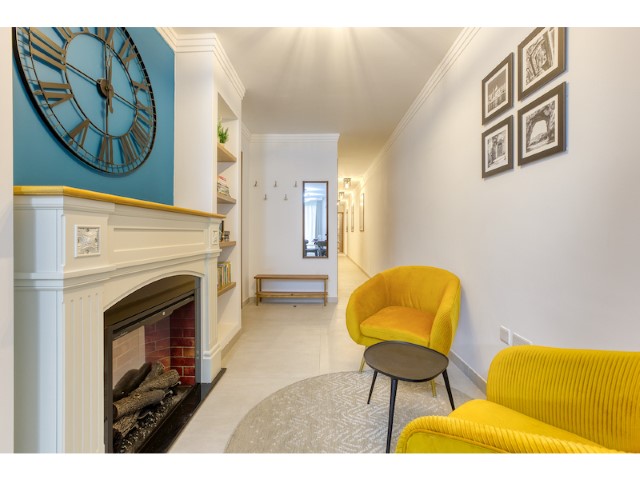
A designer 2-bedroom apartment in Gżira, close to the church, around 2 minutes from the promenade, and near Manoel Island.
View on Airbnb