
Pastizzi and a soft drink on-the-go:
Pastizzi are good. You will not find them anywhere else in the world. They are cheap, crunchy and tasty. They redefine what a savoury delicacy is. Personally I like to eat them from a paper bag. There is something thrilling about eating them while moving, while others enjoy sitting down. They go along well with such activities as people watching or taking in some of the rich sights around the Maltese islands.
Pastizzi can go out on a date with either a frothy cappuccino or a Kinnie (local soft drink).
Pastizzi are elongated pastry spheres with a filling of ricotta or peas. The pastry is both fried and baked. (Yes.) The trick is to layer in loads of “healthy” fats in between the pastry layers. Then the oven will half bake and half fry the pastry and cook the filling. Magic.
Traditionally there are two types of pastizzi: ricotta and peas.
The Qassatat
The hidden secret most locals will not share with the tourist is that the Qassata is even better than the Pastizzi!
Maybe they just want to make sure there is always some available, and let the tourist hordes feast on the Pastizzi, leaving some of the Qassatat alone.
The Pastizzi lobby has flooded the wires with propaganda about how these magic Pastizzi are the greatest. ManicMalta.com stands for the truth!
The Qassatat is better! Softer, fuller, rounder and even more, dare I say, fulfilling. The spinach version has some of the essential nutrients their brethren only dream about. One Qassatat is enough, but if you are on a binge, two will fill you up for a day. Jokes aside, both the Qassatat and Pastizzi are great, however I do have a soft spot for the gentle Qassata.
A sweet Qassatat known as Judas’ purse or “Borza ta’ Guda” also exists. I spotted them being sold next to Serkin, in Rabat.
Sidekicks: Pizza, Sausage rolls and Pies
Up there on the throne of Maltese fast food, the Queen is the Pastizzi and the King is the Qassata. Case closed.
The royal court organigramme has many layers and it keeps expanding. Just like those limited edition Red Bulls.
The pizza is not that thin-sliced, dry-at-the-bottom, warm-and-moist-at-the-top Italian kind of pizza.
The Maltese version of take-you-away pizza will give a heart attack to any Italian pizza maximalist. This is like thick bread with tomato sauce and salami or fungi on top. It’s oily, messy and makes the paper bag it is served in translucent. (If you do not see this effect, it is a cheap knock-off.)
The sausage rolls are tall, straight and proud. There are standard ones and cheesy ones. Take your pick and stick with it. Be careful as once you have made your choice and you have your paper bag, you cannot change it.
They are an ideal companion to the pastizzi, because together they offer a nutritionally balanced meal with the right* combination of protein and carbs. (Sure, go ahead trust the internet.)
The pies seem to go in and out of fashion, and I seem to have a short-term memory issue around them. You never know when they show up and you have to ask each time what their filling is. While in the UK the Cornish pasty is revered, we have failed to turn our pies into a standard national product. We’ll work on it, I promise.
*Wink Wink
Ross il-Forn (Rice in the oven)
Rice was discovered about 10,000 years ago, give or take a few millennia. It took the Maltese nation less than 100 years to turn this docile-looking ingredient into a culinary marvel.
Imagine this, baked rice, minced meat, tomato sauce and cheese. Even the most staunch international critics are speechless about this dish. There is grandma’s version served from a big casserole and the fast-food version served in a one-person tinfoil dish portion.
If I had to take a wild guess it is probably the healthiest of all the Maltese fast-food dishes.
Timpana (Pasta in the oven)
Timpana is a copy of the Ross il-Forn. There are prominent historian academics who argue that the Ross il-Forn came first, others that the Timpana came first. In reality, who cares. The Timpana is a squarish-looking solid pasta chunk that does a lot more than one suspects from the first eye-drop. Like that nerdy-looking kid sitting in Café Cordina with his parents, who no one notices but he can do a Rubik’s cube in less than 10 seconds whilst you never managed to complete one.
Timpana comes in handy, especially after a long day at sandy Mellieha Beach. Where you avoided buying the inflated, overpriced food from the stalls with systematic smart excuses to your kids and husband. Coffee is an exception of course. Now all of you are heading back to your comfy Airbnb but three hungry kids are screaming “hungry”. Waiting till dinner to get them fed will make you part ways with a piece of your sanity. So what to do?
The Hero Timpana will be on standby. All you need to do is spot one of the many pastizzi shops, there are many: Maxims, Jeff’s, etc. Park safely, cross the road safely (remember we drive on the left). Yes, most of the time for some reason (I guess the universe likes to have her fun) the Pastizzi shop is always on the other side of the road.
Grab a Timpana for each of your hungry offspring and let them eat it in the car. Deal with the furious car rental guy later. I hope you did not forget a little something for your better half as well!
Wines
If you are a wine lover, you will find solace on the islands. You can find a number of winery tours that help you explore and understand the local variety of grapes and wine making up close. Of course, the whole point for most is the wine tasting session, but the prelude is just enough brain exercise allowed on holiday. Wine bars abound around the islands as well, Gzira and Sliema are dotted with them, and most do carry the local versions. There are some out-there bars in the local villages which are also worth exploring.
For a broader introduction, see our guide to Maltese wine.
Maltese Bread
In terms of bread Malta stands out. Unlike many others who try to impress through variety, we put all our efforts into our one and only Maltese traditional bread.
It does not look as elegant as a French baguette, in fact it looks rather brute. A brown ball. Do not judge a book by its cover. While the French baguette is long and stocky-looking like a model striding down the Champs Elysee.
Our Maltese bread may look hard on the outside, but it is golden on the inside, and this is where it really matters my dear reader. You see bread is a medium to carry, expand and even out stronger tastes. The Maltese bread structure is bubbly on the inside, allowing for far better absorption than any other bread known to me. Be it peanut butter, olive oil or cottage cheese. Maltese bread is a jack of all trades, and master of all.
Don’t be shy with this local delicacy, it makes excellent sandwiches which you can take anywhere from the Tigne beach to the Barrakka Gardens or to a walk in the Three Cities. You can make it crisp for some crunchy breakfast or soft dipped in some hummus. The limit is only the contents of your fridge really.
To avoid the hassle and messiness of cutting up the bread (as most likely your Airbnb will not have a bread cutter), it is best to buy it cut up already.
Hobz biz-zejt – “Bread with olive oil”
The Hobza biz-zejt is a sandwich made with local Maltese bread. Combine capers, tomato, olive oil and pepper. You can also include Gbejniet (local goat cheese), Zalzett tal-Malti, or tuna. Probably not all three though.
For the tomato, some like to use the “Kunserva” which is a tomato concentrate.
Take this with you to the beach and it will give you the energy boost needed for yet another friendly wrestling match with your older kids in the surf of Golden Bay.
Gbejniet
Gbejniet is a local cheese made from goat’s milk. You can get pepper ones or non-pepper ones. There are also mature ones (which have a slightly harder bite) and “young” ones.
Zalzett tal-Malti
This is a local sausage. It is quite distinct, the closest is the “country sausage” but it has its own mix of herbs (rather than spices) which make it very tasty.
Imqaret
Imqaret are diamond-shaped, deep-fried date-filled pastries. They probably have their origins in the Arab conquest of Malta, which happened some time between 870 and 1091 AD.
There are stalls dedicated to Imqaret, the deep-fried version. Some mechanics are important here, the Pastizzi stalls bake “all” their products.
So the fried Maqrut is hard to come by in the baking stalls. The fried Mqaret shops are really and truly a one-trick pony, which struggles with cash flow.
Following the Maqrut rebellions** of the 1990s and the laissez-faire culinary liberalism, the culinary academics at the University of Malta came up with the baked Maqrut. The treaty of the baked maqrut of 1991 restored peace to the islands.
So now, dear tourist, in the pastizzi stalls you can find the baked version of the Maqrut. I personally prefer the baked ones, something deep down tells me I am making a healthier eating choice. Especially when the explosion of flavor hits my taste buds, and then soon after the carbs hit my bloodstream hitting my system with a much-needed surge of energy.
Albeit for a few minutes.
After which I start thinking if I should attack the last Maqrut still swinging in that paper bag, the one I bought for my better half. I can always claim they were out of Mqaret, with a naughty smile and make him go back to the shop around the block in Sliema for some more.
From a culinary perspective, I am personally inclined to the baked version because the oil messes too much with the flavors of the dates and the pastry. In the baked version, the dates are still moist on the inside, a stark contrast to the dryishish pastry on the outside. MM will keep close tabs on this competition. Early indications show that the fried Maqrut is walking on the same path of the red male squirrels, who are slowly but surely being ousted by the greys.
Ironically, now and again red squirrels have been spotted in Malta but the greys have not made their appearance yet it seems. Watch out.
**This was confirmed in one of my dreams around March 2023.
Rabbits
Rabbits cooked in wine or gravy are great! I am sure vegetarians and vegans disagree but for the rest you need to try this.
Rabbits are a traditional Maltese dish. The serving looks like fried chicken or chicken stew. I promise it will not look like the pet hamster Tommy has. Usually served with potato wedges and a salad.
This can be served as individual portions, or as a communal plate. From my acute observations of this ritual the rabbit and the potatoes disappear first, then the salad is always last to go. So prioritize accordingly.
There are some traditional Maltese restaurants that serve this dish, however they tend to be out of the way in Mgarr beyond the mountains of the South East, which is about a 30-minute drive from Sliema / Gzira. Ok, maybe 45 in rush hour. If you decide to go on this journey for the sake of the Rabbit you can combine it with a walk around Golden Bay / Gnejna etc.
I am hesitant to recommend any specific restaurant, as they do go in and out of fashion. Change management etc. So your best bet is Google reviews to be honest.
I have to tell you this, my grandma claims that during WWII when food was very tight they still ate rabbits. However, there were no rabbits around. This seemed to coincide with a rapid decline in the local stray cat population. A rule of thumb is that if the ribs are rounder (compared to what?) then it probably eats mice rather than lettuce. I am sure this is a good story to share with your family in the middle of that Sunday Rabbit lunch.
Fish
You can find fish in most restaurants, by far they are the priciest dish. Not all fish are wild though, some are farmed. Those floating nets one can see just off the coast sometimes are fish farms.
Flat-bottomed fish, which tend to be deeper water, are usually not farmed.
However, if you still want to taste fish at a lower rate, you can always go to a fish shop, ask them to clean the fish, ask them for some spices and then simply fry it, add lemon and dinner’s ready.
If you are a family of 4 adults, a fish dinner could easily go above 80 to 100 Euro. If you cook in house, in your Airbnb flat and then go for a walk in the Sliema promenade you can spend 50 Euro less and you can spend that watching some live music in one of the Gzira front bars.
In Malta, every meal cooked at home or in a restaurant is a voyage worth savoring. Bon appétit.
Octopus
This is another delicious traditional Maltese dish, I am reluctant to recommend, because I suspect there are much less of them around than before.
However, they are very tasty, especially if you can find the version with raisins and walnuts. Anyway, I consider eating Octopus similar to shark fin soup.
If you really wanna go for it, buy a plate and share it between the group.
Sea Urchin Spaghetti
This was delicious. However it is no longer possible to have this dish at least between 2005 and 2023. The sea urchin colonies in Malta have been disappearing. I do remember the seabed carpeted with these spiky creatures. They can still be seen but in much smaller numbers. It used to be served with pasta or eaten raw, picked up on the beach and eaten on the beach.
Pasti – or Sweet Pastries
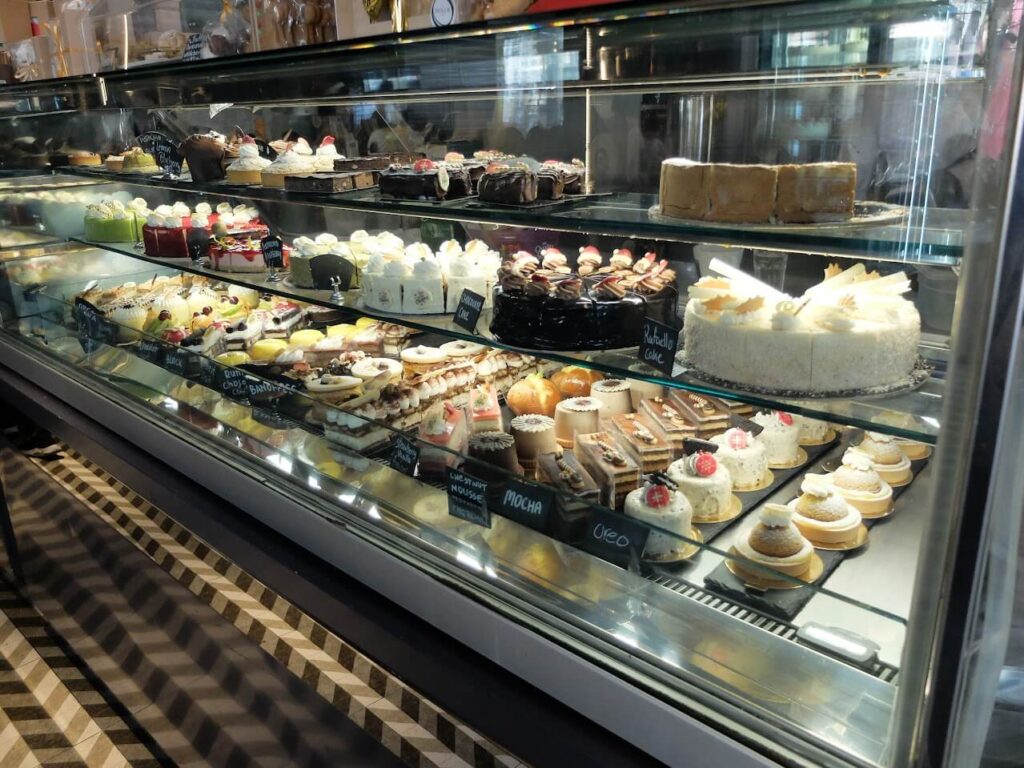
Maltese and Gozitans have somewhat of a sweet tooth. Unfortunately the proof is all around us. The confectionaries in Malta are loaded with delicious-looking things, which make your eyeballs-jump-out and your sugar tooth fall off and bang against the shop counter for her share of sugar.
Shapes, sizes and taste vary and there is something for all eyes and stomachs.
In previous decades past, confectionaries were local and all had their specialities. However local chains of tycoon confectioners have taken over those independent ones. They are still OK, but I do miss the variety of the shops in the 1980s.
Twistees
Good morning, my name is John and I am a Twistees addict. I like these things. They are not too sweet, just crunchy enough, if slightly messy to eat. The hassle is worth it. They also have low-fat, low-cheese and gluten-free versions, we are saved.
They are made out of rice (outsmarting the Chinese again), but don’t you dare declare Twistees in your five-a-day vegy score card.
They really go down well with some Kinnie or local beer.
(This is true) There were rumors in 2002 that the recipe had changed, however the local producers vehemently denied this. At that time people also had problems tasting and smelling, so maybe it was senseless to claim this in that period.
Kinnie
Kinnie is a bitter local drink originating from the island. It is made out of the usual suspects and blood oranges. It goes well with most dishes and even solo. It tastes less artificial than the other sodas to me. However it still is a soda at the end of the day.
Cisk Beer
Cisk “the original”, is a fine local beer. In terms of taste, it is a brother to Stella and Maes and a distant cousin to Bud and Carlsberg.
There are many versions of this now, Mama and Papa Cisk have been busy!
There are nine varieties of this beer now to suit every taste bud. There is something for those who like it sweet and those who like it bitter.
The Pantry Essentials
We cannot leave out some other things, that you can enjoy under the sun, with the sand between your toes. Having mentioned all of the above, we do have other interesting assets in our food arsenal … these you can buy from any corner grocer or super market.
- Kunserva (The Red Gold) aka concentrated tomato paste:
Forget what you know about tomato paste. Maltese Kunserva is a deep, sun-drenched concentrate that makes standard Italian imports taste like water. It’s sweet, intense, and it’s the secret behind any pasta ħamra that actually tastes like it was made in a Maltese home. Yes and the truth is not all of it is made from Maltese tomatoes, but keep this between us OK! - Bigilla: Let me be blunt, there is the mass produced Bigilla, there is the home made Bigilla and there was the street vendor Bigilla. They are cousins but not brothers and sisters and definitely not twins. Made from ful ta’ Ġirba (djerba beans), it’s a dense, earthy, garlicky dip that should be eaten on a wall in the shade with a bag of galletti (water crackers). If you’re at a party or a local picnic and there’s no Bigilla, mention it, you would impress.
- Ġbejniet (Gozo Cheeselets): Goat cheese shaped as a small coffee mound, that is a weird way of describing it. It is like a Babybel but bigger and whiter, like a La Vache Qui Rit but harder and no silver wrapping. The taste is mild, that’s why you find pepper ones and spicy ones. There are dry preserved and wet preserved. The dry ones have a much more concentrated taste.
- Capers: You’ll see them growing wild on the limestone walls all over the islands. Unfortunately I see less of them today, but you do see them especially if you are walking to St Peter’s Pool rather than taking a boring taxi. Maltese capers are sharp, punchy, and utterly essential to the local seafood and salad culture. If they’re in your pasta, don’t pick them out—they’re the salt-and-acid kick the dish needs to survive the heat. Of course, not all capers in the grocer are Maltese!
- Carob Fruit: With some risk I mention this, however you do need years of roaming around the Maltese countryside to do what’s in the next sentence. Carob is a mange tout like fruit in shape but bigger and darker. They can be eaten in full and contain a lot of seeds. Your taste buds will tell you if it is a good one or not. It needs to look mildly creamy on the inside, and there should not be any white larvae inside the carob fruit if you intend to eat it. I would recommend doing this in the company of a Maltese person of a certain age rather than picking this or that while in the countryside. I have seen them in supermarkets in Europe in North African groceries, Turkey imports they told me and they do taste almost the same, but the Maltese ones have a hint of vanilla and thyme in them with that slight tinge of limestone mixed in (don’t I sound like a carob connoisseur, ha!)
- Gulepp tal-Ħarrub (Carob Syrup): This is probably your safest “shot” at consuming carobs. It does look Nutella-ish, but more consistent and dare I say unlike Nutella the sweetness is a different kind of sour / sweet. Kind of earthily sweet. Each batch is different, depends where they have harvested the carob. In Malta or Turkey. However I think there are enough wild carobs in Malta to supply the Gulepp addicts. You can use it anyway you use Nutella, did I just say that?!
- Maltese Honey: Malta’s name is famously linked to Melite (the honey-sweet island). Local honey here is distinct because of the wild thyme and varied flora the bees hit. It’s richer and darker than the supermarket blends you’re used to.
The Seasonal Calendar: What to Hunt For
Food in Malta isn’t just about what’s available; it’s about what’s in season.
- Strawberries (Spring): If you are here in April, head to Mġarr. The strawberries are so sweet they almost don’t make sense. It’s a local obsession for a reason.
- Lampuki (Autumn): This is the national fish—the Dorado or Mahi-Mahi. When the Lampuki season hits in late summer, the entire island’s dinner conversation shifts. If you see it on a menu, order it. It’s the closest thing to an edible “time of year” signpost you’ll find.
- Prickly Pears (Late Summer/Autumn): They grow like weeds on the outskirts of villages. They are vibrant, prickly, and refreshing. Just buy them pre-peeled from a market vendor—don’t try to do it yourself unless you enjoy a very painful afternoon.
Conclusion
In Malta you will experience new tastes in a completely new environment. An Airbnb flat gives you the best flexibility to buy from Uber Eats, cook, prepare. If you are on a budget for a short-term rental in Malta this is definitely an advantage. For those who need or want to keep a close eye on what they eat, having your own fully equipped kitchen makes things easier.
Please see our section with more articles about Culinary experiences in Malta and Maltese Food Recipes.
Stay in Gżira near the promenade
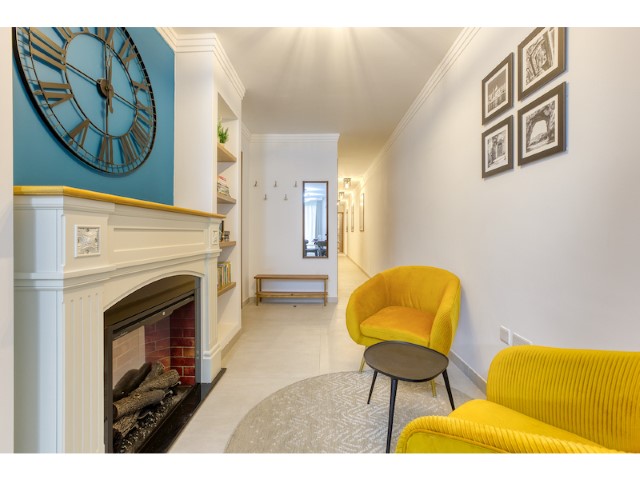
A designer 2-bedroom apartment in Gżira, close to the church, around 2 minutes from the promenade, and near Manoel Island.
View on Airbnb