

By J · 27 April 2026 · Interviews
TL;DR — THE 30-SECOND VERSION
A 3,000 m² underground museum on a quiet street in Qawra, built by one Maltese family. Around 75 restored cars, plus bikes, scooters, jukeboxes, pinball, cameras and period rooms. Mark Galea runs it now; the collection was his father Carol’s life work.
- Best for: classic-car people, mixed-interest couples, families with school-age children, rainy or hot afternoons in the St Paul’s Bay area.
- What you get: ~75 restored cars, plus motorbikes, scooters, a workshop window, a small cinema, a racing simulator, and rooms of 1940s–60s memorabilia.
- New from 1 May 2026: a larger entrance, a gift shop, and a traditional Maltese café-restaurant — Mark and his team have been working on it for the last four months.
- Driving experiences: these are passenger rides — pre-bookable 30 or 60-minute outings in a small selection of the cars.
- Time needed: 1–2 hours, 3 if you watch the films and try the simulator.
- Getting there: a few minutes’ walk from Bugibba bus terminus on Tourists Street, Qawra.
- Walk-up: fine for standard entry. Pre-book the passenger rides.
Why the Collection sits oddly on its street · Walking in for the first time · The collection, the workshop, the memorabilia · Who comes through the doors · Carol Galea’s quiet decades · The wider Maltese motoring world · Before you go — at a glance · Planning notes · FAQ
Why the Malta Classic Car Collection sits oddly on its street — and why that is the point
Tourists Street in Qawra is mostly residential, with a few shopfronts and a bus terminus, and the entrance to the Collection does not give the place away. The museum lives under a block on the street, behind a single door and a small reception room, with one classic usually parked outside as a hint. Walk past it on the way to the bay and you would probably assume it was a small dealership.
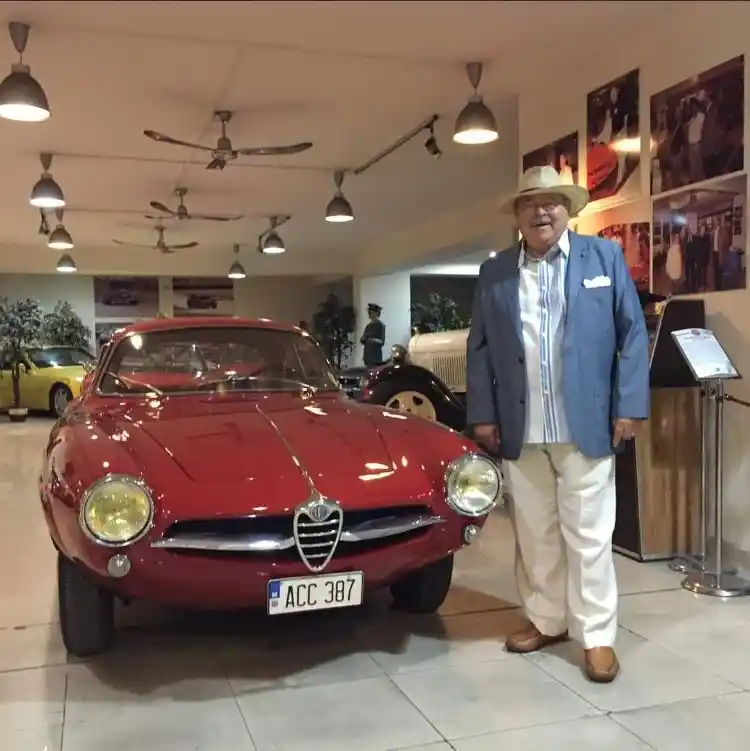
Inside, the floor opens up. Three thousand square metres of underground space, lit and clean, painted arrows on the floor, around seventy-five restored cars laid out along a route that takes you past a workshop window, a small cinema, a racing simulator and several rooms of 1940s–60s memorabilia. Italian marques anchor the collection (Alfa, Fiat, Lancia), British classics and a handful of others share the floor, and a live restoration story plays out behind the workshop glass.

The Collection was built by one Maltese family, mostly by one man. Carol Galea, a hill-climb driver in his younger years and a property developer by trade, spent decades pulling these cars and the world they came from into one place before his death a few years ago. His son Mark Galea, who works internationally as a racing and stunt driver, now runs the museum.
We sent Mark twelve questions, covering the cars currently on the ramp, his father’s first loves, why the entrance is the way it is, and where the museum fits inside Malta’s wider classic-car world. His answers are below, exactly as he sent them; the framing around them is ours. (If you like the format, the same approach sits behind our pieces on Meridiana Wine Estate and Apnea Total Malta.)
Walking in for the first time
The wow factor of not expecting such a setup.
The entrance was larger before but a decision to rent our former cafeteria/entrance meant that we had to move the entrance towards another side. That meant the the entrance will be just a door with a 2x3m rroom and a reception desk. At the time we thought it was ok but by time we we noticed that is was a mistake. People didnt think that it was the entrance to a 3000sqm museum and we think that we might have lost alot of walkins because of that. Then there was the wow factor of who entered, expecting nothing special but were amazed as they walked down the stairs. However we have been working on it for the past 4 months and will have a bigger entrance, a gift shop together with a tradiotional Maltese Cafe/Restaurant which should be open from 1st May onwards.
That depends on the visitor and what type of cars that they are into
The collection, the workshop, the memorabilia
What stops the museum feeling static after the first ten cars is the workshop window and the rooms of non-car material laid around the main route. The workshop is real rather than a display piece, and what is up on the ramp changes through the year.
Roughly around 75, we do change maybe 3/4 cars per year
My father loved all types of cars, italian style and british performance mostly
Currently we are working on a Mercedes 300SL, a Chevy Pickup, a Ford Escort mk1 and a Datsun 240z. We like to show great workmanship together with the importance of saving such cars.
My father’s idea…..he used to collect anything from that era…he loved it
Who comes through the doors
One pattern shows up in the museum’s recent TripAdvisor history: people who walk in saying they do not care about cars usually walk out enthusiastic. The memorabilia rooms, the simulator and the cinema do most of that work, and the rest of it does not really make sense until you have walked the route yourself.
I think the setup of the collection together with jukeboxes, pinball, cameras, period fashion will catch the interest of almost everyone
It is really for all ages, maybe a little less for very young children….we don’t like them running around trying to climb on our exhibits
Not driving experiences but passenger experiences….we have a small selection of cars that you can prebook for a 30 or 60min ride
Carol Galea’s quiet decades
This is not a corporate museum. It started as one man’s collection in scattered garages and only became a public-facing place once Carol decided to build a single large garage inside one of his property projects. That history is part of why the place feels coherent on the floor: every car has come through the same set of hands. One of the more personal pieces in the building is a racer Carol built from scratch around the 4.2-litre inline-six engine of a Jaguar E-Type, which is not the sort of project most enthusiasts get round to.
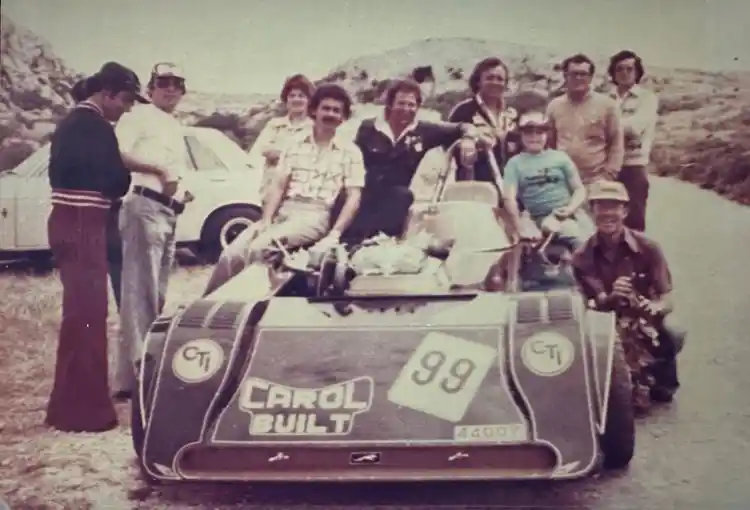
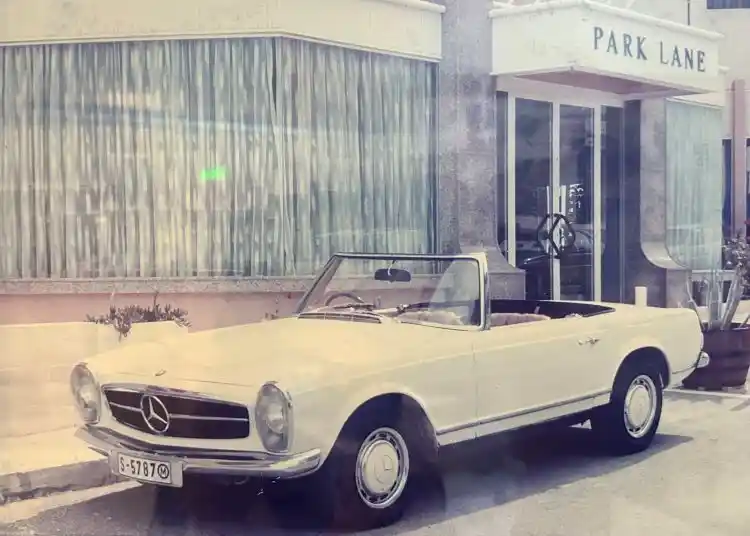
He was a car enthusiast very alot of years and some of his first favourit cars where a Mercedes 280SL Pagoda and the Jaguar E-type. The he was increasing the numbver of cars in his collection but where stored in different garages. As his main profession at the time was property development, he decided to build a large garage in one of his projects which then was transformed into a museum
The Collection and Malta’s wider classic-car world
Malta runs a surprisingly busy classic-car calendar for a country of half a million people. The Mdina Grand Prix takes over the streets of the old capital every October, the Valletta Concours d’Elegance happens in the spring, and the hill-climb tradition has been running for decades. The Collection sits inside that world rather than next to it: when international enthusiasts come over for an event, the museum is generally the indoor stop they fold into the trip.
Yes definately, all automotive events that attract international visitors end up visiting the museum
Before you go — the Malta Classic Car Collection at a glance
| Detail | What to know |
|---|---|
| Address | Tourists Street, Qawra, St Paul’s Bay SPB 1020 — 📍 Google Maps |
| Getting there | A few minutes’ walk from Bugibba bus terminus. From the terminus exit, head along Tourists Street. |
| Hours | Mon–Fri 09:00–17:00 · Sat, Sun & public holidays 09:00–14:00 (recheck on the official site close to your visit). |
| Standard entry | Adult €10 · Child €4.50 (verify on the day; prices change). |
| Passenger rides | 30-minute or 60-minute outings in a small selection of the cars. Pre-book on +356 21 578 885. |
| Booking | Walk-up is fine for standard entry. Pre-book passenger rides and any wheelchair-specific arrangements. |
| Photography | Allowed throughout, no restrictions on personal photos. |
| Accessibility | Lift access to the underground level; seating throughout the route. Call ahead if you are arranging a passenger ride for a wheelchair user. |
| Cars for sale | Some of the cars on the floor are available to buy. If something on display catches your eye, ask at reception. |
| From 1 May 2026 | A larger street-level entrance, a gift shop, and a traditional Maltese café-restaurant — straight off the museum lobby. |
| Phone | +356 21 578 885 |
| Website | classiccarsmalta.com |
Planning notes for a visit
How long to allow. Most visitors spend an hour or two on the floor. Three is realistic if you want to watch the Mille Miglia documentary, sit at the simulator, and read the memorabilia rooms properly.
Best day and time. Weekday mornings are usually the calmest. The museum is fully indoor and underground so weather makes no difference, which makes it a useful default on a 38°C July afternoon, a wet February day, or as a cool middle to a beach-morning-to-dinner-evening kind of day. Our month-by-month weather guide covers when the midday heat actually becomes a planning factor.
If it is raining. Malta does not get much rain, but when it arrives it tends to arrive between November and February, and it can shut a beach-day plan down completely. The Collection is one of the strongest rainy-day options in the northern half of the island, and easily the most substantial indoor activity in Qawra and Bugibba. A morning at the museum, a long lunch in Bugibba afterwards, and the day is rescued.
If you only have an hour. Walk the floor at pace and skip the cinema. Give five minutes to the workshop window and five to the memorabilia rooms. Pick one car to actually study properly. You will miss things, but you will get the shape of the place.
Getting there without a car. The Bugibba bus terminus is the marker. Direct routes from Valletta and from the airport (the X3 from MLA) drop you there in roughly 45–60 minutes. From Sliema and St Julian’s it is usually one transfer, often through Mater Dei or Birkirkara; check the Tallinja journey-planner before you set out. From the terminus, the museum is on Tourists Street, a few minutes on foot. Renting a car for one museum is overkill, but if you are weighing it up for the rest of the trip, see our honest guide to renting a car in Malta.
What to pair it with. The Qawra–Bugibba–St Paul’s Bay stretch is walkable. A morning at Mellieħa Bay followed by an afternoon at the Collection works. So does combining the museum with a Comino day, since the boats to the Blue Lagoon leave from Bugibba and Ċirkewwa. If you are based in Sliema or St Julian’s, the museum lands well as part of one of our day trips from Sliema and Gżira.
The new café changes the shape of a visit. Until 30 April 2026 the entrance is the small reception room Mark describes above. From 1 May the rebuild brings a Maltese café-restaurant onto the lobby, so from May onwards you can plan to eat on site. The menu is being built around traditional Maltese dishes; you will not need to walk into Bugibba for lunch.
One honest note. The collection skews Italian and British. If your interest is American muscle, German performance saloons or Japanese touring cars, you will find some of what you want (the Datsun 240z on the workshop ramp, the Chevy Pickup in restoration), but the centre of gravity sits with Carol Galea’s own taste, which leaned to Alfa, Fiat, Lancia, Jaguar and Mercedes.
Other interview pieces. Same approach, different subjects: Meridiana Wine Estate and Apnea Total Malta.
FAQ
How do I get to the Malta Classic Car Collection from Bugibba bus terminus?
Out of the terminus, walk along Tourists Street — the museum is a few minutes on foot. Direct buses to Bugibba run from Valletta and from Malta International Airport (the X3). From Sliema or St Julian’s it is usually one transfer; check the Tallinja journey-planner for current routings.
Do I need to book the Malta Classic Car Collection in advance?
No — for standard entry, walk-up is fine. The exception is the passenger rides in one of the classics: those are 30 or 60-minute outings in a small selection of cars, and they are pre-booked only. If a guest needs wheelchair-specific arrangements for a ride, contact the museum a few days ahead.
Is the museum wheelchair accessible?
Yes. The museum is on a single underground level reached by lift, with seating throughout the route. The passenger-ride logistics for a wheelchair user need to be arranged on the phone before the visit rather than at the desk.
Can I take photos inside?
Personal photography is allowed throughout. There are no restricted rooms.
Is there food, coffee or somewhere to sit afterwards?
From 1 May 2026, the rebuilt entrance includes a gift shop and a traditional Maltese café-restaurant attached to the lobby. Until then, Bugibba and Qawra both have plenty of cafés and lunch spots within a short walk.
How long does a visit usually take?
One to two hours is typical. Three is realistic if you want to watch the full Mille Miglia documentary in the cinema room and try the racing simulator.
How much does the Malta Classic Car Collection cost?
Standard entry is around €10 for adults and €4.50 for children — verify on the day on the museum’s own site, since prices change. The pre-booked passenger rides are quoted separately when you book; phone the museum to ask for the current rate for a 30 or 60-minute ride in the car you want.
Is the Malta Classic Car Collection worth visiting?
If you have any interest in classic cars, yes — and it is also the most consistent recommendation we make to people who say they do not. The 1940s–60s memorabilia rooms, the cinema, the racing simulator, and the workshop window are designed to keep mixed-interest visitors moving. The TripAdvisor pattern (4.7 stars across 2,000+ reviews) tracks with what the floor actually delivers.
Who owns the Malta Classic Car Collection?
The collection was built by Carol Galea, a Maltese property developer and former hill-climb driver, over several decades. Today the museum is run by his son Mark Galea, an internationally working racing and stunt driver. Mark is also the person who fields owner replies on TripAdvisor and the one who answered every question in this interview.
Is parking available near the museum?
There is on-street parking around Tourists Street and the wider Qawra grid; how easily you find a space depends on the time of day and the season. Mid-morning on a weekday is usually fine. From Sliema or Valletta, the bus to Bugibba is generally easier than driving and parking.
What is changing about the entrance in 2026?
Mark and his team have been rebuilding the street-level entrance for the past four months. From 1 May 2026, the museum opens a larger entrance, a gift shop, and a traditional Maltese café-restaurant on the lobby. Until that date, you arrive through the small reception room Mark describes — the door, the 2 × 3 metre lobby, and the staircase down into the main floor.
Last updated: April 2026.
Stay in Gżira near the promenade
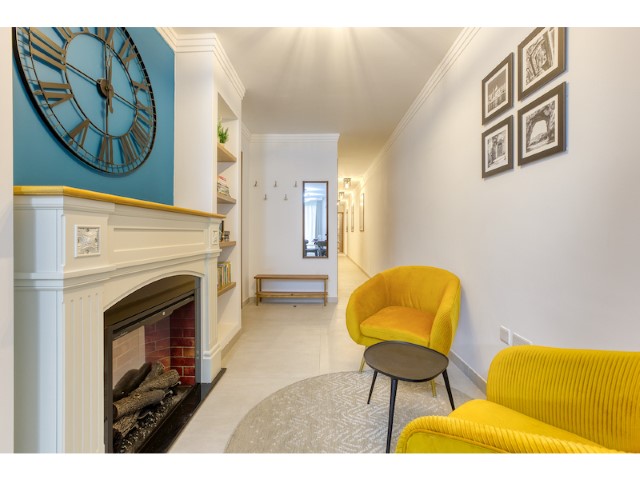
A designer 2-bedroom apartment in Gżira, close to the church, around 2 minutes from the promenade, and near Manoel Island.
View on Airbnb